Author: Osiris

  • Check Point Patches Critical VPN Vulnerabilities in Security Gateway and Spark Firewall

    Check Point Patches Critical VPN Vulnerabilities in Security Gateway and Spark Firewall

    Check Point has patched two critical vulnerabilities, CVE-2026-85102 and CVE-2026-85103, both carrying a CVSS score of 9.8, in the VPN functionality of its Security Gateway and Spark Firewall products, SecurityWeek reported. The flaws stem from a certificate-validation issue and an ASN.1 heap overflow bug that together could allow unauthenticated remote code execution.

    Check Point said its own researchers discovered both vulnerabilities internally, and the company has not confirmed any in-the-wild exploitation to date. Fixes are available in versions R82.10, R82, and R81.20.

    Why it matters: VPN gateways sit at the network perimeter for a large share of enterprise and critical-infrastructure networks, making unauthenticated RCE flaws in this class of product a high-priority patch item regardless of whether active exploitation has been observed yet — the same category of flaw was exploited in the wild within days at other vendors this quarter.

    Source: SecurityWeek, September 11, 2026.

  • Counter-UAS Netting and Physical Barriers: Stopping Drones Without Jamming or Kinetic Force

    Counter-UAS Netting and Physical Barriers: Stopping Drones Without Jamming or Kinetic Force

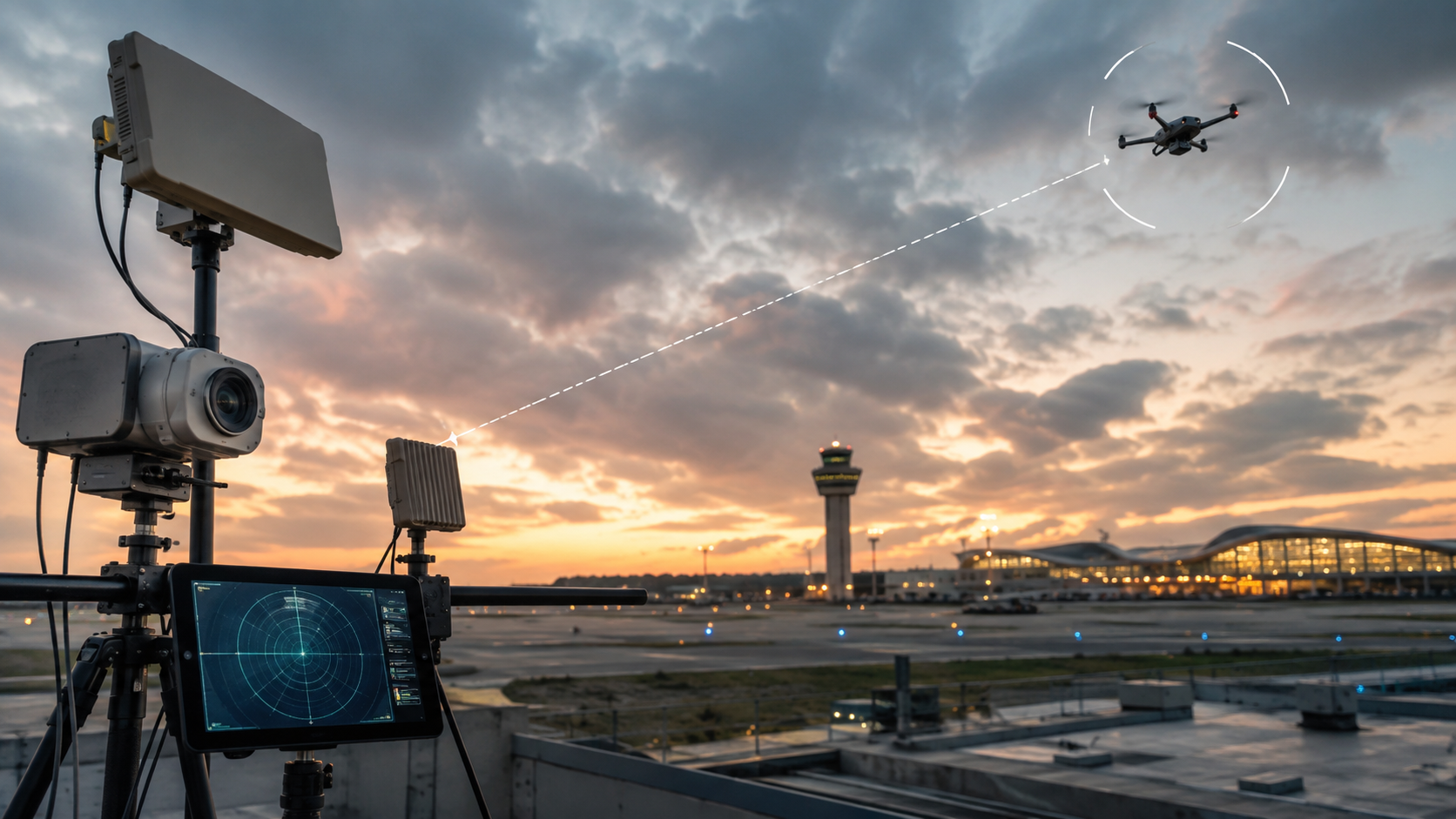
    Most public discussion of counter-UAS technology focuses on detection — radar, radio-frequency sensing, acoustic arrays — and on active countermeasures like RF jamming or interceptor drones. A quieter category of counter-drone technology works through purely physical means: netting and barrier systems designed to entangle or block small unmanned aircraft without emitting any signal at all.

    Net-Capture Systems

    Net-capture counter-UAS systems deploy a net, either fired from a ground-based or drone-mounted launcher, to physically entangle a target drone’s rotors, typically causing it to lose lift and fall, often with a tethered or parachute recovery mechanism to control where it lands. Because these systems rely on physical contact rather than radio-frequency emissions, they can be used in electromagnetically sensitive environments — near airports, hospitals, or facilities where RF jamming would create unacceptable interference risk.

    Fixed Netting and Overhead Barriers

    A more passive approach uses fixed netting or mesh barriers installed over vulnerable areas — exercise yards at correctional facilities, stadium seating bowls, or sensitive outdoor equipment at critical infrastructure sites — to physically prevent a drone from entering the protected airspace or delivering a payload, regardless of whether the drone has even been detected. This approach trades flexibility for reliability: a fixed net does not require detection, classification, or an operator decision to act, but it also only protects the specific area it physically covers.

    Where Physical Countermeasures Fit

    Physical counter-UAS methods are generally positioned as a complement to, not a replacement for, detection and RF-based systems. Detection remains necessary to know a threat exists and to cue a response; net-capture systems typically still require a human decision to fire on a specific, confirmed target rather than acting autonomously. Fixed netting, by contrast, requires no real-time decision but only protects a defined footprint.

    Legal and Regulatory Considerations

    Any counter-drone response, physical or electronic, operates in a legal environment that varies significantly by jurisdiction. In many countries, authority to bring down or interfere with an aircraft — including a small UAS — is restricted to specific government agencies, and private operators of net-capture systems may face legal exposure without proper authorization. Site operators evaluating counter-UAS technology should treat the regulatory and authorization question as a prerequisite, not an afterthought, alongside the technical deployment.

    Conclusion

    As small drones become a more routine security concern for stadiums, correctional facilities, airports and critical infrastructure, physical countermeasures like net-capture systems and fixed netting offer a non-electronic option that avoids the interference risks of RF jamming. Their real-world value depends heavily on pairing them with reliable detection and on navigating the legal authority questions that govern any active counter-drone response.

  • Video Analytics and False Alarms: Why Smart Cameras Still Cry Wolf

    Video Analytics and False Alarms: Why Smart Cameras Still Cry Wolf

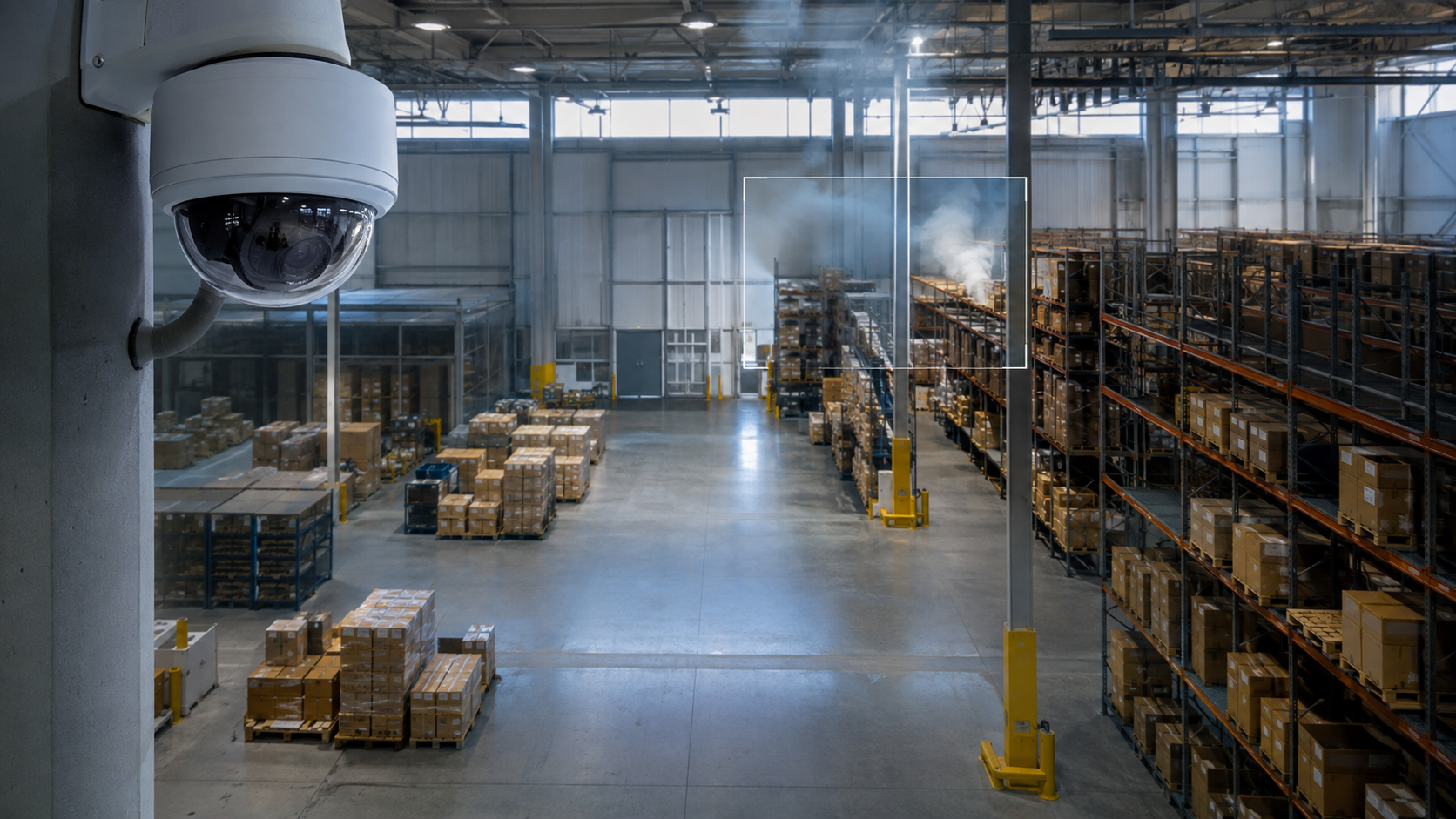
    Video analytics were sold, in large part, on the promise of reducing false alarms: instead of a motion sensor triggering on every passing shadow or blowing leaf, AI-driven analytics would recognize a person, a vehicle, or a specific behavior, and alert only when something meaningful actually happened. Years into widespread deployment, false positives remain the most common reason security operators mute, ignore, or outright disable analytics-driven alerts.

    Why Analytics Still Misfire

    Object-detection models are trained on datasets that do not perfectly represent every deployment environment. A model tuned on daylight footage can struggle with the visual noise of headlights, rain, or infrared night vision. Reflections, shadows that move quickly across a scene, birds or wildlife, and even waving flags or tree branches remain common triggers for perimeter intrusion analytics, because they share enough visual characteristics with a genuine object of interest to cross a poorly tuned detection threshold.

    Camera placement compounds the problem. Analytics tuned and validated in a controlled test environment often perform differently once installed at the actual site, where lighting conditions, camera angle, and background clutter differ from the conditions the model was tuned against.

    Tuning Is Not a One-Time Task

    The gap between analytics-as-marketed and analytics-as-deployed is often a tuning gap, not a fundamental technology limitation. Detection zones, sensitivity thresholds, and object-classification filters typically need to be adjusted after installation, based on a period of observing real false-alarm patterns at that specific site — and again seasonally, as lighting conditions and foliage change through the year. Sites that treat initial commissioning as the final tuning step tend to accumulate nuisance alarms that erode operator trust over time.

    Sensor Fusion as a False-Alarm Reducer

    A growing approach to reducing false positives is combining video analytics with a second, independent data source before an alert reaches a human operator — for example, requiring both a video-based person detection and a fence-mounted vibration sensor to trigger within the same time window and zone before escalating an alert. This cross-validation approach trades some detection speed for a meaningful reduction in single-sensor false positives.

    The Human Cost of Alarm Fatigue

    The operational consequence of high false-alarm rates is well documented in security operations research under the umbrella of alarm fatigue: operators who receive too many low-value alerts begin to respond more slowly, or dismiss alerts reflexively, including the rare genuine one. A system with impressive detection accuracy in a vendor demo can still fail operationally if its false-alarm rate in the field causes operators to stop trusting it.

    Conclusion

    The technology behind modern video analytics has genuinely improved, but the persistence of nuisance alarms in the field is less a story of AI failing to live up to its promise and more a story of deployment and tuning discipline lagging behind the underlying detection capability. Sites that budget time and expertise for post-installation tuning, and that pair analytics with a second confirming sensor where the stakes justify it, get meaningfully closer to the low-false-alarm outcome the technology was supposed to deliver from day one.

  • Security Fencing and Anti-Climb Design: The Physical Layer Most Systems Depend On

    Security Fencing and Anti-Climb Design: The Physical Layer Most Systems Depend On

    Every layer of electronic perimeter security — cameras, intrusion sensors, radar, access control — implicitly assumes there is a defined boundary an intruder must cross. Fencing is what makes that assumption physically true. It is often the least discussed layer of a security system and, at many sites, the one that actually deters the largest share of casual intrusion attempts before any sensor is triggered.

    Fence Types and What They’re Actually For

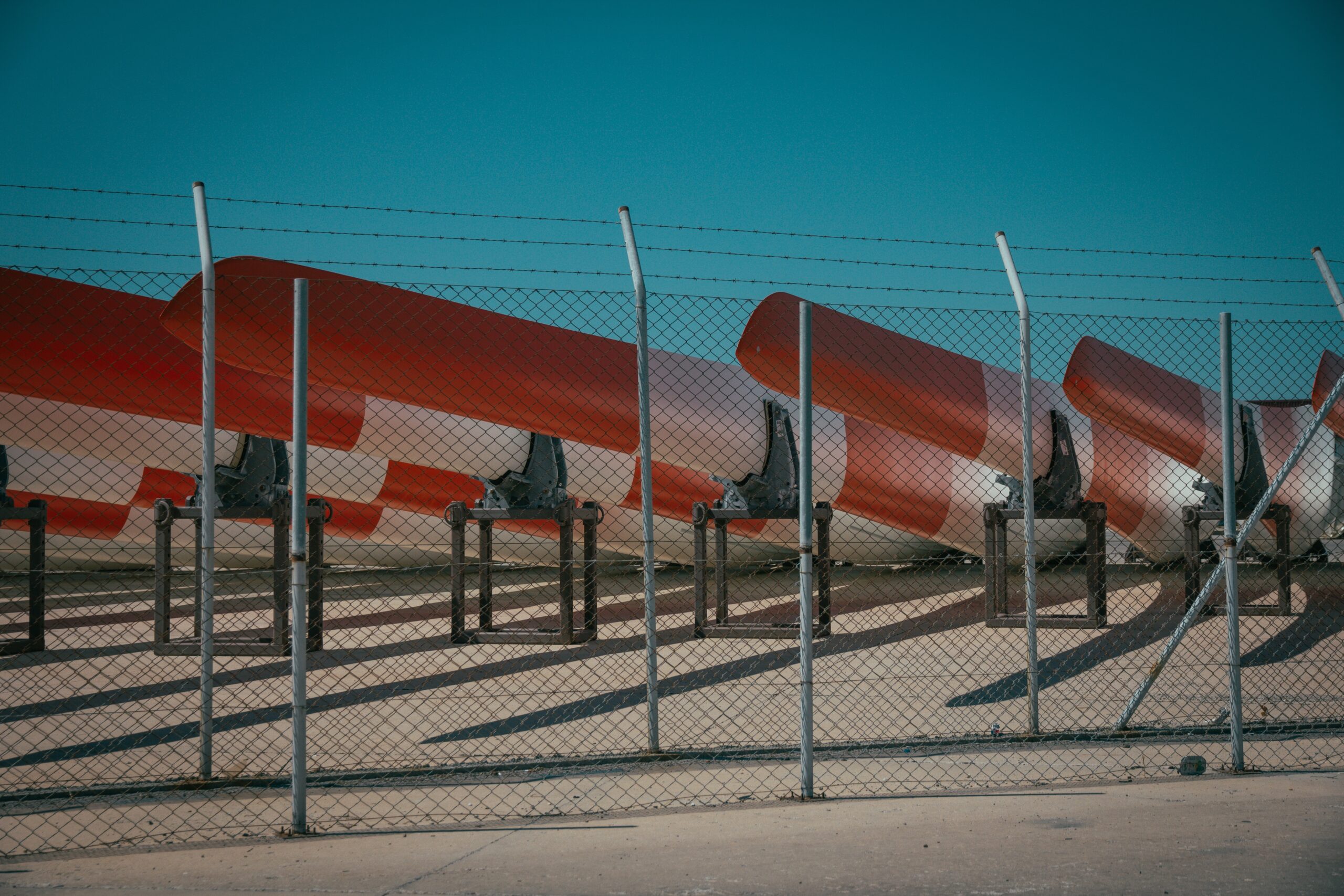
    Chain-link fencing remains common because it is inexpensive and allows clear sightlines for cameras and patrol staff, but it offers minimal delay against a determined climber and provides hand and foot holds unless modified. Welded mesh and palisade fencing increase climb resistance through smaller mesh apertures or pointed pales, at higher cost. Anti-climb mesh — small-aperture rigid mesh panels — is specifically designed to deny the toe-holds that make chain-link climbable, and is increasingly specified for critical-infrastructure and high-security commercial sites.

    Height, Overhang and Toppings

    Fence height alone is a weak predictor of effectiveness without considering toppings and overhangs. An outward-angled overhang at the top of a fence, combined with barbed wire, razor wire (concertina) or anti-climb spikes, is far more effective at deterring a climb attempt than simply adding height to a vertical fence, since a climber can often scale a taller fence more easily than negotiate an overhang. Site designers weigh these choices against local regulations, which frequently restrict razor wire and certain topping types in commercial or residential-adjacent settings.

    Fence-Mounted Detection

    Fencing increasingly does double duty as a sensor platform. Fence-mounted vibration and strain sensors detect climbing, cutting, or lifting attempts by analyzing the mechanical disturbance signature along the fence line, while fiber-optic sensing cable run along or woven into the fence fabric can provide continuous, zone-located detection across long perimeters without discrete point sensors. These systems are only as good as the fence they’re mounted on: a poorly tensioned or structurally weak fence generates noisy signals and more false alarms.

    Buffer Zones and Clear Zones

    Effective perimeter design pairs the fence itself with a clear zone on both sides — vegetation and obstruction-free space that improves camera and sensor performance, removes objects that could be used to breach or climb the fence, and gives responding personnel a clear line of approach. A well-specified fence undermined by overgrown vegetation or nearby objects that provide a climbing aid loses much of its designed effectiveness.

    Conclusion

    Fencing rarely gets the attention that cameras and access control systems do in security planning discussions, but it remains the physical layer that every other perimeter technology depends on. A camera cannot delay an intruder, and a sensor only detects what is already happening; a well-specified fence, topping and clear zone combination is what actually buys the time those other systems are designed to use.

  • Gunshot Detection and Acoustic Sensors: How Sound-Based Security Systems Work

    Gunshot Detection and Acoustic Sensors: How Sound-Based Security Systems Work

    Not every security event announces itself on camera first. Acoustic detection technology — gunshot detection systems and glass-break sensors chief among them — is built on the premise that certain security events have a distinctive sound signature that can be identified and acted on faster than a human reviewing video footage.

    How Gunshot Detection Works

    Gunshot detection systems use arrays of acoustic sensors, sometimes combined with infrared muzzle-flash detection, to identify the specific acoustic signature of a gunshot: a sharp, high-amplitude transient with a characteristic frequency profile that differs from a slammed door, a firework, or a vehicle backfire. Multi-sensor arrays can triangulate the approximate location of the shot using the small time differences in when the sound reaches each sensor.

    These systems are most established in outdoor, wide-area deployments — originally developed for city-wide law-enforcement use — and have increasingly been adapted for indoor use in schools, hospitals, and corporate campuses, where the acoustic environment (reverberation, HVAC noise, multiple rooms) presents different tuning challenges than an open outdoor space.

    Glass-Break Detection

    Glass-break sensors work on a related but distinct principle: they listen for the specific frequency signature produced when glass fractures, which differs from the sound of glass being tapped or a window being closed forcefully. Acoustic glass-break sensors are typically mounted on a wall or ceiling within a room, and rely on line-of-sound rather than line-of-sight, so a single sensor can often cover multiple windows in the same space.

    Some systems use shock sensors mounted directly on the glass or frame instead of, or in addition to, acoustic detection, trading broader room coverage for a more direct mechanical confirmation that a specific pane has been struck.

    The False-Alarm Problem

    Acoustic detection’s core engineering challenge is the same one facing every alarm technology: separating a real event from an acoustically similar but harmless one. Early gunshot-detection deployments were criticized for false positives triggered by fireworks, construction noise, and vehicle backfires. Modern systems address this primarily through sensor fusion — combining acoustic signature analysis with other data such as muzzle-flash detection, sensor-array triangulation consistency, and in some deployments, correlation with nearby camera analytics — rather than relying on audio alone.

    Integration With Response Systems

    The operational value of acoustic detection comes from what happens after a valid detection: automatic lockdown triggers, mass notification alerts, and direct routing of location data to responding security personnel or law enforcement. A detection that takes seconds to identify a threat but minutes to reach a human decision-maker loses much of its advantage over conventional alarm response.

    Conclusion

    Acoustic detection systems fill a specific gap that video-based analytics cannot: identifying threat events by sound signature, often faster than a visual confirmation would be possible, and in areas without camera coverage. Their effectiveness depends less on the underlying acoustic science, which is well established, and more on tuning for the specific environment and on tight integration with the response workflow that follows a detection.

  • Backup Power for Security Systems: What Keeps Cameras and Access Control Online During an Outage

    Backup Power for Security Systems: What Keeps Cameras and Access Control Online During an Outage

    A security system is only as reliable as the power feeding it. Cameras stop recording, access-controlled doors can fail open or fail locked depending on configuration, and alarm panels go silent the moment utility power is lost — unless the system was designed with backup power as a core requirement, not an afterthought.

    Where Power Loss Actually Hurts

    The most exposed components are usually the ones furthest from the main equipment room: PoE cameras and door controllers at the edge of the network, which depend on switches and injectors that themselves need backup power. A building’s main server room might sit on a robust UPS, while a camera on a remote loading dock loses power the moment a single upstream switch goes dark.

    Access control is particularly sensitive to power design choices. Fail-safe locks unlock when power is lost, which is often required for life-safety egress but means a power outage can leave doors unsecured. Fail-secure locks stay locked, which protects against intrusion but can trap people inside in an emergency unless a mechanical override or backup power source is available. Getting this choice wrong at a given door is a life-safety and security decision, not just an electrical one.

    UPS Sizing and Runtime

    Uninterruptible power supplies for security infrastructure are typically sized around two figures: the load they must carry (measured in VA or watts) and the runtime required before either utility power returns or a generator takes over. A common design pattern uses UPS units to bridge the gap between a power loss and generator start-up — often 30 seconds to a few minutes — rather than to power a site for hours, which is left to the generator.

    PoE budgeting matters as much as UPS capacity. A switch’s power budget does not automatically scale down gracefully when running on battery; if the connected UPS cannot sustain the switch’s full PoE load, some ports may shut down or brown out before the runtime estimate suggests they should.

    Generators and Transfer Switches

    For sites where extended outages are a real risk — critical infrastructure, hospitals, data centers, and increasingly large commercial campuses — a generator with an automatic transfer switch is standard. The transfer switch detects a utility outage, starts the generator, and switches the load over, typically restoring full power within 10 to 30 seconds. Security equipment should be on a circuit designated for generator backup, not left on the same circuit as non-essential building loads that may be intentionally shed during an extended outage.

    Testing Is the Part Most Often Skipped

    Backup power systems fail most often not because they were poorly designed, but because they were never tested under realistic conditions. UPS batteries degrade over years of standby use and can fail silently until called upon during an actual outage. Runtime testing under real load, not just a self-test indicator light, along with a documented replacement schedule for UPS batteries, is what separates backup power that works from backup power that only looks like it works on paper.

    Conclusion

    Backup power is not a single product decision but a system-level design question that touches UPS sizing, PoE budgeting, lock fail-mode selection, and generator transfer logic together. Security teams that treat power resilience as part of the initial system design — rather than an add-on after installation — are the ones whose cameras and doors are still working when the lights go out.

  • Microsoft Plans to More Than Triple Data Center Capacity to 38GW by 2032

    Microsoft Plans to More Than Triple Data Center Capacity to 38GW by 2032

    Microsoft plans to grow its global data center capacity from roughly 12GW today to more than 38GW by 2032, Bloomberg reported, a figure that would exceed peak electricity demand in New York state. The company said compute shortages had forced it to turn away AI and cloud business in recent months.

    Why it matters: The planned expansion underscores how AI compute demand is now a first-order driver of data center and power-grid planning among hyperscalers. Editorial note: the source article is behind Bloomberg’s paywall; this summary reflects only the publicly accessible headline and lede, and should be treated as preliminary pending fuller reporting.

    Source: Bloomberg, September 10, 2026.

  • K9 Detection Teams vs. Technology: Explosives and Narcotics Screening Compared

    K9 Detection Teams vs. Technology: Explosives and Narcotics Screening Compared

    Despite decades of advances in trace-detection and chemical-sensing technology, trained detection dogs remain a benchmark that many automated screening systems are still measured against, particularly for explosives and narcotics detection in environments where speed and mobility matter as much as raw sensitivity.

    What Detection Dogs Do Well

    A trained detection dog can screen a moving crowd, a parked vehicle, or a large open area far faster than most stationary technology, since the dog and handler simply walk through the space rather than requiring each person or item to pass through a fixed checkpoint. Dogs are also highly mobile and adaptable, able to work in outdoor environments, uneven terrain, and situations where setting up fixed equipment isn’t practical, and their sensitivity to airborne trace odors in real-world, unpredictable environments has proven difficult for technology to fully replicate.

    What Technology Does Well

    Trace-detection technology, which analyzes a physical swab or air sample for chemical signatures of explosives or narcotics, produces a documented, repeatable result that does not depend on a living animal’s health, mood or fatigue on a given day. Technology-based screening can also run continuously without rest breaks, doesn’t require years of specialized training and ongoing recertification the way a working dog and handler team does, and produces a data trail that can be logged and audited, which matters in regulated environments like aviation security.

    Cost, Availability and Deployment Speed

    Training a detection dog and handler team is a significant, multi-year investment, and the supply of qualified teams is limited relative to demand, particularly for high-profile events or emergency deployments where trained teams may need to travel from elsewhere. Fixed technology installations require significant upfront capital and site preparation but, once deployed, scale more predictably: a facility can install additional trace-detection lanes far more easily than it can recruit and train additional canine teams on short notice.

    Most Security Programs Use Both

    Rather than treating dogs and technology as competing options, most serious security programs deploy them as complementary layers: technology handles high-volume, repeatable screening at fixed checkpoints, while detection dogs provide rapid, mobile screening for large crowds, vehicles, and situations technology cannot easily reach, such as searching a stadium concourse before an event or sweeping a vehicle in a parking structure. Security planners generally select the mix based on the specific threat environment, available budget, and how quickly a space needs to be screened.

    FAQ

    Are detection dogs more accurate than technology? Both approaches have strengths and limitations; dogs excel at real-world, mobile screening of large or irregular spaces, while technology offers documented, repeatable results better suited to fixed, high-volume checkpoints. Neither is universally more accurate across all scenarios.

    How long does it take to train a detection dog? Training a working detection dog and handler team typically takes many months to over a year, followed by ongoing recertification and continued training throughout the dog’s working life.

    Can technology fully replace detection dogs? Not currently for most large-scale or mobile screening scenarios; most security programs use technology and detection dogs as complementary layers rather than substitutes for one another.

  • Security Lighting and CPTED: How Illumination Deters Crime

    Security Lighting and CPTED: How Illumination Deters Crime

    Lighting is one of the oldest security measures in existence, and it remains one of the most cost-effective: well-designed illumination increases the chance that a person committing a crime will be seen, which is often enough to discourage the attempt in the first place. Crime Prevention Through Environmental Design (CPTED), a framework used by security planners and architects, treats lighting as a deliberate design decision rather than simply a matter of installing as many fixtures as budget allows.

    Uniformity Matters More Than Brightness Alone

    A common misconception in security lighting is that brighter is always better, but security professionals generally focus on uniformity, the consistency of light levels across a space, rather than peak brightness at any single point. A parking lot with a few extremely bright fixtures and large dark gaps between them can actually be more dangerous than one with moderate, evenly distributed light, because the dark gaps create pockets where an offender can wait unseen, and the contrast between bright and dark areas can make it harder for the human eye and for cameras to adjust.

    CPTED’s Core Lighting Principles

    CPTED lighting guidance generally emphasizes illuminating pathways, entrances and natural surveillance zones, areas where legitimate users of a space would naturally look or pass through, rather than simply lighting every square foot of a property equally. It also stresses eliminating shadows and blind spots created by landscaping, structures or the fixtures themselves, since overgrown vegetation or poorly placed light poles can inadvertently create the dark pockets that undermine a lighting plan’s purpose. Motion-activated lighting is often used strategically in lower-traffic areas, both to draw attention to unexpected activity and to reduce energy costs compared with continuous full illumination.

    Lighting as a Camera Enabler, Not Just a Deterrent

    As video surveillance has become central to physical security, lighting design increasingly has to account for camera performance alongside human visibility, since even a high-quality camera struggles to produce a usable image in inconsistent or insufficient light. Security planners increasingly coordinate lighting layout with camera placement early in a project, rather than treating lighting and video as separate systems designed independently, since a camera aimed at a poorly lit area may capture footage too dark or too high-contrast to be useful after an incident.

    FAQ

    What does CPTED stand for? Crime Prevention Through Environmental Design, a framework that uses the physical design of a space, including lighting, landscaping and sightlines, to reduce opportunities for crime.

    Is more lighting always better for security? No. Security professionals generally prioritize uniform, well-distributed lighting over maximum brightness, since uneven lighting with dark gaps can create hiding spots and glare that undermine both human visibility and camera performance.

    Does security lighting help camera footage quality? Yes, consistent, adequate lighting is important for producing usable video footage, and lighting layout is increasingly planned alongside camera placement rather than as a separate consideration.

  • Under-Vehicle Surveillance Systems: How UVSS Technology Works

    Under-Vehicle Surveillance Systems: How UVSS Technology Works

    The underside of a vehicle is one of the few spaces that conventional security cameras, guards and X-ray baggage scanners simply cannot see, which is why under-vehicle surveillance systems (UVSS) have become a standard checkpoint technology at facilities where vehicle-borne threats are a serious concern, including government buildings, ports, prisons, data centers, and major event venues.

    How a UVSS Scan Actually Works

    A typical UVSS installation embeds a line-scan camera, or an array of cameras, in a low-profile housing set into or on top of the road surface at a checkpoint. As a vehicle drives over the unit at low speed, the camera captures a continuous image strip of the undercarriage, which imaging software then stitches together into a single flattened, readable image of the entire underside, similar in concept to how a flatbed scanner builds an image line by line. The resulting image lets an operator, or increasingly an automated analytics system, inspect the chassis, fuel tank, wheel wells and other undercarriage components for anything that looks out of place.

    Fixed, Portable and Drive-Through Configurations

    Fixed UVSS units are permanently installed at a checkpoint lane and offer the most consistent image quality, since the scanning geometry and lighting are controlled and calibrated for that specific location. Portable UVSS units, often mounted on a wheeled pallet or ramp, trade some image consistency for the ability to be moved between checkpoints or deployed temporarily for a specific event. Both configurations are generally designed for vehicles to drive over slowly rather than stop, keeping traffic moving through a checkpoint rather than creating a bottleneck.

    From Manual Review to Automated Threat Detection

    Early UVSS deployments relied entirely on a human operator visually reviewing each scanned image for anomalies, a process that works but depends heavily on operator attention and experience. Newer systems increasingly pair the scan with automated image analysis that compares the captured undercarriage against a reference image of the same vehicle model, or flags common anomaly patterns, to help operators catch changes they might otherwise miss during a high-volume shift, while still leaving the final determination to a trained person.

    FAQ

    Do vehicles need to stop for a UVSS scan? No, most systems are designed to scan a vehicle driving over the unit at low speed, though some very high-resolution or high-security deployments may require a brief stop or reduced speed for optimal image quality.

    Can UVSS detect explosives directly? UVSS provides a visual image of the undercarriage for anomaly detection; it does not chemically detect explosives the way a trace-detection or canine screening does, which is why it is often paired with other screening methods at the highest-security checkpoints.

    Where are under-vehicle surveillance systems most commonly deployed? Government and military facility entrances, ports and border crossings, prisons and correctional facilities, data centers, and major stadium or event venues are among the most common deployment locations.