
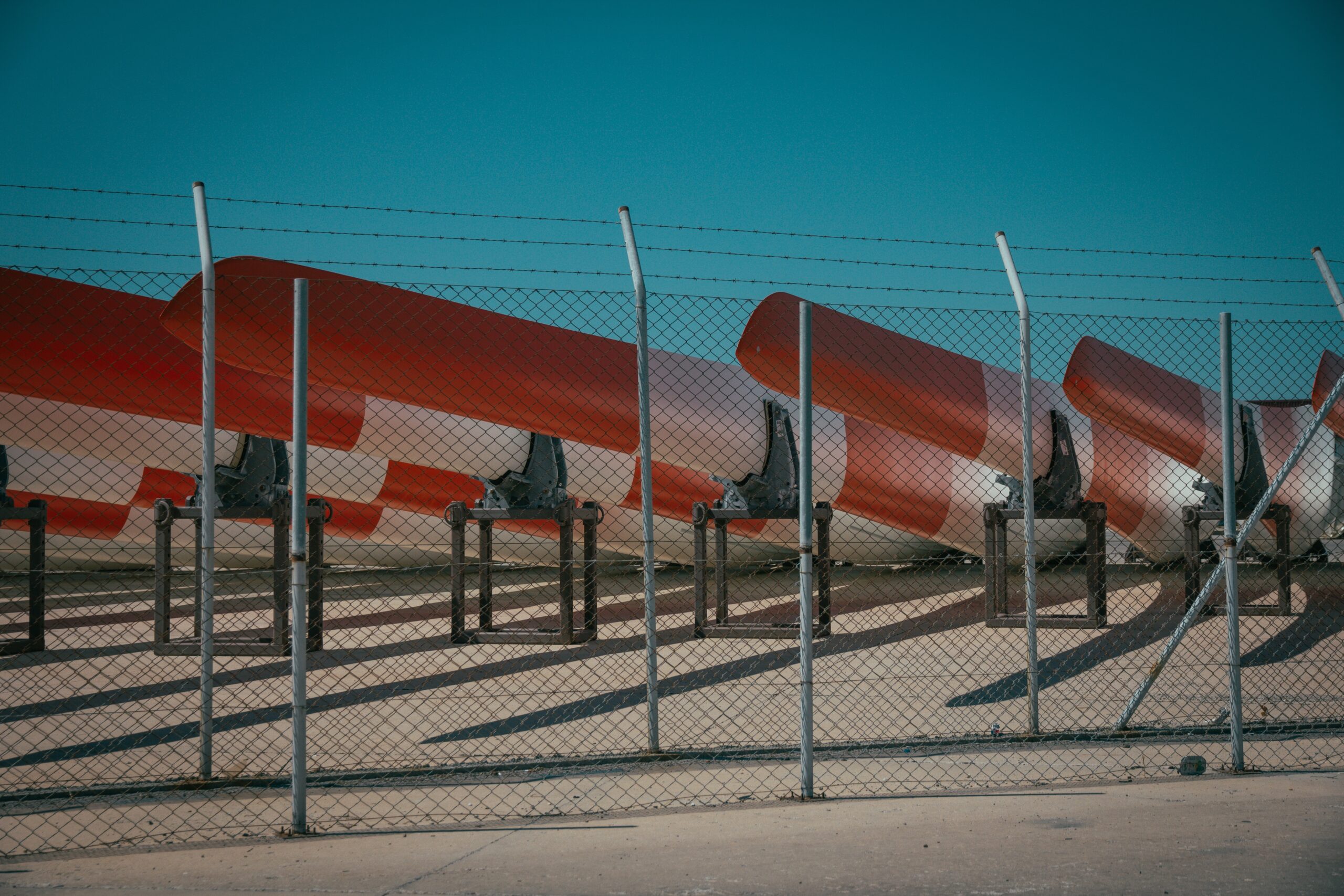
Every layer of electronic perimeter security — cameras, intrusion sensors, radar, access control — implicitly assumes there is a defined boundary an intruder must cross. Fencing is what makes that assumption physically true. It is often the least discussed layer of a security system and, at many sites, the one that actually deters the largest share of casual intrusion attempts before any sensor is triggered.
Fence Types and What They’re Actually For
Chain-link fencing remains common because it is inexpensive and allows clear sightlines for cameras and patrol staff, but it offers minimal delay against a determined climber and provides hand and foot holds unless modified. Welded mesh and palisade fencing increase climb resistance through smaller mesh apertures or pointed pales, at higher cost. Anti-climb mesh — small-aperture rigid mesh panels — is specifically designed to deny the toe-holds that make chain-link climbable, and is increasingly specified for critical-infrastructure and high-security commercial sites.
Height, Overhang and Toppings
Fence height alone is a weak predictor of effectiveness without considering toppings and overhangs. An outward-angled overhang at the top of a fence, combined with barbed wire, razor wire (concertina) or anti-climb spikes, is far more effective at deterring a climb attempt than simply adding height to a vertical fence, since a climber can often scale a taller fence more easily than negotiate an overhang. Site designers weigh these choices against local regulations, which frequently restrict razor wire and certain topping types in commercial or residential-adjacent settings.
Fence-Mounted Detection
Fencing increasingly does double duty as a sensor platform. Fence-mounted vibration and strain sensors detect climbing, cutting, or lifting attempts by analyzing the mechanical disturbance signature along the fence line, while fiber-optic sensing cable run along or woven into the fence fabric can provide continuous, zone-located detection across long perimeters without discrete point sensors. These systems are only as good as the fence they’re mounted on: a poorly tensioned or structurally weak fence generates noisy signals and more false alarms.
Buffer Zones and Clear Zones
Effective perimeter design pairs the fence itself with a clear zone on both sides — vegetation and obstruction-free space that improves camera and sensor performance, removes objects that could be used to breach or climb the fence, and gives responding personnel a clear line of approach. A well-specified fence undermined by overgrown vegetation or nearby objects that provide a climbing aid loses much of its designed effectiveness.
Conclusion
Fencing rarely gets the attention that cameras and access control systems do in security planning discussions, but it remains the physical layer that every other perimeter technology depends on. A camera cannot delay an intruder, and a sensor only detects what is already happening; a well-specified fence, topping and clear zone combination is what actually buys the time those other systems are designed to use.
Leave a Reply