Category: Articles & Analysis

Long-form guides, explainers, comparisons, analysis and sector assessments.

  • Thermal Cameras Beyond Perimeter Protection

    Thermal Cameras Beyond Perimeter Protection

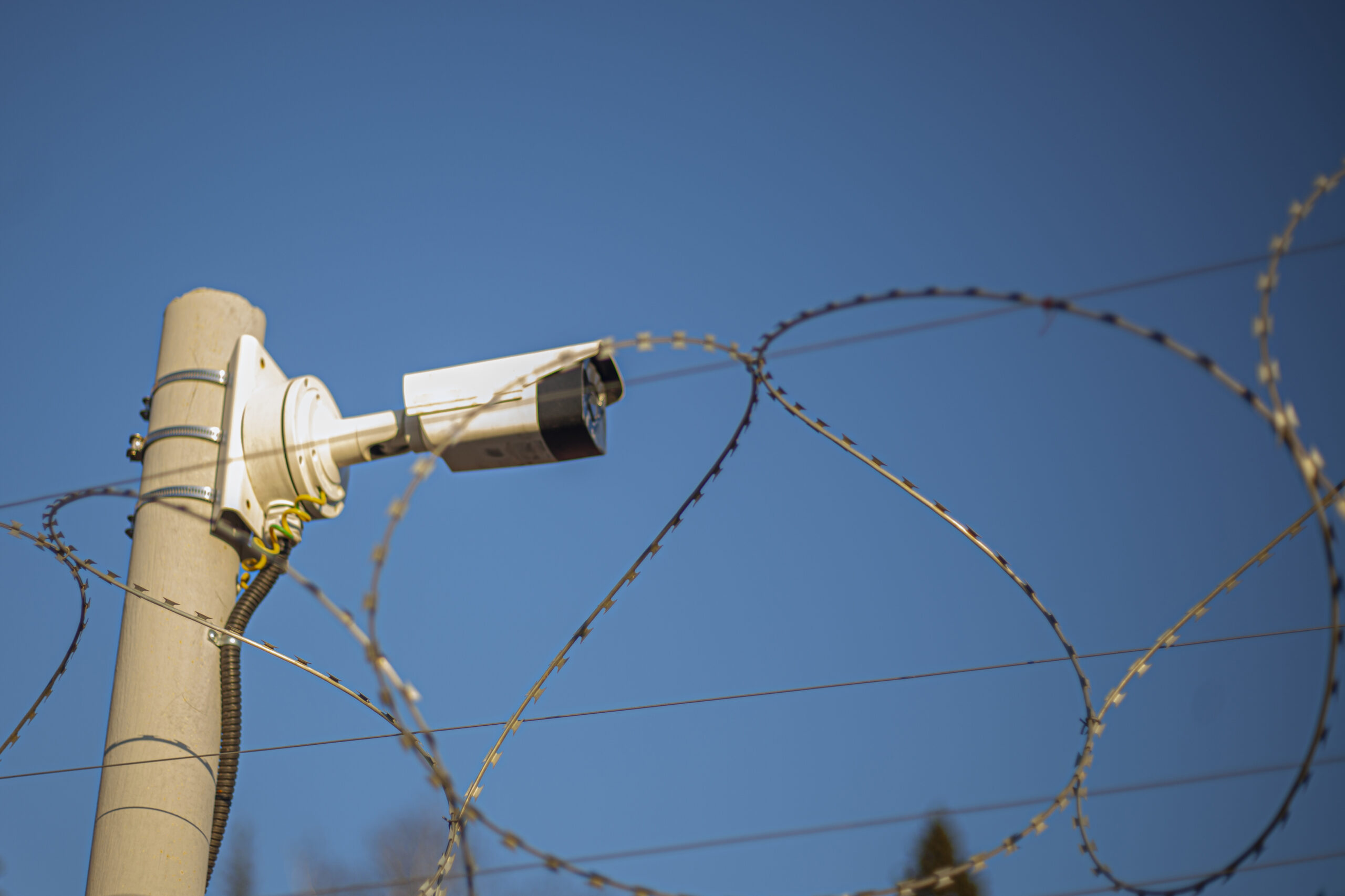
    Thermal cameras have long been associated with a single job in physical security: spotting intruders along a dark perimeter where visible-light cameras struggle. That reputation undersells the technology. Because thermal imaging detects heat rather than reflected light, it has found a growing set of applications well beyond perimeter intrusion detection.

    Why Thermal Works Where Visible Light Fails

    A thermal, or infrared, camera does not capture light in the way a conventional camera does. It measures the infrared radiation every object emits based on its temperature and converts that data into a visible image. Because it does not rely on ambient or artificial light, a thermal camera performs consistently in total darkness, through smoke, light fog and other conditions that degrade visible-light imaging, which is the original basis for its use along fences and open perimeters.

    Early Fire and Overheat Detection

    Because thermal cameras measure temperature directly, they can identify a developing fire or equipment overheating before flames or smoke are visible to a conventional camera or even to a person on site. This has made thermal imaging a growing complement to traditional smoke and heat detectors in settings like waste and recycling facilities, warehouses storing combustible materials, and outdoor stockpiles at industrial sites, where a slow-building fire in a large pile of material can go undetected by point smoke detectors for hours.

    Industrial Condition Monitoring

    Fixed thermal cameras are increasingly used for continuous monitoring of industrial equipment such as electrical switchgear, transformers, motors and bearings, where an abnormal temperature rise can be an early indicator of a developing fault. Unlike a handheld thermal camera used for periodic inspection, a fixed unit can watch critical equipment continuously and trigger an alert as soon as a reading crosses a defined threshold, extending thermal imaging from a security tool into a predictive-maintenance and safety tool.

    Health and Occupancy Screening

    Thermal cameras also saw expanded use for elevated-temperature screening at building entrances, though public health authorities and manufacturers alike have cautioned that a thermal camera at a doorway is a coarse screening tool rather than a diagnostic one, since ambient temperature, camera calibration and where on the face the reading is taken all affect accuracy. More durable applications in this space include monitoring processing areas in food and pharmaceutical facilities, where consistent thermal conditions matter for product safety and equipment performance.

    Combining Thermal With Analytics

    Modern thermal cameras increasingly pair with the same AI-based analytics used on visible-light cameras, applying object classification and behavioral detection to the thermal image. This combination is particularly useful for outdoor perimeter and critical-infrastructure sites, where a thermal-plus-analytics camera can both detect a person or vehicle in total darkness and classify what it has detected, reducing false alarms compared with older thermal systems that could only flag a change in the scene without saying what caused it.

    FAQ

    Can thermal cameras replace smoke detectors? No. Thermal cameras are generally deployed as a complement to, not a replacement for, code-required smoke and heat detection systems, particularly useful for large or open areas where point detectors are impractical or too slow.

    Do thermal cameras work in daylight? Yes. Thermal imaging is based on heat rather than visible light, so it functions in bright daylight, complete darkness and through smoke or light fog alike, unlike visible-light cameras.

    Are thermal cameras accurate for measuring exact temperatures? Radiometric thermal cameras can provide calibrated temperature readings suitable for industrial monitoring, but accuracy depends on calibration, distance and environmental conditions, and screening-grade thermal cameras are generally not precise enough for medical-grade temperature measurement.
  • AI Video Analytics: What Actually Works?

    AI Video Analytics: What Actually Works?

    Marketing around AI video analytics often implies a single, uniformly capable technology. In practice, “AI video analytics” covers a range of distinct tasks with very different levels of real-world maturity, from tasks that are now routinely reliable to others that remain error-prone outside controlled conditions. Understanding that range matters for anyone deciding what to actually deploy and trust.

    Well-Established: Object Classification and Counting

    Detecting and classifying broad object categories, such as person, vehicle or bag, is now a mature capability across most commercial video analytics products, built on deep-learning models trained on large, diverse image datasets. People counting and basic line-crossing or zone-intrusion detection built on this foundation are generally reliable in typical lighting and camera-placement conditions, which is why these features have become standard rather than premium additions on many camera and VMS platforms.

    Increasingly Reliable: License Plate Recognition

    Automatic license plate recognition has matured considerably and performs well under favorable conditions: adequate lighting, a reasonably direct camera angle and moderate vehicle speed. Performance still degrades with poor lighting, extreme angles, dirty or damaged plates, and regional plate formats the underlying model was not trained on, which is why plate-recognition systems are typically deployed with purpose-selected cameras and lenses rather than repurposed general-surveillance cameras.

    Mixed Results: Behavioral and Anomaly Detection

    Detecting behaviors such as loitering, fighting, or a person falling is harder than classifying static objects because it requires interpreting motion and context over time, and there is far less standardized training data for rare or unusual events than for common objects like people and cars. Vendors have made real progress here, but false-positive and false-negative rates for behavioral analytics remain noticeably higher than for basic object detection, and performance is more sensitive to camera angle, crowd density and scene complexity.

    Still Immature for Many Deployments: Facial Recognition at Scale

    Facial recognition accuracy has improved substantially in laboratory testing, but real-world performance depends heavily on image quality, angle, lighting and the size and diversity of the reference database being matched against. Independent testing bodies, including the U.S. National Institute of Standards and Technology, have documented accuracy differences across demographic groups for some algorithms, which is part of why facial recognition deployment in public and semi-public spaces continues to draw closer regulatory scrutiny than other forms of video analytics.

    The Common Thread: Conditions Matter More Than Marketing

    Across all of these categories, the gap between vendor demonstration performance and field performance usually comes down to conditions: camera placement, lighting, resolution, frame rate, scene complexity and how closely the deployment environment matches the data the underlying model was trained on. Security teams evaluating AI video analytics get more reliable results by piloting a product in their actual environment before wide deployment than by relying on vendor-reported accuracy figures alone, since those figures are typically generated under favorable test conditions.

    FAQ

    Which AI video analytics feature is most reliable today? Basic object classification — distinguishing people, vehicles and similar broad categories — is generally the most mature and consistently reliable analytics capability across vendors.

    Why do vendor accuracy claims sometimes not match real-world results? Vendor figures are often measured under favorable test conditions. Real deployments introduce variables like lighting changes, camera angle, weather and scene clutter that reduce accuracy compared with controlled testing.

    Should organizations pilot AI analytics before full deployment? Yes. Because performance is highly condition-dependent, testing analytics in the actual deployment environment is the most reliable way to validate accuracy before committing to a wide rollout.

  • From CCTV to Video Intelligence: The Evolution of Surveillance

    From CCTV to Video Intelligence: The Evolution of Surveillance

    The term CCTV, short for closed-circuit television, describes a technology that has changed almost beyond recognition since it first appeared in commercial security. What began as a closed loop of cameras feeding a bank of monitors and videotape recorders has become a distributed, searchable intelligence system. Tracing that evolution helps explain why the industry increasingly talks about “video intelligence” rather than simply surveillance.

    The Analog Era: Recording Without Searching

    Early CCTV systems recorded continuously to videotape, which had to be physically swapped, stored and, when needed, reviewed in real time by fast-forwarding through hours of footage. There was no way to search for a specific event other than knowing roughly when it occurred and manually scrubbing through the tape. Coverage was also limited by cost and cabling; each camera required a dedicated coaxial run back to a central recorder.

    Digital Video Recording and IP Cameras

    Digital video recorders (DVRs) replaced tape with hard drives, letting operators jump to a timestamp instantly rather than fast-forwarding physical media. The shift to IP cameras that transmit over standard computer networks further loosened the physical constraints of analog systems, allowing cameras to be added, moved or networked across sites without dedicated coaxial cabling, and enabling remote viewing over the internet for the first time.

    Video Management Systems Bring Structure

    As camera counts grew, video management system (VMS) software became necessary to organize feeds, manage storage, control user access and provide a single interface for monitoring and playback across potentially hundreds of cameras. VMS platforms introduced features like camera health monitoring, role-based access for operators, and integration with access control and alarm systems, turning a collection of individual cameras into a managed security infrastructure.

    Analytics Turn Video Into Searchable Data

    The more recent shift toward video intelligence comes from AI-based video analytics that extract structured information from footage: object classification, license plate recognition, people counting, and behavioral patterns such as loitering or wrong-way movement. Instead of reviewing footage sequentially, an investigator can now search by object type, color, direction of travel or, increasingly, natural-language description, retrieving relevant clips in seconds rather than hours. This is the functional definition of video intelligence: video that has been indexed and made queryable, rather than simply archived.

    From Reactive Review to Proactive Alerting

    Video intelligence has also shifted surveillance from a largely reactive tool, used mainly to investigate incidents after the fact, toward a proactive one that can generate real-time alerts for defined conditions, such as a person entering a restricted zone after hours or a vehicle stopped in a fire lane. That shift depends on the analytics running continuously against live video rather than only against recorded footage, which is part of why edge AI processing on cameras themselves has become an important complement to server-based video intelligence platforms.

    FAQ

    Is CCTV an outdated term? The term persists in everyday use, but modern systems typically use IP-based digital cameras, networked recording and AI-based analytics rather than the closed coaxial-cable loops the term originally described.

    What is the difference between a VMS and video analytics? A VMS manages recording, storage, access and playback across cameras. Video analytics is software, often running within or alongside a VMS, that interprets the content of the video to detect and classify objects and events.

    Does video intelligence require replacing existing cameras? Not always. Many video intelligence features can run as software layered on top of existing IP cameras and VMS platforms, though the accuracy and range of available analytics generally improve with cameras that include onboard processing.

  • Edge AI Cameras: How Cameras Became Intelligent Sensors

    Edge AI Cameras: How Cameras Became Intelligent Sensors

    For most of the history of video surveillance, a camera’s job ended at capturing an image. Analysis, if it happened at all, took place later, either by a person reviewing footage or by a server crunching video after the fact. Edge AI has changed that division of labor, moving detection and classification directly onto the camera itself, at the moment the image is captured.

    What ‘Edge’ Means in This Context

    In computing generally, the “edge” refers to processing that happens close to where data is generated, rather than in a centralized data center or cloud. For a security camera, that means running analytics on a chip inside the camera housing rather than streaming raw video to a server or the cloud for processing. The camera itself decides, in real time, whether a frame contains a person, a vehicle, a package left behind, or a fence line being crossed.

    From Motion Detection to Object Understanding

    Early “smart” cameras offered motion detection based on pixel change between frames, a technique that could not distinguish a person from a blowing tree branch or a passing cloud shadow. The generation of onboard neural processing units now built into many commercial cameras allows the device to run a trained deep-learning model directly on the video stream, classifying objects by type and often by attributes such as clothing color or vehicle type, without sending the video anywhere for that first pass of analysis.

    Why Processing at the Camera Matters

    Doing this work on the camera rather than centrally offers several practical advantages. It reduces the bandwidth needed to move video across a network, since only metadata or short alert clips, rather than continuous full-resolution streams, may need to travel to a central system. It also cuts the latency between an event happening and an alert being generated, which matters for use cases like perimeter intrusion or wrong-way vehicle detection where seconds count. Finally, running detection locally can reduce dependence on a live network or cloud connection, letting a camera continue generating alerts even if connectivity to a central server is temporarily lost.

    Metadata as the New Output

    Perhaps the more significant shift is that edge AI cameras produce structured metadata alongside video: timestamps, object classifications, bounding boxes, and sometimes attributes like direction of travel. That metadata can be indexed and searched far more efficiently than raw video, which is what makes features like natural-language video search and cross-camera object tracking practical at scale. In effect, the camera has become a sensor that reports both an image and a description of what it saw, rather than a device that only reports an image.

    Limitations Worth Understanding

    Edge processing is not a universal upgrade. Cameras with onboard AI chips generally cost more than conventional models, and the accuracy of onboard detection depends heavily on the quality and diversity of the training data behind the model, along with factors like camera placement, lighting and weather. Organizations evaluating edge AI cameras typically still pair them with a video management system capable of aggregating and correlating metadata across many devices, since a single camera’s local intelligence is most useful when it feeds into a broader security picture.

    FAQ

    Do edge AI cameras still send video to a server? Usually yes, for recording and human review, but the initial detection and classification happen on the camera, which can reduce how much video needs to be analyzed centrally in real time.

    Are edge AI cameras more accurate than server-based analytics? Not inherently. Accuracy depends on the underlying AI model and training data, not simply on where the processing happens. Edge processing is primarily a bandwidth, latency and resilience advantage.

    Can existing cameras be upgraded to edge AI without replacement? Some manufacturers offer firmware updates that add basic analytics to existing camera lines, but full onboard neural processing generally requires camera hardware built with a dedicated AI chip.

  • Security Screening Technologies Explained: X-Ray, CT and AI Detection Systems

    Security Screening Technologies Explained: X-Ray, CT and AI Detection Systems

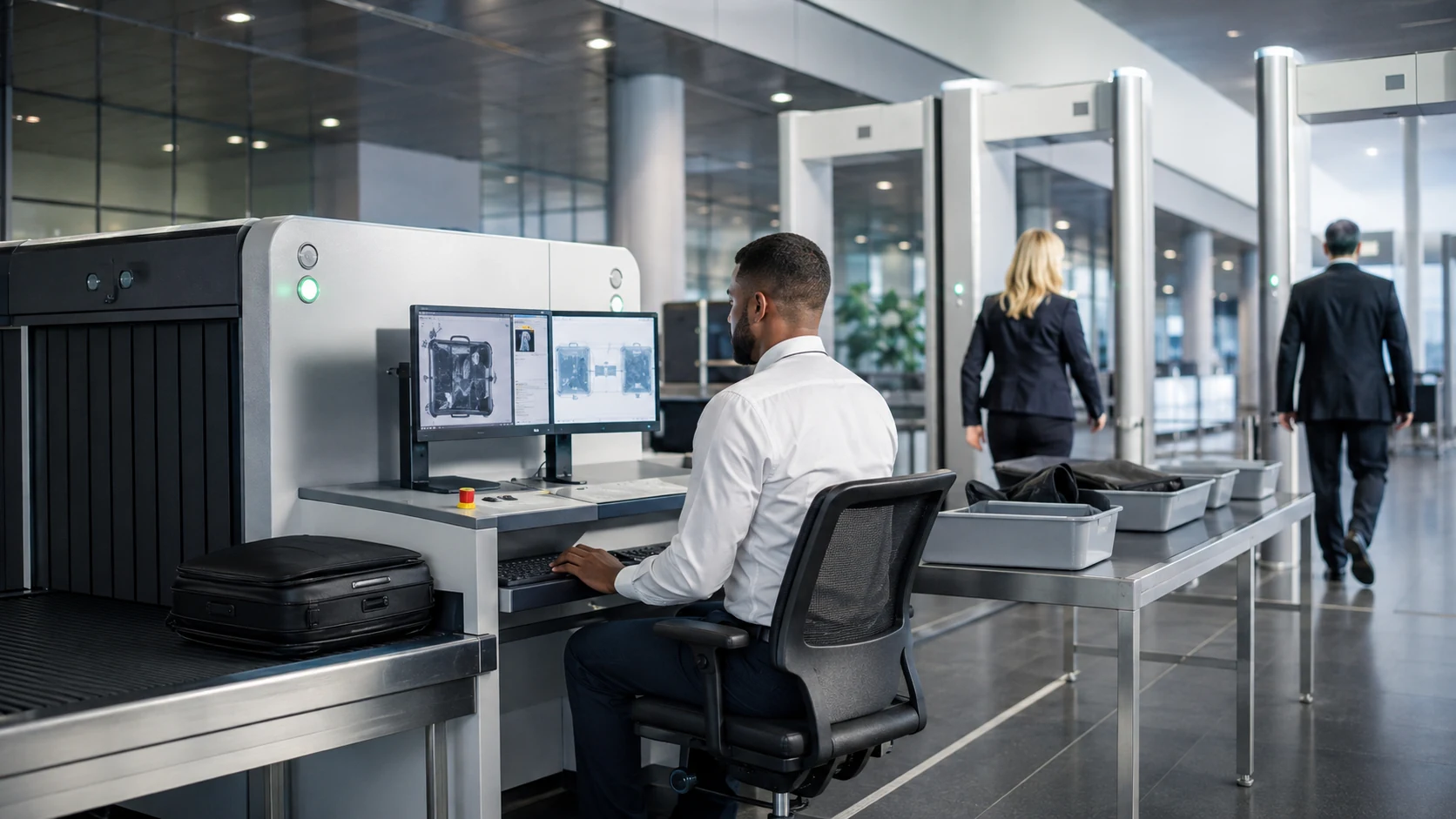
    Security screening sits at the entry point of airports, courthouses, stadiums, schools and corporate campuses, tasked with finding weapons, explosives and other prohibited items before they reach a protected space. The technology behind that job has moved well beyond the single-view X-ray machine, now combining several imaging and detection methods, often stitched together with AI-based image analysis.

    X-Ray Imaging: The Foundation

    Conventional X-ray screening remains the backbone of checkpoint security for bags and parcels. Dual-energy X-ray systems distinguish organic materials, such as explosives, from inorganic ones, such as metal, by measuring how differently two X-ray energy levels are absorbed by an object. Operators view color-coded images where organic, inorganic and mixed materials appear in different hues, helping them spot items that warrant a closer look.

    Computed Tomography Adds a Third Dimension

    Computed tomography (CT) scanning, long used in medical imaging, has moved into checkpoint security because it captures a full 3D image of a bag’s contents rather than a flat 2D projection. A CT scanner rotates an X-ray source and detector array around the object, reconstructing a volumetric image that can be rotated and examined from any angle. This additional depth of information is a major reason aviation security programs in the United States, the European Union and elsewhere have pushed to replace older 2D X-ray checkpoint lanes with CT-based lanes, since 3D imaging makes it easier to isolate the shape and density of a suspicious item without the operator needing to ask a traveler to remove it from the bag.

    Millimeter Wave and Body Scanning

    For screening people rather than bags, millimeter wave scanners have become the standard alternative to metal detectors at many checkpoints. These scanners bounce low-energy electromagnetic waves off the body and surrounding clothing, building an image that can reveal non-metallic items, such as ceramic weapons or plastic explosives, that a traditional walk-through metal detector would miss. Automated target recognition software increasingly processes that image directly, flagging areas of concern on a generic body outline rather than displaying a detailed image of the person, which addresses a long-standing privacy objection to earlier body-scanning technology.

    Where AI Fits Into Screening

    Artificial intelligence has entered checkpoint screening primarily as an assistant to human operators rather than a replacement for them. AI-based automatic threat recognition software, trained on large libraries of scanned images, highlights or outlines items in an X-ray or CT image that match the visual signature of prohibited items, such as firearms or explosive shapes. Vendors and regulators generally frame this as a way to reduce operator fatigue and inconsistency across long shifts, rather than as a fully autonomous decision system; a human screener typically still makes the final call on whether a flagged bag needs secondary inspection.

    Trace Detection and Complementary Methods

    Screening programs typically layer imaging technologies with trace detection, which identifies microscopic particles of explosive residue on a swab taken from a bag, laptop or hand. Some checkpoints also use chemical vapor detection to sample the air around a bag or person. These methods do not replace imaging but add a second, independent detection layer that can catch threats an X-ray or CT image alone might not clearly reveal, such as explosive residue on the outside of an otherwise unremarkable item.

    FAQ

    Is CT screening only used in aviation? No. While aviation checkpoints have driven much of the recent investment in CT-based screening, similar imaging systems are used in courthouses, government buildings, correctional facilities and some large venues.

    Does AI screening replace human operators? Not currently. AI automatic threat recognition tools are generally deployed to flag likely threats for a human operator to review, rather than to make autonomous accept/reject decisions.

    Are millimeter wave scanners safe? Millimeter wave technology uses non-ionizing radio frequency energy at power levels regulators consider safe for repeated screening, unlike ionizing technologies such as X-ray, which is why walk-through millimeter wave scanners are used directly on people while X-ray and CT are reserved for bags and cargo.

  • Biometric Access Control Compared: Fingerprint, Iris, Face and Vein Recognition

    Biometric Access Control Compared: Fingerprint, Iris, Face and Vein Recognition

    Biometric access control has moved from a specialist technology into a mainstream option for offices, data centers, airports and critical infrastructure sites. But “biometrics” is not one technology — fingerprint, iris, facial and vein-pattern recognition each rely on different physical traits, different sensors and different deployment trade-offs. Choosing the right modality, or combination of modalities, depends heavily on the environment, the threat model and how the system will be used day to day.

    Fingerprint Recognition

    Fingerprint readers remain the most widely deployed biometric modality because the sensors are inexpensive, compact and familiar to users from consumer smartphones. Most systems capture a digital image of the fingerprint ridge pattern and extract minutiae points — the specific locations where ridges end or split — to build a template for matching, rather than storing the raw image. Fingerprint readers perform well in controlled indoor environments but can struggle with dirty, wet, gloved or worn fingertips, which is a common consideration for industrial and outdoor sites.

    Iris Recognition

    Iris recognition captures the intricate pattern in the colored ring around the pupil using a near-infrared camera, converting the pattern into a mathematical template. Because the iris pattern is highly detailed and stable over a person’s lifetime, iris systems are often used where very high assurance is required, such as border control, data centers and other high-security facilities. Iris cameras typically require the user to look toward the sensor within a defined distance, which makes enrollment and enforcement more deliberate than a simple badge tap.

    Facial Recognition

    Facial recognition systems map geometric features of the face, or increasingly use deep-learning models to generate a numerical embedding of the face, and compare that embedding against enrolled templates. The major advantage of facial recognition for access control is speed and convenience: many systems can identify an authorized person without requiring them to touch a sensor or stop moving, which supports high-traffic entrances and touchless access goals. Accuracy can be affected by lighting conditions, camera angle, face coverings and image quality, and the technology has also drawn regulatory and public scrutiny over data protection and consent, which organizations need to factor into deployment plans.

    Vein Pattern Recognition

    Vein recognition, most commonly implemented as finger-vein or palm-vein scanning, uses near-infrared light to image the pattern of veins beneath the skin’s surface, since deoxygenated blood in veins absorbs infrared light differently than surrounding tissue. Because the vein pattern sits inside the body rather than on an exposed surface, it is difficult to capture or replicate without the cooperation of a live subject, which makes vein recognition attractive for high-security financial and data center environments concerned about spoofing. The trade-off is that vein scanners are typically more expensive than fingerprint or facial recognition hardware and are less commonly integrated into general-purpose access control platforms.

    Choosing the Right Modality

    In practice, the choice between modalities usually comes down to a handful of operational questions: How much throughput does the entrance need to support? Will users wear gloves, masks or personal protective equipment on site? Is the environment indoors and climate-controlled, or exposed to dirt, moisture and temperature swings? And what level of assurance does the asset being protected actually require? Many organizations end up deploying more than one modality across a site — for example, facial recognition for high-traffic general entrances and iris or vein recognition for a smaller number of high-security zones such as server rooms or vaults.

    Privacy and Data Protection Considerations

    Because biometric data is permanently tied to an individual and cannot be reset the way a password or badge can, organizations deploying any of these modalities need a clear policy for how templates are stored, encrypted, and eventually deleted, along with a legal basis for collecting biometric data that satisfies applicable regional privacy laws. Storing a mathematical template rather than a raw image, and keeping that template on a secure local device rather than in a shared cloud database, are common practices for reducing the impact of a potential breach.

  • Nuclear Power Plant Security Technology

    Nuclear Power Plant Security Technology

    Nuclear power plants operate under the strictest physical and cyber-physical security requirements of any commercial facility class, governed by dedicated regulatory frameworks that treat security as inseparable from safety. The technology stack protecting a nuclear generating station reflects that reality: multiple redundant, independently monitored layers designed so that no single failure, whether mechanical, electronic or human, can compromise the protection of reactor systems, spent fuel and special nuclear material.

    Layered Physical Protection

    Nuclear facilities are typically organized around concentric security zones, moving from an owner-controlled area through a protected area to vital areas immediately surrounding reactor and safety systems. Each boundary is reinforced with hardened barriers, vehicle arrest systems capable of stopping a loaded truck, and intrusion detection that combines microwave, infrared and fiber-optic perimeter sensors to minimize single-technology blind spots. Armed, highly trained security officers supplement these systems, with response times and staffing levels dictated by regulatory design-basis threat requirements rather than site-specific risk tolerance alone.

    Access Control and Insider Threat Programs

    Access to vital areas requires multi-factor identity verification, typically combining biometric authentication with credentialed access control and continuous personnel reliability screening. Because insider access represents one of the most difficult threat vectors to detect through perimeter security alone, nuclear operators maintain dedicated insider threat programs that monitor behavioral indicators, enforce two-person rules for access to the most sensitive areas, and require ongoing psychological and background reassessment of cleared personnel.

    Video Surveillance and Command Integration

    Video surveillance at nuclear sites integrates with access control, intrusion detection and radiological monitoring within a unified command-and-control platform, giving security operations centers a consolidated operational picture rather than a collection of disconnected feeds. Redundant power supplies and hardened communications ensure that surveillance and detection systems remain operational even during grid disturbances or attempted sabotage of supporting infrastructure.

    Cyber-Physical Convergence

    Modern nuclear security programs increasingly treat cybersecurity as inseparable from physical protection, given that digital instrumentation and control systems now govern safety-critical functions once managed by purely analog equipment. Regulatory frameworks require nuclear operators to secure both operational technology networks and the physical pathways — cabling, network closets, remote terminals — through which those systems could be accessed, reflecting the recognition that a determined adversary may target the weaker of the two domains rather than confronting the stronger one directly.

    Counter-Drone and Airspace Monitoring

    Growing concern over small unmanned aircraft has pushed nuclear operators to add counter-UAS detection layers, combining radar, radio-frequency and electro-optical sensors to identify and track drones approaching restricted airspace above and around generating stations, an area where regulatory guidance continues to evolve as the underlying technology matures.

  • Public Transit and Bus Depot Security Technology

    Public Transit and Bus Depot Security Technology

    Public transit systems present a distinct security challenge: they must remain open, accessible and fast-moving for millions of daily riders while simultaneously protecting vehicles, depots, stations and passengers from crime, vandalism and, in rarer cases, deliberate attack. Unlike a controlled-access facility, a transit network is deliberately porous by design, which shapes the technology choices operators make.

    Onboard and Station Video Surveillance

    Modern transit fleets deploy multi-camera systems on every vehicle, covering the driver compartment, passenger cabin, doors and exterior approach zones, with footage typically recorded locally and synchronized to a central video management system whenever the vehicle returns to a depot or passes through a wireless upload zone. Stations and platforms are covered by fixed and pan-tilt-zoom cameras integrated with the same VMS, allowing operators to follow an incident across a rider’s entire journey rather than reviewing disconnected clips from separate systems.

    Depot and Yard Perimeter Protection

    Bus and rail depots concentrate high-value rolling stock, fuel or charging infrastructure, and maintenance facilities in a single location, making perimeter security a priority distinct from the open transit network itself. Depots typically combine fenced perimeters, access-controlled gates, license plate recognition for fleet and visitor vehicles, and video analytics tuned to detect loitering or unauthorized entry after operating hours, when yards are otherwise unattended.

    Real-Time Operator Communication and Panic Alerts

    Driver safety technology has become a growing focus as assaults on transit operators have drawn regulatory and labor attention. Systems now commonly include silent panic buttons that alert dispatch and trigger live video and audio streaming from the vehicle, GPS-based location tracking integrated with computer-aided dispatch, and in some deployments, driver-facing barriers combined with intercom systems that let control center staff communicate directly with passengers without requiring the driver to intervene.

    Access Control for Employee and Maintenance Areas

    Depots and control centers restrict access to maintenance bays, parts storage and operations rooms using badge-based or biometric access control, often layered with visitor management systems for contractors and vendors who require temporary, auditable access to secure areas.

    Integration With City-Wide Public Safety Systems

    Because transit incidents frequently require a coordinated response involving both transit security and municipal police, many agencies now integrate their video and alert systems with city-wide public-safety platforms, allowing real-time video sharing and location data to reach first responders faster than a traditional phone-based incident report would allow.

  • Agriculture and Food Processing Facility Security Technology

    Agriculture and Food Processing Facility Security Technology

    Agricultural and food processing facilities occupy a growing place within critical infrastructure protection frameworks, reflecting the recognition that disruption to food production, processing or distribution can cascade into public health and supply-chain consequences far beyond a single site. Security technology for this sector must account for expansive rural footprints, biosecurity requirements and food-safety regulation alongside conventional theft and sabotage concerns.

    Perimeter Security Across Large, Remote Footprints

    Farms, feedlots and processing complexes often span hundreds or thousands of acres, making traditional fenced-perimeter models impractical for the outer boundary. Operators increasingly rely on a combination of strategically placed fencing around high-value structures — processing plants, chemical storage, equipment yards — supplemented by long-range video analytics, thermal cameras and, on the largest sites, radar systems capable of detecting vehicle or personnel intrusion across open land where fixed cameras alone cannot provide continuous coverage.

    Biosecurity-Driven Access Control

    Livestock and processing facilities implement access control designed as much to prevent disease introduction as to prevent theft or sabotage. Controlled entry points, vehicle wash stations, and credentialed access for employees and visitors work alongside traceability systems that log who entered which zone and when, supporting both security investigations and biosecurity incident response if a disease outbreak requires rapid contact tracing.

    Video Surveillance for Food Safety and Loss Prevention

    Processing plants deploy video surveillance across production lines, loading docks and cold storage areas, serving a dual purpose: deterring and investigating theft or tampering, and providing a documented record that supports food-safety compliance and audit requirements under regulations that increasingly expect traceable oversight of handling and processing conditions.

    Supply Chain and Cold Chain Monitoring

    Security technology extends into the cold chain itself, with sensor-based monitoring of temperature, humidity and door-open events on refrigerated storage and transport, integrated with alerting systems that flag deviations before spoiled product reaches distribution. GPS tracking on transport vehicles adds a security layer against cargo theft, a persistent risk for high-value agricultural shipments moving through less-monitored rural transit corridors.

    Cyber-Physical Risk in Modern Agricultural Operations

    As precision agriculture equipment, automated processing lines and remote monitoring systems proliferate, agricultural operators face a growing cyber-physical risk profile similar to other industrial sectors, with internet-connected control systems for irrigation, feed distribution and processing equipment representing a potential attack surface that security planning increasingly has to account for alongside traditional physical threats.

  • Telecommunications Infrastructure Security Technology

    Telecommunications Infrastructure Security Technology

    Telecommunications infrastructure — cell towers, central offices, data exchange facilities and the fiber networks connecting them — forms a foundational layer of critical infrastructure that other sectors depend on for their own operations, from emergency services dispatch to financial transactions to the remote monitoring systems used across utilities and industrial facilities. Securing this infrastructure combines dispersed-site physical protection with facility-level access control and a growing emphasis on supply-chain and hardware integrity.

    Securing Widely Distributed, Often Unmanned Sites

    Cell towers and remote equipment shelters are typically unmanned and geographically dispersed, making them attractive targets for copper and equipment theft as well as vandalism. Operators increasingly deploy solar-powered remote monitoring systems combining motion-activated cameras, door and cabinet intrusion sensors, and cellular or satellite backhaul for alerting, since many tower sites lack reliable wired connectivity of their own for security reporting.

    Central Office and Data Exchange Access Control

    Central offices and carrier-neutral data exchange facilities, where multiple network operators interconnect, apply layered access control similar to data center security: biometric or multi-factor authentication at building and cage-level entry points, mantrap vestibules to prevent tailgating, and comprehensive video surveillance covering both public and restricted areas. Because these facilities often host equipment belonging to multiple competing carriers within the same building, access segmentation between tenant spaces is a particular design priority.

    Fiber Route and Cable Landing Protection

    Long-haul fiber routes and cable landing stations, where undersea cables come ashore, represent concentrated points of failure for national and international connectivity. Security for these assets combines physical protection of landing station buildings with monitoring of the buried or undersea cable routes themselves, an area where distributed acoustic sensing technology has found growing application for detecting unauthorized digging, dragging anchors or other activity near cable paths before physical damage occurs.

    Network Operations Center Security

    Network operations centers, which provide real-time monitoring and control over telecommunications infrastructure, require the same access control and video surveillance rigor as other critical control-room environments, given that a compromise of NOC systems could allow an attacker to disrupt network operations directly rather than through physical damage to remote infrastructure.

    Supply Chain and Equipment Integrity

    Telecommunications security increasingly extends into supply-chain risk management, with regulatory scrutiny in multiple countries focused on the origin and integrity of network equipment given concerns that compromised hardware or firmware could introduce backdoors into national communications infrastructure, adding a procurement and vendor-vetting dimension to what has traditionally been a purely physical and operational security discipline.