Category: Articles & Analysis

Long-form guides, explainers, comparisons, analysis and sector assessments.

  • Is Traditional Access Control Becoming Obsolete?

    Is Traditional Access Control Becoming Obsolete?

    Why the old model is under pressure

    Legacy systems built around isolated doors, trusted networks and proprietary controllers are increasingly difficult to integrate with identity platforms, mobile credentials and modern cybersecurity controls. The shift is from door-centric security to policies that consider identity, role, device and context.

    Mobile credentials and digital identity

    NFC, Bluetooth Low Energy and wallet credentials can reduce physical card issuance and simplify remote provisioning and revocation. Device authentication can add protection beyond a passive badge.

    OSDP and secure reader communication

    Secure bidirectional reader protocols such as OSDP add encryption, supervision and remote configuration. New projects should treat secure reader-to-controller communication as a baseline requirement.

    Cloud, hybrid and integration

    Cloud management can simplify multi-site administration while resilient controllers continue making local decisions during outages. Access systems increasingly connect with video, visitor management, HR and security operations workflows.

    A practical modernization path

    Organizations should inventory readers, controllers, credentials, software and network dependencies, then address unsupported software, insecure communications and shared credentials before cosmetic upgrades.

    Conclusion

    Traditional access control is not obsolete, but isolated and weakly protected assumptions are. Gradual modernization can improve security and usability without replacing every door at once.

  • Digital Twins for Physical Security Operations

    Digital Twins for Physical Security Operations

    Digital twins are increasingly being used to create a live virtual representation of buildings, campuses and critical infrastructure. In physical security, the value of a digital twin is not the 3D model itself. It is the ability to connect that model to real devices, alarms, identities and operational data.

    How the Technology Works

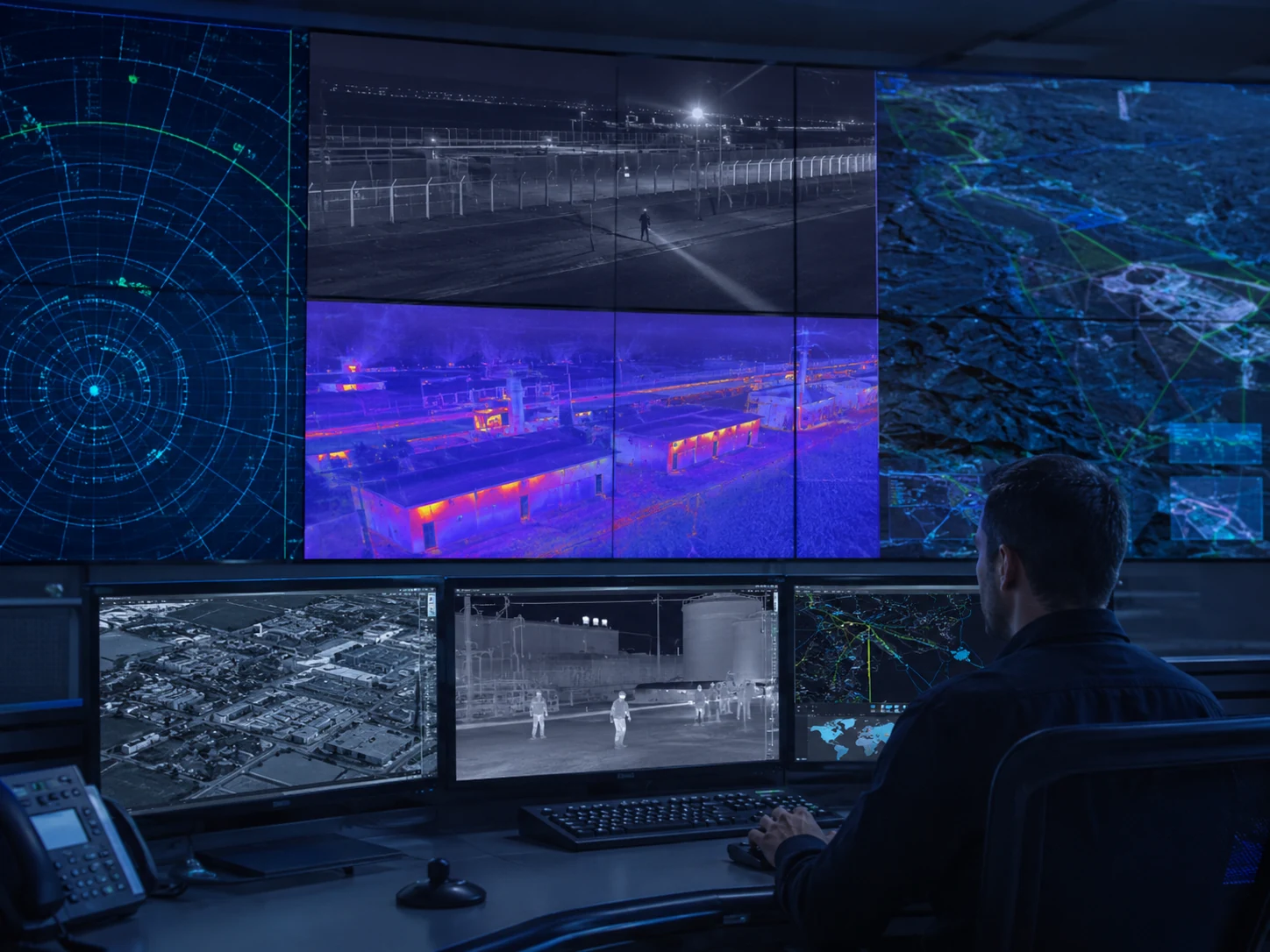
    A security digital twin can display cameras, doors, intrusion zones, fire devices, intercoms, sensors and critical assets in their actual spatial context. When an alarm occurs, the operator sees where it is happening and what systems are nearby instead of interpreting a device name from a list.

    The concept becomes more powerful when live data is added. Door status, camera health, occupancy, environmental conditions and maintenance state can all be visualized on the same model. This turns a static design file into an operational interface.

    Operational Considerations

    Incident response is an obvious use case. A perimeter alarm can highlight the affected zone, show the nearest cameras, display access routes and identify nearby personnel. During an evacuation, the model can combine fire information, occupancy data and route status to support command decisions.

    Digital twins can also help before an incident. Security planners can simulate camera coverage, evaluate blind spots, review guard routes and test the effect of new barriers or access points. The model becomes a shared environment for design, operations and training.

    Integration is the difficult part. Buildings often contain systems from many vendors using different protocols and naming conventions. A digital twin is only as useful as the data connected to it. Device identifiers, floor plans and asset records must be maintained as the facility changes.

    Deployment and Risk

    Performance and cybersecurity must also be considered. A detailed 3D environment can require significant computing resources, and connections to operational systems create a sensitive integration layer. Access to the twin should be role-based and audited.

    For large infrastructure, geographic information systems and digital twins are beginning to overlap. A single operational model may include buildings, perimeter sensors, pipelines, fiber sensing, rail corridors and remote substations.

    Conclusion

    Digital twins will not replace VMS, access control or command-and-control software. They are more likely to become a spatial interface above those systems. When designed well, they reduce cognitive load by showing operators not just what alarmed, but where it is, what surrounds it and what actions are available.

  • Video Surveillance Storage: How Much Storage Do You Really Need?

    Video Surveillance Storage: How Much Storage Do You Really Need?

    Storage is one of the largest cost components in a video surveillance system, yet it is often estimated with oversimplified assumptions. Real requirements depend on bitrate, frame rate, resolution, compression, scene complexity, recording mode, redundancy and retention policy.

    How the Technology Works

    The basic calculation is straightforward. A camera producing an average bitrate of 4 megabits per second generates roughly 43 gigabytes per day before overhead. Multiply that by the number of cameras and retention days, and storage grows quickly.

    Average bitrate is more useful than resolution alone. A 4K camera does not always use four times the storage of a lower-resolution camera because modern codecs, frame rate and scene activity have major effects. A quiet corridor may compress extremely well, while a tree-filled outdoor scene with rain and movement can require much more bandwidth.

    Operational Considerations

    Variable bitrate is common because it allocates more data to complex scenes and less to static ones. This improves efficiency but makes capacity planning dependent on realistic average and peak values. Integrators should use field measurements where possible rather than rely only on nominal manufacturer figures.

    Recording policy can reduce storage dramatically. Continuous recording is appropriate for many critical environments, but some cameras may use motion-based or event-based recording. Pre-event and post-event buffers preserve context while avoiding continuous high-bitrate storage in low-risk areas.

    Retention should be driven by operational need and regulation. Keeping every camera for 90 days because storage is available may be unnecessary. Different camera groups can have different retention periods. Critical entrances may need longer retention than low-risk internal spaces.

    Deployment and Risk

    Redundancy also consumes capacity. RAID, replication, failover recording and backup must be included in the design. Usable storage is always lower than raw disk capacity.

    Cloud storage introduces additional variables such as upload bandwidth, egress charges and subscription tiers. Hybrid systems may keep recent high-resolution video locally and archive selected evidence to the cloud.

    A good storage design includes a safety margin and monitoring. Actual bitrate should be reviewed after commissioning, and capacity alerts should warn administrators before retention drops below policy.

    Conclusion

    The objective is not to buy the largest array possible. It is to create a documented storage model that matches camera behavior, evidence requirements and resilience goals. Accurate calculation can save substantial cost while ensuring that critical video is available when an investigation begins.

  • Cloud VMS vs On-Premise VMS

    Cloud VMS vs On-Premise VMS

    Video management systems are increasingly available as cloud services, traditional on-premise platforms or hybrid combinations. The correct choice depends on scale, connectivity, cybersecurity policy, retention requirements and how much operational control the organization wants to keep locally.

    How the Technology Works

    An on-premise VMS places recording servers, databases and management software inside the organization’s infrastructure. This provides direct control over storage and network architecture. It can be attractive for high-bandwidth sites, long retention periods and facilities with strict data-residency requirements.

    Cloud VMS shifts more of the management layer to hosted infrastructure. Cameras may connect directly to the service or through local gateways. Software updates, remote access and multi-site administration are usually simpler because the platform is operated as a service.

    Operational Considerations

    Bandwidth is a key design issue. Sending full-resolution continuous video to the cloud can be expensive or impractical at large sites. Many cloud architectures therefore record locally and upload events, lower-resolution streams or selected footage. This hybrid model reduces WAN dependence while preserving centralized management.

    Cloud services can offer rapid deployment and predictable subscription costs, but recurring fees should be compared with the lifecycle cost of local servers, storage, operating systems, maintenance and upgrades. The cheapest model depends on camera count, bitrate and retention.

    Cybersecurity responsibility changes rather than disappears. A reputable cloud provider can operate strong infrastructure and patch services quickly, but the customer remains responsible for device credentials, user permissions, network configuration and governance. On-premise systems provide control but also place more maintenance responsibility on internal teams.

    Deployment and Risk

    Resilience should be designed explicitly. What happens if the internet connection fails? Can cameras continue recording? Can local operators still view critical video? A cloud-first system should define offline behavior before it is deployed in a critical environment.

    Hybrid VMS is becoming a common enterprise strategy. Local storage provides continuity and bandwidth efficiency, while cloud services provide centralized health monitoring, remote access, analytics and fleet management.

    Conclusion

    There is no universal winner. Single-site critical facilities may favor local control. Distributed organizations may benefit greatly from cloud management. The best architecture is based on operational requirements and risk, not on a blanket preference for either cloud or on-premise technology.

  • Multispectral Cameras for Security Applications

    Multispectral Cameras for Security Applications

    Visible-light cameras are excellent when there is enough illumination and contrast, but security environments are rarely ideal. Multispectral systems combine information from different parts of the electromagnetic spectrum to improve detection, classification and situational awareness.

    How the Technology Works

    The most common security combination is visible and thermal imaging. A visible sensor provides detail, color and identification information, while a thermal sensor detects heat differences that remain useful in darkness and many low-contrast conditions. When the two views are calibrated, operators can switch between them or display fused imagery.

    Near-infrared imaging is another tool. Many conventional surveillance cameras already use near-IR sensitivity for night mode. More specialized systems may combine visible, near-IR and short-wave infrared to reveal materials or conditions that are difficult to distinguish with ordinary color video.

    Operational Considerations

    Thermal imaging is particularly valuable for perimeter security because it does not depend on reflected visible light. A person can often be detected against a background at night without floodlights. Thermal cameras can also support temperature-based monitoring in industrial environments when radiometric measurement is available.

    No spectrum is perfect. Thermal cameras can lose contrast when the target and background reach similar temperatures. Heavy rain, certain atmospheric conditions and glass can affect performance. Visible cameras can provide details that thermal sensors cannot, such as clothing color or readable signage.

    Sensor fusion addresses these weaknesses. Radar can provide range and speed, thermal can provide robust detection, and visible video can provide verification. Multispectral cameras fit naturally into this layered architecture.

    Deployment and Risk

    Optics and alignment are important. Different wavelengths require different lens materials and focus characteristics. A dual-sensor device must be designed so that both views correspond accurately enough for operators and analytics.

    Multispectral systems are increasingly relevant in airports, energy facilities, borders, ports, data centers, industrial plants and remote infrastructure. They are especially useful where lighting cannot be guaranteed or where detection must continue through day-night transitions.

    Conclusion

    The right question is not whether multispectral is “better” than visible imaging. It is whether the additional spectrum solves a specific weakness in the target environment. When it does, multispectral sensing can dramatically improve resilience and reduce dependence on perfect lighting.

  • Low-Light Cameras: Sensor Size, Aperture and AI Enhancement

    Low-Light Cameras: Sensor Size, Aperture and AI Enhancement

    Low-light surveillance is often marketed with impressive nighttime images, but camera performance is governed by basic optics and sensor physics. Understanding sensor size, aperture, shutter speed, noise and illumination helps buyers distinguish real performance from aggressive image processing.

    How the Technology Works

    A larger image sensor can collect more light, especially when resolution is not increased excessively. Pixel size also matters. Two cameras with the same megapixel count may perform very differently if one uses a substantially larger sensor.

    Lens aperture controls how much light reaches the sensor. A lower f-number generally allows more light, but aperture, depth of field and lens quality must be balanced. A bright lens cannot compensate for poor focus or incorrect field of view.

    Operational Considerations

    Shutter speed is another trade-off. Slower exposure can make a static scene appear bright but creates motion blur. A camera that produces a beautiful nighttime still image may fail to capture a recognizable moving person or vehicle. Security testing should therefore include moving targets.

    Noise reduction can improve appearance but may remove detail. Heavy temporal noise reduction can produce ghosting around moving objects. AI enhancement can reconstruct edges and suppress noise more intelligently, but it still cannot recover information that the sensor never captured.

    Infrared illumination remains a practical solution. Integrated IR LEDs or separate illuminators can provide consistent nighttime performance without visible light. However, reflective surfaces, insects, fog and nearby objects can cause overexposure or backscatter.

    Deployment and Risk

    Visible white light can provide color information that infrared cannot. Some modern cameras combine large sensors, bright lenses and controlled supplemental lighting to maintain color at very low illumination. This can be useful when clothing or vehicle color is important to an investigation.

    Low-light specifications should be treated cautiously because manufacturers may measure minimum illumination under different conditions. The best comparison is a controlled field test using the intended lens, scene and target speed.

    Conclusion

    For security designers, the lesson is simple: lighting is part of the surveillance system. Camera selection, scene illumination, target movement and analytics requirements should be engineered together. AI can improve a good image, but it does not eliminate the need for enough photons at the sensor.

  • License Plate Recognition: How Modern ALPR Systems Work

    License Plate Recognition: How Modern ALPR Systems Work

    Automatic license plate recognition, often called ALPR or ANPR, converts vehicle images into searchable plate data. It is widely used for gated facilities, parking, logistics, campuses, ports and investigations because vehicle identifiers can be processed much faster than manual video review.

    How the Technology Works

    A modern ALPR pipeline begins with image capture. The camera must freeze a moving vehicle clearly enough for the plate characters to be visible. Shutter speed, lens selection, infrared illumination and camera angle are therefore more important than raw megapixel count.

    The software then detects the plate region, corrects perspective where possible and uses optical character recognition to convert the image into text. Advanced models may also estimate plate country or region, vehicle type, color, make and direction of travel.

    Operational Considerations

    Environmental conditions create challenges. Headlights can overwhelm a poorly configured camera at night. Dirty or damaged plates reduce recognition quality. Motorcycles, stacked plates, unusual fonts and high vehicle speeds may require specialized configurations.

    ALPR systems should store confidence values and the original evidence image alongside recognized text. Operators need to see the plate that produced a match rather than trust the OCR string alone. A single misread character can create a false alert.

    For access control, ALPR can operate as a credential. A vehicle on an approved list can trigger a gate workflow, while an unknown plate can be routed to an intercom or guard station. Higher-security sites should combine the plate with another factor because plates can be copied or obscured.

    Deployment and Risk

    For investigations, the real value is search. Security teams can query when a vehicle entered, which gate it used and where else it appeared. Integration with VMS and access-control data creates a more complete timeline.

    Privacy and retention policies are important because plate data can reveal travel patterns. Organizations should define who can search the database, how long records are retained and whether data is shared outside the organization.

    Conclusion

    A successful ALPR deployment is a camera-engineering project as much as an AI project. Correct geometry, illumination and lane design determine recognition quality. When those fundamentals are right, ALPR becomes one of the most reliable and operationally useful forms of video analytics.

  • Facial Recognition in Security: Technology, Accuracy and Regulation

    Facial Recognition in Security: Technology, Accuracy and Regulation

    Facial recognition is one of the most capable and controversial technologies in modern security. It can speed identity verification, support controlled access and help investigators search authorized watchlists, but its use carries technical, legal and ethical risks that differ significantly from ordinary video analytics.

    How the Technology Works

    Most facial-recognition systems perform two related tasks. Verification compares a face against a claimed identity, such as a person presenting a credential at a secure entrance. Identification searches a captured face against a database to find possible matches. Identification is generally more demanding because the system may compare one image with thousands or millions of enrolled templates.

    Image quality is critical. Pose, lighting, motion blur, camera angle, occlusion and target size all affect matching performance. A high-performing algorithm cannot compensate for a camera that captures faces at extreme angles or insufficient resolution.

    Operational Considerations

    Accuracy should be evaluated using false-match and false-non-match rates rather than a single headline percentage. Security teams should also understand threshold settings. A stricter threshold may reduce false matches but increase the number of legitimate users who are rejected.

    Demographic performance has received significant scrutiny. Organizations should review independent test results, vendor documentation and applicable regulatory requirements before deployment. High-consequence decisions should not be based solely on an automated match.

    The safest operational model treats facial recognition as a decision-support tool. A match can prompt an authorized operator to review the evidence or request another authentication factor. This is very different from allowing an algorithm to make an irreversible decision without human oversight.

    Deployment and Risk

    Data governance is central. Facial templates are biometric data and require strong protection. Organizations need clear rules for enrollment, consent where required, retention, database access, sharing and deletion. A compromised password can be changed; a biometric characteristic cannot.

    Regulation is evolving globally, and requirements vary by jurisdiction and use case. Public-space identification, employee access and voluntary customer authentication may fall under different rules. Security planners should involve privacy and legal teams early rather than treating compliance as an afterthought.

    Conclusion

    Facial recognition can deliver real operational value when the use case is narrow, lawful and technically well designed. The best deployments combine high-quality capture, conservative thresholds, human verification, strong biometric governance and transparent policies.

  • Privacy-Preserving Video Surveillance

    Privacy-Preserving Video Surveillance

    Video surveillance creates a persistent tension between security objectives and personal privacy. Privacy-preserving surveillance seeks to reduce that tension by designing systems that collect, display and retain only the information necessary for a defined security purpose.

    How the Technology Works

    One approach is masking. Faces, bodies, license plates or private areas can be blurred for routine monitoring while authorized investigators retain controlled access to the original recording. Dynamic privacy masking can follow moving people instead of applying a fixed block to part of the image.

    Another approach is metadata-first analytics. A system can count people, detect occupancy or identify movement without storing identifiable imagery for every event. In some applications, anonymous object metadata provides enough information for operations while reducing exposure of personal data.

    Operational Considerations

    Edge processing can also improve privacy. If analytics run inside the camera, only event metadata or selected clips may leave the device. This is useful in environments where sending continuous video to a cloud service is undesirable.

    Retention is one of the simplest but most important controls. Organizations often keep video longer than operationally necessary because storage is available. A better policy defines retention by risk, legal requirement and business purpose. Routine video can expire automatically while incident footage is preserved under a separate evidence process.

    Access control within the VMS matters as much as camera placement. Operators should only see cameras and functions relevant to their role. Export rights, unmasking privileges and audit-log access should be restricted. Strong authentication and logging help deter misuse.

    Deployment and Risk

    Privacy by design also affects where cameras are installed. A camera intended to monitor a doorway should not capture neighboring private property if the scene can be adjusted. High-resolution cameras should not be used to collect more detail than the operational requirement justifies.

    Modern AI introduces new questions. Object detection is different from biometric identification. A system that recognizes “person” or “vehicle” may present a lower privacy risk than one that creates persistent identity profiles. Buyers should understand exactly what data a model creates and whether it can be linked to individuals.

    Conclusion

    Privacy-preserving surveillance is not weaker surveillance. Properly designed systems can still support incident response, investigations and safety while reducing unnecessary exposure. The goal is proportionality: collect the minimum information required, protect it carefully and make every use accountable.

  • Object Detection vs Object Classification vs Tracking

    Object Detection vs Object Classification vs Tracking

    Object detection, classification and tracking are often grouped together under the label “AI video analytics,” but they solve different problems. Understanding the distinction helps security teams specify systems and interpret performance correctly.

    How the Technology Works

    Object detection answers a basic question: where is an object in the image? A model identifies regions that are likely to contain a person, vehicle, bag or other trained object. The output is commonly represented as a bounding box with a confidence score.

    Classification answers another question: what is the object? Classification may distinguish a person from a car, or a truck from a motorcycle. In some systems, classification is performed on the entire frame; in surveillance, it is more often applied to objects that have already been detected.

    Operational Considerations

    Tracking connects detections across time. The software estimates that the person detected in one frame is the same person appearing in the next. Tracking is essential for functions such as direction analysis, loitering, dwell time, virtual tripwires and movement paths.

    A fourth concept, re-identification, attempts to determine whether an object seen by one camera is the same object seen by another. This is more difficult because viewpoint, lighting, clothing visibility and image quality can change significantly between cameras.

    Each stage introduces errors. If detection misses an object, classification and tracking cannot recover it. If tracking loses a target during occlusion, the system may create a new track ID when the target reappears. Security applications therefore need end-to-end testing rather than relying on a single advertised accuracy figure.

    Deployment and Risk

    Scene design matters as much as model quality. A distant person occupying only a few pixels cannot be classified reliably. Fast-moving vehicles may blur. Crowds create occlusion. Integrators should define minimum target sizes, lighting requirements and camera angles for the intended analytics.

    Metadata generated by these processes has become extremely valuable. A VMS can search by object class, color, direction or time without replaying every video stream. The result is faster investigation and more efficient event management.

    Conclusion

    For buyers, the key is to specify the outcome rather than a fashionable AI term. If the goal is to alert when vehicles stop in a restricted lane, detection and tracking may be enough. If the goal is to distinguish delivery trucks from passenger cars, classification becomes important. Matching the analytics pipeline to the operational question produces more reliable systems.