Category: News

Current, event-driven reporting, announcements and industry developments.

  • NVIDIA and Financial Partners Target $500 Billion for AI Infrastructure

    NVIDIA and Financial Partners Target $500 Billion for AI Infrastructure

    August 10, 2026 — NVIDIA announced partnerships with six financial firms intended to mobilize more than $500 billion of third-party capital for AI infrastructure over time.

    What happened

    NVIDIA said independent financing platforms with Apollo, BlackRock, Blackstone, Brookfield, Goldman Sachs and KKR were designed to mobilize more than $500 billion of third-party capital. The announcement describes a target over time; it is not the same as NVIDIA placing $500 billion into a completed fund or guaranteeing immediate chip purchases.

    Why it matters

    The structure is significant because it treats AI compute and supporting infrastructure as a financeable asset class. That could broaden access to capital while adding questions about utilization, collateral value, operating risk and the durability of demand.

    Security and infrastructure impact

    Security and resilience affect the value of financed infrastructure. Lenders and operators will need credible controls for asset tracking, facility access, cyber risk, downtime, insurance and recovery across long equipment and financing lifecycles.

    Sources

    ← Back to Technology News

  • DEF CON Franklin and National Rural Water Association Launch Water Watch Center for Small Utilities

    DEF CON Franklin and National Rural Water Association Launch Water Watch Center for Small Utilities

    DEF CON Franklin and the National Rural Water Association (NRWA) have launched the Water Watch Center, a program giving small water utilities direct access to cybersecurity support, the organizations announced at DEF CON 34 in Las Vegas.

    What’s New

    The Water Watch Center connects small water systems — those serving fewer than 10,000 people, which make up roughly 91% of the nation’s approximately 50,000 community water systems — with five managed detection and response providers: Defendify, Legato Security, L1 Secure, Rapid7 and Sentinel Technologies. The providers exchange threat information and patches through a shared collaboration mechanism and report findings to NRWA, which coordinates response for member utilities. DEF CON Franklin, a partnership between NRWA, the University of Chicago’s Cyber Policy Initiative and DEF CON, also offers a volunteer cyber task force that matches water systems with technologists who help harden OT and IT infrastructure.

    Why It Matters

    “NRWA is excited to establish the Water Watch Center to provide the tools our sector needs to assess, prepare for, and respond to cyberattacks,” said NRWA Chief Executive Officer Matthew Holmes. The launch follows what organizers described as one of the most widespread nation-state cyberattacks on U.S. water systems to date, and comes as small utilities with limited budgets and staff have struggled to access the kind of hands-on cybersecurity support larger utilities can afford.

  • EU Delays High-Risk AI Act Obligations While Biometric Surveillance Limits Stay in Force

    EU Delays High-Risk AI Act Obligations While Biometric Surveillance Limits Stay in Force

    July 27, 2026 — The EU’s Digital Omnibus on AI took effect, postponing the AI Act’s high-risk system compliance deadlines while transparency obligations and the ban on real-time public facial recognition by police remained in force.

    What happened

    High-risk requirements for standalone systems listed in Annex III were pushed to December 2, 2027, and requirements for most product-related high-risk AI systems were pushed to August 2, 2028. Real-time facial recognition by police in public spaces remains banned, with narrow exceptions for finding missing persons, preventing terrorist attacks or pursuing serious crimes, and deployers of emotion-recognition or biometric-categorization systems must inform people exposed to them.

    Why it matters

    Delaying high-risk obligations by roughly two years gives vendors and deployers of AI-based access control, video analytics and biometric systems significantly more runway to prepare compliance programs, while the narrower core prohibitions on real-time public facial recognition remain a hard line regulators are not relaxing.

    Security and infrastructure impact

    Security-technology vendors selling AI-based video analytics or biometric systems into the EU should track the distinction between the delayed high-risk obligations and the still-active transparency and facial-recognition-ban provisions, since compliance timelines now differ significantly by system category.

    Sources

    ← Back to Technology News

  • Anthropic Releases Claude Opus 5, Its New Flagship Model

    Anthropic Releases Claude Opus 5, Its New Flagship Model

    July 24, 2026 — Anthropic made Claude Opus 5 generally available, describing it as a model that approaches the intelligence of its top-tier system at roughly half the price of its predecessor.

    What happened

    Claude Opus 5 became the new default model on Claude Max and the strongest option on Claude Pro, offering a 1-million-token context window and an extended reasoning mode. Anthropic positioned it as a state-of-the-art option for coding and knowledge-work evaluations while noting it remains behind Anthropic’s specialized cybersecurity-research model on vulnerability-finding tasks.

    Why it matters

    Meaningful price-performance gains at the flagship tier accelerate enterprise adoption of frontier models for higher-stakes workloads such as code review, security triage and large-document analysis, increasing the volume of sensitive data that flows through third-party AI providers.

    Security and infrastructure impact

    Organizations that expand Opus-class model use into code review or security workflows should extend existing data-handling and vendor-risk assessments to cover the new model version rather than assuming prior approvals carry over automatically.

    Sources

    ← Back to Technology News

  • Alphabet Raises 2026 AI Capital Spending Guidance to $205 Billion

    Alphabet Raises 2026 AI Capital Spending Guidance to $205 Billion

    July 22, 2026 — Alphabet raised its full-year 2026 capital expenditure guidance to a range of $195 billion to $205 billion, up from a prior $180 billion to $190 billion range, citing accelerating AI infrastructure demand.

    What happened

    Alphabet’s chief financial officer announced the increase on the company’s second-quarter 2026 earnings call. Roughly half of the spending is allocated to servers, with about 40 percent going to data centers and networking equipment.

    Why it matters

    Combined 2026 AI-related capital spending across Alphabet, Microsoft, Amazon and Meta is now projected in the $600 billion to $725 billion range, a scale of infrastructure investment with direct implications for power grids, construction supply chains and the physical and cyber security of the resulting facilities.

    Security and infrastructure impact

    SectechMedia continues to track how this data-center boom translates into demand for perimeter security, fire and life-safety systems and OT/IT convergence expertise at newly built AI campuses.

    Sources

    ← Back to Technology News

  • AMD and Anthropic Plan Up to 2 Gigawatts of MI450 GPU Deployment

    AMD and Anthropic Plan Up to 2 Gigawatts of MI450 GPU Deployment

    July 22, 2026 — AMD and Anthropic announced a strategic partnership for up to two gigawatts of MI450-series GPU capacity, with the first gigawatt planned for 2027.

    What happened

    AMD and Anthropic said they plan to deploy up to two gigawatts of AMD Instinct MI450 Series GPUs in Helios rack-scale systems. Their official statement places the beginning of the first gigawatt in the first half of 2027, so the announcement is a forward deployment commitment rather than completed capacity.

    Why it matters

    The agreement signals that frontier AI developers are seeking large-scale alternatives and complementary supply to established accelerator platforms. It also shows that future model capacity is being negotiated in power-scale terms, not only in numbers of chips.

    Security and infrastructure impact

    Multi-gigawatt plans have consequences for grid interconnection, cooling, construction, fire safety and site protection. Procurement teams should separate announced maximum scope from contracted phases and verify delivery milestones before treating capacity as operational.

    Sources

    ← Back to Technology News

  • AI Data Center Growth Expands Power, Safety and Security Risk Planning

    AI Data Center Growth Expands Power, Safety and Security Risk Planning

    2025–2026 — Rapid AI data-center construction is forcing operators to treat power availability, fire safety, physical protection and cyber resilience as one connected risk program.

    What happened

    AI workloads are accelerating demand for high-density computing facilities and the energy systems that support them. The International Energy Agency’s Energy and AI work describes the growing relationship between data centers and electricity systems, while large infrastructure announcements show that the buildout is already moving into physical delivery.

    Why it matters

    The risk is not simply higher electricity consumption. Dense compute changes cooling, backup power, battery, fire-detection and business-continuity requirements. New sites also add construction-stage access, supplier and commissioning risks before normal operations begin.

    Security and infrastructure impact

    A defensible design connects cyber and physical controls: segmented building and OT networks, managed contractor identities, layered perimeter detection, validated fire scenarios and a command process that can correlate facility, security and IT alarms.

    Sources

    ← Back to Technology News

  • Alarm.com Expands Into Commercial Fire With New Fire Communicator

    Alarm.com Expands Into Commercial Fire With New Fire Communicator

    Alarm.com has launched the Fire Communicator (ADC-FC100), extending its commercial security platform into fire alarm monitoring for the first time, the company announced.

    What’s New

    The UL-listed, NFPA 72-compliant communicator lets service providers add fire monitoring alongside the intrusion, access control and video categories already available through Alarm.com for Business, standardizing commercial customers on a single platform across all four major categories of commercial security. “The Fire Communicator has the same Alarm.com benefits that helped us grow in other categories like intrusion and access control,” said Scott Davis of DDA Systems, an Alarm.com dealer. “What makes it so valuable is how simple it is to use.”

    Why It Matters

    Fire alarm monitoring has traditionally required a separate communicator and, often, a separate service relationship from intrusion and access control systems. By folding fire into its existing commercial platform, Alarm.com is betting that dealers who already sell and service its intrusion, access and video products will find it easier to add fire monitoring than to manage a fourth, disconnected system — a consolidation trend also visible in other access-control and video vendors’ recent moves to unify previously separate security categories.

  • Anthropic Launches Claude Sonnet 5 as Its New Default Model

    Anthropic Launches Claude Sonnet 5 as Its New Default Model

    June 30, 2026 — Anthropic released Claude Sonnet 5, positioning it as its most agentic Sonnet-tier model and making it the new default for Claude.ai Free and Pro users.

    What happened

    Claude Sonnet 5 replaced Sonnet 4.6 as the default model for Free and Pro plans, with Max, Team and Enterprise customers able to select it and developers reaching it through the Claude API, Amazon Bedrock, Google Cloud Vertex AI and Microsoft Foundry. Anthropic said the model narrows the performance gap with its higher-priced Opus tier on agentic and coding tasks while keeping Sonnet-level pricing.

    Why it matters

    Pushing near-Opus agentic capability down into a cheaper, faster tier lowers the cost of deploying autonomous, multi-step AI agents — including agents that operate browsers, terminals and internal tools — which is precisely the capability class that security teams need to govern most closely.

    Security and infrastructure impact

    Wider access to cheaper agentic models increases the attack surface for prompt injection and unauthorized tool use in production systems, making agent-specific guardrails, logging and human-in-the-loop review more relevant for organizations adopting Sonnet-class models at scale.

    Sources

    ← Back to Technology News

  • Siemens Showcases ASD+ Aspirating Smoke Detection at NFPA Conference & Expo 2026

    Siemens Showcases ASD+ Aspirating Smoke Detection at NFPA Conference & Expo 2026

    June 22, 2026 — Siemens presented its ASD+ aspirating smoke detection system, alongside its Acend Intelligent, Fire Install Suite and Fire Digital Twin offerings, at the NFPA Conference & Expo 2026 in Las Vegas.

    What happened

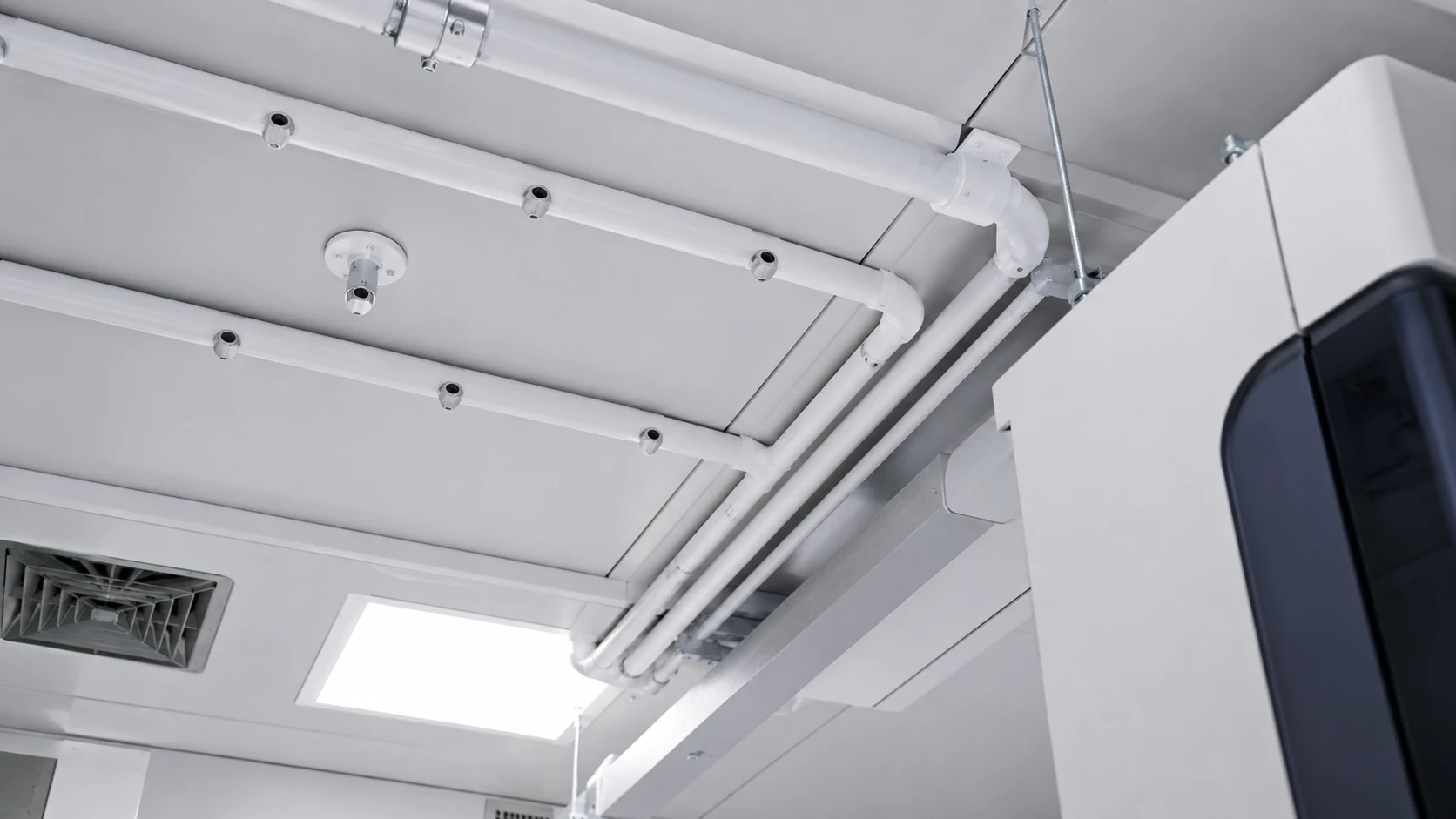
    Aspirating smoke detection actively draws air samples to a detector rather than waiting for smoke to reach a ceiling-mounted sensor, a very-early-warning approach recognized in NFPA 72 for environments with airflow challenges. Siemens positioned ASD+ alongside its broader fire-safety software suite at the industry’s largest annual fire-protection conference.

    Why it matters

    Very-early-warning detection technologies are gaining renewed attention as data centers, industrial facilities and other airflow-challenged environments seek faster fire detection than conventional ceiling-mounted smoke alarms can provide, directly relevant to the fire-safety demands of the current AI data-center construction boom.

    Security and infrastructure impact

    Facility designers specifying fire-detection systems for high-value or airflow-complex environments — including data centers — increasingly need to evaluate aspirating and video-based detection alongside traditional point detectors rather than defaulting to legacy designs.

    Sources

    ← Back to Technology News