Category: News

Current, event-driven reporting, announcements and industry developments.

  • White House Executive Order Sets Federal Post-Quantum Cryptography Deadlines

    White House Executive Order Sets Federal Post-Quantum Cryptography Deadlines

    June 22, 2026 — The White House issued Executive Order 14412, formally setting deadlines for federal agencies to migrate high-value systems to NIST-approved post-quantum cryptography.

    What happened

    The order requires federal civilian agencies to complete migration of key-establishment cryptography by December 31, 2030, and digital-signature cryptography by December 31, 2031, for high-value assets and high-impact systems. It also directs the FAR Council to propose a rule requiring covered federal contractors to meet the same NIST FIPS post-quantum standards, with agency migration leads due by late July 2026 and full migration plans due by late October 2026.

    Why it matters

    A binding federal deadline, rather than voluntary guidance, gives government contractors and critical-infrastructure operators a concrete planning horizon for a migration that touches nearly every system relying on current public-key cryptography.

    Security and infrastructure impact

    Organizations supplying software, hardware or managed services to federal agencies should begin cryptographic inventory and migration planning now, since the multi-year runway to 2030–2031 is short relative to the scope of systems that need updating across large, distributed infrastructure.


    Sources

    ← Back to Technology News

  • US Export-Control Order Briefly Suspends Claude Fable 5 Worldwide

    US Export-Control Order Briefly Suspends Claude Fable 5 Worldwide

    June 12, 2026 — The US Commerce Department ordered Anthropic to suspend access to its Claude Fable 5 and Claude Mythos 5 models under export-control rules, prompting a brief worldwide shutdown before access was restored around July 1.

    What happened

    Citing a claimed jailbreak with national-security implications, Commerce ordered Anthropic to cut off foreign access to the two models under the Export Administration Regulations. Because Anthropic could not verify user nationality for every account in real time, it suspended access globally rather than only for the flagged accounts. Commerce Secretary Howard Lutnick confirmed the order was withdrawn around July 1, and Anthropic began restoring service on July 8.

    Why it matters

    This marked one of the first times a commercially available frontier AI model service was directly restricted under US export-control authority, establishing a precedent that AI labs’ global service availability can be interrupted by national-security-driven trade enforcement with very short notice.

    Security and infrastructure impact

    Enterprises running Claude Fable 5-dependent production workloads experienced an unplanned multi-week disruption, underscoring why AI vendor-risk planning should account for export-control and geopolitical suspension risk alongside conventional outage and security incidents.

    Sources

    ← Back to Technology News

  • 2026 FIFA World Cup Becomes Largest Civilian AI Surveillance Deployment on Record

    2026 FIFA World Cup Becomes Largest Civilian AI Surveillance Deployment on Record

    June 11, 2026 — As the 2026 FIFA World Cup opened across the United States, Mexico and Canada, coverage of the tournament’s security operation described it as the largest civilian AI surveillance deployment in sporting history.

    What happened

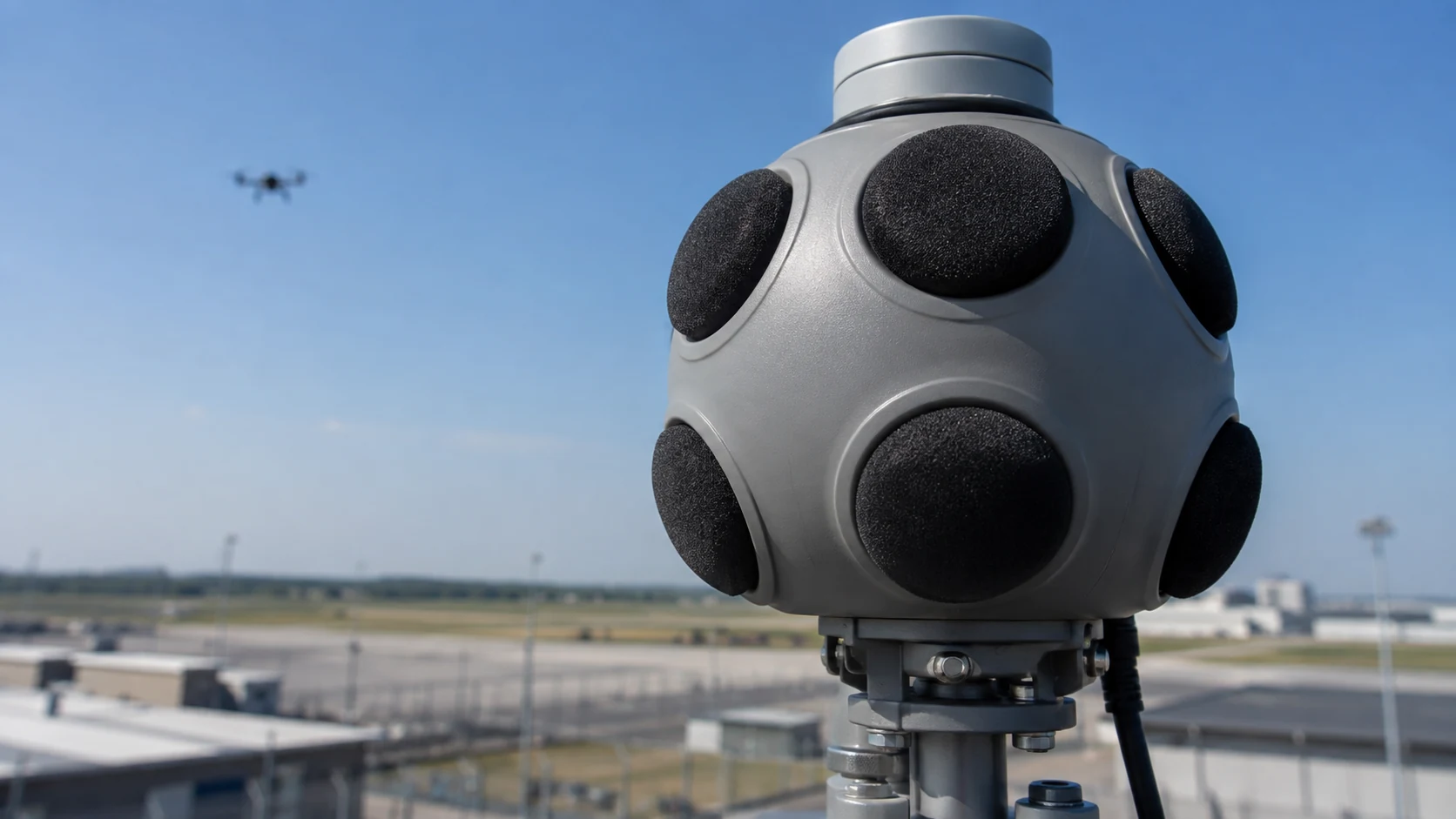
    US host venues including Gillette Stadium in Boston, Hard Rock Stadium in Miami and Mercedes-Benz Stadium in Atlanta deployed AI-powered facial recognition for entry and payments, autonomous robotic patrol units in restricted areas and perimeters, counter-drone systems, and real-time AI video analytics feeding stadium security operations centers. US federal agencies reported committing $365 million specifically to security technology for the event.

    Why it matters

    A tournament spanning 16 stadiums and more than 6 million attendees provided one of the largest real-world stress tests yet for integrated AI video analytics, biometric access control and counter-drone systems operating together at scale under sustained public scrutiny.

    Security and infrastructure impact

    How these systems perform — and how incidents, false positives or privacy complaints are handled — will likely shape procurement and regulatory debates around AI-based stadium and major-event security well beyond the tournament itself.

    Sources

    ← Back to Technology News

  • CISA Orders Emergency Patching After Ivanti Sentry Flaw Added to KEV

    CISA Orders Emergency Patching After Ivanti Sentry Flaw Added to KEV

    June 11, 2026 — CISA confirmed active exploitation of a maximum-severity vulnerability in Ivanti’s Sentry gateway appliance and added it to its Known Exploited Vulnerabilities catalog, triggering a new binding patch deadline for federal agencies.

    What happened

    The flaw, an OS command-injection weakness in Ivanti’s security gateway appliance formerly known as MobileIron Sentry, was confirmed as actively exploited and catalogued by CISA. Under newly issued Binding Operational Directive 26-04, CISA ordered federal civilian agencies to patch the flaw within three days.

    Why it matters

    A three-day emergency patch window for a maximum-severity, actively exploited edge-appliance vulnerability underscores how little time defenders now have between public disclosure and mandated remediation for internet-facing management infrastructure.

    Security and infrastructure impact

    Organizations running Ivanti gateway appliances outside the federal directive’s direct scope should still treat the finding as an urgent patch signal, given that KEV entries reliably indicate active, opportunistic exploitation rather than theoretical risk.

    Sources

    ← Back to Technology News

  • DeepSeek Previews V4, Its Next Open-Weight Flagship Model

    DeepSeek Previews V4, Its Next Open-Weight Flagship Model

    April 24, 2026 — DeepSeek released a preview of V4, its next flagship model family, continuing the rapid pace of open-weight releases that has narrowed the gap with closed frontier labs.

    What happened

    DeepSeek’s V4 preview introduced two variants that later shipped in full: V4-Pro, a roughly 1.6-trillion-parameter mixture-of-experts model, and the smaller, faster V4-Flash, both sharing a 1-million-token context window and released with open weights.

    Why it matters

    Continued frontier-class releases from open-weight developers give enterprises and governments outside the small group of US frontier labs a credible self-hostable alternative, which changes data-residency and vendor-lock-in calculations for regulated industries.

    Security and infrastructure impact

    Security teams evaluating open-weight models for self-hosted or air-gapped use still need independent red-teaming and supply-chain review of model weights and inference stacks, since open availability does not by itself substitute for a formal security assessment.

    Sources

    ← Back to Technology News

  • Google Announces General Availability of TPU v7 “Ironwood”

    Google Announces General Availability of TPU v7 “Ironwood”

    April 22, 2026 — Google announced general availability of its seventh-generation Tensor Processing Unit, Ironwood, at Google Cloud Next 2026, its first TPU designed specifically for inference workloads.

    What happened

    Google said Ironwood delivers roughly ten times the peak performance of its TPU v5p and about four times the per-chip performance of the prior TPU v6e (Trillium) generation, scaling up to superpods of thousands of chips. Anthropic disclosed a commitment to use up to one million TPU chips, including an initial 400,000 Ironwood units, extending its compute plans into 2027.

    Why it matters

    A major AI lab the size of Anthropic committing to Google’s custom silicon at this scale, alongside its existing Nvidia and Azure relationships, reinforces that frontier AI companies are deliberately spreading compute dependency across multiple hardware ecosystems rather than standardizing on one.

    Security and infrastructure impact

    For enterprise buyers, the diversification of underlying AI hardware across Nvidia, custom hyperscaler silicon like Ironwood, and vendor-specific chips such as OpenAI’s Titan means that performance, cost and security characteristics increasingly vary by which cloud and chip a given AI service actually runs on.

    Sources

    ← Back to Technology News

  • Anthropic Launches Project Glasswing to Share AI Vulnerability-Finding With Industry

    Anthropic Launches Project Glasswing to Share AI Vulnerability-Finding With Industry

    April 9, 2026 — Anthropic announced Project Glasswing, giving a group of major technology and finance companies early access to Claude Mythos Preview, a model it says can find and exploit software vulnerabilities at a level that rivals skilled human researchers.

    What happened

    Partners in the program included Amazon Web Services, Apple, Broadcom, Cisco, CrowdStrike, Google, JPMorganChase, the Linux Foundation, Microsoft, Nvidia and Palo Alto Networks. Anthropic said Mythos Preview had already identified thousands of high-severity vulnerabilities across every major operating system and web browser, and it kept the model unreleased to the public, citing misuse concerns.

    Why it matters

    An AI model capable of automated, human-competitive vulnerability discovery is a double-edged development: it can dramatically accelerate defensive patching, but the same capability could eventually be misused for offensive exploit development if it reaches less careful actors.

    Security and infrastructure impact

    Critical-infrastructure operators and software vendors should watch how programs like Glasswing scale, since AI-assisted vulnerability research at this level will likely change both the speed of patch cycles and the sophistication expected of future exploit attempts.

    Sources

    ← Back to Technology News

  • Ransomware Attack on Dutch Health-IT Vendor ChipSoft Disrupts Hospitals

    Ransomware Attack on Dutch Health-IT Vendor ChipSoft Disrupts Hospitals

    April 7, 2026 — A ransomware attack on ChipSoft, a software vendor used by roughly 80 percent of hospitals in the Netherlands, forced parts of its digital infrastructure offline and disrupted hospital operations.

    What happened

    The Embargo ransomware group was linked to the attack, which took ChipSoft’s public website and several patient-facing platforms — including Zorgportaal and HiX Mobile — offline. Eleven hospitals took their ChipSoft-dependent systems offline as a precaution, and the company later confirmed that medical personal data had been stolen, though it said the stolen data was subsequently destroyed.

    Why it matters

    The incident illustrates concentration risk in healthcare IT: a single software vendor’s compromise can simultaneously disrupt patient care across a large share of a country’s hospital system, a pattern increasingly common as healthcare consolidates around a small number of electronic health-record platforms.

    Security and infrastructure impact

    Hospital IT and physical-security teams should treat vendor-concentration risk as a resilience planning priority, including tested downtime procedures for core clinical software, not only for ransomware directly targeting the hospital’s own network.

    Sources

    ← Back to Technology News

  • CISA Adds Six Actively Exploited Fortinet, Microsoft and Adobe Flaws to KEV

    CISA Adds Six Actively Exploited Fortinet, Microsoft and Adobe Flaws to KEV

    April 6, 2026 — CISA added six actively exploited vulnerabilities spanning Fortinet, Microsoft and Adobe products to its Known Exploited Vulnerabilities catalog in a single batch update.

    What happened

    The additions included Fortinet FortiClient EMS and FortiSandbox flaws that allow improper access control and unauthenticated OS command injection respectively, alongside vulnerabilities in Microsoft and Adobe software. CISA’s catalog entries require affected federal agencies to remediate on a defined schedule.

    Why it matters

    Batch KEV updates spanning multiple, unrelated vendors in the same week illustrate how broadly distributed exploitation activity has become across common enterprise software rather than concentrated in a single product line.

    Security and infrastructure impact

    Security teams should treat multi-vendor KEV batches as a prompt to review patch status across their full software inventory, not just the specific products named, since KEV additions often reflect exploitation trends that spread quickly to adjacent, similarly configured systems.

    Sources

    ← Back to Technology News

  • OpenAI Closes $122 Billion Funding Round at $852 Billion Valuation

    OpenAI Closes $122 Billion Funding Round at $852 Billion Valuation

    March 31, 2026 — OpenAI closed a funding round totaling $122 billion in committed capital at an $852 billion post-money valuation, expanding on the $110 billion round it had announced in February.

    What happened

    The round followed a $110 billion raise closed on February 27, 2026 at an $840 billion valuation, with SoftBank, Nvidia and Amazon among the largest contributors. OpenAI described the additional capital as funding for its next phase of AI infrastructure and research.

    Why it matters

    Funding rounds of this size, arriving within weeks of one another, show how capital-intensive frontier AI development has become and how deeply intertwined AI labs’ finances now are with their chip and cloud suppliers, several of whom are also investors.

    Security and infrastructure impact

    The scale of committed capital gives a sense of the infrastructure build-out still to come, reinforcing the case for security and safety planning to be built into new AI data-center projects from the design stage rather than retrofitted later.

    Sources

    ← Back to Technology News