Category: Access Control & Identity

Credentialing, biometrics, smart locks and identity verification technologies that control who can enter a facility.

  • Hong Kong and Singapore Expand Facial Recognition for In-Vehicle Border Clearance

    Hong Kong and Singapore Expand Facial Recognition for In-Vehicle Border Clearance

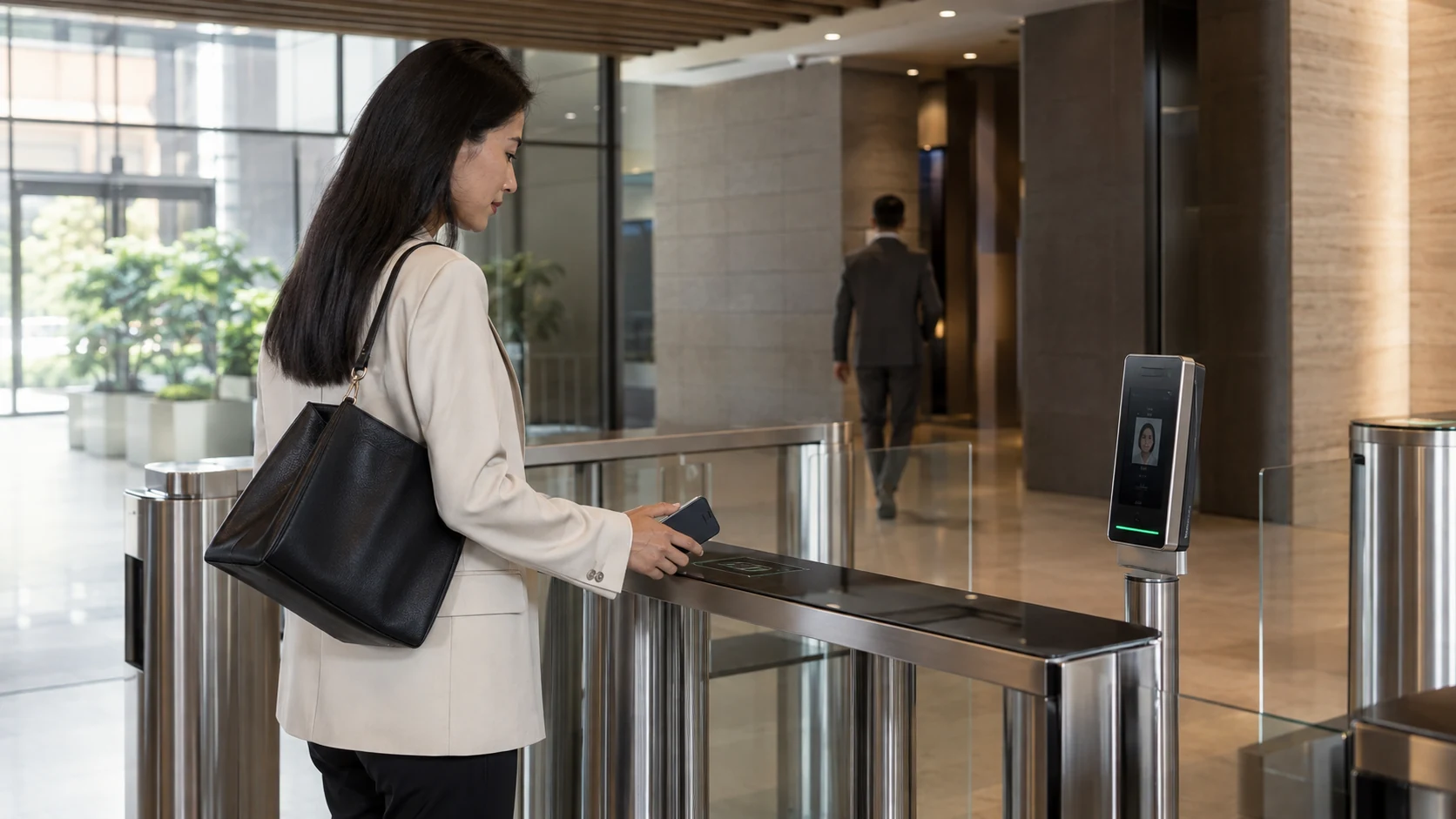
    Hong Kong and Singapore are expanding the use of facial recognition for border checks that can be completed while travelers remain inside their vehicles. The initiatives are intended to shorten processing at high-volume land crossings while retaining identity checks that are normally performed at a staffed booth.

    How the approach changes border processing

    Biometric Update reported that Hong Kong is preparing in-car clearance at the Hong Kong–Zhuhai–Macao Bridge and examining related arrangements at the new Huanggang Port. Singapore has also been extending automated immigration clearance, including vehicle-lane processes. The common design objective is to link a traveler’s face with an authorized travel record without requiring every occupant to leave the vehicle.

    Such systems depend on controlled capture conditions, reliable document and watchlist integration, and clear procedures for exceptions. A failed match must route the traveler to a secondary process rather than be treated automatically as evidence of wrongdoing. Operators also need controls for children, passengers whose appearance has changed, poor lighting and partial occlusion inside a vehicle.

    Security and governance questions

    In-vehicle biometrics can improve throughput, but border agencies still have to manage retention, access logging and false-match risk. The technology should be evaluated as one layer within a broader access-control and identity architecture, not as a substitute for trained officers. Independent performance testing and transparent fallback procedures will be important as deployment expands.

    Sources

  • Interoperability Testing for Integrated Security Platforms

    Interoperability Testing for Integrated Security Platforms

    An integrated security platform promises one operational view across video, access control, intrusion, intercom and analytics. Compatibility on a product sheet does not prove that the combined system will exchange the correct data, preserve timestamps or fail safely. Interoperability must be tested against real workflows.

    Define the expected behavior

    Begin with use cases, not protocols. For a forced door, specify which event is generated, which camera appears, how much pre-event video is shown, who may acknowledge it and what remains available if one subsystem is offline. Clear acceptance criteria prevent a successful network connection from being mistaken for operational integration.

    Test data meaning

    Systems may exchange an event while interpreting fields differently. Verify device identifiers, priorities, user identities, timestamps, alarm states and location names. Check how updates and clear conditions are represented. A mapping error can cause a command platform to display the right type of alarm at the wrong door.

    Test control boundaries

    Read-only integrations carry different risk from those that unlock doors, silence alarms or change recording. Confirm exactly which commands are permitted, which user identity is recorded and whether the originating system can reject unsafe requests. Least privilege should apply to machine-to-machine accounts as well as people.

    Test failure modes

    • Disconnect the network between subsystems.
    • Stop an integration service.
    • Introduce clock drift.
    • Restart devices in different sequences.
    • Fill a message queue or storage volume.
    • Revoke an integration credential.
    • Restore service and check for duplicated or lost events.

    The objective is graceful degradation: local security functions should continue where possible, operators should see the loss of integration and recovery should not create false commands.

    Verify standards claims

    Standards such as ONVIF define profiles and interfaces, but support varies by device, firmware and function. Record the exact profile, tested feature and version. A camera supporting one ONVIF profile does not imply every analytic event or configuration function will work with every platform.

    Include the operator interface

    An integration can be technically accurate yet operationally confusing. Test alarm wording, color, sound, map position, acknowledgement and escalation with the people who will use the system. Confirm that critical information remains visible during high event volume and that operators can distinguish source-system failure from a genuine quiet period.

    Preserve evidence

    Integrated workflows must maintain source attribution and time context. Verify that exported video and event records can be traced back to the originating system, following the principles in the guide to video evidence chain of custody.

    Retest after change

    Firmware, certificates, API versions and licensing can alter behavior. Keep a repeatable regression set covering the highest-consequence workflows and run it after significant updates. This turns interoperability from a one-time project claim into a maintained system property.

    Conclusion

    Interoperability succeeds when the combined system produces correct, timely and explainable outcomes under normal and failed conditions. Testing should prove workflows, permissions and recovery—not merely connectivity.

    Reference sources

  • Honeywell Modernizes Access Management Across U.S. Marine Corps Barracks

    Honeywell Modernizes Access Management Across U.S. Marine Corps Barracks

    Honeywell Technologies has announced a modernized access-management program for U.S. Marine Corps barracks worldwide. The deployment is intended to replace fragmented mechanical-key and local access processes with connected electronic controls and centralized management.

    The program is designed to give authorized personnel a consistent way to issue, revoke and audit access across geographically distributed facilities. A centralized model can reduce the delay between a change in authorization and enforcement at the door, while producing records that support investigations and compliance reviews.

    Neither the company announcement nor secondary reporting provides a complete public architecture, device count or cybersecurity assessment. Those details matter because a global access platform must protect credentials, administrative privileges, network paths and offline operation as carefully as it protects doors. Local emergency procedures must remain workable during network or power disruption, including reliable override, accountability and recovery controls.

    Why it matters

    Barracks access is an identity-lifecycle problem as much as a lock problem. The program highlights the value of centralized governance while reinforcing the need for resilient local operation, auditable credential changes and disciplined key and credential management.

    Sources

  • Niger Starts National Enrollment for Alliance of Sahel States Biometric Passport

    Niger Starts National Enrollment for Alliance of Sahel States Biometric Passport

    Niger has begun public biometric enrollment for the Alliance of Sahel States passport. The campaign launched on September 15 in Niamey, with the government planning additional enrollment centers across the country and services for citizens abroad.

    Officials also plan to add online pre-enrollment through domestic payment platforms. The ordinary passport is priced at FCFA 45,000, while a reduced price applies to children and students, according to the Niger News Agency and Biometric Update. Authorities say the document is designed to align with International Civil Aviation Organization requirements, although detailed certification evidence was not included in the public announcement.

    Niger follows Burkina Faso and Mali in rolling out the common AES passport. The government is presenting the program as part of a wider modernization of civil registration, identity verification and border processes. Regional expansion will also require dependable enrollment equipment, training and document supply.

    Why it matters

    A biometric passport program is not only a document project. It requires secure enrollment, trusted issuance, protected biometric data, inspection-system interoperability and accessible service delivery. Those operational controls determine whether a new credential improves border and airport security in practice.

    Sources

  • Malaysia Opens Applications for New MyKad With Restricted Biometric QR Verification

    Malaysia Opens Applications for New MyKad With Restricted Biometric QR Verification

    Malaysia has opened applications for a new generation of its MyKad national identity card. The updated credential includes a QR-based verification mechanism and is designed to support live facial matching against National Registration Department records when authorized equipment is used.

    The department has stressed that the QR code is restricted to authorized enforcement use, cannot be read by an ordinary smartphone camera and is not currently intended for payments. That clarification narrows broader claims by supplier NexG about possible future commercial verification and optional wallet functions. Those additional capabilities have not been announced as active government services.

    Reporting by Malay Mail says the card includes 53 security features that will be introduced progressively. The new design removes the Touch ‘n Go function included in the previous card, directing users to a separate card or wallet instead. Enrollment and verification governance will determine how consistently those controls operate.

    Why it matters

    The rollout shows how physical identity documents are becoming gateways to digital verification while still retaining strict control over who may read protected data. Clear separation between deployed functions and supplier roadmaps is essential when evaluating identity and access-control systems.

    Sources

  • PD Ports Deploys Abloy Electronic Access Control Across UK Sites

    PD Ports Deploys Abloy Electronic Access Control Across UK Sites

    PD Ports, which operates major UK port gateways handling millions of tonnes of cargo annually, has deployed Abloy UK’s PROTEC2 CLIQ electronic access control system across multiple sites, combining mechanical lock protection with digital access management. The port group previously relied on Abloy mechanical products to secure perimeter gates and operational facilities, but growing operations and increasingly complex access requirements prompted it to add electronic control without ripping out the existing hardware.

    The deployment covers 112 PROTEC2 CLIQ keys alongside 32 mechanical padlocks. Each CLIQ key can be programmed and updated remotely, letting PD Ports control permissions across different locations from a central point, and every use is logged through CLIQ Web Manager, creating an audit trail and allowing access rights to be revoked instantly if a key is lost. Because CLIQ keys also operate Abloy’s existing mechanical locks, PD Ports introduced electronic access control incrementally rather than replacing its entire lock inventory at once. The system protects warehouses holding high-value goods as well as perimeter gates and remote access points.

    Why it matters

    Ports typically have large numbers of gates, warehouses and remote access points spread across a site that is expensive to fully re-key — a system that layers electronic control onto existing mechanical locks, rather than requiring wholesale replacement, is often the more realistic upgrade path for large industrial sites with sunk investment in mechanical hardware.

    Sources

  • Key Control and Electronic Key Management Systems Explained

    Key Control and Electronic Key Management Systems Explained

    Every access-controlled building still has mechanical keys somewhere: master keys for maintenance staff, override keys for electronic locks during a power failure, keys to server cabinets, vehicles, or cash boxes that were never converted to card access. Key control is the discipline of tracking who holds which key, when, and why — and electronic key management systems exist because a sign-out clipboard in a supervisor’s office does not scale, and does not produce an audit trail anyone can trust.

    From Lockboxes to Electronic Cabinets

    A basic key control program starts with a locked cabinet and a manual log, but electronic key management cabinets replace that with individually locked key slots, or in higher-security versions, keys physically tethered to an electronic fob that only releases when a valid credential is presented. Each key or fob has a unique identifier the system tracks, so the cabinet knows not just that a key was removed, but which specific key, by whom, and whether it was returned to the correct slot.

    Access Rules and Scheduling

    Electronic systems let administrators define exactly which users can access which keys, and when: a contractor might be authorized to remove a specific key only during scheduled work hours, while a facilities manager retains broader access at any time. Some systems require a second authorized user to approve release of high-value or master keys, and most will trigger an alert if a key is not returned within a defined window, turning a vague policy (“please return keys promptly”) into an enforced and logged rule.

    Integration With Access Control and Asset Management

    Because key cabinets are themselves electronic devices, they increasingly integrate with the same access-control platform managing card readers and door hardware, so a single credential works at both the front door and the key cabinet, and a single audit log covers both. Some cabinets extend beyond keys to manage other high-value or sensitive items — radios, weapons, narcotics box keys in healthcare settings, or fleet vehicle fobs — using the same locker-and-credential model.

    Mechanical Master Keying

    Underneath any electronic layer, most buildings still rely on a mechanical master-key system, where individual keys open specific doors and progressively higher master keys open larger groups of doors. Designing and maintaining that hierarchy is its own discipline: a lost sub-master key can force rekeying an entire wing of a building, which is one of the strongest practical arguments for moving high-consequence keys into an electronic cabinet with a full audit trail rather than leaving them in general circulation.

    Reference sources

  • SITA Launches Border Flow Lane, an In-Motion Biometric Border Check for Airports

    SITA Launches Border Flow Lane, an In-Motion Biometric Border Check for Airports

    SITA launched Border Flow Lane, a border-processing model that replaces stop-and-check passport control at gates, kiosks and officer stations with continuous, in-motion identity verification as travelers walk through the terminal. The company says the approach runs up to eight times faster than standard eGates and can clear more than 75% of passengers before their flight departs, freeing immigration officers to focus on non-routine cases while retaining full authority to stop any traveler.

    Toronto Pearson is piloting the system with Air Canada across four facial-verification gates — one for domestic travelers and three for U.S.-bound passengers — using Dormakaba hardware with middleware from SITA and Airsphere. For U.S.-bound flights, the reference image comes from the identity record created during U.S. preclearance; for domestic flights, it draws on the record generated through Air Canada’s app. Participation remains voluntary, and travelers can opt for standard document checks instead.

    Why it matters

    Airports have largely hit the physical limits of widening queues and adding staff to handle passenger growth; shifting identity verification earlier and making it continuous rather than a single stop-and-check event is one of the few remaining ways to add effective checkpoint capacity without new floor space.

    Sources

  • Texas School District Rolls Out AI Weapons-Detection Scanners at Elementary and Middle School Entrances

    Texas School District Rolls Out AI Weapons-Detection Scanners at Elementary and Middle School Entrances

    Center Independent School District in Texas is deploying AI-based weapons-detection scanners at every student and visitor entry point across three campuses, phasing the rollout in day by day: F.L. Moffett Elementary, Center Elementary and Center Middle School. Superintendent Jake Henson described the deployment as “a proactive measure … designed to provide an additional layer of safety and security for our students, staff, and visitors.”

    The district released an explanatory video covering how the system works and outlining new entry procedures for students and visitors adjusting to the scanners. No cost or budget figures were disclosed publicly alongside the rollout.

    Why it matters

    AI weapons-detection scanners are becoming a routine capital purchase for US school districts, but they also raise questions — being litigated elsewhere — about liability when a system misses a threat, making transparent rollout communication like this district’s explainer video part of managing that risk.

    Sources

  • Robotics Startup Splan Debuts SENA Visitor and Access Robot at GSX 2026

    Robotics Startup Splan Debuts SENA Visitor and Access Robot at GSX 2026

    Robotics startup Splan introduced SENA — short for Smart Entry & Navigation Assistant — at GSX 2026 in Atlanta, an AI-powered robot designed to handle visitor registration, identity verification, guard tours and incident management at building entrances. The unveiling was among the AI-focused product debuts on the opening day of the show, which drew more than 500 exhibitors to the Georgia World Congress Center.

    According to trade-press coverage of the show floor, SENA is positioned to work alongside human guards rather than replace them, automating repetitive front-desk and patrol tasks so staff can focus on higher-judgment security decisions. The launch reflects a broader theme at this year’s GSX: multiple exhibitors showed AI systems meant to move beyond simple event detection toward actively assisting with day-to-day security operations.

    Why it matters

    Visitor-management and reception robots are one of the more visible test cases for how far building owners are willing to let autonomous systems handle identity verification — a function with real liability and access-control consequences if it gets a decision wrong.

    Sources