Category: Access Control & Identity

Credentialing, biometrics, smart locks and identity verification technologies that control who can enter a facility.

  • Multi-Family and Apartment Complex Security Technology

    Multi-Family and Apartment Complex Security Technology

    Multifamily housing sits at an unusual intersection of residential and commercial security. A single property can house hundreds of residents who move in and out regularly, share common amenities and parking structures, and expect the convenience of modern connected living, while the property owner carries liability for the safety of common areas they don’t fully control. This combination produces a distinct set of technology priorities that differ from both single-family residential security and typical commercial office security.

    Credential Turnover at Scale

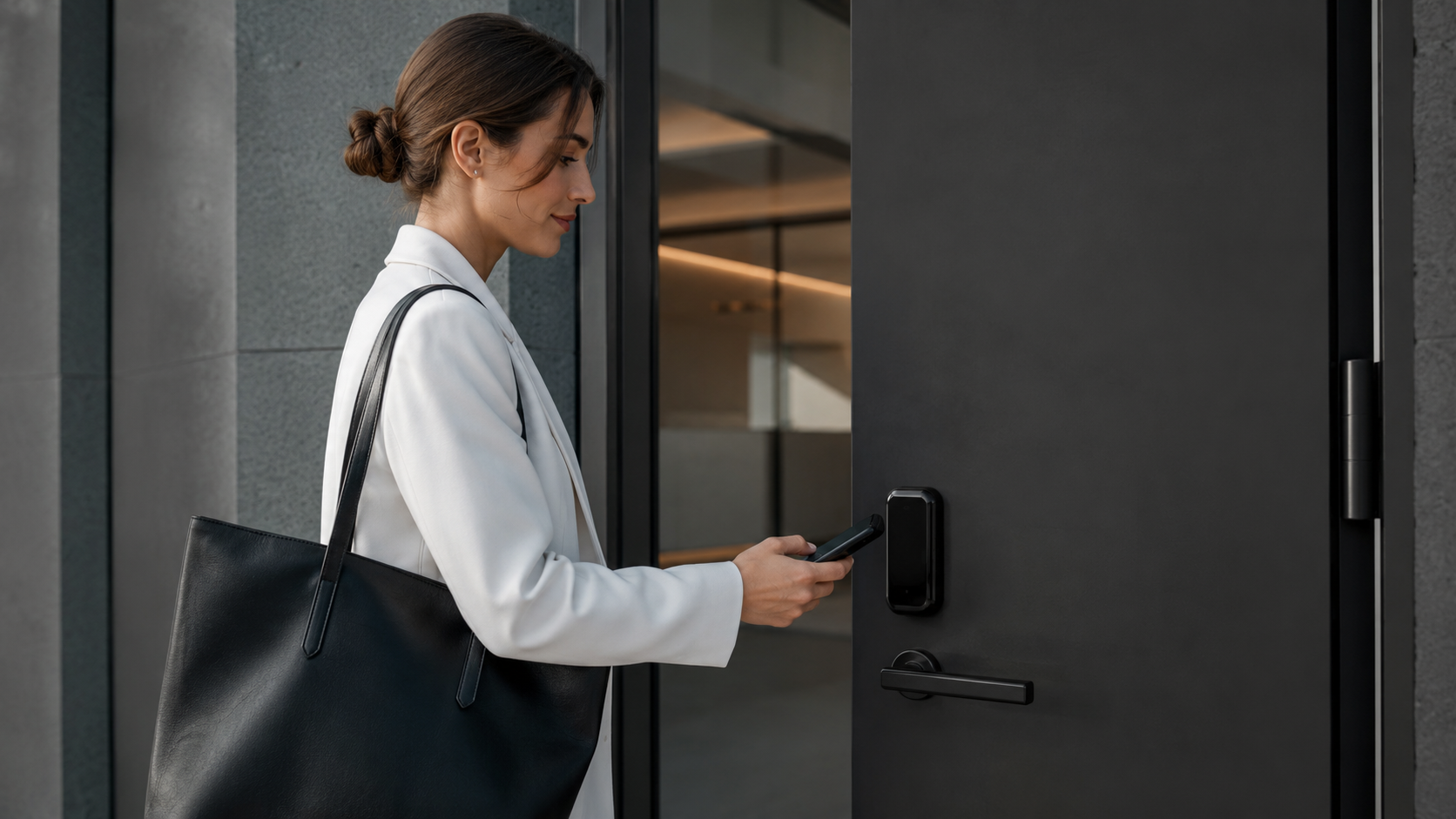
    A property with hundreds of units and regular lease turnover can’t rely on the kind of static keying or long-lived badge issuance that suits a stable office workforce. Mobile credentials, using a resident’s smartphone as their access token, have become widely adopted in multifamily specifically because they let property management issue and revoke access remotely the moment a lease starts or ends, without the cost and delay of rekeying locks or reprogramming physical cards. Cloud-based access control platforms extend this further, giving off-site property managers the ability to manage access across a portfolio of buildings from a single interface.

    Video Intercom as the Front Door Experience

    Video intercom systems have become central to how multifamily properties handle the front-door problem: verifying visitors, delivery personnel, and guests at a building entrance that no staff member is physically monitoring most of the time. Modern systems let residents answer intercom calls remotely from their phone regardless of where they are, and integrate with the same access control platform that manages resident credentials, so a resident can grant a visitor temporary entry without needing to come downstairs.

    Common Area Coverage and the Package Problem

    Shared amenities, lobbies, mail and package rooms, laundry facilities, fitness centers, and pools, represent both a security responsibility and a liability exposure for property owners. Package theft in particular has become one of the most common resident complaints in multifamily housing as e-commerce delivery volume has grown, driving adoption of dedicated package rooms with individual electronic lockers or camera-monitored bulk delivery areas rather than packages simply left in open lobbies.

    Parking Structures and Vehicle Access

    Multifamily parking garages and surface lots share many of the same security considerations as standalone parking facilities, lighting, camera coverage of vehicle and pedestrian pathways, and license plate capture at entry gates, but are also tied directly into resident access credentials, since garage access is frequently bundled with unit access rather than managed as a separate system. Analytics that flag loitering or unusual dwell time in parking areas and stairwells have found particular traction in this vertical.

    Integrating With Property Management Operations

    What distinguishes multifamily security technology most from other verticals is how tightly it needs to integrate with property management software rather than functioning as a standalone system. Move-in and move-out dates, lease status, and maintenance access requests all need to translate into access control changes automatically for the system to keep pace with a property’s turnover rate, and video systems increasingly feed into resident-facing communication, proof of delivery, incident documentation for insurance claims, or visitor logs, that goes beyond the traditional security-only use case.

    Reference sources

  • Group-IB Details ‘JWR’ Phishing Kit Powering Smishing Triad Bank-Fraud Campaigns

    Group-IB Details ‘JWR’ Phishing Kit Powering Smishing Triad Bank-Fraud Campaigns

    Group-IB has published a technical analysis of a phishing kit it calls JWR, used by an operator cluster it tracks as “Outsider” within the broader Smishing Triad ecosystem. In the campaign Group-IB analyzed, victims received fraudulent SMS messages impersonating official entities and were directed through a short link to a disposable domain, where a multi-stage form walked them through submitting identity details, payment card information, and one-time passcodes, sometimes for a second bank or a digital wallet.

    According to Group-IB, the kit’s landing page is built as a Vue 2 single-page application wired to a dedicated Web Worker that maintains a binary WebSocket channel, encrypted with an AES-256-CTR envelope, alongside a two-second HTTP long-poll fallback, letting a human operator monitor and steer victim sessions in near real time. Group-IB said code strings tie the kit to infrastructure known in operator circles as the trsb.top family.

    Group-IB, along with prior public reporting from Silent Push, Palo Alto Networks’ Unit 42, Resecurity and Fortra, has linked the wider Smishing Triad ecosystem to more than 194,000 malicious domains registered since 2024 spanning over 121 countries. Group-IB researcher Mohammad Gamal Younis authored the analysis, which included indicators of compromise for defenders.

    Why it matters

    Real-time, operator-steered phishing sessions raise the bar for defenders beyond static blocklists, since the kit adapts its lure mid-session to whatever the victim’s device or bank actually shows; financial institutions and their customers benefit most from the published indicators of compromise, not from generic awareness alone.

    Sources

  • Boon Edam to Demonstrate Biometric-Integrated Entrance Systems at GSX 2026

    Boon Edam to Demonstrate Biometric-Integrated Entrance Systems at GSX 2026

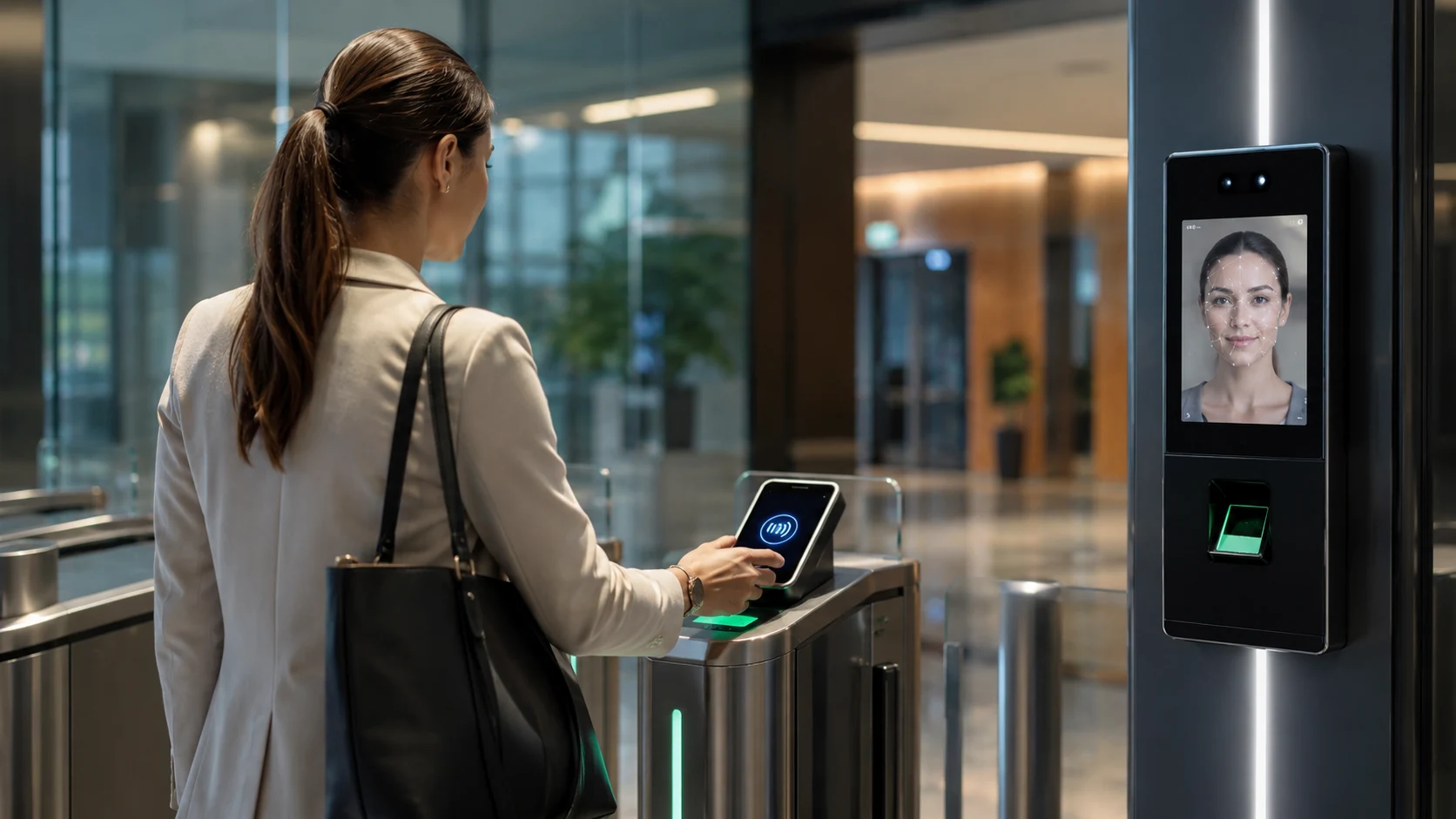
    Boon Edam Inc. plans to demonstrate entrance security systems integrated with biometric authentication technology at booth 2633 during GSX 2026 in Atlanta, according to Security Today. The lineup includes optical turnstiles, revolving doors and interlocking portals designed to detect unauthorized entry attempts such as tailgating or piggybacking.

    One demonstration pairs a Speedlane Compact optical turnstile with IDEMIA’s MorphoWave contactless fingerprint reader, which scans multiple fingerprints as a user passes a hand over the device. Another combines Boon Edam’s Circlelock interlocking portal with Alcatraz Rock facial authentication and an Iris ID reader, applying facial and iris recognition at different points of entry.

    A Tourlock 180 revolving door will be shown alongside the Alcatraz Rock X facial authentication system, supporting simultaneous multidirectional movement while monitoring for tailgating. Boon Edam will also display a mobile Turnlock full-height turnstile mounted on a movable steel base, featuring a BE Secure overhead system that uses artificial intelligence and measurement sensors to detect two people attempting to pass on a single credential, along with a Lifeline Speedlane Swing turnstile using a standard card reader.

    Why it matters

    Pairing physical entrance hardware with biometric readers at the point of passage, rather than at a separate door reader, is aimed squarely at tailgating, one of the most persistent gaps in access-control programs regardless of credential technology.

    Sources

  • PoE Power Budgeting for Security Cameras and Access Control

    PoE Power Budgeting for Security Cameras and Access Control

    Power over Ethernet simplifies security installations by carrying data and electrical power over the same structured cabling. Simplicity at the endpoint can hide a system-level constraint: the switch or injector still has a finite power budget, and the connected load changes with heaters, infrared illumination, motors and door hardware.

    Start With the Powered Device

    Use the manufacturer’s declared power class and maximum consumption for each camera, reader, intercom or controller. A camera that draws modest power in daylight may require more when infrared LEDs, a heater, a wiper or pan-tilt-zoom motors operate. Design against the credible maximum operating state, not the average shown on a quiet bench.

    Separate Port Capacity From Total Budget

    A switch can support a particular power level on an individual port while lacking enough total capacity to deliver that level on every port simultaneously. Add the endpoint requirements, reserve capacity for startup and future change, and check the power supply actually fitted to the switch. Modular switches may have different budgets depending on installed supplies.

    Cabling and Distance

    Voltage loss rises with cable resistance. Use compliant cabling, connectors and installation practice, especially for long outdoor runs or bundles exposed to heat. Extenders and intermediate devices add their own consumption and failure points. For distant perimeter equipment, local fiber plus a properly protected remote power source may be more resilient than stretching copper beyond its intended design.

    Backup Power Changes the Calculation

    If the security network must operate during a mains failure, the UPS has to support both network electronics and the PoE load. Runtime calculations should include worst-case device demand and conversion losses. Load-shedding priorities can preserve critical entrances and cameras while disabling lower-priority devices.

    Commissioning Tests

    • Verify negotiated power class and actual draw at each port.
    • Force night mode, heaters and moving mechanisms where practical.
    • Test restart behavior after a complete power interruption.
    • Confirm UPS runtime with the operational PoE load.
    • Set monitoring alerts for overload, port denial and supply failure.

    Conclusion

    PoE reliability depends on more than selecting a switch with enough ports. A defensible design matches endpoint maxima, total supply capacity, cable conditions and backup-power objectives so security devices remain available during the operating states that create the greatest demand.

    Reference sources

  • CBP Seeks Walk-Through Facial Comparison Systems for 38 Airport Terminals

    CBP Seeks Walk-Through Facial Comparison Systems for 38 Airport Terminals

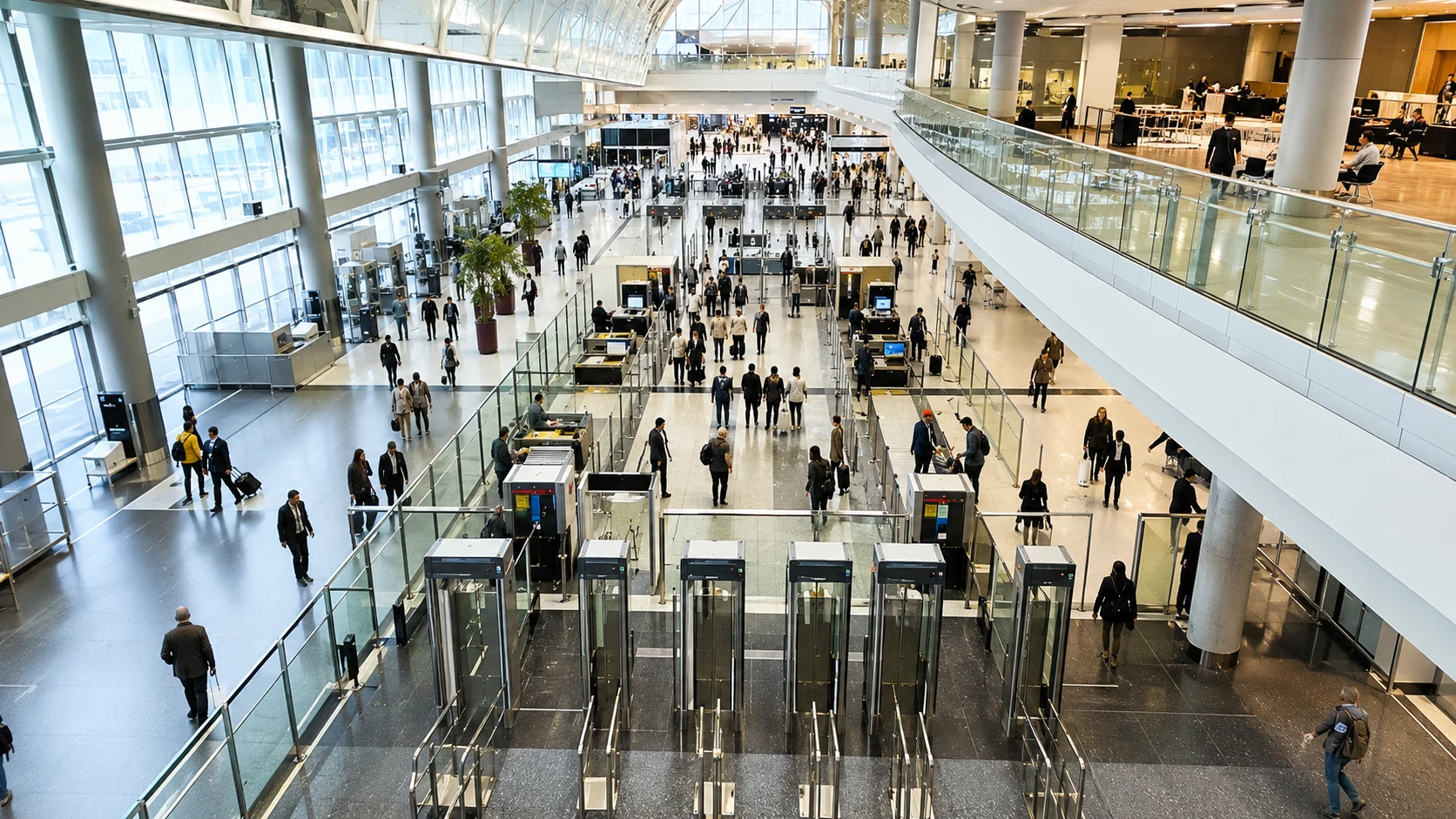
    U.S. Customs and Border Protection has issued a solicitation for biometric capture lanes intended to photograph Global Entry travelers while they continue walking through airport arrival areas. The procurement covers 38 terminal installations at 30 airports, including several sites with more than one terminal.

    The requested system would capture and transmit facial images while CBP’s Traveler Verification Service, or a successor government platform, performs matching and identity adjudication. Public documents describe a movable archway or comparable structure with cameras, lighting where needed and protected electrical and data wiring.

    The solicitation contains availability, throughput and image-quality requirements, but it does not publish an estimated contract value. It also includes privacy, civil-rights, data-security and AI risk-management conditions; those requirements are procurement terms, not evidence that a system has already been selected or deployed.

    Why it matters

    Continuous-flow biometrics may reduce passenger stops, but they shift design pressure to capture quality, exception handling and transparent governance. Airport operators need to plan for travelers who cannot be matched as well as those cleared automatically.

    For wider context, see SectechMedia’s related technical coverage.

    Sources

  • South Africa Seeks Facial Recognition for Police Body and Dashboard Cameras

    South Africa Seeks Facial Recognition for Police Body and Dashboard Cameras

    South Africa’s State Information Technology Agency is seeking a supplier for body-worn cameras, vehicle dashboard cameras and supporting software for the national police. Public tender information describes facial recognition, automatic number-plate recognition and integration with other security platforms.

    The procurement is described as a three-year contract including training and maintenance. Public documents cited in the reporting do not state a target budget or a final camera quantity, so those fields remain unknown rather than estimated.

    Biometric Update also highlighted unresolved governance questions around police processing of biometric footage. Procurement requirements establish desired technical functions; they do not by themselves demonstrate that privacy, retention, accuracy and redress rules are complete.

    Why it matters

    Body-camera programs combine evidentiary, operational and civil-rights requirements. Buyers need measurable image-quality and audit controls as well as explicit policies for face searching, retention, access and disclosure before deployment.

    For wider context, see SectechMedia’s related technical coverage.

    Sources

  • Google Pay and Mastercard Plan Device-Biometric Card Payments in India

    Google Pay and Mastercard Plan Device-Biometric Card Payments in India

    Mastercard and Google Pay plan to introduce optional device-biometric approval for eligible card payments in India. Participating customers would use the fingerprint, face recognition or passcode already configured on their phone to approve supported transactions.

    The companies previewed the capability at Global Fintech Fest and expect rollout to begin by the end of 2026. Participating issuers and eligible card products have not yet been publicly specified, so availability should not be described as nationwide or universal.

    The design uses a consumer-device cardholder verification method and is separate from payment tokenization. Tokenization protects card details used in a transaction; local biometric or passcode verification confirms that the person operating the device is authorized to approve it.

    Why it matters

    India’s updated payment-authentication directions allow alternatives to SMS one-time passwords while retaining multi-factor requirements. Device-based verification can improve usability, but secure enrollment, fallback and issuer risk controls remain essential.

    For wider context, see SectechMedia’s related technical coverage.

    Sources

  • UK Expands Passkey Sign-In for GOV.UK One Login

    UK Expands Passkey Sign-In for GOV.UK One Login

    The UK government is broadening passkey sign-in for GOV.UK One Login, allowing users to authenticate with a device biometric or local passcode instead of entering a password and a separate security code. The option follows a trial and remains an alternative rather than the only sign-in route.

    Biometric Update reported that more than 300,000 users adopted passkeys during the trial. GOV.UK guidance explains that the biometric template used to unlock a credential stays with the user’s device or credential manager and is not sent to One Login.

    A passkey is distinct from the identity-checking process that may compare a selfie with an identity document. It authenticates possession of a cryptographic credential after an account has been established; it does not independently prove the civil identity behind that account.

    Why it matters

    Public-sector passkey deployments can reduce phishing exposure, but recovery and fallback paths remain part of the security boundary. A strong credential can be undermined if enrollment, account recovery or help-desk processes allow weaker impersonation routes.

    For wider context, see SectechMedia’s related technical coverage.

    Sources

  • HID Expands Mobile Access App to Let Existing Readers Use Seos Keys Without Hardware Swaps

    HID Expands Mobile Access App to Let Existing Readers Use Seos Keys Without Hardware Swaps

    HID Global has introduced enhancements to its HID Mobile Access App that let existing HID Signo and iCLASS SE readers work with mobile credentials without requiring readers to be replaced, reconfigured, or updated with new firmware. The updates were introduced ahead of GSX 2026, where HID will be exhibiting September 14–16 in Atlanta.

    The core change lets HID mobile-ready readers use existing Seos keys already deployed in the field, removing one of the most common obstacles to mobile credential rollouts: the need for a truck roll to touch every reader before mobile access can go live. According to HID, the update supports both disaster-recovery-style continuity and a faster path to mobile adoption for organizations that don’t want to choose between preserving existing card-based infrastructure and moving to phone- and watch-based credentials.

    “Rather than requiring organizations to choose between maintaining existing infrastructure and adopting mobile credentials, HID’s latest enhancements provide a practical digital transformation path that supports both,” the company said in its announcement. Customers can scale mobile access incrementally, HID said, building on existing reader investments while supporting current operational priorities.

    The update lands as access control vendors broadly push mobile credentials as a lower-friction alternative to physical badges, with reader backward-compatibility increasingly positioned as the deciding factor in how quickly enterprise customers can move.

    Sources: SecurityWorldMarket.com, HID Global.

  • RecFaces Shows Id-Time, Id-Gate and Id-Guard Facial Biometrics at Fire & Security India Expo 2026

    RecFaces Shows Id-Time, Id-Gate and Id-Guard Facial Biometrics at Fire & Security India Expo 2026

    RecFaces, a developer of enterprise-grade facial biometric software, presented its three core products at the Fire & Security India Expo 2026 (FSIE 2026), held September 3–5 at the Jio World Convention Centre in Mumbai, on the stand of local partner Startologic Technologies. The lineup included Id-Time, positioned for biometric workforce time and attendance tracking; Id-Gate, which applies facial recognition to access control; and Id-Guard, which adds facial biometric matching to video surveillance feeds.

    The company said the demonstrations targeted construction, retail, education and smart-office customers evaluating facial recognition for attendance management, facility access and surveillance enhancement. RecFaces did not publish independently verified accuracy or performance figures for the products at the event, and no such figures are cited here.

    Why it matters: Facial recognition vendors are increasingly bundling attendance, access control and surveillance into a single biometric platform rather than selling point solutions, a packaging shift that lowers integration overhead for buyers but also means a single biometric database now underpins more of a facility’s security and HR functions at once, raising the stakes of getting data protection and consent controls right.

    Source: SecurityInformed.com, August 31, 2026.