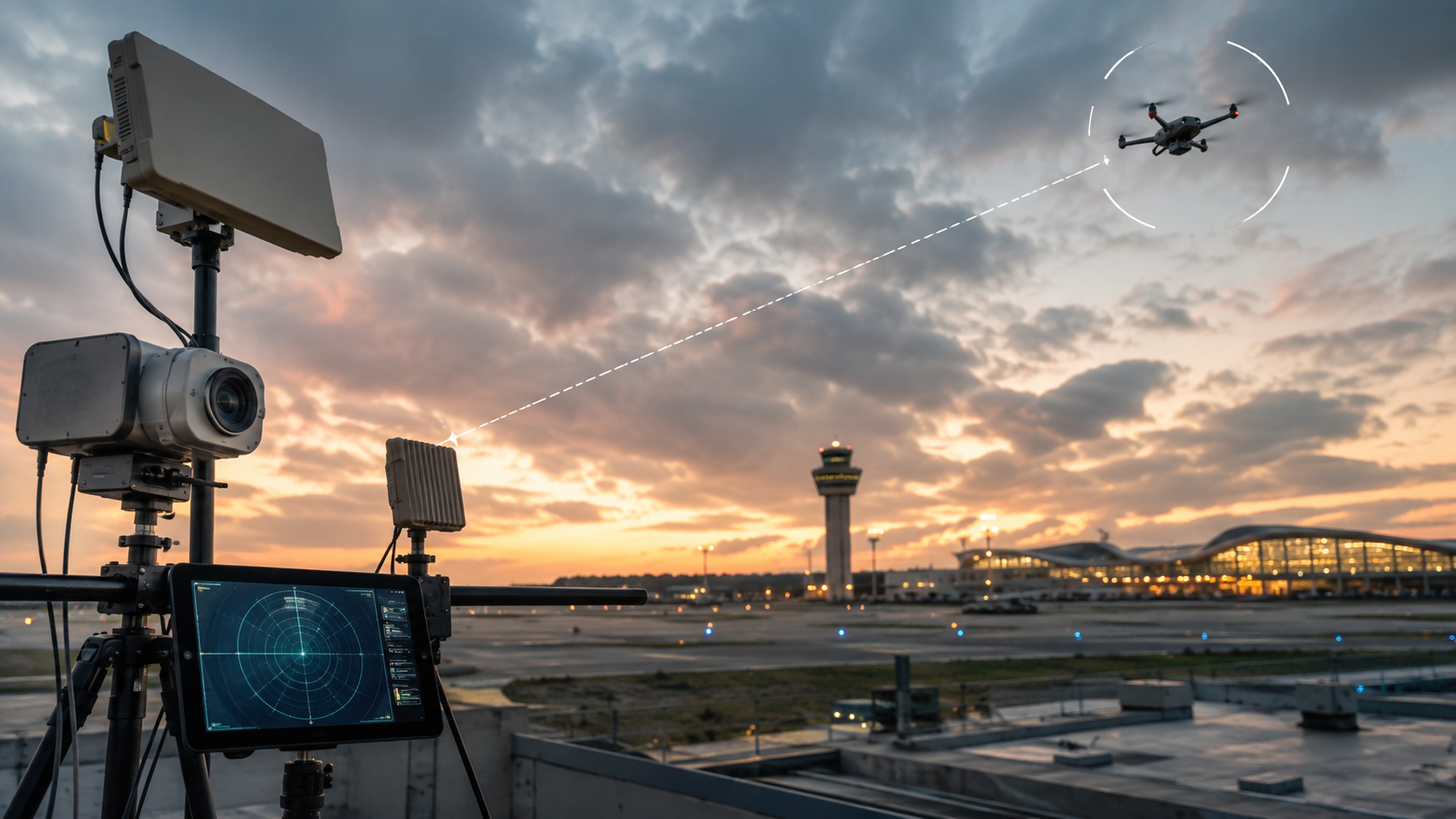
Category: Counter-UAS & Airspace Security

Detection and mitigation technologies for unauthorized drones and other low-altitude airspace threats — a fast-growing area of security technology.

  • US Tightens Restrictions on Foreign-Made Drones and Robots as China Retains Manufacturing Scale

    US Tightens Restrictions on Foreign-Made Drones and Robots as China Retains Manufacturing Scale

    Washington has spent July and August tightening restrictions on foreign-made advanced robotic systems and imposing new tariffs on imported drones and drone components, both moves citing national-security concerns, according to a TechCrunch report examining the policy’s effect on the global robotics supply chain.

    What Changed, and When

    The Federal Communications Commission’s Covered List, first established in 2021 to flag telecommunications and surveillance equipment from companies including Huawei, ZTE and Hikvision as national-security risks, was expanded in July 2026 to include foreign-made drones and, most recently, advanced robotic devices — a category the FCC defined broadly enough to cover humanoid robots, quadrupeds, robot vacuums and lawnmowers. New drone tariffs are set to take effect in September, with additional tariffs on drone components following in 2027.

    China’s Scale Advantage Persists

    Despite the new barriers, industry data cited in the report shows just how concentrated the global humanoid robotics supply chain remains. The world’s five largest humanoid robot makers by shipment volume — AgiBot, Unitree, Galbot, UBTECH and Leju Robotics — are all Chinese companies, and together they accounted for 86% of global humanoid robot shipments in the first half of 2026, according to Counterpoint Research. Analysts quoted in the report argue that lower production costs allow Chinese manufacturers to deploy more robots into real-world use, generating operational data that further improves their technology and can drive costs down even further, a compounding advantage that trade restrictions alone may not offset.

    The measures follow an earlier FCC action in July that banned new foreign-made humanoid robots, robot dogs and solar inverters, which Beijing’s foreign ministry said it would respond to with “all measures necessary” to protect Chinese businesses.

    Why It Matters for Security Buyers

    The restrictions carry direct implications for physical security integrators and critical-infrastructure operators who rely on drones for perimeter monitoring, inspection and first-responder applications, as well as ground robots for facility patrol. Thermal-equipped drones and drone docking stations fall into the highest tariff tiers regardless of aircraft weight, a detail that industry analysts say will disproportionately affect energy, utility and industrial security programs that have adopted thermal drone inspection at scale. Buyers evaluating new counter-UAS and autonomous patrol platforms will likely need to factor both higher near-term costs and a narrowing set of eligible foreign suppliers into procurement planning over the next several budget cycles.
  • Army Laser Weapon Downs Cartel-Linked Drones on Texas Border in System’s First Confirmed Use

    Army Laser Weapon Downs Cartel-Linked Drones on Texas Border in System’s First Confirmed Use

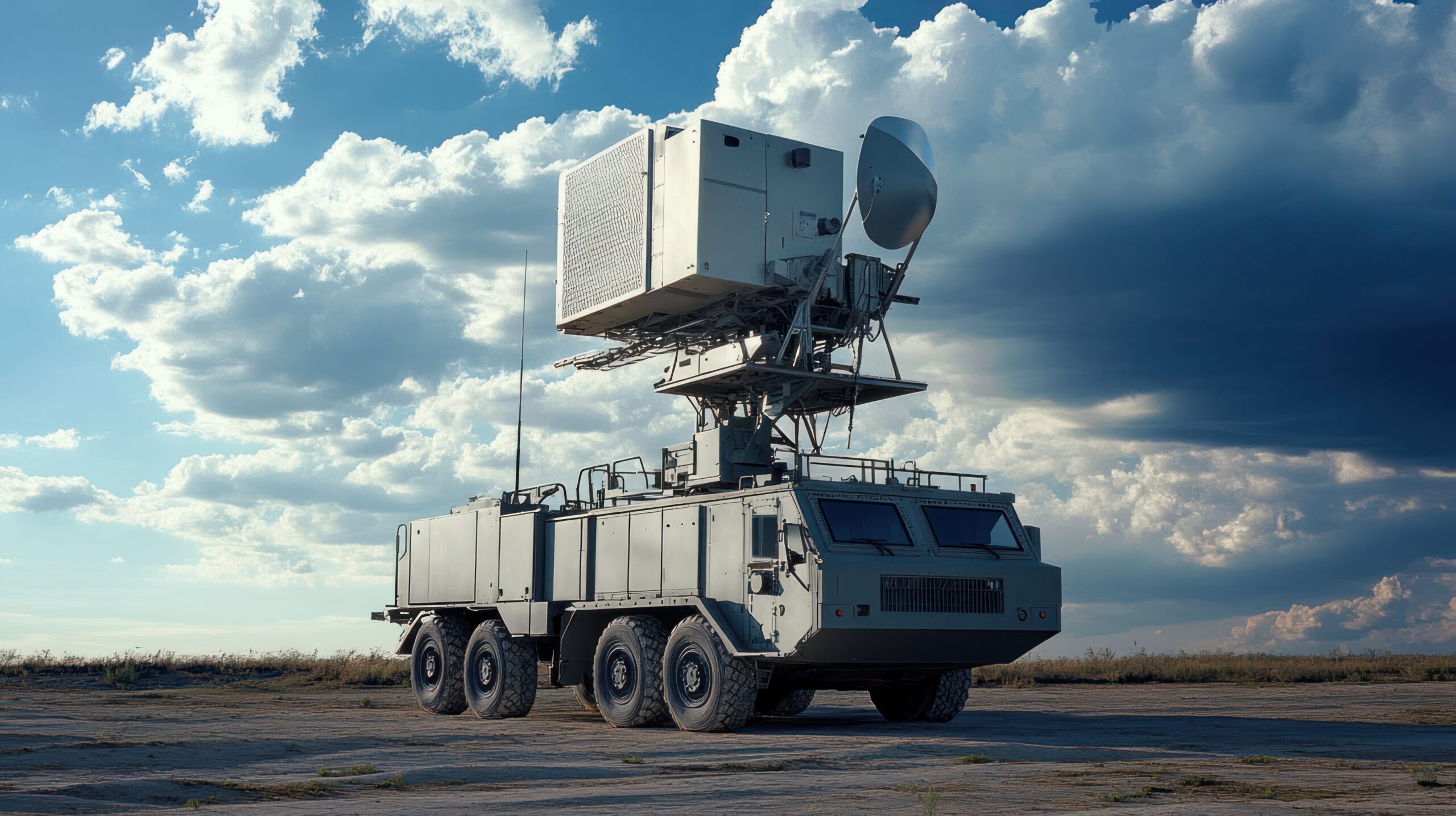
    The US Army’s Multipurpose High Energy Laser destroyed three cartel-linked drones along the Texas border over two nights, August 25 and 26, 2026, in what officials describe as the system’s first confirmed operational engagement, according to reporting from DroneXL, Unmanned Airspace, and NORTHCOM’s own statement, corroborated by AeroVironment, which confirmed one of its AMP-HEL units was involved.

    The engagements took place in airspace over or near the Rio Grande Valley in southern Texas and were carried out by Joint Task Force-Southern Border, a roughly 8,000-strong US Northern Command unit. The drones were assessed as hostile because they were operating in direct support of activity posing a physical threat to US military personnel and Customs and Border Protection partners working the area.

    Vehicle-Mounted System Produces 20 Kilowatts of Laser Power

    AMP-HEL is a vehicle-mounted directed-energy weapon capable of producing 20 kilowatts of laser power, designed for precision engagement of small unmanned aerial threats at a fraction of the cost of a traditional interceptor missile. The military did not specify the exact model variant used in the border engagements.

    The successful engagement marks a turnaround for the program, which drew criticism in February after an AMP-HEL unit mistakenly targeted the wrong drone and briefly froze operations at a commercial airport. Border-area counter-drone activity has intensified this year as cartel organizations increasingly use small unmanned aircraft for smuggling and surveillance, prompting expanded federal investment in counter-UAS testing and detection infrastructure.

  • Virginia Tech Opens Counter-UAS Testing and Research Center Backed by $5 Million Army Futures Command Award

    Virginia Tech Opens Counter-UAS Testing and Research Center Backed by $5 Million Army Futures Command Award

    Virginia Tech held a ribbon-cutting ceremony on August 28, 2026, for a new Counter-UAS Testing and Research Center at its Kentland Farms property in Blacksburg, Virginia, a facility the university’s National Security Institute says will support development of drone-defense technology for both the US Army and civilian critical-infrastructure operators, according to Virginia Tech News and local coverage from WSLS.

    The outdoor site is backed by a $5 million award from the US Army Futures Command’s Combat Capabilities Development Command C5ISR Center and gives researchers a real-world, open-air environment to test detection, tracking, and identification systems against unmanned aircraft — complementing indoor and virtual test environments the university already operates. University President Tim Sands, US Senator Mark Warner, and 9th District Congressman Morgan Griffith attended the opening.

    Officials Cite a Capability Gap

    “This is an area where we have to catch up, where America is behind,” Warner said at the ceremony. Austin Phoenix, director of mission systems at the Virginia Tech National Security Institute, said unmanned aircraft present a distinct detection challenge “because they’re just much smaller” than the aerial threats legacy air-defense systems were designed around.

    The center is intended to provide independent verification and validation testing for both government and private-industry counter-UAS systems, adding to a small number of dedicated outdoor test ranges nationally as drone incursions over military installations, airports, and other sensitive sites continue to draw federal attention. Virginia was one of seven states granted early federal UAS test-site designation roughly twelve years ago, giving the university a long-running base of aviation-research infrastructure to build on. The opening follows a string of counter-drone contract awards this year, including DHS’s department-wide counter-drone contracts.

  • Denmark Selects Terma to Build Nationwide Counter-Drone Defense System

    Denmark Selects Terma to Build Nationwide Counter-Drone Defense System

    A Shared National Drone Picture

    Denmark’s Ministry of Defence Acquisition and Logistics Organisation (DALO) announced on August 19, 2026 that it has selected Danish defense contractor Terma to deliver an integrated, nationwide command-and-control system for counter-drone defense. The system will connect existing and future sensors operated by the Danish Armed Forces, civilian authorities and critical infrastructure operators into a single shared drone situational picture, according to Terma.

    “To defend ourselves, we need to be able to eliminate enemy drones in our airspace,” Danish Defense Minister Jeppe Bruus said of the contract. Terma said the platform will support the management of drone incidents at military installations, airports, ports, energy facilities, government buildings and other critical infrastructure sites, and that its architecture is designed to allow additional sensors, sites and countermeasures to be integrated over time.

    Built on Terma’s Helion Data Backbone

    The system is based on Terma Helion, the company’s multi-domain data backbone, and will integrate command-and-control and data-fusion software from OSL Technology, which Terma acquired in 2025. The combined platform uses artificial intelligence to process, classify and prioritize sensor data, fusing input from radar, other surveillance systems and third-party sensors to support tactical decision-making at both local and central command levels.

    “This new agreement with Terma is an important cornerstone in the ongoing effort to build a strong counter-drone capability, both within the Danish Armed Forces and Danish industry,” said Lieutenant General Per Pugholm Olsen, chief of DALO. The contract comes as European states have grown increasingly concerned about unauthorized drone activity near military sites, airports and other critical infrastructure. Terma and DALO did not disclose the contract value.

    Sources

  • DHS Awards Department-Wide Contracts for Counter-Drone Capabilities

    DHS Awards Department-Wide Contracts for Counter-Drone Capabilities

    A Common Acquisition Pathway Across DHS

    The Department of Homeland Security announced on August 5, 2026 that it has made multiple contract awards to support department-wide access to Counter-Unmanned Aircraft Systems (C-UAS) capabilities. The awards give DHS components a common pathway to acquire C-UAS hardware, software and services tailored to fixed-site, mobile, aviation, maritime, aircraft-based and special-mission environments, according to the department’s Science and Technology Directorate.

    “These awards mark an important step in strengthening DHS’s ability to respond to unauthorized and malicious unmanned aircraft systems,” said Homeland Security Secretary Markwayne Mullin. “By taking a Department-wide approach, we are improving mission readiness, supporting more consistent capabilities, and helping ensure DHS personnel have access to the right tools for the job.”

    Replacing Fragmented Procurement

    DHS components have historically procured C-UAS capabilities through separate acquisition efforts. The new contract structure is intended to support greater consistency, interoperability, operational flexibility, technology refresh and lifecycle management across the department, while still letting individual components select solutions aligned to their specific missions. The awarded contracts cover detection, tracking, classification, identification, mitigation, command-and-control integration, training, maintenance, technical support, system integration, research and development, test and evaluation, and vendor-operated turnkey services.

    “As unmanned aircraft systems become more capable and more widely available, DHS needs solutions that can adapt,” said Under Secretary for Science and Technology Pedro Allende. Components expected to use the contract include the U.S. Secret Service, U.S. Coast Guard, Customs and Border Protection, Immigration and Customs Enforcement, the Transportation Security Administration, FEMA, the Federal Protective Service, U.S. Citizenship and Immigration Services, and the Science and Technology Directorate itself. DHS did not disclose specific contract values or awardee names in its announcement.

    Sources

  • Civilian Drones Have Grounded Wildfire Aircraft Dozens of Times in 2026, Officials Say

    Civilian Drones Have Grounded Wildfire Aircraft Dozens of Times in 2026, Officials Say

    67 Reported Incursions So Far This Year

    The U.S. Forest Service says there have been 67 unauthorized drone incursions into wildfire airspace so far in 2026, a pattern officials say repeatedly forces firefighting aircraft out of the sky. In an August 2026 public safety post, the Forest Service and the National Interagency Fire Center said temporary flight restrictions are put in place over active wildfires specifically to protect aerial firefighting crews flying air tankers and helicopters, and that every incursion by an unauthorized drone forces those aircraft to stand down until the airspace is confirmed clear. Thirty-nine of the 67 reported incursions this year occurred in Washington state, according to the agencies. Individuals caught flying drones into these restricted zones can face significant fines and potential prison time.

    Spokane Complex Fires: A Concrete Example of the Risk

    The scale of the disruption was illustrated during the Spokane Complex wildfires in Washington in early August 2026. According to FireRescue1, citing a Spokane County Sheriff’s Office news conference, 26 drone incursions were reported on August 2, four of which flew directly into the path of firefighting aircraft. The following evening, aircraft were grounded for roughly 30 minutes after another unauthorized drone entered the restricted airspace, the outlet reported, citing The Seattle Times; the operator in that case was not located. Spokane County Sheriff John Nowels said his office had identified multiple drone operators from the earlier incidents and referred citations to the Federal Aviation Administration, noting each operator could face penalties up to $100,000.

    Washington Department of Natural Resources spokesperson Ryan Rodruck told FireRescue1 that grounding aircraft even briefly has real operational costs: “We’re utilizing all units at our disposal right now, but we can’t do that effectively if the airspace isn’t clear.” He said the temporary flight restriction over the Spokane fires protected airspace up to 5,000 feet, and that wildland firefighting aircraft often operate at altitudes similar to many civilian drones, raising collision risk for pilots and ground crews alike. Thirty-five aircraft, including assets from DNR and the National Guard, were assigned to the Spokane fires on August 3. “Vital seconds, minutes, are lost” with every grounding, Rodruck said.

    Legal Exposure and Public Messaging

    Interfering with firefighting operations on public lands is a federal crime that can carry up to a year in prison, and flying a drone inside a wildfire-related temporary flight restriction can also trigger a civil penalty of $20,000 or more, according to FireRescue1’s reporting. The Forest Service has run a public-awareness campaign, “If You Fly, We Can’t,” aimed at recreational drone operators, warning that even a very small drone can damage a helicopter’s tail rotor or disable an aircraft engine. Both agencies encourage anyone who spots a drone inside restricted wildfire airspace to call 911 or report it directly to the FAA.

    Sources

  • Third Drone and Suspected Explosives Found in Widening Leipzig Airport Sabotage Probe

    Third Drone and Suspected Explosives Found in Widening Leipzig Airport Sabotage Probe

    German investigators have found a third drone and a substance suspected to be military-grade explosive near Leipzig/Halle Airport, widening the investigation into an attempted attack earlier this month, German broadcasters NDR and WDR and the newspaper Sueddeutsche Zeitung reported on August 25, 2026.

    What was found

    According to the reports, the drone was recovered on August 14, ten days after the original incident, in an area west of the airport. Investigators also found roughly 50 grams (1.8 ounces) of a substance they suspect is hexogen, a military explosive, along with drone-control equipment reportedly taped to a tree in Kursdorf near the airport and a suspected blast site nearby.

    The original incident

    The case began on August 4, 2026, when an airport employee found a drone carrying an explosive device with a faulty detonator near a Ukrainian Antonov cargo aircraft in the airport’s secure cargo operations area. The discovery forced a temporary shutdown of the airport’s southern runway. German Interior Minister Alexander Dobrindt described the incident as representing a “new quality of danger” and a hybrid-style attack.

    Why it matters for aviation security

    Leipzig/Halle is a major European cargo hub used by Ukrainian Antonov aircraft, NATO and German military logistics, and DHL. The fact that an armed drone reached a secure airside cargo area — and that investigators are still recovering additional devices and evidence weeks later — underscores the difficulty of defending sensitive perimeter and airside zones against small, low-cost unmanned aircraft. Chancellor Friedrich Merz has said the government intends to formally attribute the attack; German security sources have pointed to possible Russian intelligence involvement, which Moscow denies.

    Sources

    More coverage like this is available on Technology News.

  • Acoustic Drone Detection: Where It Works and Where It Fails

    Acoustic Drone Detection: Where It Works and Where It Fails

    Acoustic drone detection uses microphones or microphone arrays to listen for characteristic sound signatures produced by propellers and electric motors. Unlike radar or active radio systems, acoustic sensors are passive. They do not transmit energy and can sometimes detect drones that are flying autonomously without an obvious RF control link.

    The technology is attractive because it can be compact, relatively easy to deploy and useful as a supplementary sensor. Algorithms compare incoming audio with trained signature libraries and may estimate direction of arrival when multiple microphones are used together.

    Its main limitation is range. Sound attenuates quickly, especially in wind, rain or complex terrain. Urban areas, highways, factories, airports and ports generate substantial background noise that can mask drone signatures or create false detections. The same drone may also sound different depending on payload, propeller type, speed and distance.

    Acoustic detection therefore works best in quieter environments or as part of a multi-sensor architecture. A radar track can be strengthened by an acoustic confirmation, while an acoustic cue can direct a camera toward a suspected target. It is generally less suitable as the sole primary detector for large critical sites.

    System evaluation should focus on measured performance in the actual environment rather than laboratory range claims. Buyers should test wind conditions, machinery noise, vehicle traffic and different drone types. They should also examine how the acoustic layer integrates with radar, RF and video systems.

    Acoustic sensing has a legitimate role in drone awareness, but its strength comes from complementing other technologies. Used correctly, it adds another independent source of evidence; used alone, it can be vulnerable to environmental conditions that are difficult to control.

  • Critical Infrastructure Airspace Monitoring

    Critical Infrastructure Airspace Monitoring

    Critical infrastructure security traditionally focused on fences, gates, cameras and ground-based intrusion detection. Drones have added a new dimension: the low-altitude airspace above a facility can now be used for observation, inspection, accidental overflight or unauthorized activity. Power plants, refineries, substations, ports, data centers and water facilities increasingly treat airspace awareness as part of physical security.

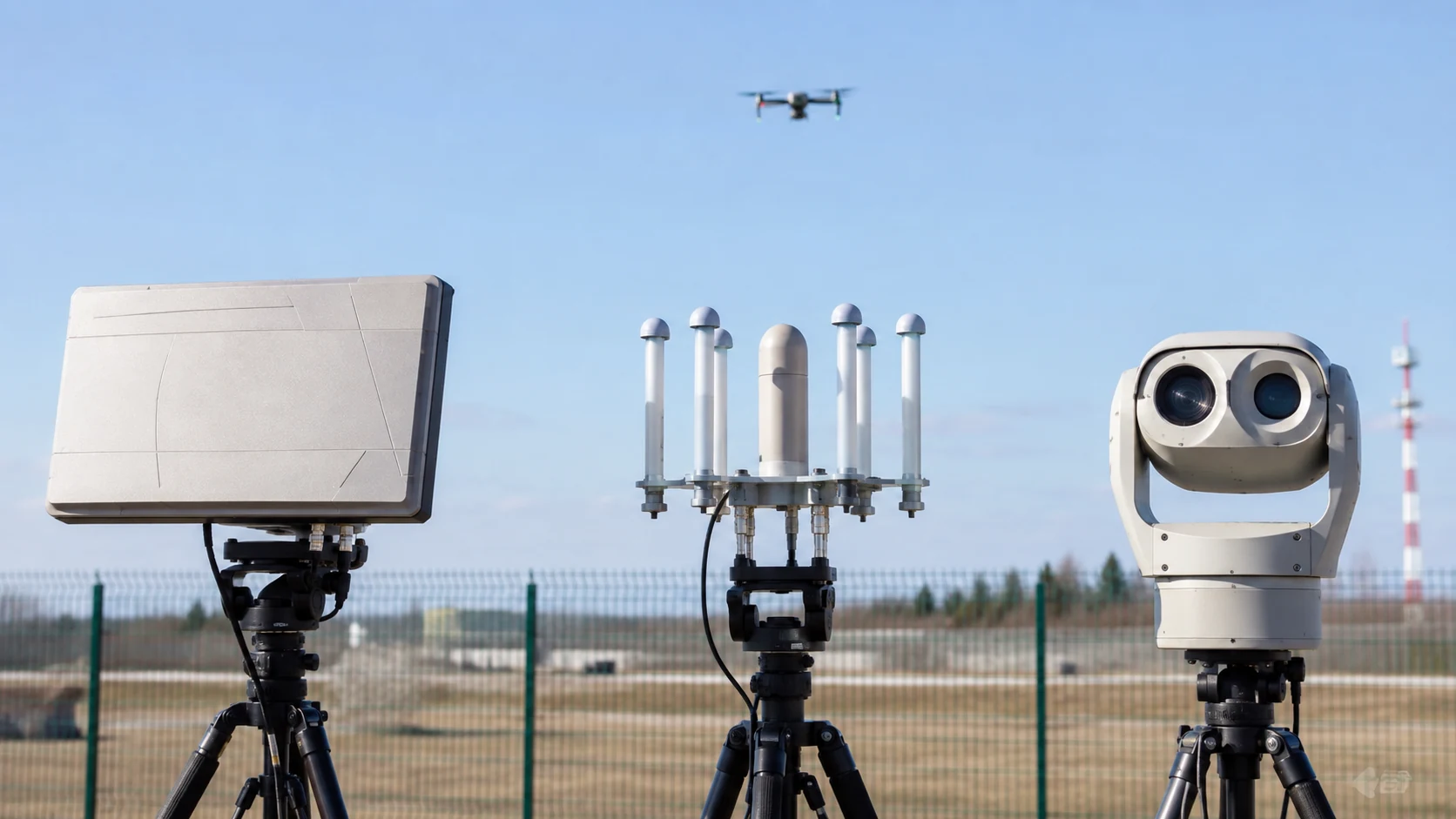
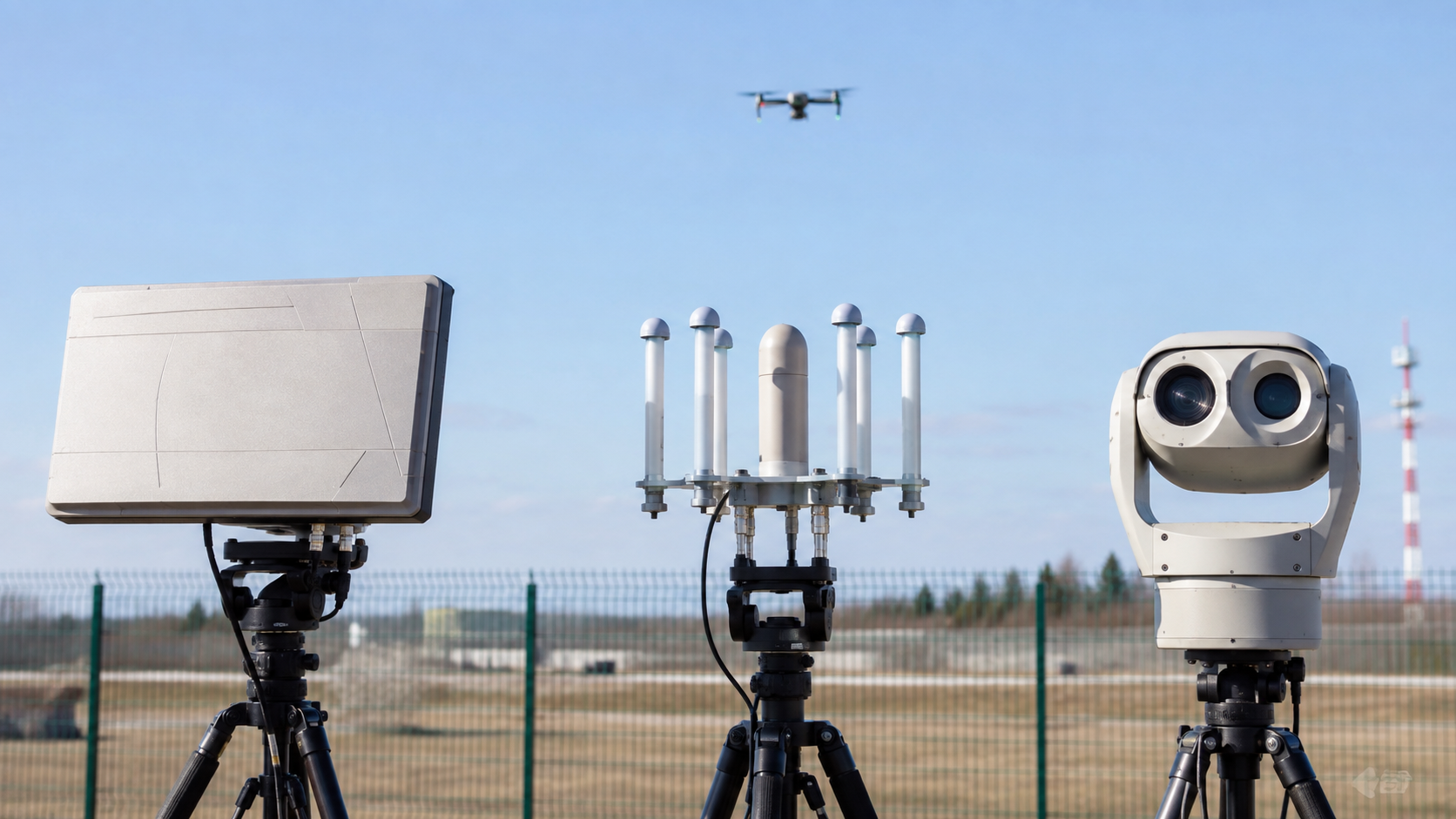
    A typical architecture combines radar, RF sensing, optical or thermal cameras and a command platform. Radar supplies range, direction and track history. RF monitoring can provide protocol-level clues when a drone is actively communicating. Cameras verify the target and create evidence. Sensor fusion then combines these data points into a single operational track.

    Risk is highly site-specific. A drone above a large solar farm presents a different concern from one approaching a high-voltage substation, LNG terminal or nuclear facility. Security teams should therefore define protected zones, alert thresholds and escalation rules around critical assets rather than using one uniform alarm policy.

    Integration with existing systems is essential. When an airspace event is detected, nearby perimeter cameras can be cued automatically, incident-management software can create a case and operators can correlate the drone’s route with ground activity. This is especially valuable when the airspace event is part of a broader security incident.

    Environmental design is also important. Industrial facilities contain steel structures, pipes, cranes, electromagnetic noise and moving machinery. These conditions affect radar, RF and camera performance. Site surveys and real-world testing should therefore be part of procurement.

    The most useful outcome is not a separate drone console, but a unified picture that shows what is happening on the ground and in the air. As critical infrastructure becomes more instrumented, low-altitude airspace monitoring is likely to become another standard layer of integrated physical security.

  • Airport Drone Detection Systems

    Airport Drone Detection Systems

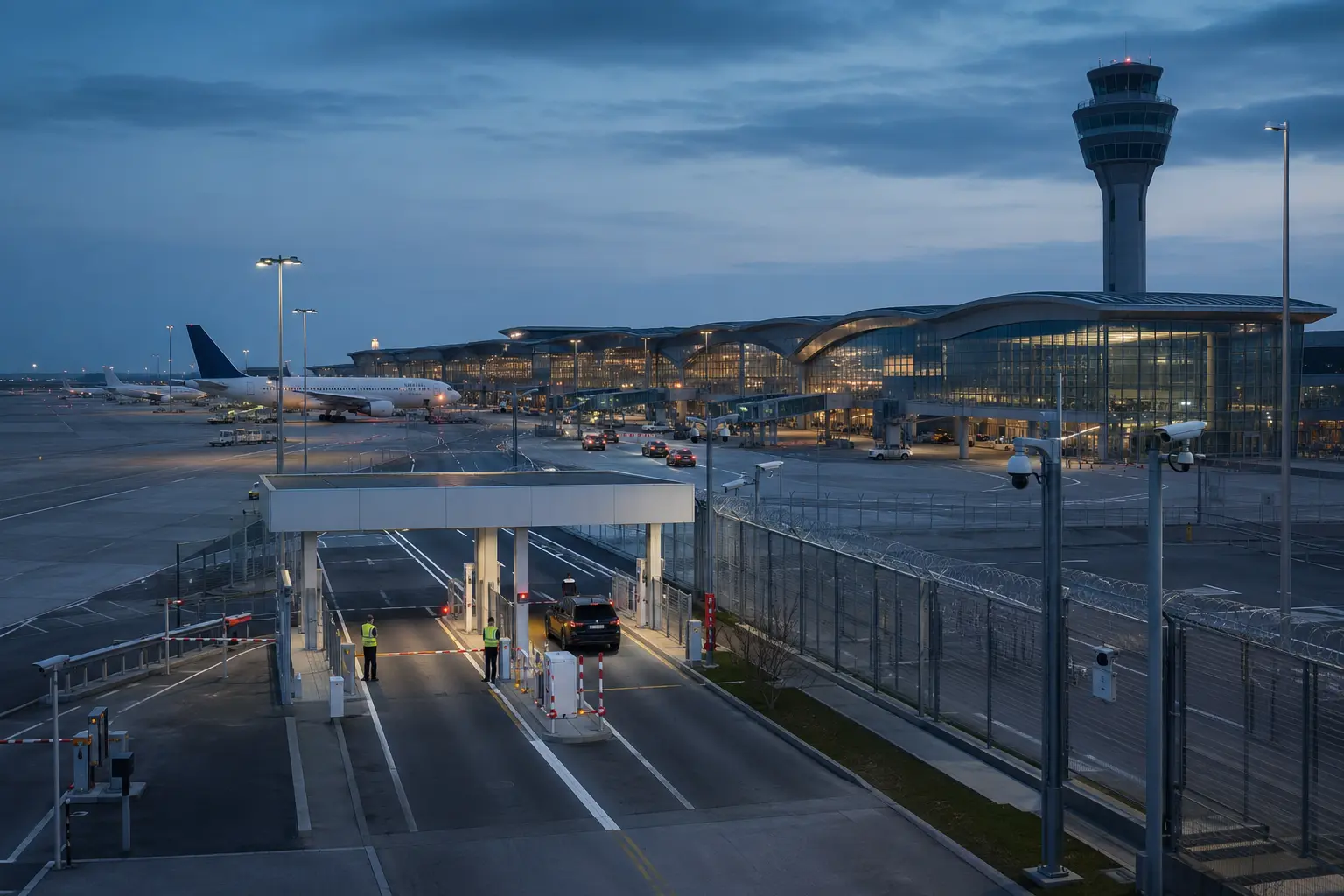
    Airports face one of the most demanding drone-detection environments. A small unmanned aircraft can create operational disruption around runways, approach paths and terminal areas even when there is no malicious intent. The challenge is not simply to detect an object in the sky, but to determine whether it represents a credible risk quickly enough for airport operators to act.

    Modern airport systems normally combine short- and medium-range radar, radio-frequency monitoring, electro-optical cameras and thermal imaging. Radar provides persistent coverage and track information. RF sensors can identify known command links or protocols. Cameras then provide visual confirmation and evidence. Because airports already contain extensive radar, radio and navigation infrastructure, careful frequency planning and site engineering are essential.

    Coverage design matters as much as sensor selection. A system should consider runway approaches, terminal airspace, parking aprons, perimeter zones and nearby public areas. Terrain, hangars, control towers and other structures can create blind spots. Multiple sensors positioned around the airport are often required to achieve useful low-altitude coverage.

    False alarms are another major concern. Birds, ground vehicles, construction equipment and conventional aircraft can all produce confusing signatures. Good systems use track behavior, micro-Doppler analysis and sensor fusion to improve classification. The objective is not to eliminate every false positive, but to reduce them to a level at which operators continue to trust the system.

    Drone detection must also integrate with airport operations. A verified track may need to be shared with the airport operations center, air traffic stakeholders, police or other authorized responders. Automated camera cueing and geofenced alert zones can help prioritize drones that are moving toward a runway or other sensitive area.

    Detection should be separated from mitigation. Active countermeasures may be restricted by aviation and communications law, and authority varies by country. For many airports, the most important capabilities are early detection, reliable tracking, evidence preservation and a clear operational response plan.

    The best airport drone-detection architecture is therefore layered, site-specific and tightly integrated with existing safety and security procedures. The goal is not simply to see drones. It is to create a dependable low-altitude airspace picture that supports fast, proportionate decisions.