Category: Emerging Technologies

  • Anthropic Launches Claude Sonnet 5 as Its New Default Model

    Anthropic Launches Claude Sonnet 5 as Its New Default Model

    June 30, 2026 — Anthropic released Claude Sonnet 5, positioning it as its most agentic Sonnet-tier model and making it the new default for Claude.ai Free and Pro users.

    What happened

    Claude Sonnet 5 replaced Sonnet 4.6 as the default model for Free and Pro plans, with Max, Team and Enterprise customers able to select it and developers reaching it through the Claude API, Amazon Bedrock, Google Cloud Vertex AI and Microsoft Foundry. Anthropic said the model narrows the performance gap with its higher-priced Opus tier on agentic and coding tasks while keeping Sonnet-level pricing.

    Why it matters

    Pushing near-Opus agentic capability down into a cheaper, faster tier lowers the cost of deploying autonomous, multi-step AI agents — including agents that operate browsers, terminals and internal tools — which is precisely the capability class that security teams need to govern most closely.

    Security and infrastructure impact

    Wider access to cheaper agentic models increases the attack surface for prompt injection and unauthorized tool use in production systems, making agent-specific guardrails, logging and human-in-the-loop review more relevant for organizations adopting Sonnet-class models at scale.

    Sources

    ← Back to Technology News

  • US Export-Control Order Briefly Suspends Claude Fable 5 Worldwide

    US Export-Control Order Briefly Suspends Claude Fable 5 Worldwide

    June 12, 2026 — The US Commerce Department ordered Anthropic to suspend access to its Claude Fable 5 and Claude Mythos 5 models under export-control rules, prompting a brief worldwide shutdown before access was restored around July 1.

    What happened

    Citing a claimed jailbreak with national-security implications, Commerce ordered Anthropic to cut off foreign access to the two models under the Export Administration Regulations. Because Anthropic could not verify user nationality for every account in real time, it suspended access globally rather than only for the flagged accounts. Commerce Secretary Howard Lutnick confirmed the order was withdrawn around July 1, and Anthropic began restoring service on July 8.

    Why it matters

    This marked one of the first times a commercially available frontier AI model service was directly restricted under US export-control authority, establishing a precedent that AI labs’ global service availability can be interrupted by national-security-driven trade enforcement with very short notice.

    Security and infrastructure impact

    Enterprises running Claude Fable 5-dependent production workloads experienced an unplanned multi-week disruption, underscoring why AI vendor-risk planning should account for export-control and geopolitical suspension risk alongside conventional outage and security incidents.

    Sources

    ← Back to Technology News

  • 2026 FIFA World Cup Becomes Largest Civilian AI Surveillance Deployment on Record

    2026 FIFA World Cup Becomes Largest Civilian AI Surveillance Deployment on Record

    June 11, 2026 — As the 2026 FIFA World Cup opened across the United States, Mexico and Canada, coverage of the tournament’s security operation described it as the largest civilian AI surveillance deployment in sporting history.

    What happened

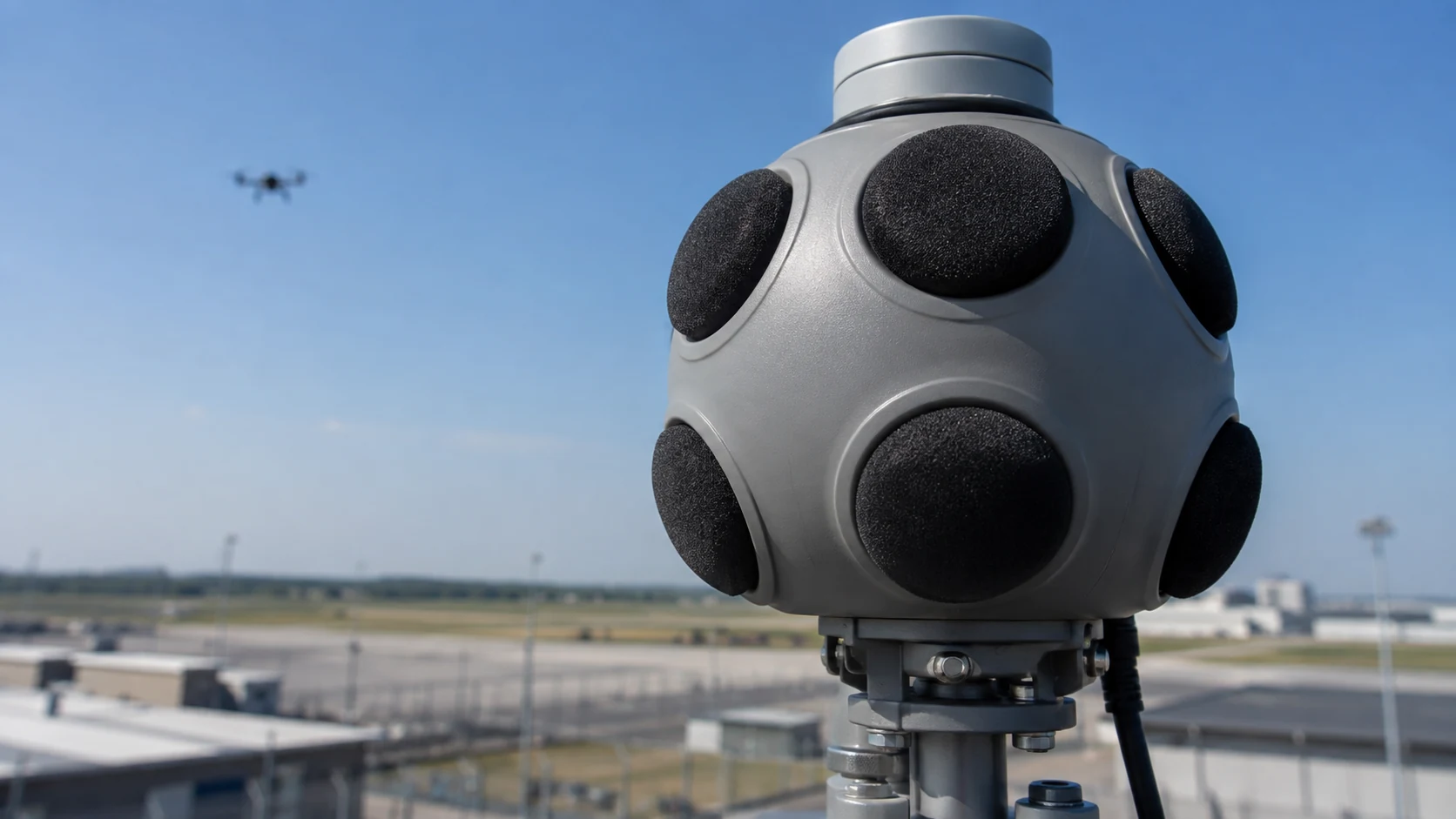
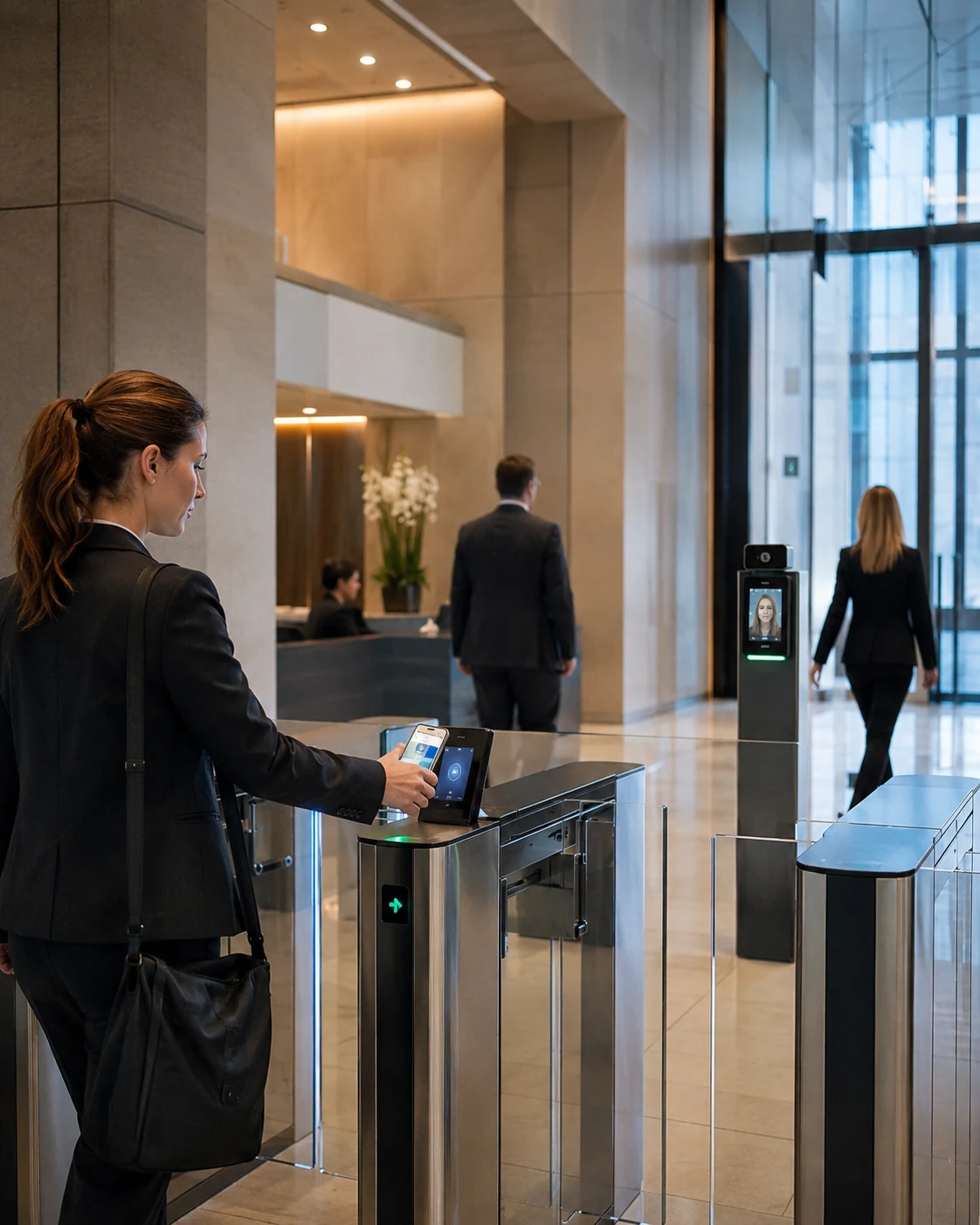
    US host venues including Gillette Stadium in Boston, Hard Rock Stadium in Miami and Mercedes-Benz Stadium in Atlanta deployed AI-powered facial recognition for entry and payments, autonomous robotic patrol units in restricted areas and perimeters, counter-drone systems, and real-time AI video analytics feeding stadium security operations centers. US federal agencies reported committing $365 million specifically to security technology for the event.

    Why it matters

    A tournament spanning 16 stadiums and more than 6 million attendees provided one of the largest real-world stress tests yet for integrated AI video analytics, biometric access control and counter-drone systems operating together at scale under sustained public scrutiny.

    Security and infrastructure impact

    How these systems perform — and how incidents, false positives or privacy complaints are handled — will likely shape procurement and regulatory debates around AI-based stadium and major-event security well beyond the tournament itself.

    Sources

    ← Back to Technology News

  • DeepSeek Previews V4, Its Next Open-Weight Flagship Model

    DeepSeek Previews V4, Its Next Open-Weight Flagship Model

    April 24, 2026 — DeepSeek released a preview of V4, its next flagship model family, continuing the rapid pace of open-weight releases that has narrowed the gap with closed frontier labs.

    What happened

    DeepSeek’s V4 preview introduced two variants that later shipped in full: V4-Pro, a roughly 1.6-trillion-parameter mixture-of-experts model, and the smaller, faster V4-Flash, both sharing a 1-million-token context window and released with open weights.

    Why it matters

    Continued frontier-class releases from open-weight developers give enterprises and governments outside the small group of US frontier labs a credible self-hostable alternative, which changes data-residency and vendor-lock-in calculations for regulated industries.

    Security and infrastructure impact

    Security teams evaluating open-weight models for self-hosted or air-gapped use still need independent red-teaming and supply-chain review of model weights and inference stacks, since open availability does not by itself substitute for a formal security assessment.

    Sources

    ← Back to Technology News

  • Google Announces General Availability of TPU v7 “Ironwood”

    Google Announces General Availability of TPU v7 “Ironwood”

    April 22, 2026 — Google announced general availability of its seventh-generation Tensor Processing Unit, Ironwood, at Google Cloud Next 2026, its first TPU designed specifically for inference workloads.

    What happened

    Google said Ironwood delivers roughly ten times the peak performance of its TPU v5p and about four times the per-chip performance of the prior TPU v6e (Trillium) generation, scaling up to superpods of thousands of chips. Anthropic disclosed a commitment to use up to one million TPU chips, including an initial 400,000 Ironwood units, extending its compute plans into 2027.

    Why it matters

    A major AI lab the size of Anthropic committing to Google’s custom silicon at this scale, alongside its existing Nvidia and Azure relationships, reinforces that frontier AI companies are deliberately spreading compute dependency across multiple hardware ecosystems rather than standardizing on one.

    Security and infrastructure impact

    For enterprise buyers, the diversification of underlying AI hardware across Nvidia, custom hyperscaler silicon like Ironwood, and vendor-specific chips such as OpenAI’s Titan means that performance, cost and security characteristics increasingly vary by which cloud and chip a given AI service actually runs on.

    Sources

    ← Back to Technology News

  • Anthropic Launches Project Glasswing to Share AI Vulnerability-Finding With Industry

    Anthropic Launches Project Glasswing to Share AI Vulnerability-Finding With Industry

    April 9, 2026 — Anthropic announced Project Glasswing, giving a group of major technology and finance companies early access to Claude Mythos Preview, a model it says can find and exploit software vulnerabilities at a level that rivals skilled human researchers.

    What happened

    Partners in the program included Amazon Web Services, Apple, Broadcom, Cisco, CrowdStrike, Google, JPMorganChase, the Linux Foundation, Microsoft, Nvidia and Palo Alto Networks. Anthropic said Mythos Preview had already identified thousands of high-severity vulnerabilities across every major operating system and web browser, and it kept the model unreleased to the public, citing misuse concerns.

    Why it matters

    An AI model capable of automated, human-competitive vulnerability discovery is a double-edged development: it can dramatically accelerate defensive patching, but the same capability could eventually be misused for offensive exploit development if it reaches less careful actors.

    Security and infrastructure impact

    Critical-infrastructure operators and software vendors should watch how programs like Glasswing scale, since AI-assisted vulnerability research at this level will likely change both the speed of patch cycles and the sophistication expected of future exploit attempts.

    Sources

    ← Back to Technology News

  • OpenAI Closes $122 Billion Funding Round at $852 Billion Valuation

    OpenAI Closes $122 Billion Funding Round at $852 Billion Valuation

    March 31, 2026 — OpenAI closed a funding round totaling $122 billion in committed capital at an $852 billion post-money valuation, expanding on the $110 billion round it had announced in February.

    What happened

    The round followed a $110 billion raise closed on February 27, 2026 at an $840 billion valuation, with SoftBank, Nvidia and Amazon among the largest contributors. OpenAI described the additional capital as funding for its next phase of AI infrastructure and research.

    Why it matters

    Funding rounds of this size, arriving within weeks of one another, show how capital-intensive frontier AI development has become and how deeply intertwined AI labs’ finances now are with their chip and cloud suppliers, several of whom are also investors.

    Security and infrastructure impact

    The scale of committed capital gives a sense of the infrastructure build-out still to come, reinforcing the case for security and safety planning to be built into new AI data-center projects from the design stage rather than retrofitted later.

    Sources

    ← Back to Technology News

  • Samsung Reported to Win Exclusive HBM4 Supply Deal for OpenAI’s Titan Chip

    Samsung Reported to Win Exclusive HBM4 Supply Deal for OpenAI’s Titan Chip

    March 2026 — Samsung was reported to have secured an exclusive deal to supply HBM4 memory for OpenAI’s first custom AI chip, internally known as Titan, with shipments planned for the second half of 2026.

    What happened

    Multiple industry outlets reported that Samsung agreed to supply up to roughly 800 million gigabits of 12-layer HBM4 memory for OpenAI’s Titan processor. Samsung separately showcased its next-generation HBM4E memory, aimed at Nvidia’s Vera Rubin platform, at Nvidia’s GTC 2026 conference in March.

    Why it matters

    Because neither company has issued a joint press release confirming exact volumes or terms, the specifics should be treated as reported rather than officially confirmed; the broader trend — OpenAI building its own silicon supply chain alongside its Broadcom and Nvidia partnerships — is well corroborated across sources.

    Security and infrastructure impact

    OpenAI’s parallel hardware partnerships with Broadcom, Samsung and Nvidia show a deliberate strategy of diversifying AI chip supply across multiple vendors, a resilience approach that mirrors what physical-security integrators increasingly recommend for critical camera, sensor and access-control hardware supply chains.

    Sources

    ← Back to Technology News

  • NVIDIA Expands AI-Powered Cybersecurity Partnerships for OT and ICS

    NVIDIA Expands AI-Powered Cybersecurity Partnerships for OT and ICS

    February 23, 2026 — NVIDIA detailed integrations with Akamai, Forescout, Palo Alto Networks, Siemens and Xage Security for operational technology and industrial control security.

    What happened

    NVIDIA announced that several security and industrial vendors were integrating its accelerated computing, AI and BlueField technology into OT and ICS security offerings. The company described architectures for visibility, policy enforcement and threat response at the infrastructure edge. Capabilities will vary by partner product and deployment, so the announcement should not be read as a single universally available solution.

    Why it matters

    OT environments often combine long-lived equipment, availability constraints and limited maintenance windows. Moving selected security functions closer to industrial workloads may improve visibility and response, but it also adds components that must be engineered and governed correctly.

    Security and infrastructure impact

    Operators should validate passive discovery, segmentation, fail-safe behavior, update procedures and the effect of automated containment on production. AI-generated detections must feed accountable incident workflows rather than making uncontrolled process decisions.

    Sources

    ← Back to Technology News

  • Big Tech AI Infrastructure Spending Is Estimated Near $650 Billion in 2026

    Big Tech AI Infrastructure Spending Is Estimated Near $650 Billion in 2026

    February 23, 2026 — Bridgewater analysis reported by Reuters estimated that Alphabet, Amazon, Meta and Microsoft could invest about $650 billion in AI-related infrastructure during 2026.

    What happened

    Reuters reported a Bridgewater Associates analysis estimating that Alphabet, Amazon, Meta and Microsoft would collectively invest about $650 billion to scale AI-related infrastructure in 2026. The number is an external estimate based on spending plans and should not be presented as a completed expenditure or a single pooled fund.

    Why it matters

    Even as an estimate, the scale shows that AI is driving a major build cycle for servers, networks, data centers and power. It also creates execution risk: capacity can arrive later than expected, demand can shift, and infrastructure decisions may outlast a particular model generation.

    Security and infrastructure impact

    Security planners should be included early in AI-facility programs. Physical protection, supply-chain assurance, identity, OT segmentation, fire protection and incident response need to scale with the compute environment and its concentration of operational value.

    Sources

    ← Back to Technology News