Category: Emerging Technologies

  • Digital Twins for Physical Security Operations

    Digital Twins for Physical Security Operations

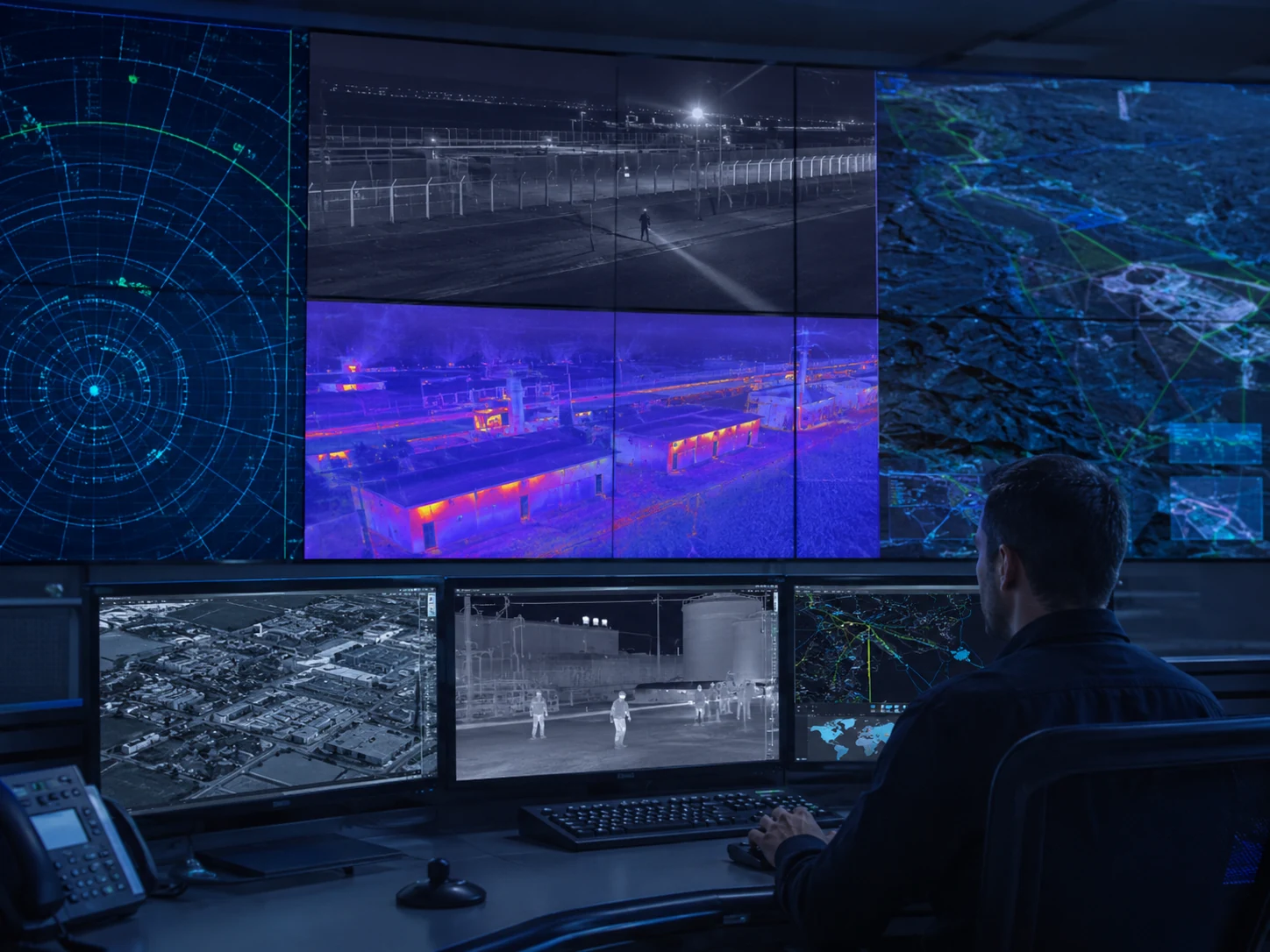
    Digital twins are increasingly being used to create a live virtual representation of buildings, campuses and critical infrastructure. In physical security, the value of a digital twin is not the 3D model itself. It is the ability to connect that model to real devices, alarms, identities and operational data.

    How the Technology Works

    A security digital twin can display cameras, doors, intrusion zones, fire devices, intercoms, sensors and critical assets in their actual spatial context. When an alarm occurs, the operator sees where it is happening and what systems are nearby instead of interpreting a device name from a list.

    The concept becomes more powerful when live data is added. Door status, camera health, occupancy, environmental conditions and maintenance state can all be visualized on the same model. This turns a static design file into an operational interface.

    Operational Considerations

    Incident response is an obvious use case. A perimeter alarm can highlight the affected zone, show the nearest cameras, display access routes and identify nearby personnel. During an evacuation, the model can combine fire information, occupancy data and route status to support command decisions.

    Digital twins can also help before an incident. Security planners can simulate camera coverage, evaluate blind spots, review guard routes and test the effect of new barriers or access points. The model becomes a shared environment for design, operations and training.

    Integration is the difficult part. Buildings often contain systems from many vendors using different protocols and naming conventions. A digital twin is only as useful as the data connected to it. Device identifiers, floor plans and asset records must be maintained as the facility changes.

    Deployment and Risk

    Performance and cybersecurity must also be considered. A detailed 3D environment can require significant computing resources, and connections to operational systems create a sensitive integration layer. Access to the twin should be role-based and audited.

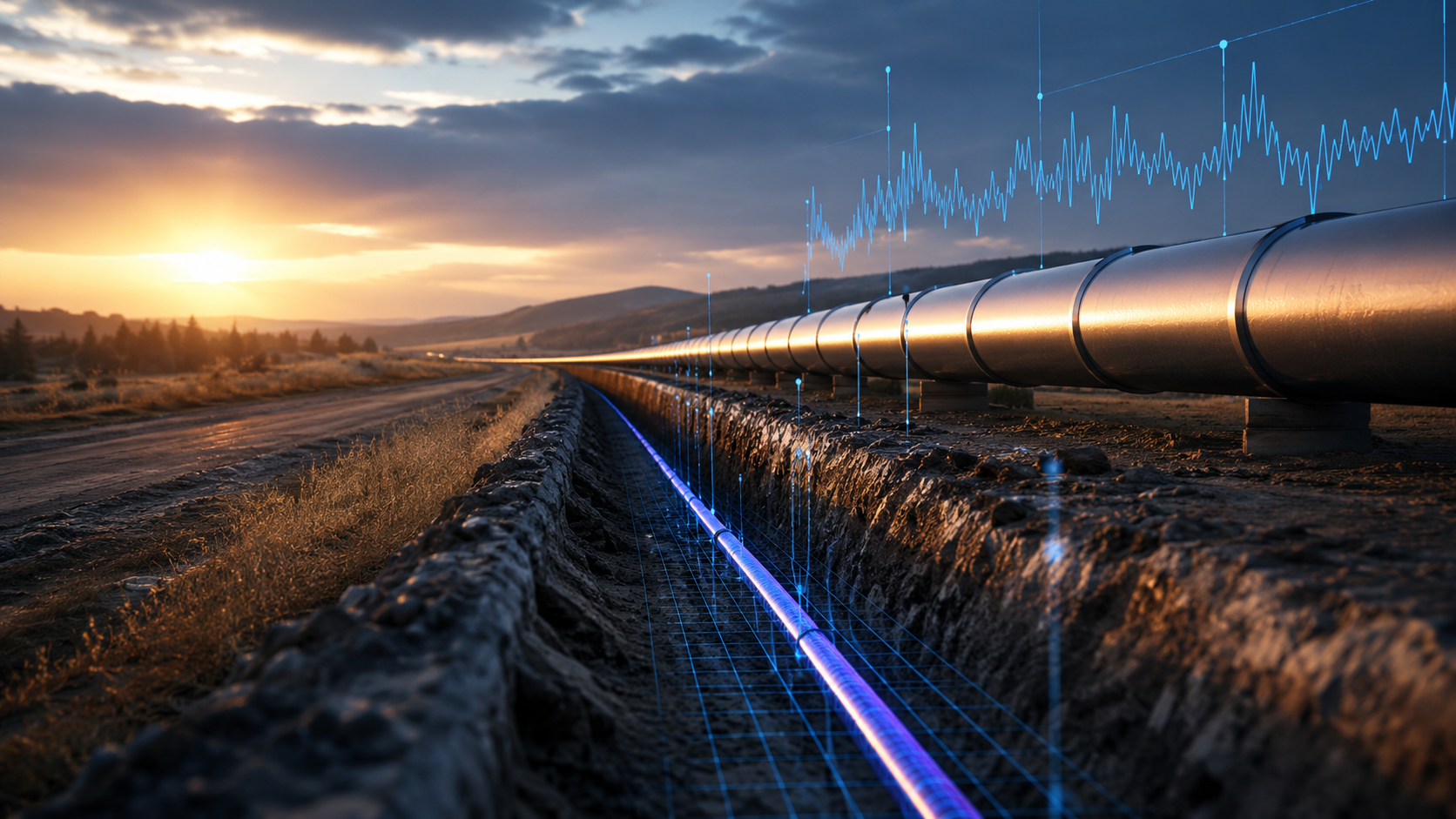
    For large infrastructure, geographic information systems and digital twins are beginning to overlap. A single operational model may include buildings, perimeter sensors, pipelines, fiber sensing, rail corridors and remote substations.

    Conclusion

    Digital twins will not replace VMS, access control or command-and-control software. They are more likely to become a spatial interface above those systems. When designed well, they reduce cognitive load by showing operators not just what alarmed, but where it is, what surrounds it and what actions are available.
  • Object Detection vs Object Classification vs Tracking

    Object Detection vs Object Classification vs Tracking

    Object detection, classification and tracking are often grouped together under the label “AI video analytics,” but they solve different problems. Understanding the distinction helps security teams specify systems and interpret performance correctly.

    How the Technology Works

    Object detection answers a basic question: where is an object in the image? A model identifies regions that are likely to contain a person, vehicle, bag or other trained object. The output is commonly represented as a bounding box with a confidence score.

    Classification answers another question: what is the object? Classification may distinguish a person from a car, or a truck from a motorcycle. In some systems, classification is performed on the entire frame; in surveillance, it is more often applied to objects that have already been detected.

    Operational Considerations

    Tracking connects detections across time. The software estimates that the person detected in one frame is the same person appearing in the next. Tracking is essential for functions such as direction analysis, loitering, dwell time, virtual tripwires and movement paths.

    A fourth concept, re-identification, attempts to determine whether an object seen by one camera is the same object seen by another. This is more difficult because viewpoint, lighting, clothing visibility and image quality can change significantly between cameras.

    Each stage introduces errors. If detection misses an object, classification and tracking cannot recover it. If tracking loses a target during occlusion, the system may create a new track ID when the target reappears. Security applications therefore need end-to-end testing rather than relying on a single advertised accuracy figure.

    Deployment and Risk

    Scene design matters as much as model quality. A distant person occupying only a few pixels cannot be classified reliably. Fast-moving vehicles may blur. Crowds create occlusion. Integrators should define minimum target sizes, lighting requirements and camera angles for the intended analytics.

    Metadata generated by these processes has become extremely valuable. A VMS can search by object class, color, direction or time without replaying every video stream. The result is faster investigation and more efficient event management.

    Conclusion

    For buyers, the key is to specify the outcome rather than a fashionable AI term. If the goal is to alert when vehicles stop in a restricted lane, detection and tracking may be enough. If the goal is to distinguish delivery trucks from passenger cars, classification becomes important. Matching the analytics pipeline to the operational question produces more reliable systems.

  • Predictive Security Analytics: Can Systems Detect Risk Before an Incident?

    Predictive Security Analytics: Can Systems Detect Risk Before an Incident?

    Predictive security analytics aims to identify elevated risk before a conventional alarm occurs. The idea is attractive: instead of reacting to an intrusion, theft or safety event, a system would detect patterns that suggest conditions are becoming abnormal.

    How the Technology Works

    In practice, predictive analytics is most credible when it focuses on systems and environments rather than human intent. A rise in repeated access denials, a failing perimeter sensor, unusual vehicle dwell times, degraded camera health or increasing temperature around critical equipment can all be early indicators of operational risk.

    The technology works by establishing baselines. A platform learns or is configured to understand normal activity by time, location, device and user group. It then highlights deviations. The value comes from combining many weak signals that would not be meaningful on their own.

    Operational Considerations

    For example, a warehouse may normally receive vehicles at specific gates during defined hours. A vehicle arriving at an unusual time, remaining near a restricted loading zone and coinciding with repeated access failures could justify operator attention even if no single event is severe.

    The danger is overclaiming. Predicting criminal behavior from appearance, emotion or loosely defined “suspicious” activity is scientifically and ethically problematic. Organizations should avoid systems that claim certainty about human intent without strong evidence and transparent validation.

    Good predictive security analytics is therefore closer to anomaly detection and risk scoring. It helps prioritize attention. A score should lead to review, not automatically label a person or event as malicious.

    Deployment and Risk

    Data integration is a major requirement. Video metadata, access events, intrusion alarms, maintenance data, environmental sensors and operational schedules become more useful when they share timestamps and location identifiers. Without normalized data, predictive models may generate noise rather than insight.

    Measurement is also essential. A deployment should define what constitutes a useful prediction, how early the warning must occur and how many false positives operators can tolerate. Success should be measured against real operational outcomes, not only model accuracy in a laboratory dataset.

    Conclusion

    Predictive analytics will become an important layer in enterprise security, but its strongest role is decision support. The most valuable systems will identify meaningful deviations early, explain the evidence behind the alert and allow experienced operators to decide what action is appropriate.

  • AI Video Analytics in 2026: What Actually Works

    AI Video Analytics in 2026: What Actually Works

    AI video analytics has moved from a specialist add-on to a core layer of modern physical security. The useful question is where it performs reliably enough to improve operations and reduce investigation time.

    Mature use cases

    Person and vehicle detection, line crossing, loitering, occupancy, queue analysis and basic object classification can be effective when scenes and objectives are clearly defined.

    Claims that require caution

    Vague predictions of suspicious intent or complex behavior are context dependent. These systems should support operators rather than act as unquestionable decision makers.

    Architecture choices

    Edge analytics can reduce bandwidth, server analytics can use larger models, and cloud analytics can simplify scaling. Enterprises often combine all three.

    How to evaluate performance

    Accuracy is not one universal number. Testing should examine precision, recall, nuisance alarms and performance across day, night, rain, glare, occlusion and seasonal change.

    Workflow, privacy and governance

    Detection is most useful when connected to maps, cameras, access status and response procedures. Organizations should also document data processing, retention and whether biometric identification is involved.

    Conclusion

    AI delivers the most value when it solves a narrow, measurable operational problem and is verified under representative site conditions.

  • Edge vs Cloud in Physical Security

    Edge vs Cloud in Physical Security

    Physical security now depends on where data is processed. Cameras can analyze video at the edge, on-site servers can run analytics, and cloud platforms can centralize management across many locations.

    What edge means

    Edge processing happens close to the sensor. A camera may classify people and vehicles locally, record to onboard storage and send only metadata or alarms, reducing bandwidth and preserving local operation.

    What cloud means

    Cloud platforms provide centralized management, remote access, scalable computing and software updates, particularly for distributed organizations that do not maintain servers at every site.

    Latency, bandwidth and resilience

    Local decisions can reduce latency for immediate actions. Systems must also define what happens during WAN failure: critical cameras should keep recording and doors should continue enforcing access rules.

    Cybersecurity and cost

    Cloud services centralize identity and updates but introduce vendor and account risks. Edge fleets require local patching. Cost comparisons should include servers, subscriptions, bandwidth, maintenance, replacement and staffing.

    Hybrid architecture

    Many organizations record locally while using cloud management and health monitoring. Basic analytics may run at the edge while cross-site search uses centralized services.

    Conclusion

    Edge is strong for autonomy and low latency; cloud is strong for scale and management. A deliberate hybrid design often provides the best balance.

  • LiDAR for Physical Security: Technology, Applications and Limitations

    LiDAR for Physical Security: Technology, Applications and Limitations

    LiDAR measures distance using laser light and can create a detailed three-dimensional representation of an area. In physical security, this supports detection and tracking based on geometry rather than visible appearance.

    How LiDAR works

    A sensor emits laser pulses and measures the time required for reflections to return. Repeated measurements create a point cloud showing the position of objects and surfaces.

    Security applications

    LiDAR can monitor entrances, facades, rooftops, restricted zones, warehouses and open areas. It can also support people counting, queue analysis and occupancy monitoring.

    Three-dimensional zones and privacy

    Virtual detection volumes can be created around assets, fences or doorways. Point clouds may represent people as shapes rather than conventional images, reducing identifiable visual data without removing privacy obligations.

    Limitations

    Heavy rain, fog, highly reflective surfaces and direct environmental conditions can affect performance. Range and point density vary between devices, and cost may exceed that of basic cameras or motion sensors.

    LiDAR, radar and video

    Radar often provides longer-range detection and stronger all-weather performance; LiDAR provides precise spatial detail; video provides texture, color and identity information. Combining them can improve tracking and verification.

    Conclusion

    LiDAR is most valuable where precise 3D awareness or privacy-conscious detection is important. Selection should follow site testing rather than generic range or accuracy claims.

  • Motorola Solutions Completes $1.5 Billion Acquisition of Counter-Drone Firm D-Fend

    Motorola Solutions Completes $1.5 Billion Acquisition of Counter-Drone Firm D-Fend

    August 20, 2026 — Motorola Solutions completed its acquisition of D-Fend Solutions, a counter-drone technology company, for $1.5 billion, adding radio-frequency-based drone detection and mitigation to its public-safety portfolio.

    What happened

    D-Fend’s technology is designed to safely identify and neutralize unauthorized drones without kinetic interception, giving public-safety and enterprise customers air-to-ground situational awareness. Motorola Solutions said the acquisition would integrate into its broader ecosystem alongside its earlier Silvus Technologies deal.

    Why it matters

    The deal is Motorola Solutions’ second major counter-drone-adjacent acquisition within roughly a year, reflecting how central drone detection and mitigation has become to physical-security portfolios as unauthorized drone incursions increase at airports, stadiums, prisons and critical-infrastructure sites.

    Security and infrastructure impact

    Facility security managers evaluating counter-UAS options now have a wider range of integrated, single-vendor options from established public-safety technology suppliers rather than needing to combine point solutions from multiple smaller specialists.

    Sources

    ← Back to Technology News

  • NVIDIA and Financial Partners Target $500 Billion for AI Infrastructure

    NVIDIA and Financial Partners Target $500 Billion for AI Infrastructure

    August 10, 2026 — NVIDIA announced partnerships with six financial firms intended to mobilize more than $500 billion of third-party capital for AI infrastructure over time.

    What happened

    NVIDIA said independent financing platforms with Apollo, BlackRock, Blackstone, Brookfield, Goldman Sachs and KKR were designed to mobilize more than $500 billion of third-party capital. The announcement describes a target over time; it is not the same as NVIDIA placing $500 billion into a completed fund or guaranteeing immediate chip purchases.

    Why it matters

    The structure is significant because it treats AI compute and supporting infrastructure as a financeable asset class. That could broaden access to capital while adding questions about utilization, collateral value, operating risk and the durability of demand.

    Security and infrastructure impact

    Security and resilience affect the value of financed infrastructure. Lenders and operators will need credible controls for asset tracking, facility access, cyber risk, downtime, insurance and recovery across long equipment and financing lifecycles.

    Sources

    ← Back to Technology News

  • Anthropic Releases Claude Opus 5, Its New Flagship Model

    Anthropic Releases Claude Opus 5, Its New Flagship Model

    July 24, 2026 — Anthropic made Claude Opus 5 generally available, describing it as a model that approaches the intelligence of its top-tier system at roughly half the price of its predecessor.

    What happened

    Claude Opus 5 became the new default model on Claude Max and the strongest option on Claude Pro, offering a 1-million-token context window and an extended reasoning mode. Anthropic positioned it as a state-of-the-art option for coding and knowledge-work evaluations while noting it remains behind Anthropic’s specialized cybersecurity-research model on vulnerability-finding tasks.

    Why it matters

    Meaningful price-performance gains at the flagship tier accelerate enterprise adoption of frontier models for higher-stakes workloads such as code review, security triage and large-document analysis, increasing the volume of sensitive data that flows through third-party AI providers.

    Security and infrastructure impact

    Organizations that expand Opus-class model use into code review or security workflows should extend existing data-handling and vendor-risk assessments to cover the new model version rather than assuming prior approvals carry over automatically.

    Sources

    ← Back to Technology News

  • AMD and Anthropic Plan Up to 2 Gigawatts of MI450 GPU Deployment

    AMD and Anthropic Plan Up to 2 Gigawatts of MI450 GPU Deployment

    July 22, 2026 — AMD and Anthropic announced a strategic partnership for up to two gigawatts of MI450-series GPU capacity, with the first gigawatt planned for 2027.

    What happened

    AMD and Anthropic said they plan to deploy up to two gigawatts of AMD Instinct MI450 Series GPUs in Helios rack-scale systems. Their official statement places the beginning of the first gigawatt in the first half of 2027, so the announcement is a forward deployment commitment rather than completed capacity.

    Why it matters

    The agreement signals that frontier AI developers are seeking large-scale alternatives and complementary supply to established accelerator platforms. It also shows that future model capacity is being negotiated in power-scale terms, not only in numbers of chips.

    Security and infrastructure impact

    Multi-gigawatt plans have consequences for grid interconnection, cooling, construction, fire safety and site protection. Procurement teams should separate announced maximum scope from contracted phases and verify delivery milestones before treating capacity as operational.

    Sources

    ← Back to Technology News