
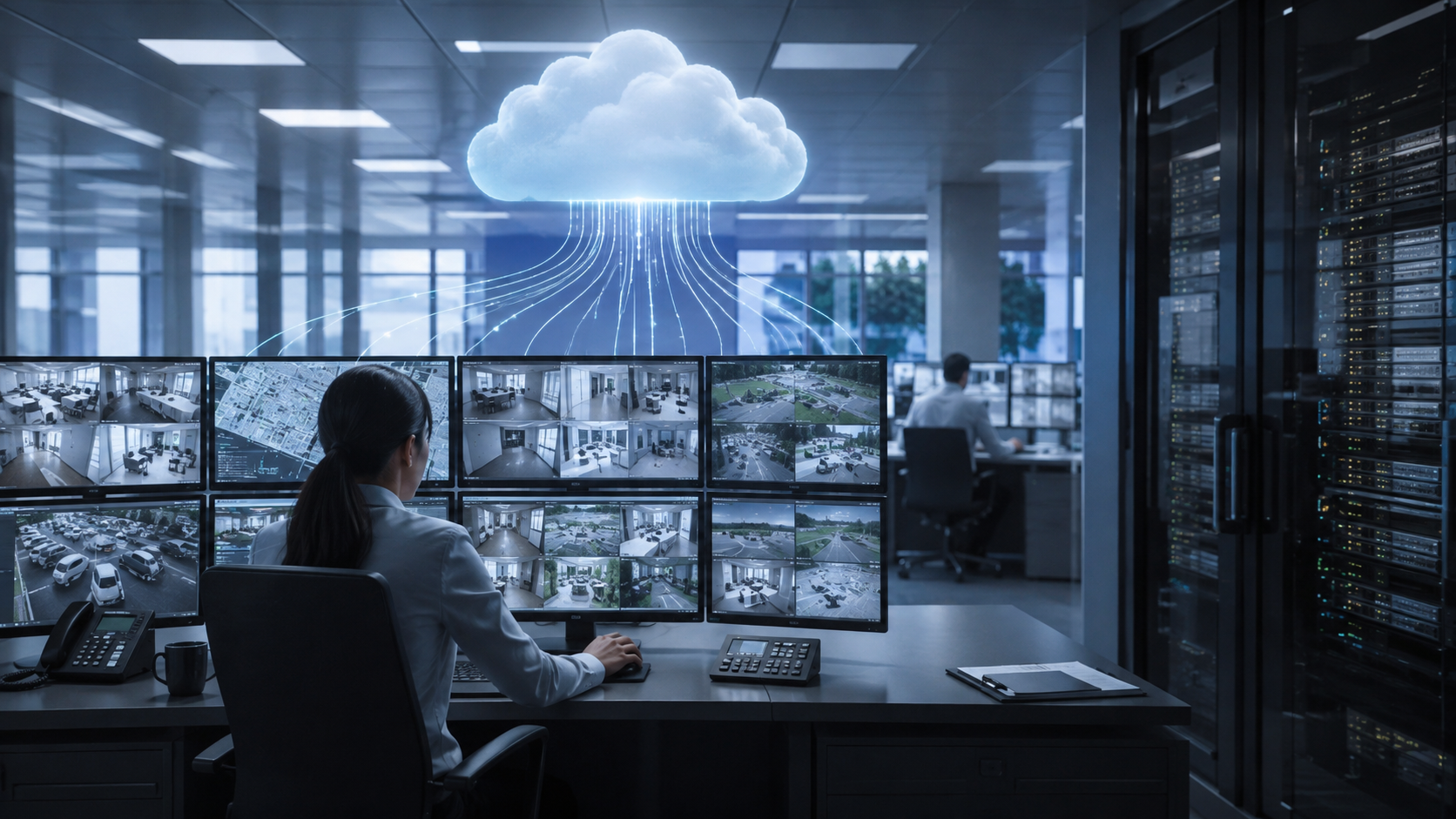
Physical security now depends on where data is processed. Cameras can analyze video at the edge, on-site servers can run analytics, and cloud platforms can centralize management across many locations.
What edge means
Edge processing happens close to the sensor. A camera may classify people and vehicles locally, record to onboard storage and send only metadata or alarms, reducing bandwidth and preserving local operation.
What cloud means
Cloud platforms provide centralized management, remote access, scalable computing and software updates, particularly for distributed organizations that do not maintain servers at every site.
Latency, bandwidth and resilience
Local decisions can reduce latency for immediate actions. Systems must also define what happens during WAN failure: critical cameras should keep recording and doors should continue enforcing access rules.
Cybersecurity and cost
Cloud services centralize identity and updates but introduce vendor and account risks. Edge fleets require local patching. Cost comparisons should include servers, subscriptions, bandwidth, maintenance, replacement and staffing.
Hybrid architecture
Many organizations record locally while using cloud management and health monitoring. Basic analytics may run at the edge while cross-site search uses centralized services.
Conclusion
Edge is strong for autonomy and low latency; cloud is strong for scale and management. A deliberate hybrid design often provides the best balance.
Leave a Reply