
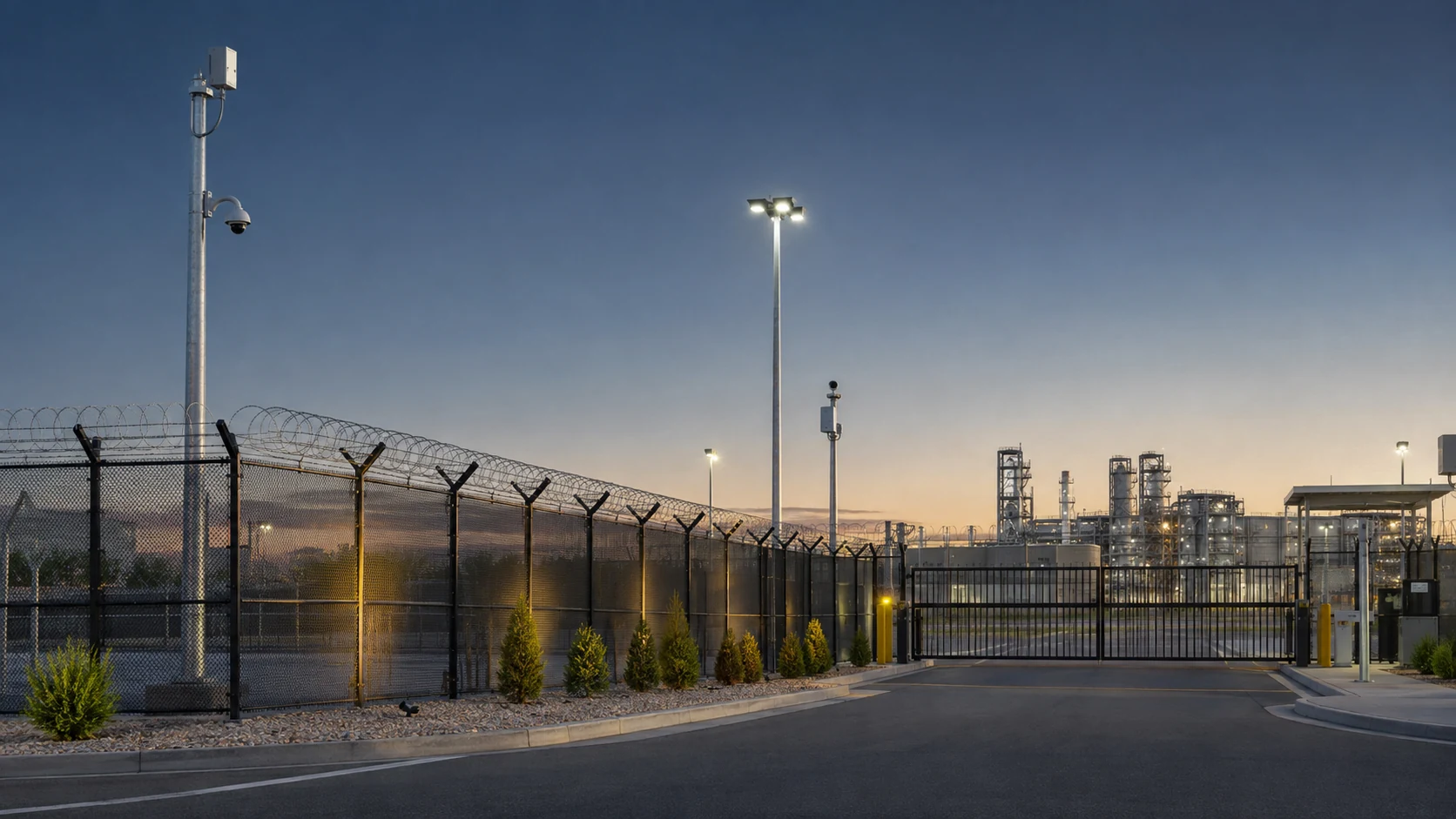
IP66, IK10, and similar alphanumeric codes appear on nearly every outdoor camera, access control reader, and enclosure datasheet, but the codes are frequently treated as a simple pass/fail badge rather than what they actually are: specific, testable claims about resistance to particular hazards, with real limits on what they do and don’t cover.
IP Codes: Ingress Protection
The IP (Ingress Protection) rating system, defined by IEC 60529, uses two digits: the first indicates protection against solid objects and dust, on a scale from 0 (no protection) to 6 (fully dust-tight); the second indicates protection against water, from 0 (no protection) to 9K (protection against high-pressure, high-temperature washdown). A camera rated IP66 is dust-tight and protected against powerful water jets from any direction — a common and reasonable standard for outdoor security cameras, though it does not guarantee protection against submersion, which requires an IP67 or IP68 rating instead.
IK Codes: Impact Protection
The IK rating system, defined by IEC 62262, measures resistance to mechanical impact, on a scale from IK00 (no protection) to IK10 (resistant to a 20-joule impact, roughly equivalent to a 5kg mass dropped from 40cm). IK ratings matter most for equipment mounted in publicly accessible locations at ground level or within reach, where vandalism-resistance is a practical concern rather than a theoretical one; a camera mounted 4 meters up a pole has a much lower practical need for a high IK rating than one mounted at head height in a public corridor.
What the Ratings Don’t Cover
Neither IP nor IK ratings say anything about temperature range, UV resistance, or long-term material degradation from sun exposure — a housing can be IP66/IK10 rated and still fail prematurely in a hot, high-UV climate if its plastics weren’t formulated for that environment. Buyers evaluating outdoor equipment for extreme climates need to check operating temperature range and UV/weathering certifications separately from the IP/IK codes.
Matching Ratings to Real Deployment Conditions
Over-specifying ratings has a real cost: higher IP/IK-rated enclosures are typically more expensive and sometimes bulkier, so specifying IK10 vandal-resistant housings for equipment mounted well out of reach, or IP69K washdown ratings for equipment that will never face pressure-washing, adds cost without adding real-world protection. The right approach is matching the specific rating to the specific hazard actually present at each deployment location, rather than defaulting to the highest available rating across an entire project.
Conclusion
IP and IK ratings are precise, testable engineering specifications, not marketing shorthand for “rugged.” Reading the actual digits, and understanding what hazard each one certifies protection against, lets security teams specify equipment that matches real deployment conditions instead of over-paying for protection against hazards that were never present at the site.
Leave a Reply