
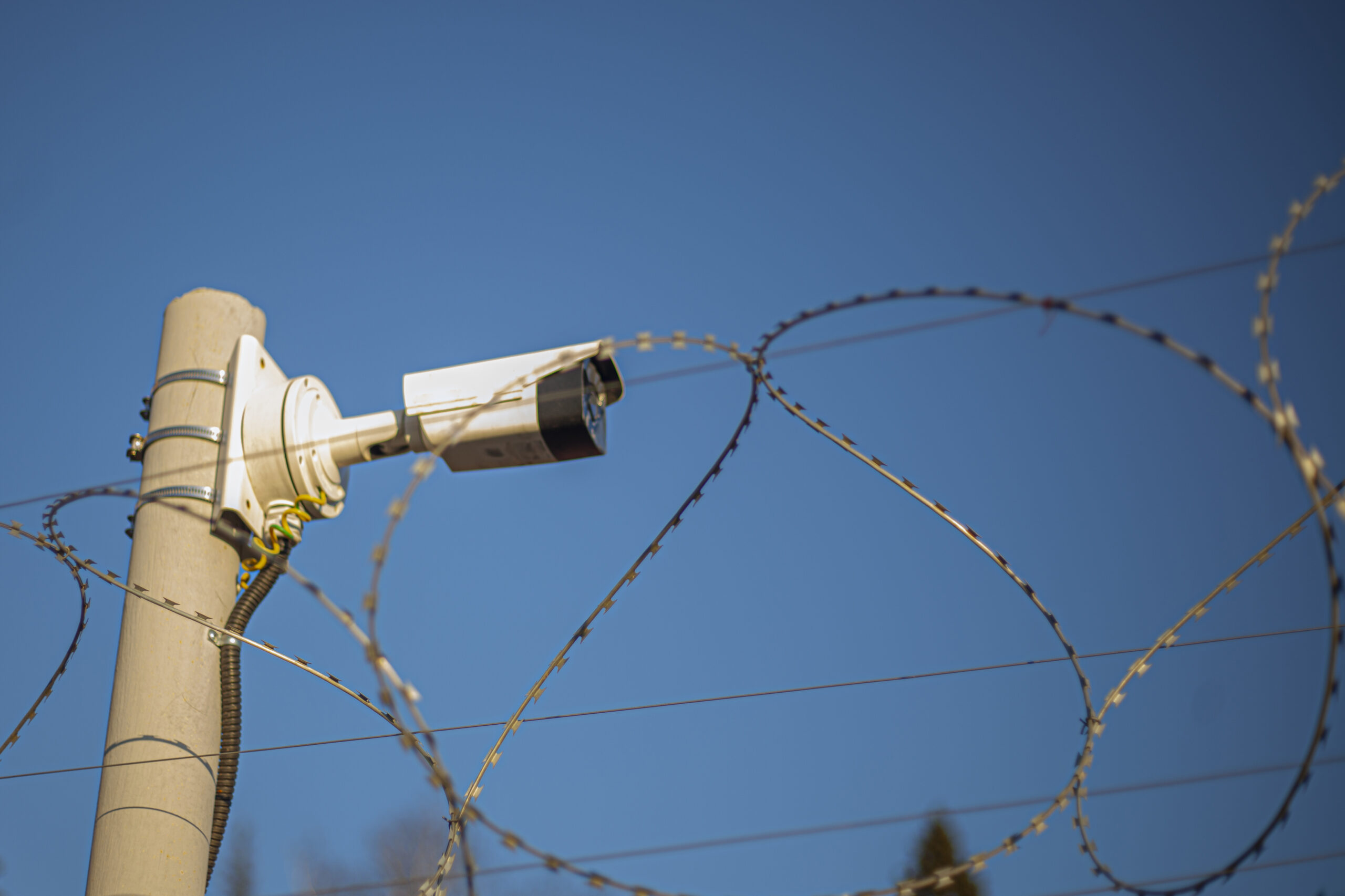
Perimeter sensors detect activity along a physical boundary, but operators respond to zones. If zones are too long, the alarm location is vague and verification takes longer. If they are too short, the system can generate excessive events and complex maintenance. Segmentation should balance localization, site geography, sensor behavior and response capability.
Design zones around operational landmarks
Use fence corners, gates, roads, buildings and numbered posts as stable references. A zone name should tell an operator where to look and tell a responder where to go. Avoid labels that exist only in an installer drawing or controller database without a visible field reference.
Consider terrain, vegetation, drainage, lighting and public access. One continuous sensor cable may cross areas with different nuisance conditions. Logical zones can separate those environments, but the design must preserve enough overlap to avoid gaps at boundaries.
Define the handover between technologies
An intrusion alarm may cue a fixed camera, move a PTZ camera, display a map and create an incident in a command platform. Test the complete handover rather than validating each device separately. The selected view should show the correct zone with useful pre-event and post-event footage.
Where adjacent sensors overlap, document which system has primary responsibility and how simultaneous alarms are presented. Duplicate events should support confidence without overwhelming the operator. If one technology is unavailable, the degraded workflow should remain clear.
Walk-test boundaries and approach paths
Use controlled targets to cross each zone at representative points, speeds and directions. Include corners, changes in fence construction, gates and locations near electronics or junction boxes. Test along the boundary as well as across it because some sensing technologies respond differently to parallel movement.
Pay particular attention to the last part of one zone and the first part of the next. Record whether both detect, neither detects or the platform assigns the event to an unexpected location. A clean central-zone test does not prove boundary coverage.
Validate response information and maintenance
The operator display should include the zone name, map position, camera view, priority and response instruction. Field responders need the same naming convention. Confirm radio procedures and access routes, especially where a long perimeter makes travel time significant.
Maintain a baseline of sensitivity, alarm location, environmental conditions and test results. Repeat boundary tests after fence repair, vegetation work, sensor replacement, software changes or recurring nuisance alarms. Perimeter segmentation is part of broader Physical Security design: the technical alarm becomes useful only when localization, verification and response remain connected.
Store the accepted zone map with controller configuration, camera presets and response instructions. Maintenance teams should record temporary bypasses and confirm their removal. A periodic end-to-end exercise can verify that field detection, network delivery, command-platform display and response dispatch still use the same zone identity.
Leave a Reply