
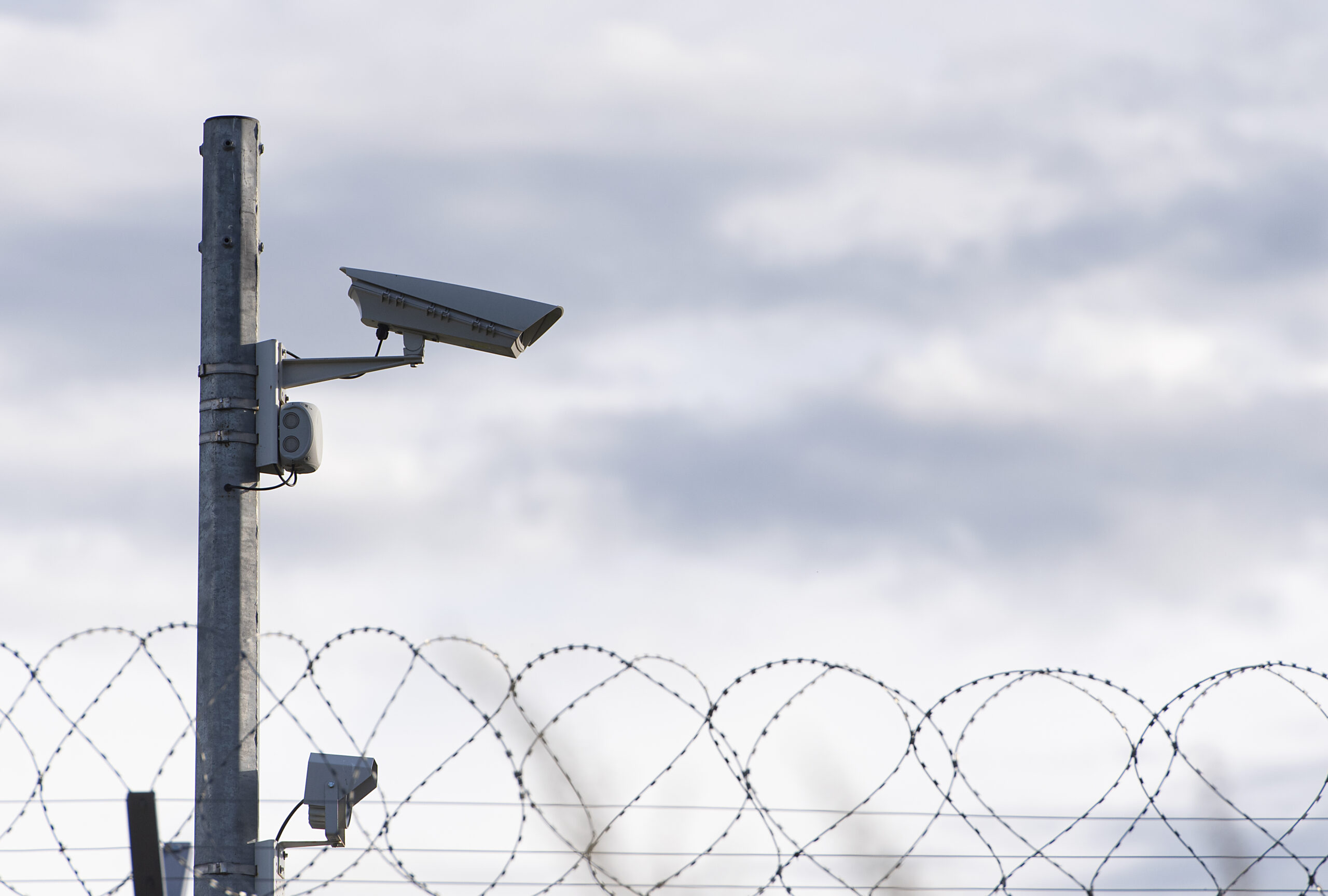
Perimeter lighting and video surveillance are often designed by different teams, yet their performance is tightly coupled. More light does not automatically produce better evidence. Poor aiming can create glare, deep shadows, reflections and rapid exposure changes that reduce recognition and destabilize analytics. A co-design audit evaluates the camera, luminaire and scene as one sensing system.
Define the operational task
For each camera, state whether the objective is detection, observation, recognition or identification. Record the target area, expected movement, required retention and operator response. Lighting criteria should follow that task rather than a generic site-wide brightness value.
Document camera position, lens, field of view, mounting height, day/night mode, infrared capability and analytics zones. For lighting, record luminaire type, beam pattern, color characteristics, controls, power source and maintenance condition.
Measure the scene after dark
Inspect the perimeter under representative night conditions. Evaluate horizontal and vertical illumination, uniformity, contrast and the transition between bright and dark areas. Camera targets are three-dimensional, so a well-lit ground plane may still leave faces or vehicle markings in shadow.
Observe direct glare into the lens, reflections from fencing or wet surfaces and backlighting from roads or adjacent properties. Test with foliage, gates and parked vehicles in their realistic positions. CISA physical-security guidance emphasizes layered assessment rather than dependence on one control.
Test camera response and analytics
Review live and recorded video while a representative target moves through the scene. Check shutter behavior, motion blur, noise, white balance, infrared cutover and compression. Confirm that illumination changes do not wash out nearby targets or hide distant ones.
Run analytics acceptance tests across the full zone and at boundary conditions. Headlights, insects, rain and moving shadows can create nuisance alarms. SectechMedia’s guide to video analytics recommissioning provides a structured method for validating zones after scene changes.
Coordinate resilience and controls
Determine what happens during utility failure, generator transfer and lighting-control network loss. Critical cameras may require emergency illumination or independent infrared coverage. Avoid a single control command that can disable both lighting and surveillance without an alarm.
Access to lighting controls should be restricted and logged. Time schedules, photocells and central management commands need consistent clocks and documented overrides.
Document corrective action and seasonal change
Use annotated images to record glare, shadows, dead zones and recommended aiming or equipment changes. Re-test after vegetation growth, construction, fence modifications or luminaire replacement. Clean lenses and fixtures, verify mounts and trend failed lamps. A successful audit proves that the combined system delivers usable evidence and stable detection under actual night conditions.
Leave a Reply