
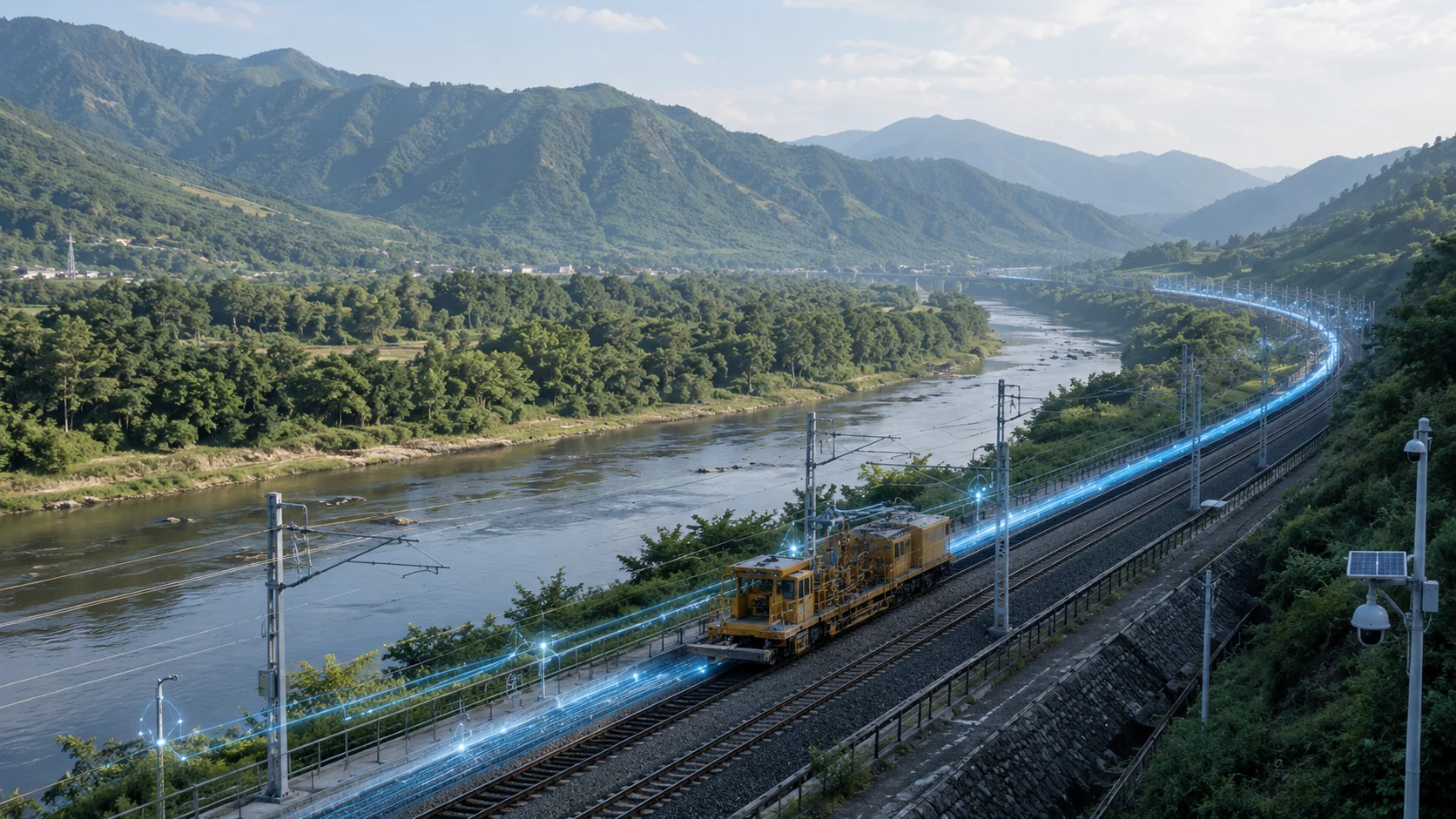
Railway networks combine long open corridors, crowded stations, depots, signaling infrastructure and moving assets. Security therefore requires different technologies at different layers of the system.
Track and Corridor Monitoring
Long rail corridors are difficult to protect with cameras alone. Distributed Acoustic Sensing can use fiber alongside the track to detect and locate trains, footsteps, excavation activity and other vibration events. Fiber sensing can also support infrastructure monitoring where suitable installation and analytics are available.
At high-risk sections, radar, thermal cameras and fixed video surveillance provide additional verification. Bridges, tunnels and level crossings often require more intensive monitoring than ordinary open track.
Station Security
Stations combine passenger safety, access management and operational security. Video surveillance, crowd analytics, emergency communication, intrusion detection and access control are commonly integrated into a central platform. Analytics can help operators identify congestion or unusual movement, but operational procedures remain essential.
Depots and Maintenance Facilities
Depots contain valuable rolling stock, tools and technical systems. Perimeter detection, vehicle access, staff credentials and thermal/video monitoring can create layered protection. Maintenance contractors should be managed with temporary permissions and auditable access records.
Rolling Stock
Onboard video, passenger emergency systems and communications extend the security architecture onto trains. Data synchronization and evidence management become important when large fleets generate video across many moving vehicles.
Cyber-Physical Integration
Railways increasingly rely on connected operational systems. Security platforms must therefore be designed so physical-security devices do not create new cyber risks. Network segmentation, hardened devices and controlled interfaces between security and operational technology are critical.
Conclusion
Railway security is a system-of-systems problem. Track sensing, station surveillance, depot protection and onboard technologies must provide a coherent operational picture. Fiber-optic sensing is particularly valuable because it adds continuous awareness along long linear rail corridors where conventional point sensors are difficult to scale.
Leave a Reply