Category: Vehicle & Transportation Security

  • Vehicle Barriers and Bollards: How Anti-Ram Perimeter Protection Actually Works

    Vehicle Barriers and Bollards: How Anti-Ram Perimeter Protection Actually Works

    Bollards and vehicle barriers have become a standard part of perimeter protection at government buildings, stadiums, transit hubs and commercial plazas, driven by a mix of vehicle-ramming attacks and simple traffic accidents. What looks like a decorative post or a low steel arm is, in most professional installations, a rated device engineered and tested to stop a specific vehicle at a specific speed.

    Fixed, Removable and Automatic Bollards

    Fixed bollards are permanently anchored and offer the highest reliability since there is no mechanism to fail, but they permanently block the space they occupy. Removable or retractable bollards can be taken out of the ground or lowered to allow authorized vehicle access, trading some convenience for a manual or semi-manual operating step. Automatic bollards rise and lower on command from an access control system, gate operator or guard station, letting a single lane serve both pedestrians and authorized vehicles without a fixed barrier permanently occupying the space, at the cost of added mechanical and power complexity that must be maintained.

    Crash Ratings Are Not Marketing Claims

    Serious perimeter security specifications reference independent crash-rating standards, most commonly the US State Department’s K-rating system and ASTM F2656, which test a barrier against a vehicle of a defined weight striking it at a defined speed and measure how far the vehicle penetrates past the barrier line after impact. A barrier rated to stop a 15,000-pound vehicle at 40 miles per hour behaves very differently in a real event than an unrated decorative post that merely looks similar, which is why security consultants specify barriers by their tested rating rather than their appearance.

    Barriers as Part of a Layered Approach

    Bollards and barriers are typically combined with standoff distance, planters, retaining walls, sloped grading and other landscape features that a site’s architects can use to keep vehicles away from a building without visually presenting as a fortress. Security planners generally treat the vehicle barrier line as the outermost layer of a broader protection plan that also includes access control, video surveillance and, at higher-risk sites, manned checkpoints, rather than as a standalone solution to vehicle-borne threats.

    FAQ

    What is a K-rating? K-ratings are a US State Department classification system that rates a barrier’s ability to stop a vehicle of a specified weight traveling at a specified speed, based on independent crash testing.

    Can automatic bollards fail open or closed during a power outage? Behavior varies by product and installation; many automatic bollards are specified to fail in a particular position (safe, secure, or last-known-state) depending on site requirements, which is a key design decision during installation.

    Do decorative bollards provide real vehicle protection? Only if they carry an independent crash rating for the intended threat vehicle and speed. Purely decorative posts without a tested rating should not be relied on to stop a vehicle.


  • NHTSA Opens Audit Into Tesla’s Cybercab Safety Self-Certification After Austin Launch

    NHTSA Opens Audit Into Tesla’s Cybercab Safety Self-Certification After Austin Launch

    The National Highway Traffic Safety Administration (NHTSA) has opened an Audit Query, numbered AQ26002, into the technical data and process Tesla used to self-certify that its new Cybercab complies with all applicable Federal Motor Vehicle Safety Standards (FMVSS), according to an NHTSA press release and reporting by the New York Times and Electrek. The investigation, opened September 3, 2026, covers an estimated 1,000 Cybercab vehicles and was prompted by public information, according to the filing.

    A Vehicle With No Manual Controls

    Cybercab has no steering wheel or pedals, and Tesla began putting paying passengers in the vehicles in Austin, Texas the same day the audit was opened. NHTSA said it will examine “the extent to which Tesla’s certification depended on determinations that certain FMVSS are inapplicable to the Cybercab,” according to Electrek, focusing on whether standards written for vehicles with traditional human controls can be validly waived for a fully autonomous design.

    How Self-Certification Works

    Under the US system, automakers certify their own compliance with federal safety standards rather than obtaining pre-approval from regulators, with NHTSA auditing that certification after the fact. The audit will assess the technical data and processes underlying Tesla’s compliance determination and how occupant protection is addressed in a vehicle operating without a human driver behind physical controls, according to NHTSA.

    Stakes for Tesla’s Robotaxi Rollout

    Tesla has said it plans to gradually expand Cybercab deployment to more vehicles and locations. The outcome of the audit could influence the pace of that expansion and is being closely watched as a test case for how federal vehicle safety standards, largely written around human-operated cars, apply to commercially deployed vehicles with no manual controls at all.

  • Waymo Names Munich as Its Third City Outside the US for Driverless Ride-Hailing

    Waymo Names Munich as Its Third City Outside the US for Driverless Ride-Hailing

    Waymo announced on August 28, 2026, that Munich will become its third international city for autonomous ride-hailing, following earlier expansions to London and Tokyo, according to reporting from Euronews. The company said it is laying the operational and regulatory groundwork for a driverless service in the German city but has not set a specific public launch date.

    Waymo pointed to safety data from its US operations to make the case for expansion, citing internal analysis suggesting its autonomous vehicles are involved in significantly fewer serious-injury and fatal crashes per mile than human-driven taxis in the same markets. The company noted that Europe records roughly 20,000 road fatalities annually, with driver error cited as a factor in a majority of crashes, as part of its rationale for prioritizing European expansion.

    Part of a Broader European Push for Autonomous Driving

    The Munich announcement comes as European regulators show growing openness to autonomous and driver-assistance systems more broadly; a recent Dutch approval of Tesla’s Full Self-Driving Supervised system has been followed by similar regulatory movement in Denmark, Lithuania, and Estonia. Waymo already operates fully driverless commercial service across ten US cities, where the company has said it now completes more than half a million paid trips per week.

    Munich’s position as a major automotive-engineering hub, home to BMW and a dense supplier base, is likely to shape how quickly Waymo can secure local regulatory approval and testing partnerships. The company has not disclosed which German authorities it is engaging with or a target timeline for public rides to begin.

  • Railway Security Technologies: Track, Stations and Rolling Stock

    Railway Security Technologies: Track, Stations and Rolling Stock

    Railway networks combine long open corridors, crowded stations, depots, signaling infrastructure and moving assets. Security therefore requires different technologies at different layers of the system.

    Track and Corridor Monitoring

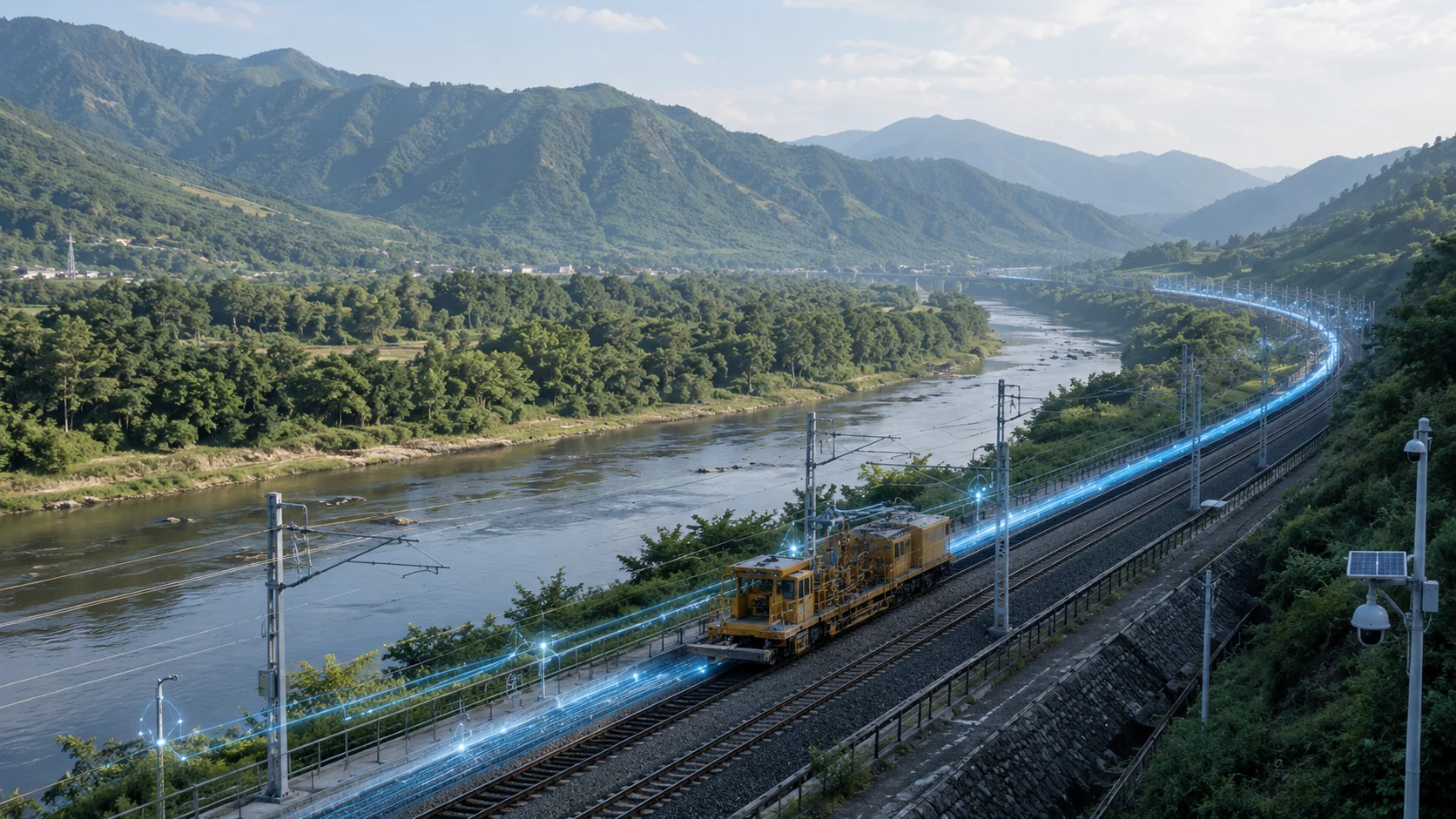
    Long rail corridors are difficult to protect with cameras alone. Distributed Acoustic Sensing can use fiber alongside the track to detect and locate trains, footsteps, excavation activity and other vibration events. Fiber sensing can also support infrastructure monitoring where suitable installation and analytics are available.

    At high-risk sections, radar, thermal cameras and fixed video surveillance provide additional verification. Bridges, tunnels and level crossings often require more intensive monitoring than ordinary open track.

    Station Security

    Stations combine passenger safety, access management and operational security. Video surveillance, crowd analytics, emergency communication, intrusion detection and access control are commonly integrated into a central platform. Analytics can help operators identify congestion or unusual movement, but operational procedures remain essential.

    Depots and Maintenance Facilities

    Depots contain valuable rolling stock, tools and technical systems. Perimeter detection, vehicle access, staff credentials and thermal/video monitoring can create layered protection. Maintenance contractors should be managed with temporary permissions and auditable access records.

    Rolling Stock

    Onboard video, passenger emergency systems and communications extend the security architecture onto trains. Data synchronization and evidence management become important when large fleets generate video across many moving vehicles.

    Cyber-Physical Integration

    Railways increasingly rely on connected operational systems. Security platforms must therefore be designed so physical-security devices do not create new cyber risks. Network segmentation, hardened devices and controlled interfaces between security and operational technology are critical.

    Conclusion

    Railway security is a system-of-systems problem. Track sensing, station surveillance, depot protection and onboard technologies must provide a coherent operational picture. Fiber-optic sensing is particularly valuable because it adds continuous awareness along long linear rail corridors where conventional point sensors are difficult to scale.

  • Smart Gates and Vehicle Access Control

    Smart Gates and Vehicle Access Control

    Vehicle entrances are among the most complex points in physical security because they combine identity, traffic flow, safety and perimeter control. A modern smart gate must determine who or what is approaching, whether access is authorized and how to move vehicles through the site without creating congestion or unsafe conditions.

    Common technologies include license-plate recognition, RFID tags, mobile credentials, intercoms, loop detectors, radar, barriers, bollards and video analytics. High-security sites may also add under-vehicle inspection or guard verification.

    The most effective systems link the vehicle to an access policy. A recognized plate alone should not automatically be treated as proof of identity in every environment. The system may also verify a driver credential, delivery schedule, visitor record or vehicle classification.

    Video plays a major role in evidence and exception handling. Cameras can document the vehicle, driver lane and surrounding context, while analytics can detect tailgating, wrong-way movement or a vehicle entering a restricted lane.

    Safety must be engineered alongside security. Barrier arms, gates and bollards require presence detection and safe operating logic to avoid collisions. Emergency egress and fire-service access also need dedicated procedures.

    For multi-site organizations, cloud-connected gate management can centralize credentials and audit logs. At critical infrastructure sites, local operation should remain available if connectivity fails.

    Smart vehicle access is therefore not one product but a coordinated system. The strongest designs combine identification, physical barriers, sensors, video and workflow software into one controlled entry process.

  • License Plate Recognition: How Modern ALPR Systems Work

    License Plate Recognition: How Modern ALPR Systems Work

    Automatic license plate recognition, often called ALPR or ANPR, converts vehicle images into searchable plate data. It is widely used for gated facilities, parking, logistics, campuses, ports and investigations because vehicle identifiers can be processed much faster than manual video review.

    How the Technology Works

    A modern ALPR pipeline begins with image capture. The camera must freeze a moving vehicle clearly enough for the plate characters to be visible. Shutter speed, lens selection, infrared illumination and camera angle are therefore more important than raw megapixel count.

    The software then detects the plate region, corrects perspective where possible and uses optical character recognition to convert the image into text. Advanced models may also estimate plate country or region, vehicle type, color, make and direction of travel.

    Operational Considerations

    Environmental conditions create challenges. Headlights can overwhelm a poorly configured camera at night. Dirty or damaged plates reduce recognition quality. Motorcycles, stacked plates, unusual fonts and high vehicle speeds may require specialized configurations.

    ALPR systems should store confidence values and the original evidence image alongside recognized text. Operators need to see the plate that produced a match rather than trust the OCR string alone. A single misread character can create a false alert.

    For access control, ALPR can operate as a credential. A vehicle on an approved list can trigger a gate workflow, while an unknown plate can be routed to an intercom or guard station. Higher-security sites should combine the plate with another factor because plates can be copied or obscured.

    Deployment and Risk

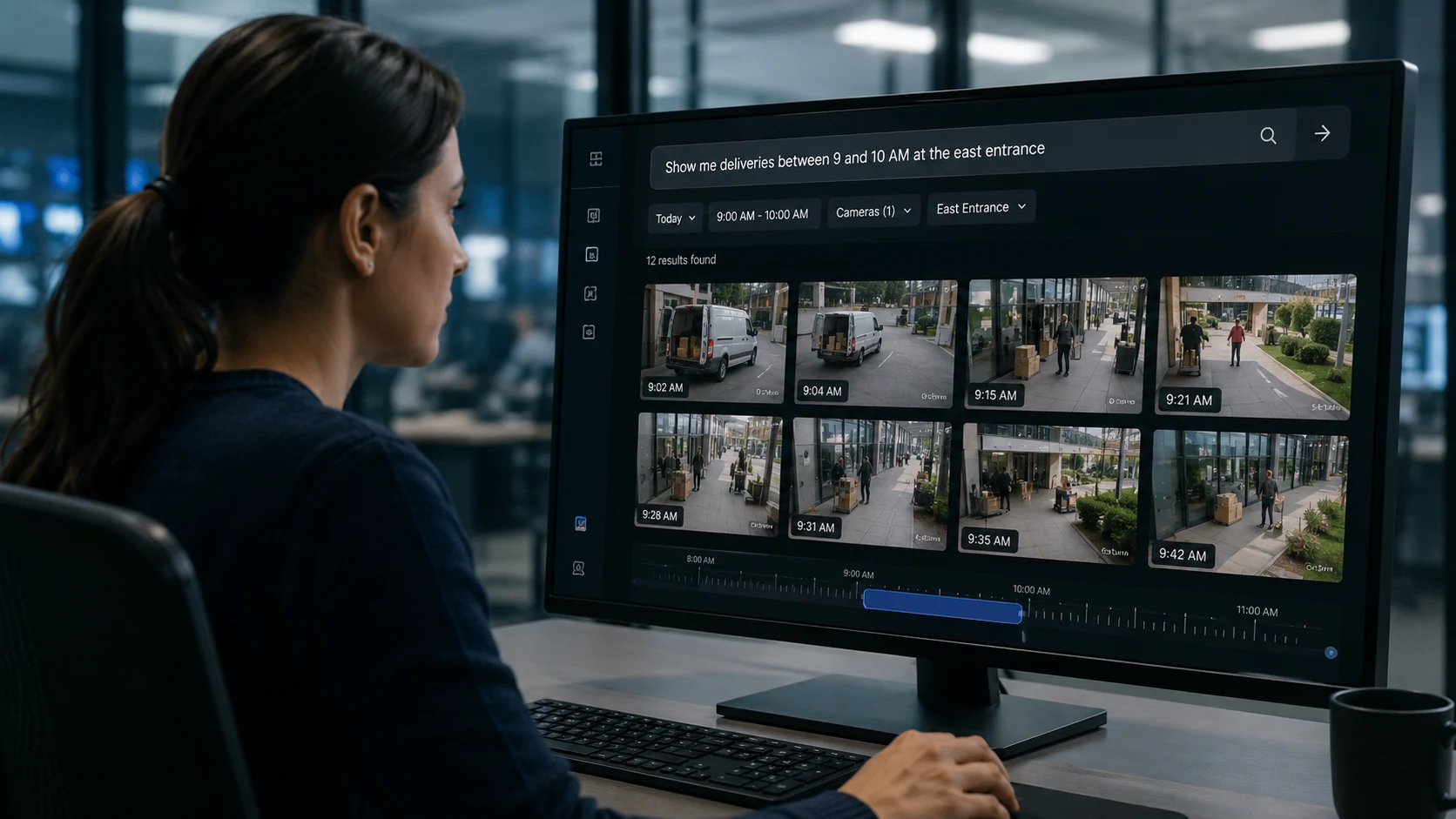
    For investigations, the real value is search. Security teams can query when a vehicle entered, which gate it used and where else it appeared. Integration with VMS and access-control data creates a more complete timeline.

    Privacy and retention policies are important because plate data can reveal travel patterns. Organizations should define who can search the database, how long records are retained and whether data is shared outside the organization.

    Conclusion

    A successful ALPR deployment is a camera-engineering project as much as an AI project. Correct geometry, illumination and lane design determine recognition quality. When those fundamentals are right, ALPR becomes one of the most reliable and operationally useful forms of video analytics.