
Pipelines cross long distances, remote terrain and multiple jurisdictions. Protecting them requires more than cameras at a few stations. Modern pipeline security combines distributed sensing, process data, imaging and centralized command-and-control.
The Linear Challenge
A pipeline can extend hundreds or thousands of kilometers. Conventional point sensors leave large gaps, while continuous patrol is expensive. Distributed Acoustic Sensing can use fiber installed along the route to identify excavation, digging, vehicle movement and other vibration events. In some applications, acoustic signatures may also contribute to leak-related monitoring.
Process Monitoring
Security data should be combined with pressure, flow and valve information. A suspicious vibration event near the route becomes more important if process data simultaneously shows an abnormal change. This correlation reduces the time required to understand what is happening.
Video Verification
Cameras and thermal imagers are most useful at high-risk locations such as block-valve stations, terminals, crossings and urban interfaces. On long remote routes, mobile cameras, drones or PTZ systems can be tasked after another sensor identifies a specific location.
Perimeter Protection at Facilities
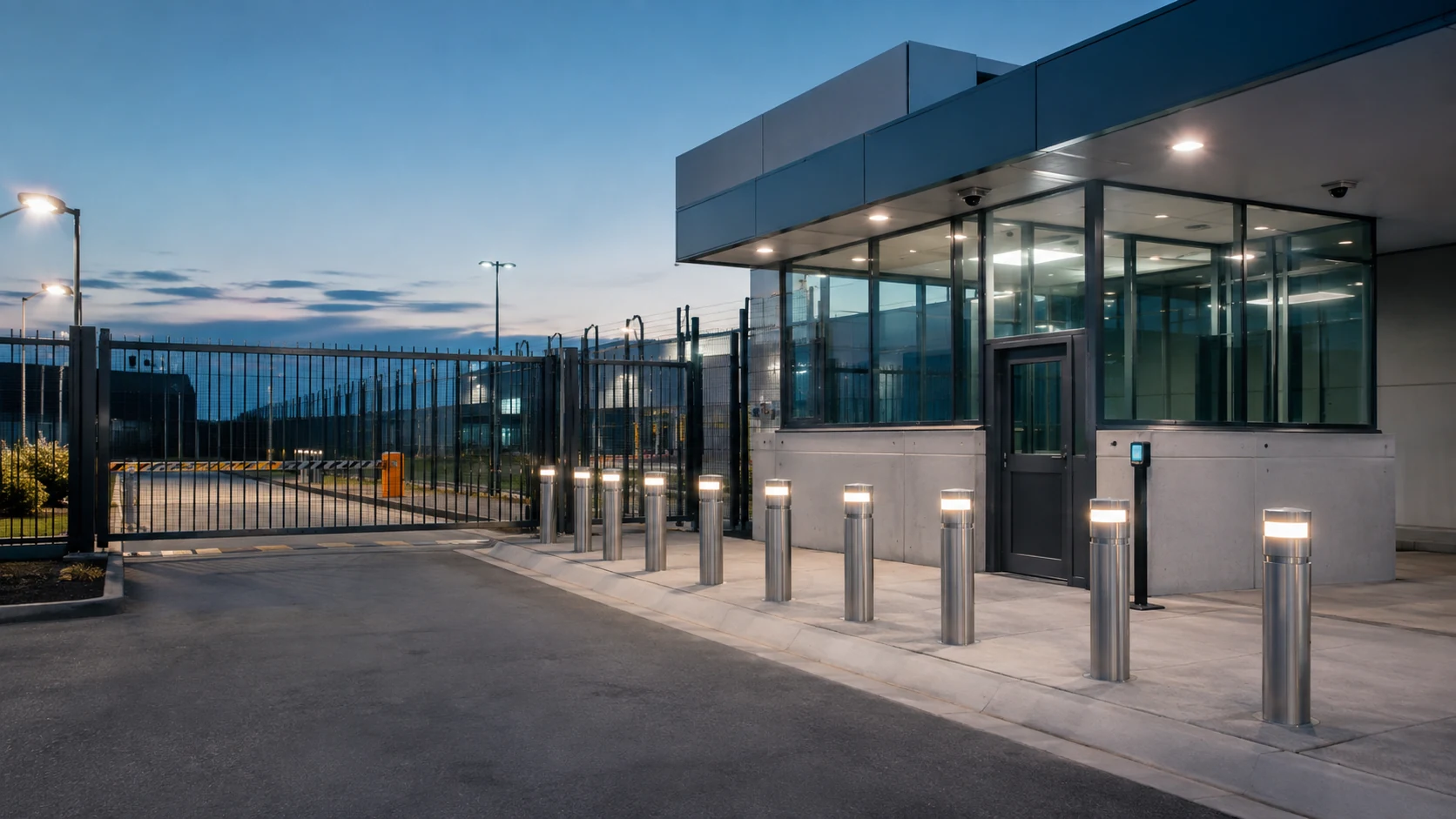
Compressor stations, pump stations and terminals require conventional layered security: fencing, access control, radar, thermal imaging, intrusion detection and vehicle management. These fixed sites should feed the same operational picture as the linear pipeline sensors.
Command and Control
A central platform should correlate fiber alarms, SCADA events, video, GIS coordinates and maintenance information. Operators need a map-based view showing where an event occurred, what nearby assets are present and which verification resources are available.
Cyber-Physical Risk
Pipelines are cyber-physical systems. Security architecture must protect both field assets and the networks connecting sensors, cameras and control systems. Segmentation, authentication and secure remote access are essential.
Conclusion
The most effective pipeline-security model is layered and data-driven. Distributed fiber sensing provides continuous awareness along the route, while cameras, process systems and control centers add verification and context. The objective is not more alarms; it is faster, more reliable understanding of events affecting the pipeline.