
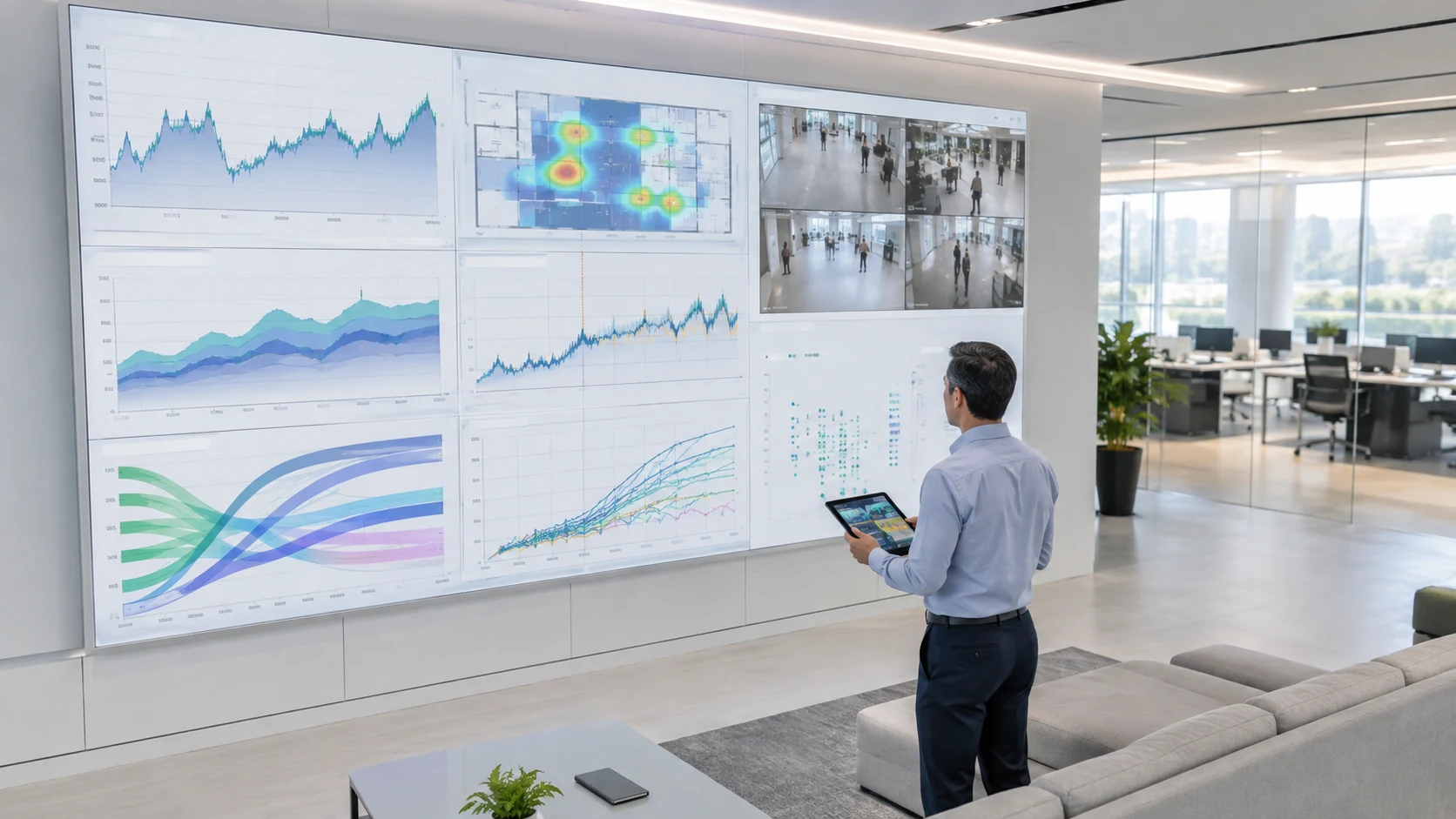
A security control room can contain excellent cameras and analytics yet still perform poorly if operators cannot interpret alarms, reach controls or maintain attention across a shift. Ergonomics connects technology, workplace design and operating procedure so that information arrives in a form people can act on.
Design Around Tasks, Not Displays
Begin with the decisions operators make: verifying an alarm, dispatching a response, controlling a door or preserving evidence. Place frequently used information and controls within comfortable sight and reach. A large video wall can support shared awareness, but it should not become a decorative surface filled with feeds no one can meaningfully monitor.
Alarm Presentation and Workload
Prioritize alarms by consequence and required response. Repeated nuisance alerts create habituation, while too many simultaneous sounds and pop-ups compete for attention. Alarm rationalization should remove duplicates, define ownership and give the operator enough context to choose the next action.
Lighting and Acoustics
Control reflections on screens and avoid extreme contrast between displays and the room. Provide adjustable task lighting for written work. Acoustic design should keep radio, telephone and alarm audio intelligible without making the space continuously noisy.
Workstation Layout
Adjustable seating, monitor height and input-device placement reduce fatigue and allow different operators to use the same position. Critical controls should be identifiable and protected against accidental activation. Shared work should have clear handover points and unobstructed communication between roles.
Resilience and Emergency Use
The UK Health and Safety Executive notes that control-room design should address both ergonomic operation and the room’s ability to support control during foreseeable hazardous events. Security facilities likewise need backup power, communications, evacuation arrangements and an alternate operating position where risk requires one.
Commissioning With People
- Run realistic alarm scenarios with actual operators.
- Measure acknowledgement and decision time, not only system response.
- Review nuisance alarms and workload by shift.
- Test handovers, escalation and degraded-mode procedures.
- Reassess layout when systems or responsibilities change.
Conclusion
Control-room ergonomics is operational engineering. A task-led layout, disciplined alarm strategy and realistic human testing help operators notice the right event, understand it and act before technology-generated information becomes noise.