Tag: distributed temperature sensing

  • DTS for Tunnels, Cable Routes and Linear Fire Detection

    DTS for Tunnels, Cable Routes and Linear Fire Detection

    Distributed Temperature Sensing provides continuous temperature measurements along optical fiber, making it useful where heat must be monitored over long or difficult-to-access routes.

    How DTS differs from point detection

    Traditional temperature sensors measure specific locations. DTS creates thousands of measurement points along one fiber and can show how heat develops spatially over time.

    Tunnel applications

    In road and rail tunnels, DTS can support linear heat detection and help operators identify the approximate location and development of abnormal temperature conditions.

    Power cables

    High-voltage cables can develop hotspots that limit loading or indicate deteriorating conditions. DTS provides a thermal profile along the route and supports dynamic operational decisions.

    Industrial routes

    Conveyors, cable trays, pipelines and storage areas can benefit from continuous thermal monitoring where point sensors leave gaps.

    Design considerations

    Response time, spatial resolution, fiber type, installation geometry, calibration and integration with the fire or SCADA system should be evaluated together. DTS is strongest when operators can convert temperature data into clear actions.

    Conclusion

    DTS for Tunnels, Cable Routes and Linear Fire Detection should be evaluated as part of a broader operational architecture. The strongest deployments combine suitable sensing technology, resilient communications, clear procedures and measurable performance rather than relying on a single device or headline specification.

  • DTS for High-Voltage Power Cable Monitoring: Technology and Applications

    DTS for High-Voltage Power Cable Monitoring: Technology and Applications

    High-voltage cable systems are increasingly critical to urban grids, renewable-energy connections, offshore wind farms and interconnectors. As power density rises, operators need more than periodic inspections. They need continuous information about where heat is building, whether a cable section is approaching its thermal limit and how loading affects long-term asset health. Distributed Temperature Sensing, or DTS, is one of the most powerful tools for this job.

    How DTS Works Along a Power Cable

    A DTS interrogator launches laser pulses into an optical fiber installed alongside or inside the cable system. Temperature changes affect the characteristics of backscattered light, allowing the system to calculate temperature at thousands of points along many kilometers of fiber. Instead of installing thousands of conventional temperature sensors, the fiber itself becomes a continuous sensing line.

    For power transmission operators, this creates a thermal profile of the complete route. Hot spots can be associated with joints, ducts, crossings, soil conditions, cable trays or other installation features. The key benefit is spatial awareness: the operator does not only know that a circuit is hot, but where the thermal constraint is developing.

    Dynamic Cable Rating

    One of the most valuable uses of DTS is dynamic cable rating. Traditional cable ratings are based on conservative assumptions about ambient conditions and heat dissipation. Real-time thermal data allows operators to estimate how much current can safely be carried under actual conditions.

    This can help utilities increase usable capacity without immediately replacing cables. It can also identify sections where poor thermal conditions are limiting the entire circuit. When combined with load data and thermal models, DTS becomes part of a real-time asset-management system rather than a simple alarm sensor.

    Where DTS Is Used

    Common applications include underground high-voltage cables, subsea export cables, tunnel installations, cable bridges, industrial power networks, data-center feeders and renewable-energy connections. It is especially useful on routes where conventional inspection is difficult or where failure would have severe operational consequences.

    Installation quality matters. The sensing fiber must have a known thermal relationship with the monitored cable. Calibration, route mapping, spatial resolution and integration with SCADA or condition-monitoring platforms all affect the quality of the final system.

    DTS vs Point Temperature Sensors

    Point sensors are valuable where a few specific components need monitoring, but they cannot provide a continuous thermal map. DTS is strongest when the asset is long and distributed. It can reveal unexpected heating between known inspection points and can provide historical temperature data for trend analysis.

    The two approaches are not mutually exclusive. Critical joints may use dedicated sensors while DTS monitors the complete route. A layered design often produces the best result.

    The Future: Combined Fiber-Optic Condition Monitoring

    The next step is combining DTS with other distributed fiber-optic sensing technologies. DAS can detect vibration and acoustic events, while distributed strain sensing can provide information about mechanical stress. Together, these technologies can create a multi-parameter view of cable health.

    For modern power networks, the optical fiber running beside a cable is becoming more than a communications channel. It can act as a continuous digital nervous system for the asset, helping operators improve capacity, detect abnormal conditions earlier and make better maintenance decisions.

    SectechMedia Editorial Note

    DTS should not be treated as a standalone thermometer. Its greatest value appears when thermal data is integrated with electrical load, cable models, alarms and maintenance workflows. In high-value cable systems, that integration can turn raw temperature measurements into actionable infrastructure intelligence.

  • DAS vs DTS vs DSS vs DTSS: Fiber Optic Sensing Explained

    DAS vs DTS vs DSS vs DTSS: Fiber Optic Sensing Explained

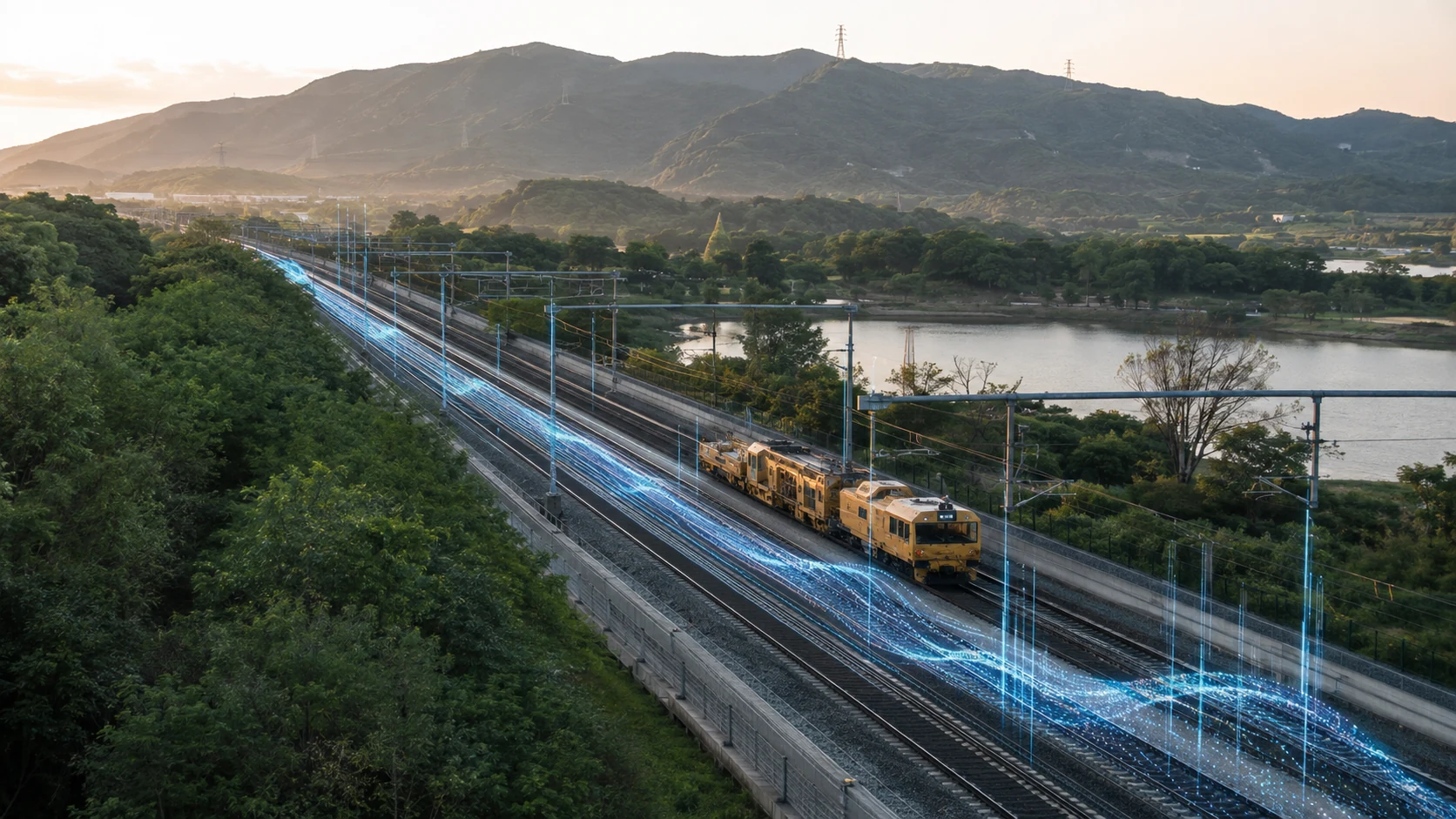
    Distributed fiber-optic sensing is not one technology. Several sensing methods use optical fiber to measure different physical effects along long distances. The most common terms are DAS, DTS, DSS and DTSS.

    DAS: Distributed Acoustic Sensing DAS measures dynamic strain and vibration. It is used to detect acoustic and mechanical events such as footsteps, digging, vehicles, trains, fence disturbance, machinery vibration and seismic activity. Many systems analyze coherent Rayleigh backscatter and can sample events at high frequency.

    DTS: Distributed Temperature Sensing DTS measures temperature continuously along a fiber. Raman-based systems are widely used for power cables, tunnels, pipelines, fire detection and industrial temperature monitoring. The output is a temperature profile rather than an acoustic waveform.

    DSS: Distributed Strain Sensing DSS measures static or slowly changing strain. Applications include structural monitoring, geotechnical movement, pipelines, bridges, dams and other assets where deformation develops over minutes, hours or longer periods. Brillouin scattering is commonly associated with this type of measurement, although architectures vary.

    DTSS: Distributed Temperature and Strain Sensing DTSS combines temperature and strain information, often through Brillouin-based measurements or hybrid configurations. Because temperature and strain can both influence the optical signal, system design and compensation methods are important.

    Different physics, different questions DAS asks: where is vibration occurring and what kind of event is it? DTS asks: where is the temperature changing? DSS asks: where is the fiber being stretched or compressed? DTSS seeks to characterize both temperature and strain.

    Can one fiber support several measurements? In some architectures, the same cable can support multiple interrogators or hybrid sensing systems. This allows an infrastructure owner to combine acoustic, temperature and strain information along the same route. Integration can create a richer condition-monitoring picture, but optical budgets, fiber allocation and system compatibility must be engineered carefully.

    The correct technology depends on the physical phenomenon that matters. A pipeline intrusion problem is usually acoustic; a power cable thermal-capacity problem is temperature-based; a slope movement problem may require strain. Understanding that distinction is the first step toward specifying the right distributed sensing system.

  • Distributed Temperature Sensing (DTS): Complete Technology Guide

    Distributed Temperature Sensing (DTS): Complete Technology Guide

    Distributed Temperature Sensing, or DTS, uses optical fiber as a continuous temperature sensor over long distances. Instead of installing individual electronic temperature probes every few meters, a single fiber can provide a temperature profile across cables, tunnels, pipelines, conveyors, storage areas and other extended assets.

    How DTS works Many DTS systems use Raman backscatter. A laser pulse travels through the fiber and a very small amount of light is scattered back toward the interrogator. The relative intensity of temperature-sensitive Raman components changes with the local fiber temperature. By measuring the return time, the system determines where along the fiber each temperature reading originated.

    Continuous temperature profiles The key advantage of DTS is not simply measuring temperature. It is seeing temperature as a continuous spatial profile. Operators can identify hot spots, compare zones, detect rate-of-rise conditions and follow thermal behavior over time.

    Power cable monitoring High-voltage cables are a major application. Cable loading capacity is influenced by conductor temperature, soil conditions, duct arrangement and surrounding thermal resistance. DTS can monitor the cable route and support dynamic cable rating, hotspot detection and asset-management decisions.

    Fire detection Linear heat detection with fiber is useful in tunnels, cable trays, conveyor galleries, warehouses and industrial facilities. Because the sensing fiber is passive and immune to electromagnetic interference, it can operate in environments where conventional electronics are difficult to deploy.

    Pipelines and industrial assets DTS can help identify temperature anomalies associated with leaks, process changes or insulation problems. In wells and pipelines, distributed temperature profiles provide information that would be impractical to obtain with sparse point sensors.

    Performance considerations Important parameters include sensing range, spatial resolution, temperature accuracy, measurement time and fiber configuration. Installation geometry and thermal coupling strongly influence how quickly the fiber reflects the temperature of the surrounding asset.

    DTS is most valuable when temperature is not a single point measurement but a distributed condition. By converting kilometers of passive optical fiber into a thermal map, it gives operators a continuous view of infrastructure that conventional sensors can only sample at selected locations.