
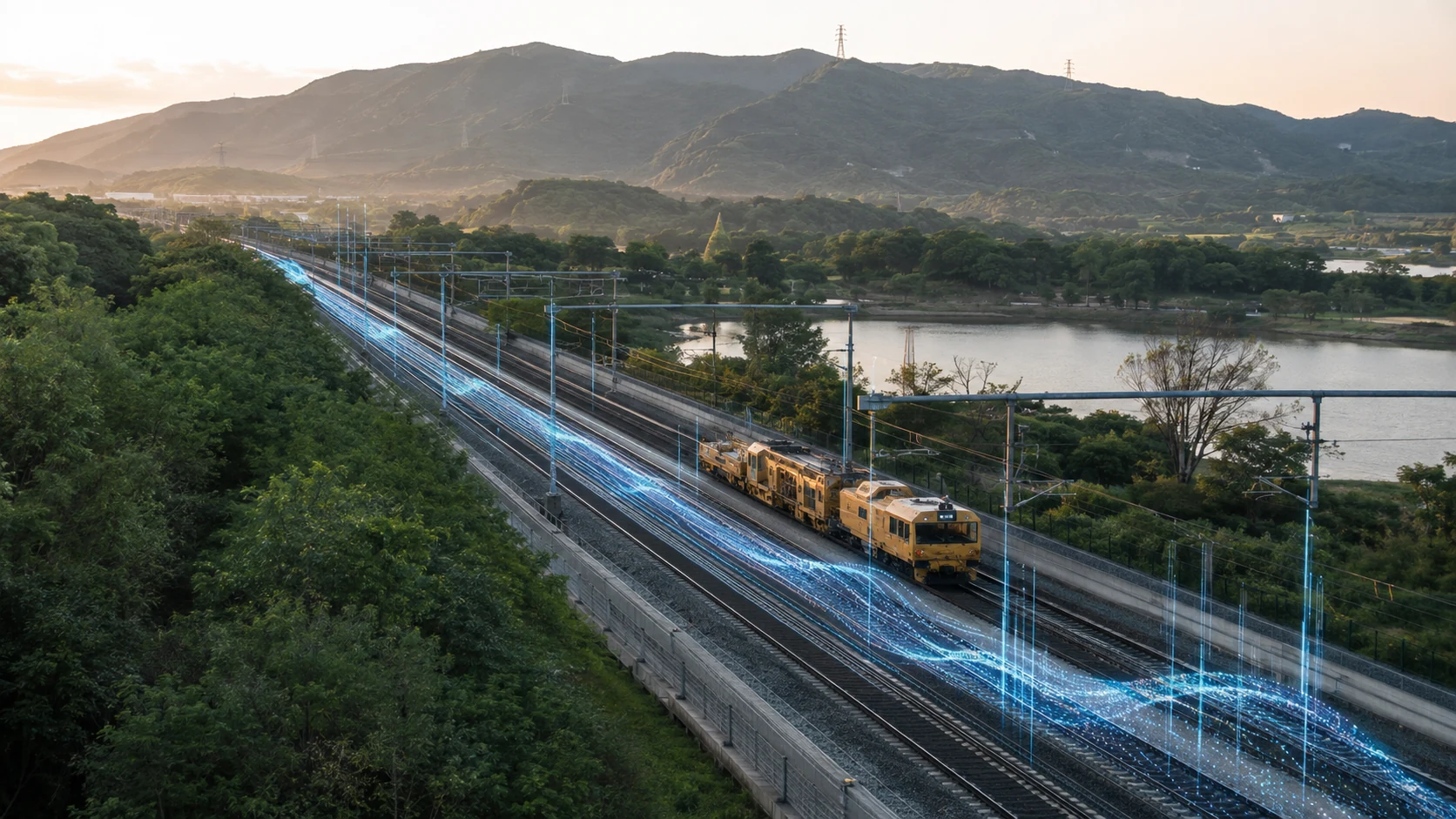
Distributed Temperature Sensing provides continuous temperature measurements along optical fiber, making it useful where heat must be monitored over long or difficult-to-access routes.
How DTS differs from point detection
Traditional temperature sensors measure specific locations. DTS creates thousands of measurement points along one fiber and can show how heat develops spatially over time.
Tunnel applications
In road and rail tunnels, DTS can support linear heat detection and help operators identify the approximate location and development of abnormal temperature conditions.
Power cables
High-voltage cables can develop hotspots that limit loading or indicate deteriorating conditions. DTS provides a thermal profile along the route and supports dynamic operational decisions.
Industrial routes
Conveyors, cable trays, pipelines and storage areas can benefit from continuous thermal monitoring where point sensors leave gaps.
Design considerations
Response time, spatial resolution, fiber type, installation geometry, calibration and integration with the fire or SCADA system should be evaluated together. DTS is strongest when operators can convert temperature data into clear actions.
Conclusion
DTS for Tunnels, Cable Routes and Linear Fire Detection should be evaluated as part of a broader operational architecture. The strongest deployments combine suitable sensing technology, resilient communications, clear procedures and measurable performance rather than relying on a single device or headline specification.
Leave a Reply