

Tag: false alarm reduction

  • AI and Machine Learning for DAS Event Classification

    AI and Machine Learning for DAS Event Classification

    Distributed Acoustic Sensing produces enormous amounts of vibration data. The central operational challenge is not detecting that something happened, but deciding what happened. Was the signal caused by a person, vehicle, excavation machine, train, leak-related noise, environmental activity or harmless background vibration?

    This is where machine learning becomes important. Instead of relying only on fixed amplitude thresholds, modern DAS platforms can analyze temporal patterns, frequency content, event duration, spatial movement and correlations across neighboring sensing channels.

    Training Data Determines Performance

    A classification model is only as useful as the data used to train and validate it. Pipeline, railway, perimeter and subsea environments produce very different signal signatures. Models therefore need representative data from the real installation environment rather than generic laboratory recordings.

    False alarms are a major reason to use AI, but aggressive filtering creates another risk: missing weak or unusual events. Good systems balance sensitivity and confidence rather than treating classification as a simple yes-or-no decision.

    Edge and Centralized Analytics

    Some classification can run close to the interrogator for low-latency alarms, while more computationally intensive analytics can run on centralized servers or cloud infrastructure. Hybrid architectures are increasingly attractive because they combine fast local response with fleet-wide model improvement.

    Human operators remain important. AI should prioritize events, attach confidence scores and provide context, while critical decisions remain auditable.

    Conclusion

    Machine learning is turning DAS from a high-volume signal generator into an operational intelligence platform. The competitive advantage will increasingly come not only from interrogator hardware, but from high-quality training data, reliable classification models and integration with real security and infrastructure workflows.
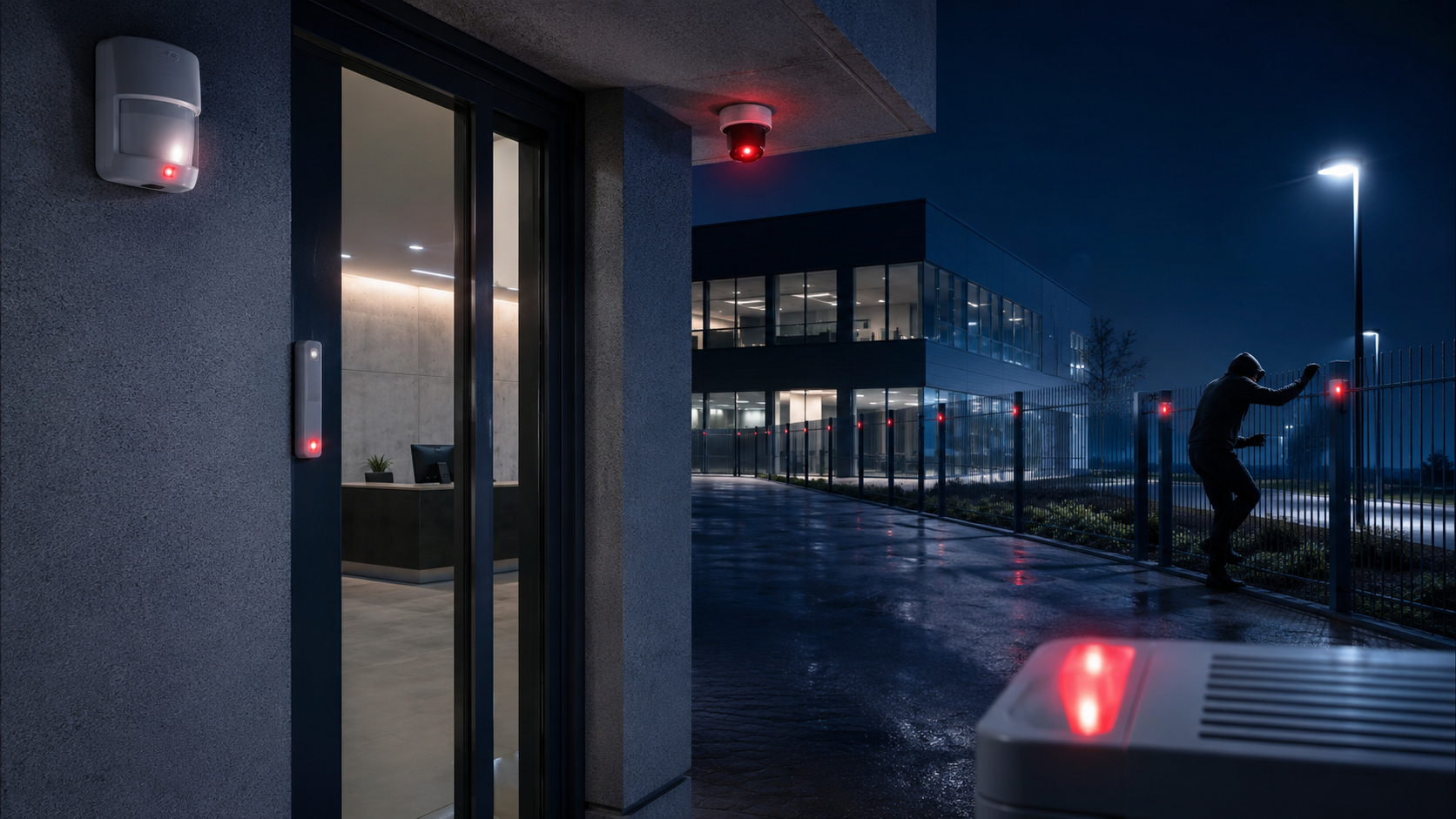
  • AI-Based Perimeter Analytics: How to Reduce False Alarms

    AI-Based Perimeter Analytics: How to Reduce False Alarms

    Perimeter systems are often judged by detection range, but alarm quality is just as important. A sensor that detects everything can overwhelm operators with animals, vegetation, weather effects and routine activity. AI-based analytics are increasingly used to separate relevant events from background noise.

    Why false alarms happen

    Outdoor environments change constantly. Shadows move, rain crosses the scene, trees sway, insects pass near cameras and wildlife enters protected zones. Traditional motion detection can interpret many of these changes as security events.

    Object classification

    Modern analytics can distinguish people, vehicles and other object classes. Instead of alarming whenever pixels change, the system can apply rules only when a relevant object enters a defined zone, crosses a virtual line or remains in an area for a specified time.

    Context matters

    Classification alone is not enough. A person walking on a public path may be normal while the same person inside a restricted substation is significant. Good perimeter analytics combine object type with location, direction, speed, dwell time and schedule.

    Sensor fusion

    AI becomes more useful when it receives data from several sensors. Radar may establish that a target is moving toward the perimeter, a thermal camera may detect a warm object and video analytics may classify it as a person. Combining these signals can increase confidence and reduce single-sensor nuisance alarms.

    Training and tuning

    Analytics should be commissioned for the actual site. Camera angle, target size, vegetation, weather and seasonal changes affect performance. Thresholds that work during installation may need refinement after weeks of real operation.

    Human verification remains important

    AI should prioritize and enrich alarms rather than automatically treating every classification as fact. Operators need access to live and recorded video, sensor history and clear alarm context.

    Conclusion

    The goal of AI perimeter analytics is not to eliminate every false alarm. It is to improve the signal-to-noise ratio so that operators can focus on events that deserve attention. Strong results come from good sensor placement, site-specific tuning, multiple sources of evidence and disciplined alarm workflows.