
Tag: flame detection

  • Flame Detection Technologies: UV, IR and Multispectrum

    Flame Detection Technologies: UV, IR and Multispectrum

    Flame detectors are designed for hazards where open combustion may develop rapidly and waiting for smoke or heat to travel to a ceiling detector would be too slow. They are widely used in oil and gas, petrochemical plants, fuel storage, turbines, aircraft hangars and other high-risk industrial environments.

    Ultraviolet detectors respond to UV radiation produced by many flames. They can react quickly but may require careful management of other UV sources. Infrared detectors monitor characteristic IR wavelengths associated with combustion and can be effective over longer distances.

    Dual- and multispectrum detectors compare several wavelength bands to improve discrimination. By analyzing the relationship between bands and the flicker characteristics of fire, modern detectors can reject many false-alarm sources while maintaining fast response.

    Coverage is line-of-sight. A flame detector cannot see through equipment, walls or dense smoke, so field of view and mounting geometry are essential design factors. Multiple detectors may be required around complex process equipment.

    Environmental conditions also matter. Sunlight, welding, hot machinery, reflections and weather can influence performance depending on detector type. Selection should be based on the expected fuel and credible fire scenario, not simply maximum advertised range.

    Flame detection is most effective when integrated with process shutdown, alarm and suppression logic. In high-hazard facilities, a few seconds of earlier detection can materially change the outcome of an incident.
  • Video Fire Detection: AI Cameras as Early-Warning Systems

    Video Fire Detection: AI Cameras as Early-Warning Systems

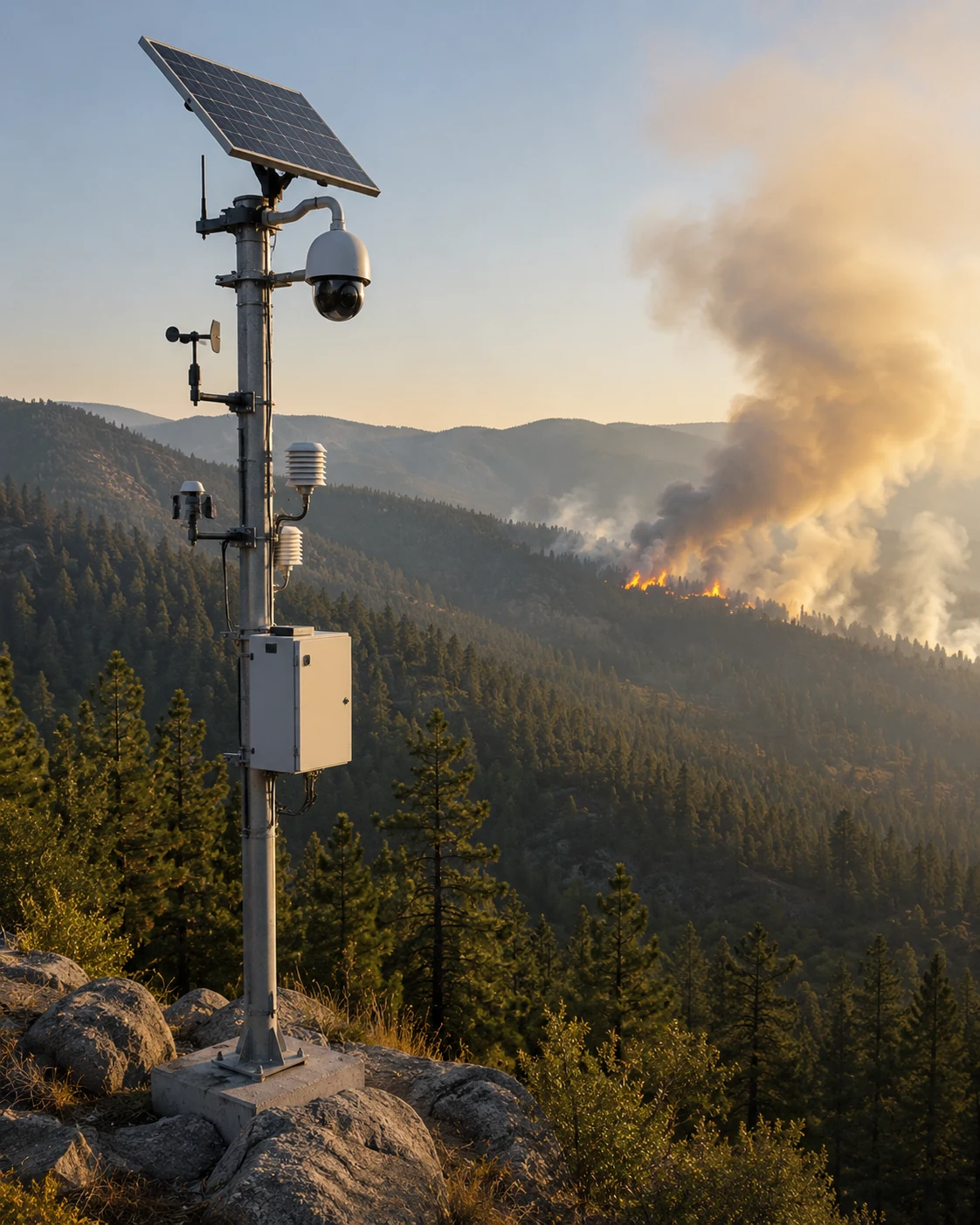
    Video fire detection uses cameras and analytics to identify visual patterns associated with smoke or flame. The technology is especially attractive in large or open spaces where traditional ceiling-mounted detectors may be slow or difficult to install.

    Algorithms analyze movement, texture, color, growth patterns and other features that distinguish smoke or flame from normal scene activity. Modern AI models can improve classification and reduce nuisance alarms caused by fog, steam, reflections or moving objects.

    Typical applications include warehouses, waste facilities, tunnels, industrial yards, aircraft hangars, battery storage areas and outdoor process sites. In these environments, a camera may see developing smoke at a distance before heat or smoke reaches a conventional detector.

    Video detection also provides immediate context. Operators can verify the scene visually and understand the location and scale of an event. Recorded video can support investigation after the incident.

    The technology still has limitations. Camera placement, lighting, obstructions, weather and lens contamination affect performance. Video analytics should not be assumed to replace code-required detection systems unless the design and approvals explicitly support that use.

    The strongest approach is usually integration. Video fire detection can add early-warning capability to conventional smoke, heat, flame or gas detection, creating a richer and faster picture of developing fire conditions.