
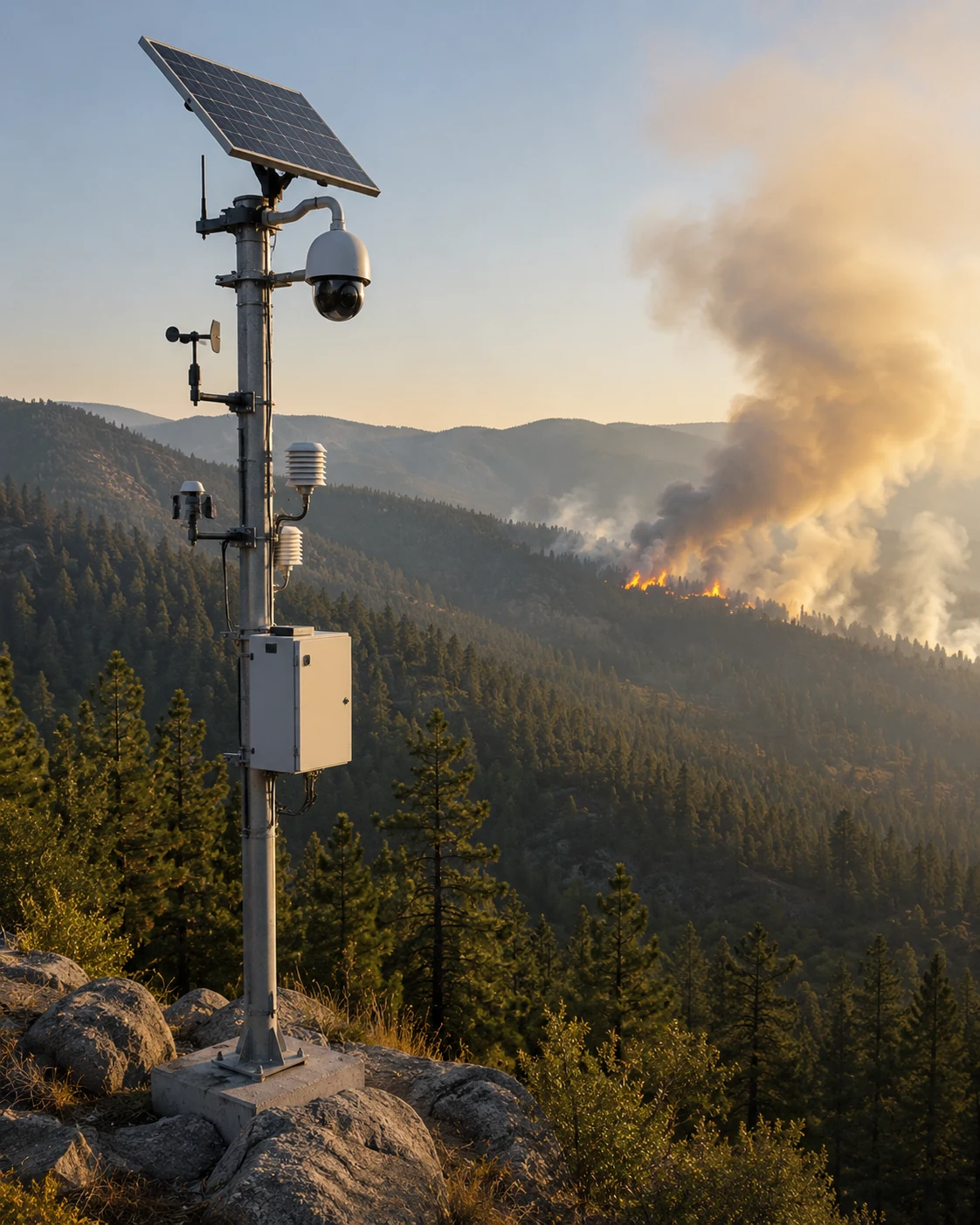
Video fire detection uses cameras and analytics to identify visual patterns associated with smoke or flame. The technology is especially attractive in large or open spaces where traditional ceiling-mounted detectors may be slow or difficult to install.
Algorithms analyze movement, texture, color, growth patterns and other features that distinguish smoke or flame from normal scene activity. Modern AI models can improve classification and reduce nuisance alarms caused by fog, steam, reflections or moving objects.
Typical applications include warehouses, waste facilities, tunnels, industrial yards, aircraft hangars, battery storage areas and outdoor process sites. In these environments, a camera may see developing smoke at a distance before heat or smoke reaches a conventional detector.
Video detection also provides immediate context. Operators can verify the scene visually and understand the location and scale of an event. Recorded video can support investigation after the incident.
The technology still has limitations. Camera placement, lighting, obstructions, weather and lens contamination affect performance. Video analytics should not be assumed to replace code-required detection systems unless the design and approvals explicitly support that use.
The strongest approach is usually integration. Video fire detection can add early-warning capability to conventional smoke, heat, flame or gas detection, creating a richer and faster picture of developing fire conditions.
Leave a Reply