Category: Articles & Analysis

Long-form guides, explainers, comparisons, analysis and sector assessments.

  • Perimeter Security Technologies: Fences, Sensors, Radar, Thermal and Fiber

    Perimeter Security Technologies: Fences, Sensors, Radar, Thermal and Fiber

    A complete introduction to perimeter security, from fencing and vehicle barriers to radar, thermal cameras, buried sensors and fiber-optic intrusion detection.

    Physical perimeter measures

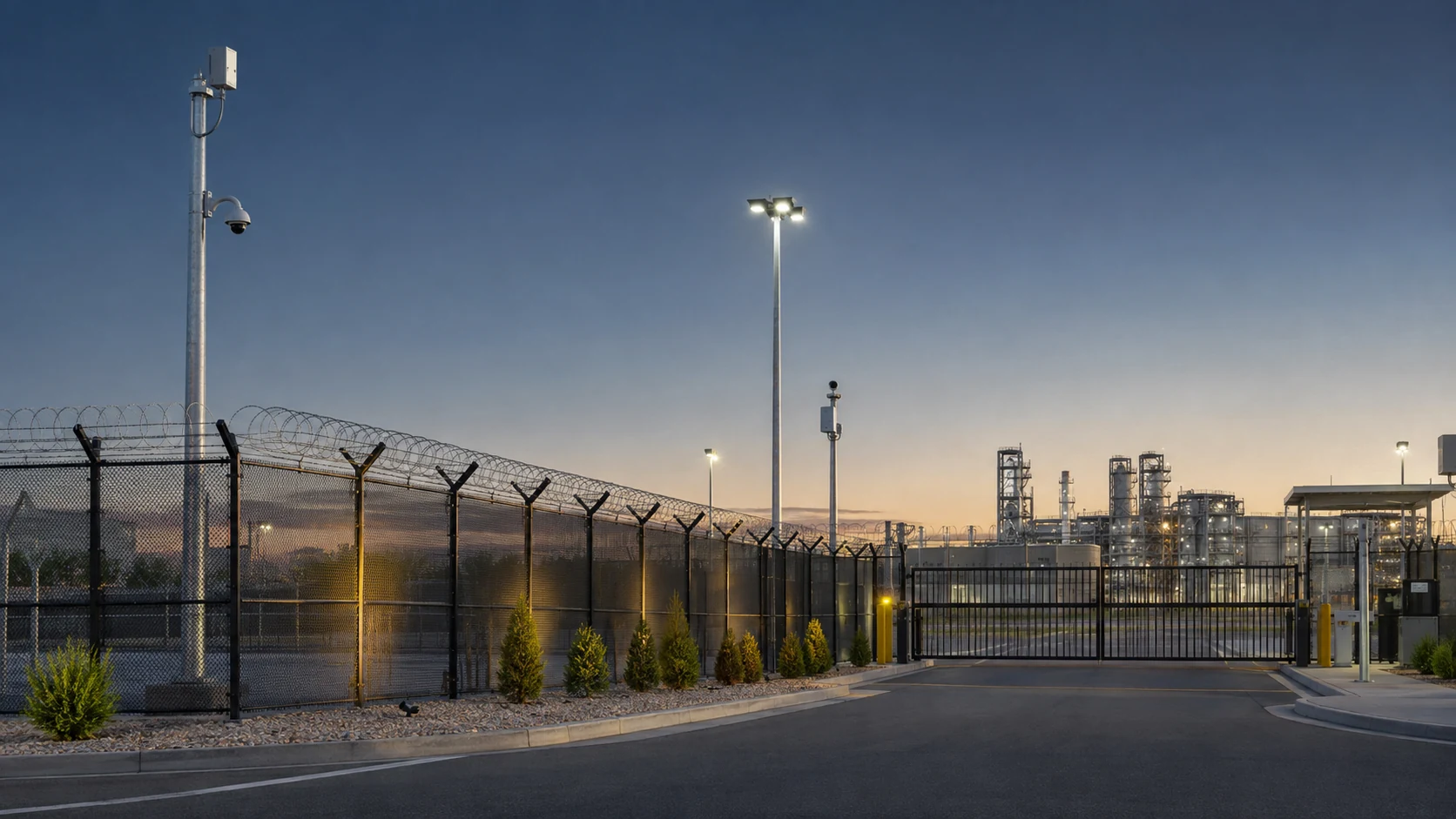
    Fences, walls, gates, security doors and anti-climb features create a visible boundary and add delay. Their value depends on height, construction, terrain, foundations, gate design and what an adversary is expected to attempt. Vehicle threats require separate analysis: bollards, road blockers and other hostile-vehicle-mitigation measures are designed around vehicle mass, speed, approach geometry and stand-off distance. CISA’s Vehicle Incident Prevention and Mitigation Security Guide recommends a Plan–Prevent–Protect framework.

    Perimeter intrusion detection systems (PIDS)

    PIDS is a broad term covering technologies that detect activity at or near a boundary. Fence-mounted sensors measure vibration or movement caused by climbing, cutting or impact. Buried systems can detect footsteps or vehicles. Microwave barriers create an invisible detection field between transmitters and receivers, and infrared beams detect interruption of a defined path. Each technology has environmental trade-offs, and good design starts with the site, not the brochure.

    Radar

    Ground-surveillance radar detects and tracks moving targets across an area, covering open terrain beyond the fence and cueing PTZ or thermal cameras toward a detected target. Radar performance varies with terrain, clutter, target size, speed, mounting and frequency—a maximum-range figure alone says little about reliable detection of the target class that matters to the project.

    Thermal and video analytics

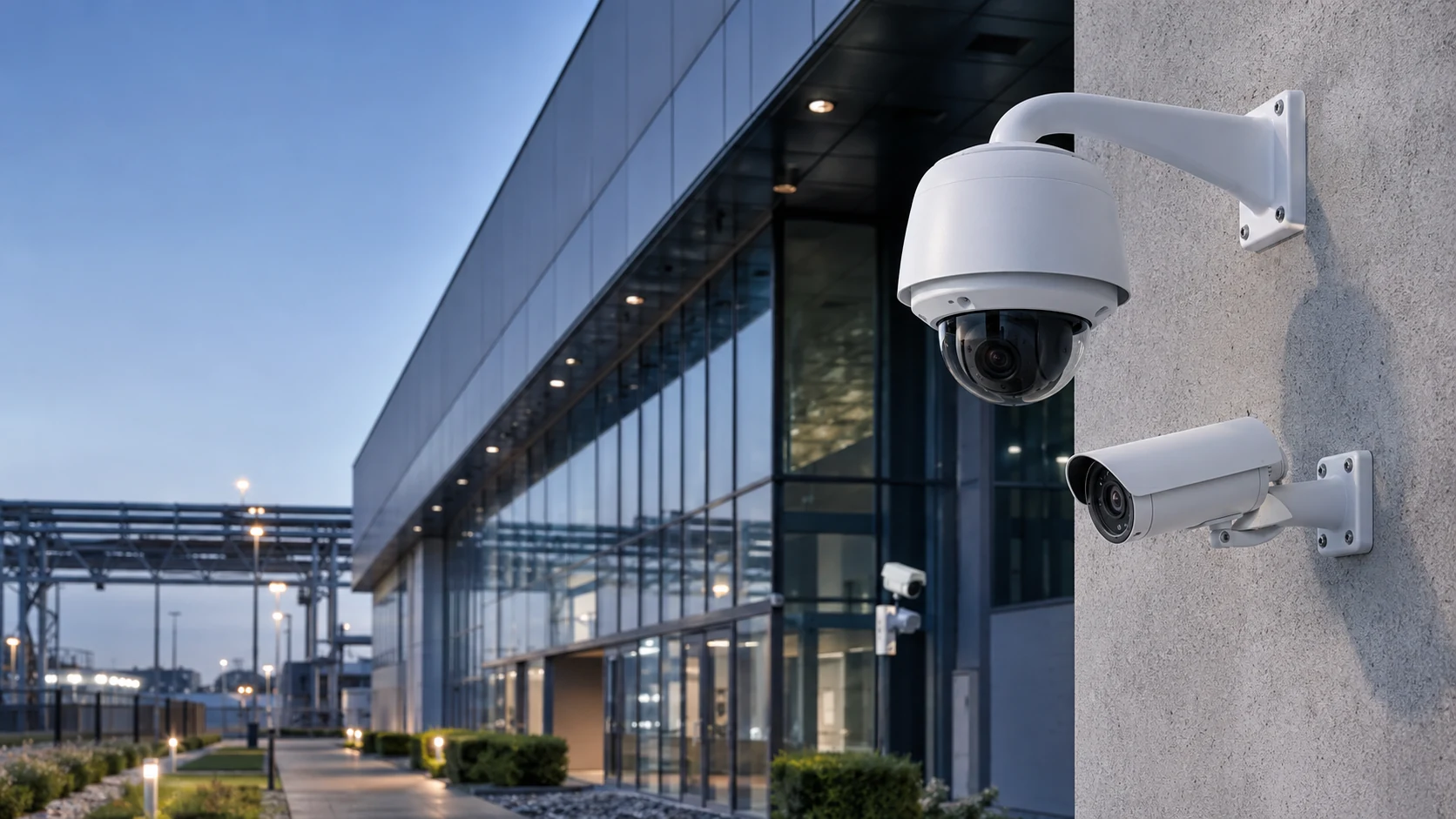
    Thermal cameras are valuable for detection in darkness because they respond to thermal contrast rather than visible illumination. Video analytics can classify people and vehicles or apply rules such as line crossing and loitering. In many perimeter systems the camera’s most important role is assessment: giving the operator visual evidence immediately after another sensor alarms.

    Fiber-optic PIDS and DAS

    Fiber-optic sensing can monitor long boundaries with passive sensing cable in the field, attached to a fence, buried or installed along a linear asset. Distributed Acoustic Sensing uses changes in Rayleigh backscatter to detect strain and vibration along the fiber. The attraction is continuous sensing over long distances with minimal active electronics along the protected line; the engineering challenge is classification—distinguishing digging, climbing or vehicle movement from weather and other background vibration.

    Sensor fusion and response

    The strongest perimeter systems increasingly combine complementary sensors: radar may detect and track a person, a thermal camera verifies the target, a fence sensor confirms interaction with the boundary, and a VMS or PSIM presents the event to the operator. Detection range is meaningless without a response concept—perimeter engineering should combine threat assessment, delay analysis, detection probability, nuisance alarms, camera coverage, lighting and procedures.

    FAQ

    Is a fence enough for perimeter security? A fence is an important physical layer but does not necessarily provide timely detection or assessment.

    Radar or thermal camera: which is better? They do different jobs. Radar is strong for wide-area detection and tracking; thermal imaging is strong for visual assessment and detection based on heat contrast. They are often used together.

    Where does fiber sensing fit? It is particularly relevant to long perimeters and linear assets where continuous distributed detection is valuable.

    Verification note: Never compare perimeter technologies using a single nominal range figure. Target class, terrain and nuisance-alarm performance must be considered.
  • Intrusion Detection and Alarm Systems Explained: Sensors, Panels and Verification

    Intrusion Detection and Alarm Systems Explained: Sensors, Panels and Verification

    Learn how intrusion detection systems use PIR, microwave, magnetic contacts, seismic sensors, alarm panels and video verification to identify security events.

    Perimeter and opening sensors

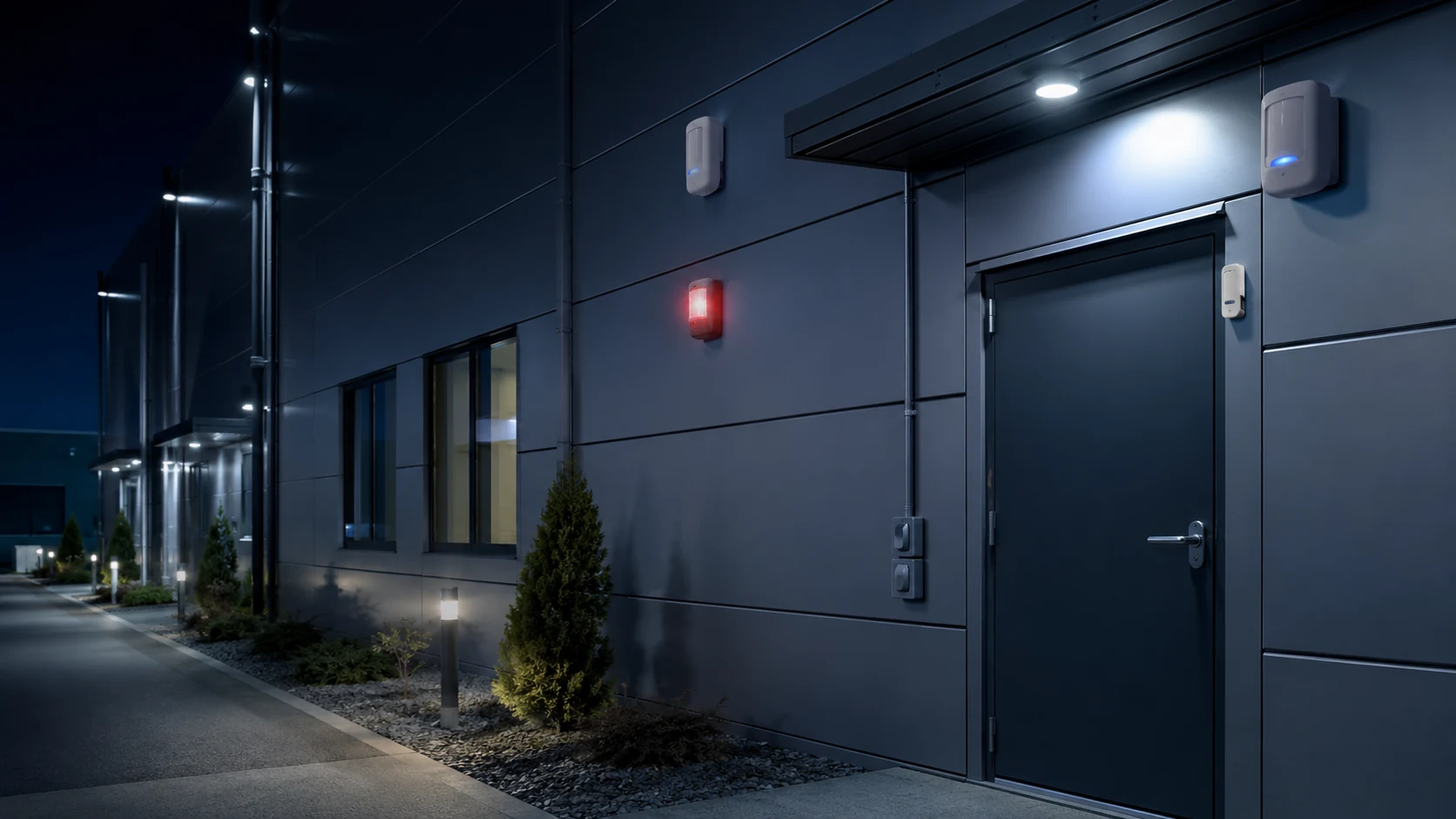
    Magnetic contacts are widely used on doors and windows, indicating a change in the protected opening rather than identifying who caused it. For higher-security applications, balanced magnetic switches and supervised circuits may be used. Glass-break detectors listen for acoustic signatures or sense physical shock associated with breaking glass, while seismic detectors can identify vibration patterns from attacks on walls or safes.

    Volumetric detection

    Passive infrared (PIR) detectors sense changes in infrared energy across zones in their field of view; they do not emit a beam and do not “see” a person like a camera. Microwave motion detectors emit radio-frequency energy and analyze changes in the reflected signal. Dual-technology detectors combine sensing principles—commonly PIR and microwave—to improve confidence and reduce nuisance alarms.

    Outdoor intrusion detection

    Outdoor environments are harder: wind, rain, moving vegetation, animals and temperature swings create nuisance sources. Outdoor PIR, microwave barriers, fence sensors, buried sensors, radar, thermal analytics and fiber-optic systems each address different parts of the problem. The right question is what event must be detected, over what distance, in what terrain, with what acceptable nuisance-alarm rate.

    Alarm control panels and supervision

    The panel receives sensor states, applies logic and communicates alarms or faults. A professional system should also supervise critical wiring, power, communication paths and device health. Modern platforms may combine intrusion events with access control and video, so a door-contact alarm can automatically display the nearest camera.

    Verification changes the value of an alarm

    An alarm tells the operator that a rule has been triggered; it does not automatically explain what happened. Video verification, sequential confirmation from multiple sensors or operator call procedures can help distinguish a genuine intrusion from a nuisance event, avoiding the alarm fatigue that undermines system effectiveness.

    Layered security

    CISA physical-security guidance repeatedly emphasizes layered approaches to protection. Intrusion detection works best as one layer alongside physical delay, lighting, surveillance, access control, procedures and response.

    FAQ

    What is the difference between detection and verification? Detection identifies a condition that meets alarm logic. Verification adds evidence—often video or a second sensor—to help determine whether the alarm represents a real threat.

    Can one sensor type protect an entire facility? Usually not. Different spaces and threats require different sensing methods.

    Why do false alarms happen? Common causes include poor placement, environmental conditions, incorrect sensitivity, movement outside the intended area, maintenance issues and weak commissioning.

    Verification note: Detection ranges and immunity claims should be taken from specific product test data, not generalized across a technology class.

  • Fire Detection and Automatic Fire Suppression Systems: A Complete Guide

    Fire Detection and Automatic Fire Suppression Systems: A Complete Guide

    Understand fire detection, alarm and automatic suppression systems, from smoke and heat detection to sprinklers, water mist, foam and clean-agent systems.

    How fire detection works

    Different detectors respond to different products of combustion. Smoke detectors respond to airborne particles or changes caused by smoke. Heat detectors react when temperature reaches a threshold or rises rapidly. Flame detectors identify characteristic radiation from flames. Gas detection can identify combustible or toxic gases associated with an industrial process or battery event.

    Aspirating smoke detection actively draws air through sampling pipework to a sensitive detector and can provide early warning in environments such as data centers, high-bay facilities and clean spaces. Linear heat detection monitors temperature along a cable or sensing path and is useful for long assets such as tunnels, conveyors and cable trays.

    Automatic sprinklers

    Automatic sprinklers remain one of the most widely used forms of fixed fire protection. Individual sprinkler heads generally operate when local heat causes the thermal element to activate, meaning a typical system does not release water from every head at once. OSHA’s fire-protection rules distinguish automatic sprinkler systems from other fixed extinguishing systems and require fixed-system components and agents to be designed and approved for the specific hazards they are intended to control.

    Water mist, water spray and deluge

    Water-mist systems use very fine droplets to influence heat and radiant heat transfer, depending on the application and design. Water-spray and deluge systems can protect industrial hazards, transformers or process equipment where rapid, broad application is required. These are engineered solutions where nozzle position and hydraulic calculations matter.

    Foam and clean-agent systems

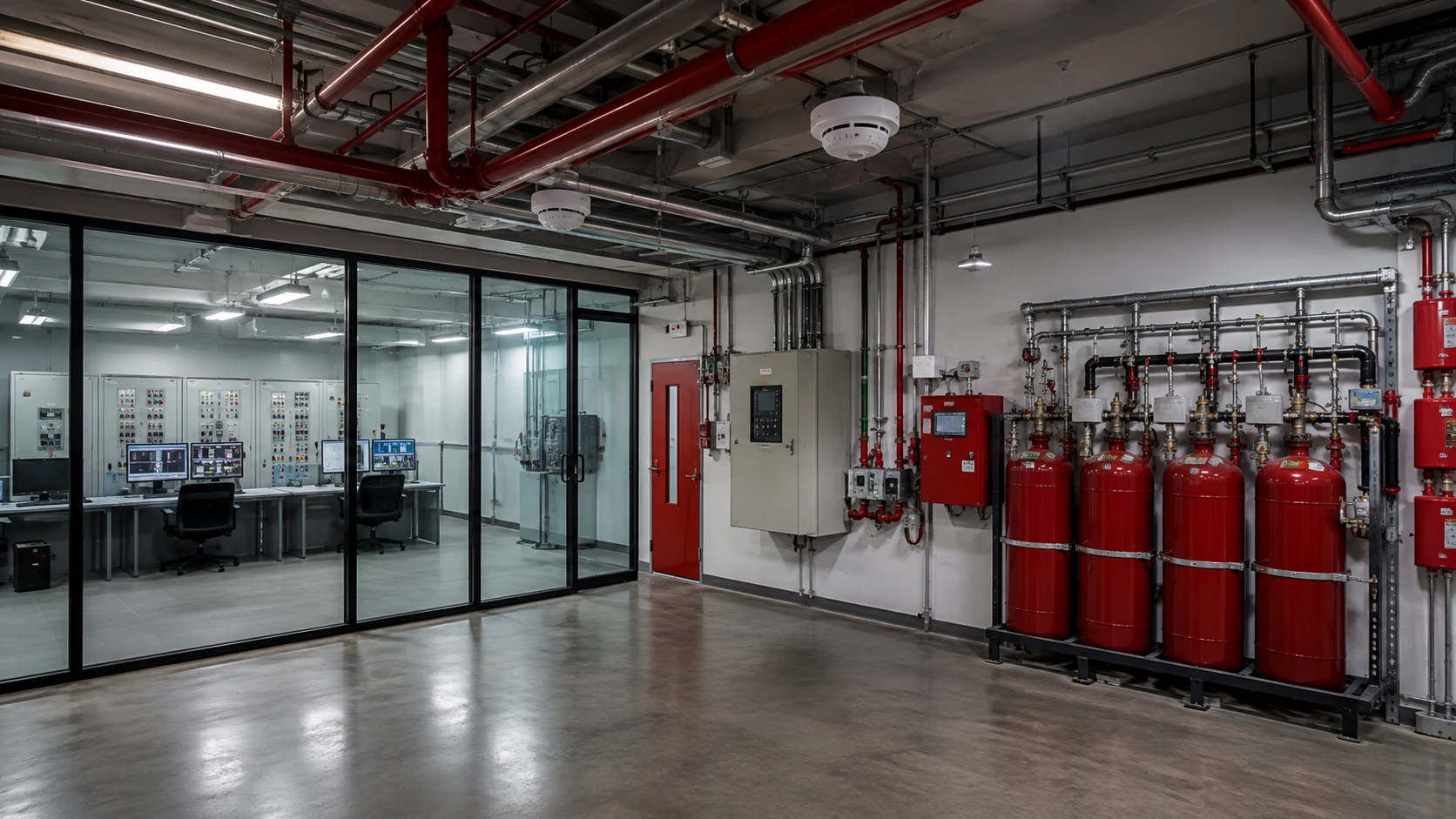
    Foam is primarily associated with flammable-liquid hazards because it can form a blanket over a fuel surface and reduce vapor release. Fixed gaseous systems are commonly used where water damage is a major concern or where three-dimensional hazards require agent distribution throughout an enclosure. OSHA requires safeguards for hazardous discharge areas and, for certain total-flooding systems, a pre-discharge alarm that gives employees time to exit.

    Detection-to-release logic

    Automatic release should be designed to avoid both delayed suppression and unwanted discharge. Engineered systems may use cross-zoned detection, confirmation logic, manual release stations, abort controls, pre-discharge alarms and equipment shutdowns, verified during commissioning.

    How to choose the right technology

    Start with the fire hazard, not the preferred product. Ask what can burn, how quickly the fire can develop, whether people occupy the space, whether water is acceptable, and what business interruption would result from a discharge. Design, installation, inspection and maintenance should be handled by qualified professionals under the applicable local standards.

    FAQ

    Does every automatic suppression system need smoke detectors? No. The detection and activation method depends on the system and hazard; some systems have independent thermal activation.

    Are clean agents safe for occupied rooms? Suitability depends on agent concentration, exposure conditions, system design and applicable standards. Occupancy safety must be engineered, not assumed.

    Is water mist the same as a sprinkler system? No. Both use water, but droplet characteristics, operating pressures, design methods and applications differ.

    Verification note: Fire codes and accepted extinguishing agents vary by jurisdiction. Final published versions should identify relevant NFPA, EN, UL/FM or local standards for the target geography.

  • Video Surveillance Systems Explained: Cameras, VMS, AI and Storage

    Video Surveillance Systems Explained: Cameras, VMS, AI and Storage

    A practical guide to modern video surveillance systems, covering IP cameras, PTZ, thermal imaging, VMS, storage, analytics, interoperability and system design.

    What is a video surveillance system?

    A video surveillance system captures visual information from a protected environment and makes that information available for live monitoring, recording, search, investigation and increasingly automated analysis. Traditional analog CCTV systems carried video over dedicated coaxial infrastructure. IP-based systems encode video digitally and transmit it across networks, which makes integration, remote access and distributed architectures much easier.

    The main components are cameras, network infrastructure, recording or cloud storage, a video management system, operator interfaces and optional analytics. In larger installations, identity systems, intercoms, intrusion sensors and command-and-control platforms may also exchange events with the video system.

    Camera types and where they fit

    Fixed network cameras are suited to entrances, corridors and areas where the required field of view is known. PTZ cameras can pan, tilt and zoom, making them useful for active tracking and wide-area verification. Multi-sensor and panoramic cameras reduce blind spots by covering several directions from one mounting point. Thermal cameras detect infrared radiation rather than visible light, so they can be useful for detection in darkness, haze or visually complex perimeter environments. They are not a universal replacement for visible cameras because identification and forensic detail may still require conventional imaging.

    Resolution is only one part of image quality. Lens selection, field of view, lighting, shutter settings, dynamic range, compression and mounting position can matter as much as pixel count.

    VMS: the operating layer

    Video Management Software, or VMS, is the layer that brings camera streams, recordings, alarms, maps, user permissions and investigations together. It controls who can see what, how video is recorded and retained, how operators receive alarms and how recorded material is searched or exported.

    Interoperability is important in multi-vendor systems. ONVIF describes itself as an open industry forum for standardized interfaces for IP-based physical security, covering advanced video streaming, edge storage and metadata/events for analytics applications. Conformance should be checked against the official ONVIF conformant-products database rather than assumed from a marketing claim.

    Storage and bandwidth

    Storage requirements depend on resolution, frame rate, compression, scene complexity, recording mode and retention period. H.265 can reduce bandwidth and storage compared with older encoding approaches under suitable conditions, but real-world savings vary. Motion-based recording can reduce storage in low-activity scenes, while high-activity environments may record almost continuously.

    For critical systems, storage design should also consider redundancy, evidence integrity, cybersecurity and what happens when network connectivity is lost.

    Where AI analytics fit

    Video analytics can detect or classify events such as people, vehicles, line crossing, loitering or objects entering a restricted area. The useful question is not whether a camera has “AI,” but how accurately the analytic performs in the actual scene and how false alarms are handled. Analytics should be treated as decision support, since lighting, weather, camera angle and occlusion can all affect performance.

    How to specify a system

    Start with threats and operational goals. Define what must be detected, what level of identification is needed, how quickly an alarm must be verified, which areas are most critical and how long video must be retained. Then design fields of view, pixel density, lighting, network capacity, storage, resilience and operator workflow around those requirements.

    FAQ

    Is IP video always better than analog CCTV? IP architectures offer major advantages in integration, scalability and analytics, but migration decisions should consider existing infrastructure, cybersecurity, cost and operational need.

    What does ONVIF compliance mean? It means a product conforms to a defined ONVIF profile. Compatibility should be verified for the specific profiles and functions required by the project.

    Do AI cameras eliminate human monitoring? No. They can reduce search and alarm workload, but human verification remains important, especially in high-consequence environments.

    Verification note: Avoid presenting a vendor’s claimed AI accuracy as a universal performance figure. Test results are scene- and configuration-dependent.