Category: Factories

  • Oakland Apartment Fire Injures Four and Displaces About 70 Residents

    Oakland Apartment Fire Injures Four and Displaces About 70 Residents

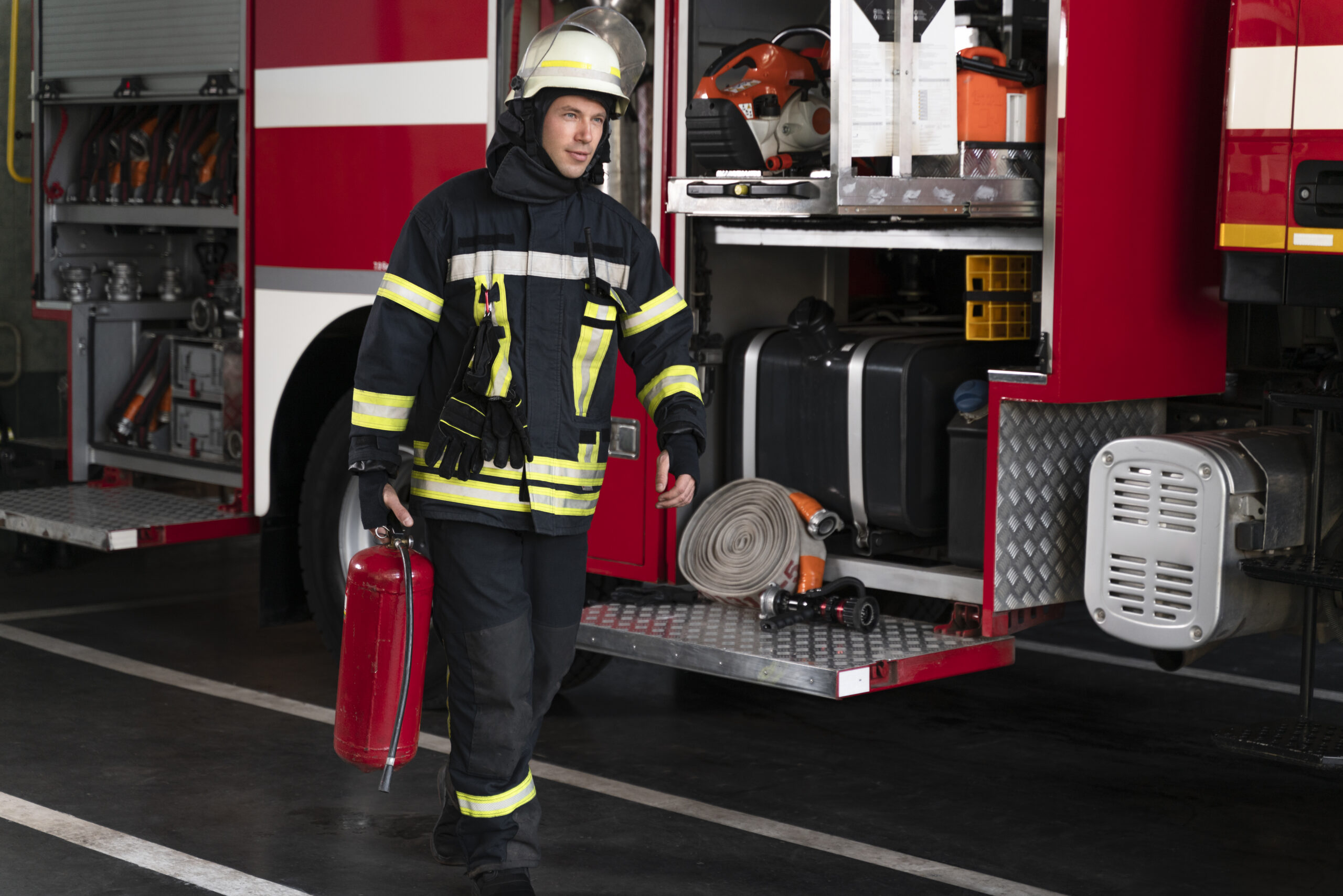
    A three-alarm fire in a four-story East Oakland apartment building injured four residents and displaced about 70 people, according to local reporting based on fire-department information. The incident began shortly after midnight in the 5100 block of Bancroft Avenue, with smoke and flames visible from all four floors when crews arrived.

    Crews carried out rescues during escalation

    The response grew to a third alarm within minutes and involved about 65 firefighters. Crews rescued several occupants while others evacuated independently. Three adults and a nine-year-old child were taken to hospital for smoke inhalation and other injuries. No firefighter injuries were reported, and the fire was brought under control in a little over an hour.

    Officials described extensive damage, and the 21-unit building was red-tagged as uninhabitable. Emergency housing support was being arranged with assistance from the Red Cross. The cause remained under investigation at the time of reporting.

    Multi-unit incidents test several safeguards

    Apartment fires place simultaneous demands on detection, alarm audibility, protected escape routes, compartmentation and fire-service access. Post-incident reviews should examine whether alarms reached every occupied area, how smoke affected exits and whether resident accountability supported rescues. SectechMedia follows these engineering issues in its fire and life-safety coverage.

    Sources

  • Michigan Plastics Plant Fire Disrupts Power Near South Haven

    Michigan Plastics Plant Fire Disrupts Power Near South Haven

    A major fire at East Jordan Plastics near South Haven, Michigan, spread from plastic pallets stored outside the facility into the factory and disrupted electrical service in parts of the community. Local reporting said smoke was visible for miles as multiple fire agencies responded.

    Propane explosions complicated the response

    South Haven Area Emergency Services said early propane explosions threw tanks into the air while crews worked the third-alarm incident. At least six agencies participated in the response. Employees evacuated safely, and no injuries had been reported in the initial public information.

    The fire’s proximity to critical electrical infrastructure added a second operational problem. The City of South Haven said an electric transmission feed was cut because the incident threatened a municipal utility substation. Power restoration depended on progress toward containment, and the public was asked to stay away from the area.

    Industrial incidents can cross system boundaries

    The event illustrates why industrial emergency planning must account for stored materials, pressurized containers, utility dependencies and access for mutual-aid crews. Detection and suppression systems are important, but pre-incident surveys, isolation plans and coordination with energy providers can determine how far consequences spread beyond a facility. SectechMedia follows related engineering risks in its fire and safety coverage.

    Sources

  • Google Cloud Publishes Secure Agentic AI Blueprint for Manufacturing

    Google Cloud Publishes Secure Agentic AI Blueprint for Manufacturing

    Google Cloud has published a blueprint for deploying agentic artificial intelligence in manufacturing while preserving physical safety, operational resilience and human authority. The framework addresses agents that can move beyond analysis to plan tasks or propose actions across enterprise, engineering and plant-floor workflows.

    Three connected operating domains

    The blueprint groups opportunities into business operations, engineering and industrial operations, and unified cybersecurity and resilience. Examples include procurement checks, predictive-maintenance analysis and the triage of security telemetry across IT and operational technology. Google emphasizes targeted pilots, data readiness, governance and access controls rather than unrestricted deployment.

    That distinction matters because an error in a factory can have physical consequences. An agent that summarizes maintenance records presents a different risk from one that can change a production schedule or interact with control infrastructure. The latter requires constrained permissions, tested rollback paths and a human decision point for consequential actions.

    Security architecture before scale

    Manufacturers should separate deterministic control from experimental AI services, validate data flows and monitor agent activity as a privileged workload. Digital twins and isolated environments can support testing without exposing production equipment. The blueprint reinforces a wider industrial monitoring principle: faster automation is valuable only when teams can explain, authorize and reverse its actions.

    Sources

  • Semiconductor Fabrication Plant Security Technology

    Semiconductor Fabrication Plant Security Technology

    Semiconductor fabrication plants occupy an unusual position in industrial security: the facilities are simultaneously among the most valuable manufacturing sites in the world, among the most contamination-sensitive, and among the most exposed to economic-espionage risk. Protecting a fab means protecting process recipes, yield data and equipment configurations that can represent years of R&D investment, while doing so inside cleanroom environments where conventional security hardware cannot simply be installed without engineering review.

    Intellectual Property Is the Primary Asset at Risk

    Unlike most manufacturing facilities, where the physical product is the main asset of concern, a fab’s greatest value often sits in intangible process knowledge: lithography recipes, etch parameters, and the tool-configuration data that determines chip yield. Semiconductor manufacturers and their national governments have treated the theft of this process knowledge as a strategic economic-security issue, not merely a corporate one, which has pushed leading fabs toward access-control and monitoring regimes closer to those used in defense manufacturing than in general industrial settings.

    Cleanroom-Compatible Physical Security

    Access Control Inside Contamination-Controlled Zones

    Standard access-control hardware, badge readers and cameras must be specified in cleanroom-rated enclosures that do not shed particles, since even minor contamination can affect wafer yield. This constrains equipment choices and typically requires close coordination between the security integrator and the fab’s process-engineering team before any device is installed inside a cleanroom bay.

    Tiered Access by Process Area

    Fabs commonly implement tiered access zones that go well beyond a simple perimeter-and-interior model: photolithography bays, where the most sensitive recipe data is generated, are typically restricted to a smaller population of cleared personnel than general fab-floor access, with additional logging of tool-level login activity layered on top of physical badge access.

    Operational Technology and Equipment Security

    Fab tools are networked to manufacturing-execution systems that schedule wafers, collect yield data and adjust process parameters, making tool-level cybersecurity as important as the physical perimeter. Because process tools from multiple equipment vendors are often serviced by third-party field engineers with remote-access needs, fabs have generally been early adopters of tightly scoped vendor remote-access controls and network segmentation between fab-floor OT systems and corporate IT.

    Visitor, Contractor and Insider Controls

    Fabs draw a large volume of equipment-vendor field engineers, auditors and prospective customers through facility tours, creating sustained insider and visitor-risk exposure. Common controls include escort requirements in sensitive bays, camera-restricted or camera-prohibited zones around specific tool sets, and device-control policies restricting phones and storage media in areas where process data is visible on tool displays.

    FAQ

    Why can’t fabs use standard commercial security cameras everywhere?

    Standard camera housings and other electronic hardware can shed particles or off-gas materials that compromise cleanroom air-cleanliness classifications. Any device installed inside a classified cleanroom area typically needs a cleanroom-rated enclosure validated against the facility’s particulate standards.

    Is fab security mainly about preventing physical theft?

    Physical theft of finished product is a much smaller concern than the theft or leakage of process knowledge and yield data. Most fab security programs are built primarily around protecting intellectual property and process information rather than physical inventory.

    Conclusion

    Semiconductor fab security sits at the intersection of cleanroom engineering constraints, high-value intellectual-property protection and OT cybersecurity for networked process tools. That combination has pushed the sector toward access-control and monitoring practices that are more granular, and more tightly coupled to process engineering, than in almost any other manufacturing vertical.