
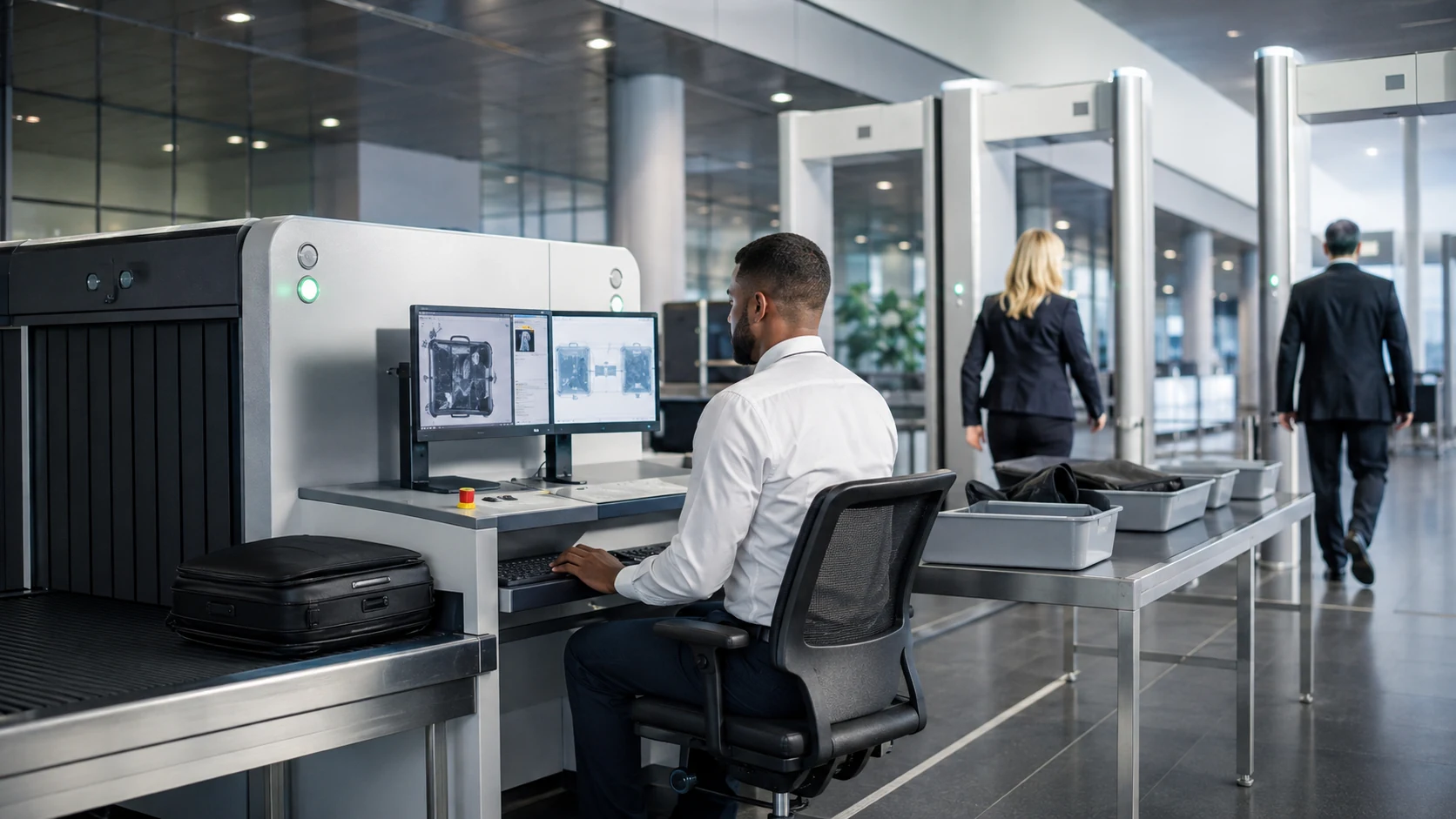
Every piece of mail and every parcel delivered to a facility is, from a security standpoint, an unverified object entering a controlled environment from the outside world. Most of the time that’s a non-issue. But letter bombs, powder threats, and concealed contraband have made mailroom screening a standard layer of protection at government buildings, financial institutions, corporate headquarters, and other facilities that present an attractive target or handle sensitive operations, in much the same way lobby screening protects a building’s main entrance.
Isolating the Mailroom From the Rest of the Building
The starting point for a serious mail screening program is physical isolation. A dedicated mailroom, separated from general building circulation and ideally served by its own ventilation system rather than sharing return air with the rest of the building, limits how far a threat can spread if something makes it past initial screening or activates before screening is complete. Some high-risk facilities go further, screening mail at an off-site or separate structure entirely before cleared items are transported into the main building.
X-Ray and Trace Detection for Parcels
X-ray screening of incoming parcels and larger mail items works on the same imaging principle used in other security screening contexts, letting trained screeners identify suspicious density patterns, wiring, or concealed objects without opening the package. This is typically paired with explosive and narcotics trace detection, which samples a package’s exterior for microscopic particle residue and analyzes it for chemical signatures associated with explosive compounds or controlled substances. Neither technology alone is comprehensive, which is why serious mail screening programs use both together rather than relying on a single method.
Powder and Biological Threat Response
Letters or parcels containing unknown powders present a different challenge than a density-based explosive threat, since the concern is often airborne contamination rather than a device that x-ray can characterize. Mailrooms designed for this risk incorporate containment procedures: sealed handling stations, negative air pressure to prevent particles from migrating into occupied space, and protocols for isolating a suspicious item and the immediate area around it. Staff training on visual indicators of suspicious mail, alongside the equipment itself, remains a significant part of this layer.
Workflow, Chain of Custody and Access Control Integration
Screening only adds security value if it’s built into a consistent workflow: every incoming item passes through screening before internal delivery, exceptions are documented, and any item held for further review has a clear chain of custody until it’s cleared or escalated to law enforcement. Mailroom access itself is typically restricted through the building’s access control system, limiting who can enter the space and creating a log of mailroom activity that can be reviewed alongside any incident.
Scaling to Facility Risk Level
Not every facility needs the same intensity of mail screening. A small office might rely primarily on staff awareness and a simple isolation protocol, while a government building, financial headquarters, or facility with elevated threat history may operate a dedicated, staffed screening center with x-ray, trace detection, and physical isolation all in place simultaneously. The right level of investment tracks the facility’s overall threat profile and the population size it’s protecting.
Leave a Reply