
Tag: Cyber-Physical Security

  • Security Technology Outlook 2027: Ten Technologies to Watch

    Security Technology Outlook 2027: Ten Technologies to Watch

    The next phase of security technology will be defined less by individual devices and more by software intelligence, sensor fusion and infrastructure-scale sensing. Ten areas deserve particular attention heading into 2027.

    1. AI agents for security operations

    AI is moving from simple detection toward workflow assistance: searching video, correlating alarms, preparing incident summaries and guiding operators through procedures.

    2. Natural-language video investigation

    Operators will increasingly search large video archives using ordinary language, reducing the time required to find relevant footage.

    3. Sensor fusion

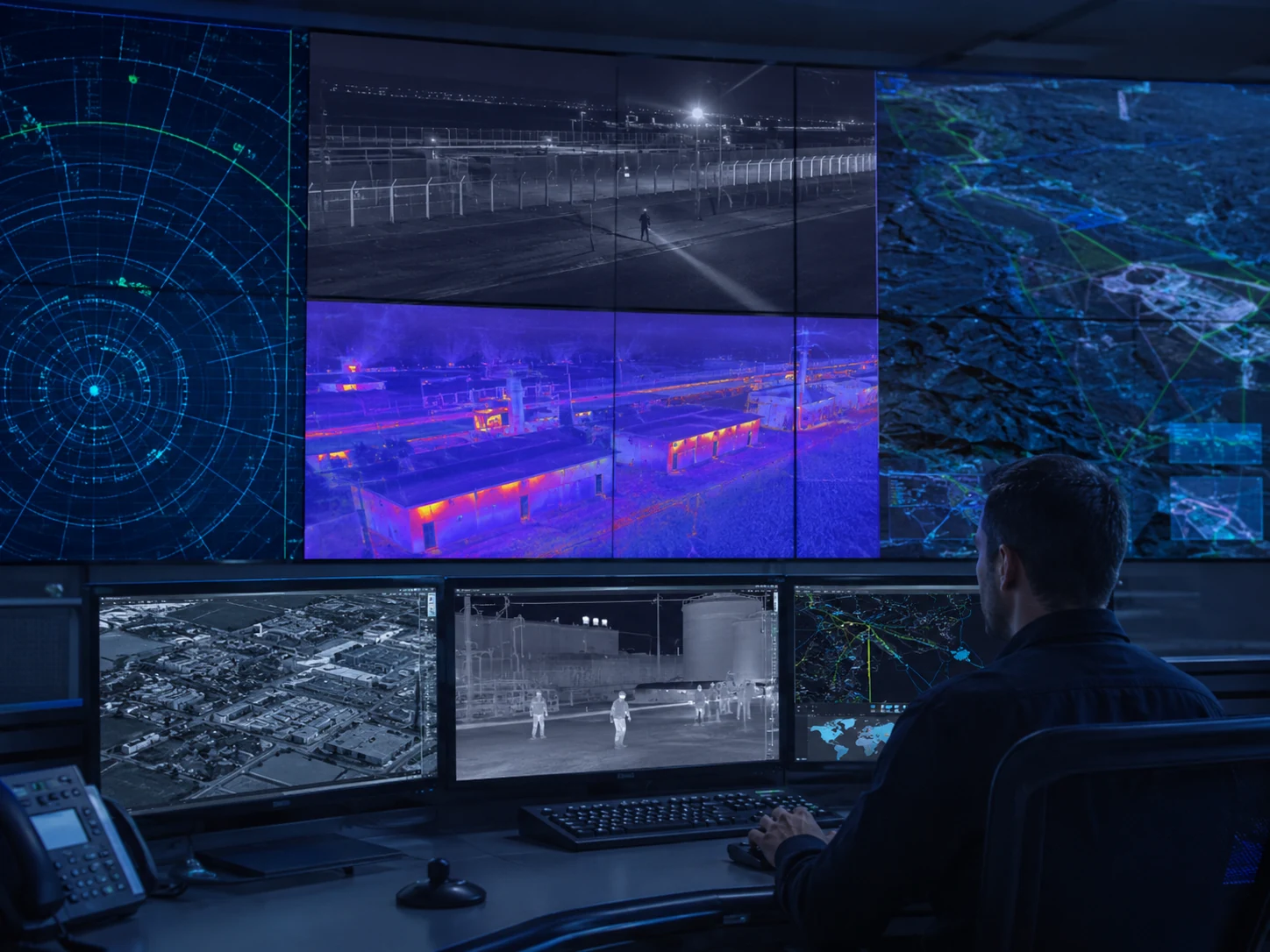
    Radar, thermal, visible video, access events, acoustic sensing and environmental data will be combined to improve confidence and reduce false alarms.

    4. Edge AI

    More analytics will run in cameras, gateways and sensing interrogators, reducing latency and bandwidth dependence.

    5. Distributed fiber sensing

    DAS and DTS are expanding from specialized industrial tools into broader infrastructure intelligence platforms.

    6. Mobile and wallet credentials

    Physical access is shifting from plastic cards toward secure mobile identity and wallet-based credentials.

    7. Hybrid cloud security platforms

    Enterprises will combine cloud management with local recording and edge resilience instead of choosing a purely cloud or purely on-premise model.

    8. Autonomous inspection

    Drones and ground robots will increasingly handle repetitive patrol and inspection tasks in controlled environments.

    9. Cyber-physical convergence

    Security, OT and IT teams will share more telemetry and incident workflows as building and infrastructure systems become networked.

    10. Privacy-enhancing analytics

    Masking, selective disclosure, metadata-first search and stronger governance will become competitive requirements rather than optional features.

    Conclusion

    Security Technology Outlook 2027: Ten Technologies to Watch should be evaluated as part of a broader operational architecture. The strongest deployments combine suitable sensing technology, resilient communications, clear procedures and measurable performance rather than relying on a single device or headline specification.
  • Digital Twins for Physical Security Operations

    Digital Twins for Physical Security Operations

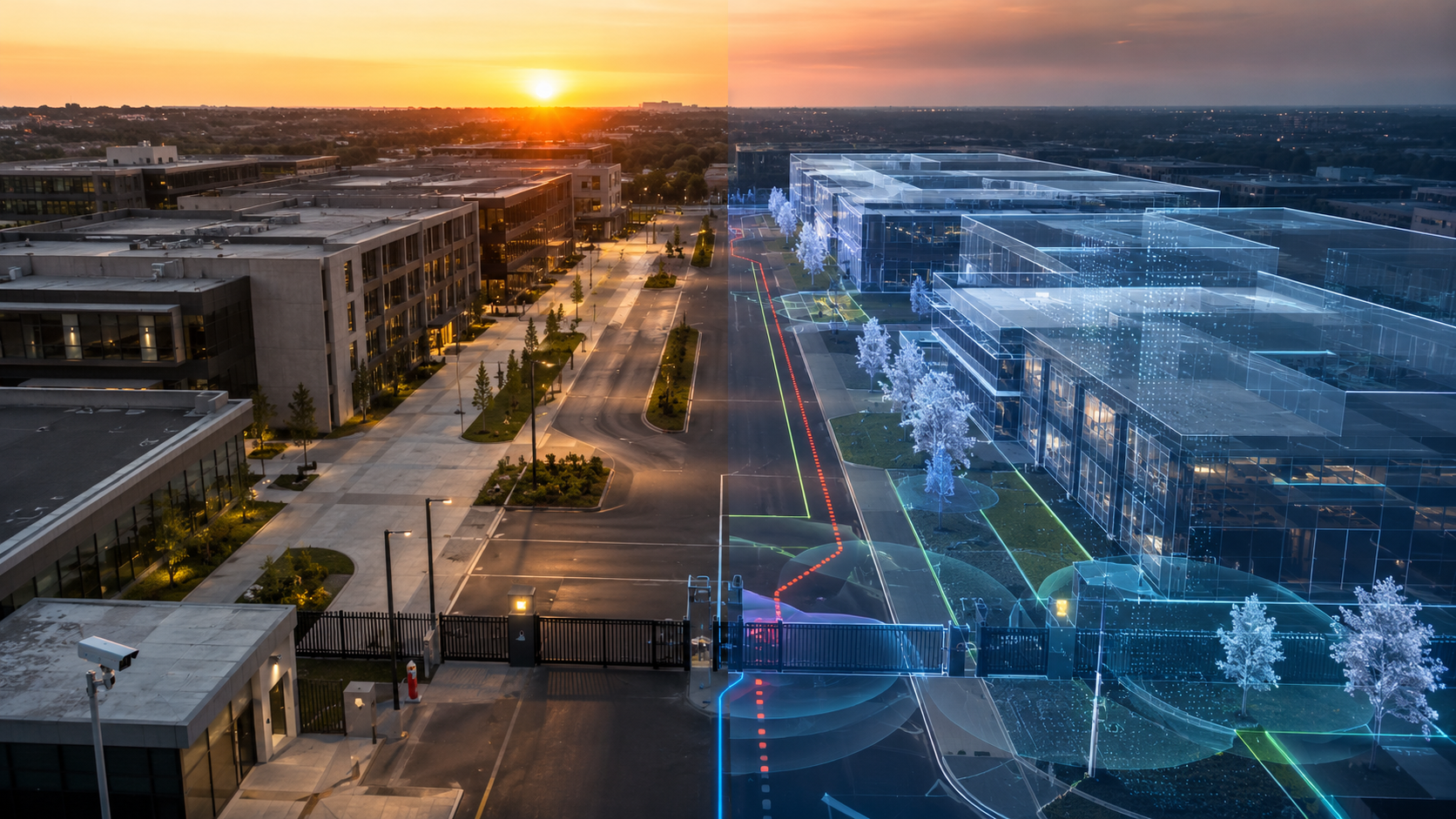
    Digital twins are increasingly being used to create a live virtual representation of buildings, campuses and critical infrastructure. In physical security, the value of a digital twin is not the 3D model itself. It is the ability to connect that model to real devices, alarms, identities and operational data.

    How the Technology Works

    A security digital twin can display cameras, doors, intrusion zones, fire devices, intercoms, sensors and critical assets in their actual spatial context. When an alarm occurs, the operator sees where it is happening and what systems are nearby instead of interpreting a device name from a list.

    The concept becomes more powerful when live data is added. Door status, camera health, occupancy, environmental conditions and maintenance state can all be visualized on the same model. This turns a static design file into an operational interface.

    Operational Considerations

    Incident response is an obvious use case. A perimeter alarm can highlight the affected zone, show the nearest cameras, display access routes and identify nearby personnel. During an evacuation, the model can combine fire information, occupancy data and route status to support command decisions.

    Digital twins can also help before an incident. Security planners can simulate camera coverage, evaluate blind spots, review guard routes and test the effect of new barriers or access points. The model becomes a shared environment for design, operations and training.

    Integration is the difficult part. Buildings often contain systems from many vendors using different protocols and naming conventions. A digital twin is only as useful as the data connected to it. Device identifiers, floor plans and asset records must be maintained as the facility changes.

    Deployment and Risk

    Performance and cybersecurity must also be considered. A detailed 3D environment can require significant computing resources, and connections to operational systems create a sensitive integration layer. Access to the twin should be role-based and audited.

    For large infrastructure, geographic information systems and digital twins are beginning to overlap. A single operational model may include buildings, perimeter sensors, pipelines, fiber sensing, rail corridors and remote substations.

    Conclusion

    Digital twins will not replace VMS, access control or command-and-control software. They are more likely to become a spatial interface above those systems. When designed well, they reduce cognitive load by showing operators not just what alarmed, but where it is, what surrounds it and what actions are available.

  • Cyber-Physical Security Convergence: Why IT and Security Teams Are Merging

    Cyber-Physical Security Convergence: Why IT and Security Teams Are Merging

    Physical security systems increasingly run on IP networks, cloud services and software platforms, while cyber incidents can create physical consequences. This is pushing IT, cybersecurity and physical-security teams toward closer operational convergence.

    Physical devices are cyber assets

    Cameras, door controllers, intercoms, alarm panels and sensors contain processors, firmware and network interfaces. Weak credentials, vulnerable software or unnecessary services can turn protective equipment into a cyber entry point.

    Identity and incident convergence

    Joiner, mover and leaver processes should update both digital and physical permissions. Badge activity, login records, forced doors and camera status can also provide stronger incident context when correlated.

    Architecture and governance

    Security devices should not sit on unmanaged flat networks. Segmentation, secure remote access, logging and vulnerability management require shared ownership across IT, cyber and physical-security functions.

    Cloud and operational technology

    Vendor security posture becomes part of procurement as video and access platforms move to cloud services. Critical infrastructure must also consider OT systems that control physical processes.

    Benefits and limitations

    Convergence can improve asset visibility, investigation and policy consistency, but it does not require every department to merge. Clear responsibilities and escalation paths remain essential.

    Conclusion

    Unified identity, shared data and careful correlation will continue to drive cyber-physical convergence. Isolated facilities systems are increasingly difficult to govern securely.