Tag: Cyber-Physical Security

  • ABB PCM600 Flaws Could Enable Privilege Escalation and File Overwrite

    ABB PCM600 Flaws Could Enable Privilege Escalation and File Overwrite

    ABB has addressed two vulnerabilities in PCM600, its protection and control engineering tool. CISA says the flaws could let a local attacker elevate privileges or cause project-archive files to be written outside the intended extraction directory.

    Two different local attack paths

    CVE-2026-15952 concerns permissions around a scheduler component running as LocalSystem. Under the conditions described by the advisory, a local user could exploit that arrangement to gain higher privileges. CVE-2026-15953 is a path-traversal issue in project archive handling that could place files beyond the selected extraction folder.

    CISA lists PCM600 versions through 2.14 as affected and gives the vulnerabilities a maximum CVSS v3 base score of 6.4. The agency says it is not aware of public exploitation. ABB has published product security advisories and provides workaround guidance for affected deployments.

    Why engineering workstations need special care

    PCM600 is used in energy-sector protection and control engineering. An engineering workstation can therefore hold trusted project files and privileged access to operational assets even when it is not directly exposed to the internet. Organizations should apply ABB’s guidance, limit local administrator rights and treat imported project archives as untrusted until validated.

    Before remediation, teams should back up projects and confirm recovery procedures. Afterward, review scheduled tasks, extraction directories and endpoint telemetry for unexpected files or privilege changes. SectechMedia’s energy-security coverage examines the wider operational context for protecting utility and industrial environments.

    Sources

  • CISA Details Critical Authentication Flaws in Monta EV Charging Platform

    CISA Details Critical Authentication Flaws in Monta EV Charging Platform

    CISA has disclosed four vulnerabilities affecting Monta’s electric-vehicle charging platform. The agency says the issues could allow unauthorized administrative actions or denial-of-service activity, making identity controls and session handling a priority for charging operators.

    Where the weaknesses appear

    The advisory identifies missing authentication and rate-limiting controls, weaknesses involving sessions, and the use of publicly accessible identifiers. CISA assigns the group a maximum CVSS v3 base score of 9.4 and lists monta.app as affected across all versions at the time of publication.

    The practical risk extends beyond a conventional web account. EV charging platforms coordinate users, chargers and operational services, so unauthorized administrative access can affect a distributed physical service. CISA says it is not aware of public exploitation targeting these vulnerabilities.

    Mitigation and operational checks

    Monta is working toward authenticated connections and says its platform supports OCPP 1.6 Security Profile 2. The company also applies throttling and rate limits. Operators should confirm which controls are active in their own tenant and charger estate instead of assuming that a supported feature is already enabled everywhere.

    Security teams should review privileged accounts, revoke stale sessions, monitor failed authentication patterns and segment charger-management services from unrelated business systems. Any configuration change should be tested against charger availability and field-support procedures. Related developments in connected transport can be followed through SectechMedia’s vehicle and transportation security coverage.

    Sources

  • CISA Warns Armatura One Flaws Could Expose Physical Access-Control Systems

    CISA Warns Armatura One Flaws Could Expose Physical Access-Control Systems

    The US Cybersecurity and Infrastructure Security Agency has published an advisory covering several vulnerabilities in Armatura One, a platform used to administer physical access-control systems. CISA says successful exploitation could expose database information, enable code execution or allow an attacker to take control of access-control functions.

    Affected versions and security impact

    The advisory covers Armatura One versions earlier than 4.7.2 and the US edition earlier than 4.6.1. The reported issues include embedded ActiveMQ vulnerability CVE-2023-46604 as well as four newly assigned CVEs affecting the platform. CISA lists a maximum CVSS v3 base score of 9.8.

    The agency notes that CVE-2023-46604 appears in its Known Exploited Vulnerabilities catalog because it has been used against other products. CISA says it is not aware of public exploitation specifically targeting Armatura One. That distinction matters: operators should treat the exposure seriously without assuming that every installation has already been compromised.

    What access-control operators should do

    Armatura recommends upgrading to version 4.7.2, or 4.6.1_USA for the US edition. Owners should first inventory management servers, restrict administrative interfaces to trusted networks and preserve configuration backups before changing production systems.

    Because the platform can influence doors and credentials, remediation should be coordinated with physical-security teams, not handled as an isolated IT patch. Administrators should also review service accounts, database access and logs for unexpected changes. SectechMedia’s access-control and identity coverage provides additional context for securing controller and credential-management environments.

    Sources

  • Network Segmentation Verification for Physical Security Systems

    Network Segmentation Verification for Physical Security Systems

    Network diagrams often show physical security systems in carefully separated zones, but a diagram does not prove that the controls work. Firewall drift, temporary maintenance rules, dual-homed servers and unmanaged switches can reconnect networks that were intended to remain isolated. Segmentation verification tests the deployed paths rather than trusting the design document.

    Define zones and permitted flows

    Start with functional zones such as field devices, controllers, recording, management, operator clients, integration services and remote support. For each pair of zones, document the exact allowed source, destination, protocol and business purpose. Everything else should be denied by default where the architecture permits.

    Include dependencies that are easy to overlook: DNS, NTP, certificate enrollment, directory services, software repositories, email relays and monitoring. An incomplete allowlist can push teams toward broad emergency rules that later become permanent.

    Verify from representative endpoints

    Testing should originate from actual device classes or safe equivalents. A scan from the IT network cannot prove what an embedded camera or controller can reach. Confirm intended connections, then attempt prohibited paths in a controlled manner. Review both the client result and the firewall or switch log so silent drops and routing failures can be distinguished.

    NIST’s operational-technology security guidance recommends segmentation and controlled communication paths as central risk-reduction measures. Physical security networks share many of the same constraints: long-lived devices, vendor protocols, availability requirements and limited endpoint protection.

    Test management and vendor access separately

    Administrative paths deserve stricter validation than ordinary event traffic. Confirm that device management is limited to approved jump hosts, named users and monitored sessions. Test whether vendor VPN access can reach only the contracted systems and whether access is disabled outside approved windows.

    Check for alternate paths through Wi-Fi, cellular modems, secondary network interfaces and service laptops. A controller isolated on the primary interface may still expose a management service through an overlooked channel. SectechMedia’s article on access-control cybersecurity hardening covers related device and credential controls.

    Include failure and recovery states

    Segmentation may change during failover. Test redundant firewalls, backup links, disaster-recovery sites and temporary routing used during maintenance. Confirm that a failed security appliance does not default to an unrestricted path and that restored configurations preserve the approved policy.

    Record packet captures or log evidence for critical tests. A simple pass/fail worksheet is insufficient when a rule later changes or an incident team needs to understand historical reachability.

    Manage exceptions as expiring risks

    Every exception should identify the owner, reason, compensating controls and expiry date. Re-test after firmware upgrades, VMS migrations, controller replacements and network redesigns. Track unexpected reachable paths, stale rules and assets outside their assigned zone. The result should be a living verification program that detects architectural drift before an attacker or outage exposes it.

    Reference sources

  • Security Device Certificate Lifecycle and Expiration Testing

    Security Device Certificate Lifecycle and Expiration Testing

    Certificates increasingly protect communication between cameras, access-control controllers, recorders, management servers and operator clients. They can also become a hidden single point of failure. An expired certificate may block management access, interrupt event delivery or encourage operators to bypass validation during an outage. Lifecycle management must therefore be tested as an operational control, not handled as an annual spreadsheet exercise.

    Build an ownership-based inventory

    Record every certificate’s subject, issuer, serial number, validity period, key use, endpoint, trust chain and responsible owner. Include embedded devices, reverse proxies, APIs, mobile credentials and internal services. The inventory should distinguish public certificates from private-public-key-infrastructure certificates and device-generated self-signed certificates.

    Ownership matters because renewal may involve different teams. A security integrator may manage cameras, corporate infrastructure may operate the certificate authority and a vendor may control a cloud connector. Every certificate needs a named decision path before expiration.

    Test validation from the real clients

    A certificate can look correct in a management console while failing on a recorder or legacy controller that lacks the issuing chain. Test from each client class, including operator workstations, mobile applications, APIs and failover servers. Validate hostname matching, trust anchors, revocation behavior and time synchronization. NIST key-management guidance stresses that cryptographic controls depend on protected keys, defined lifecycles and accountable processes.

    Do not disable validation to make a test pass. If a client cannot support the required trust model, document the limitation and isolate the risk while planning replacement or an approved gateway.

    Exercise renewal before the deadline

    Use a non-production endpoint or canary device to rehearse certificate signing requests, approval, installation and service restart requirements. Confirm whether private keys can remain on the device and whether renewal changes fingerprints used by integrations. Test overlapping validity so a new chain can be distributed before the old one expires.

    Automated monitoring should warn at multiple thresholds, but alerts are not enough. A renewal exercise should prove that the team can obtain, deploy and validate the replacement within the available window. SectechMedia’s guide to asset inventory and configuration management shows how ownership and baseline records support this process.

    Protect keys and recovery material

    Private keys should be generated and stored according to the device’s risk and capabilities. Restrict export, protect enrollment credentials and log administrative changes. Where hardware-backed storage is unavailable, use compensating controls such as network isolation, least-privilege management and rapid revocation procedures.

    Back up certificate authority configuration and document recovery dependencies, but avoid copying private keys into general ticket systems or shared folders. Recovery tests should prove that certificates can be reissued without reusing compromised key material.

    Measure lifecycle health

    Useful metrics include unknown certificates, certificates without owners, failed validation paths, renewals completed before threshold and emergency exceptions. Review the inventory after device replacement, firmware updates and architecture changes. The objective is not merely zero expirations; it is sustained encrypted trust that survives routine maintenance and incident response.

    Reference sources

  • Security Technology Outlook 2027: Ten Technologies to Watch

    Security Technology Outlook 2027: Ten Technologies to Watch

    The next phase of security technology will be defined less by individual devices and more by software intelligence, sensor fusion and infrastructure-scale sensing. Ten areas deserve particular attention heading into 2027.

    1. AI agents for security operations

    AI is moving from simple detection toward workflow assistance: searching video, correlating alarms, preparing incident summaries and guiding operators through procedures.

    2. Natural-language video investigation

    Operators will increasingly search large video archives using ordinary language, reducing the time required to find relevant footage.

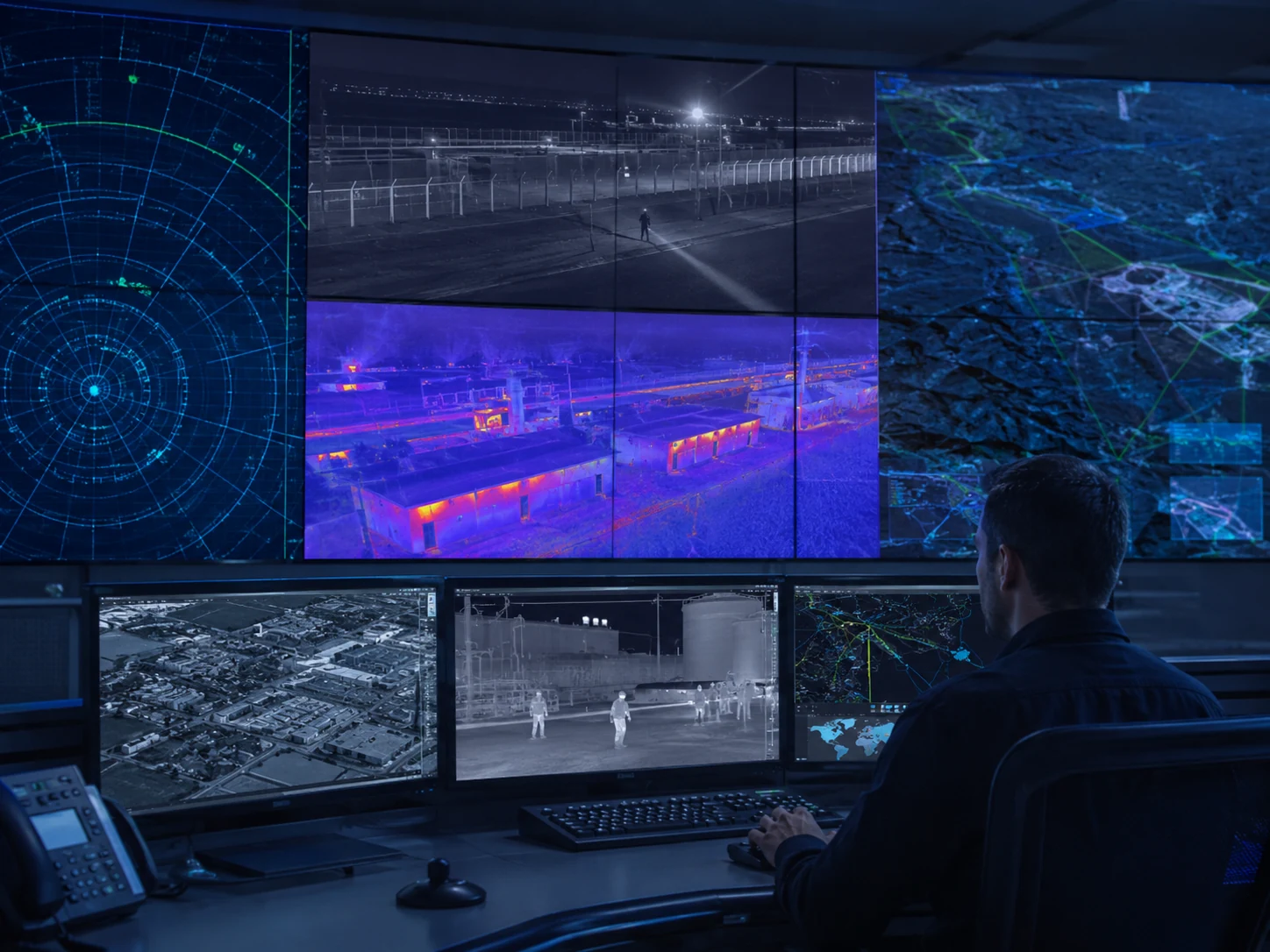
    3. Sensor fusion

    Radar, thermal, visible video, access events, acoustic sensing and environmental data will be combined to improve confidence and reduce false alarms.

    4. Edge AI

    More analytics will run in cameras, gateways and sensing interrogators, reducing latency and bandwidth dependence.

    5. Distributed fiber sensing

    DAS and DTS are expanding from specialized industrial tools into broader infrastructure intelligence platforms.

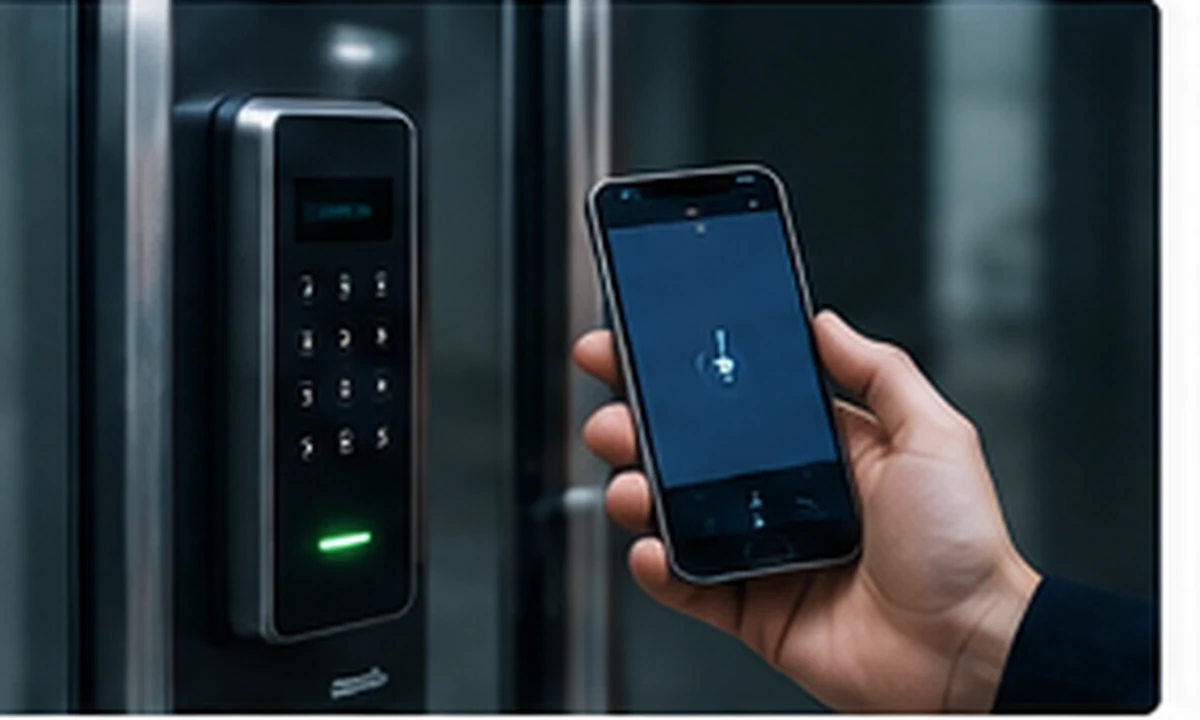
    6. Mobile and wallet credentials

    Physical access is shifting from plastic cards toward secure mobile identity and wallet-based credentials.

    7. Hybrid cloud security platforms

    Enterprises will combine cloud management with local recording and edge resilience instead of choosing a purely cloud or purely on-premise model.

    8. Autonomous inspection

    Drones and ground robots will increasingly handle repetitive patrol and inspection tasks in controlled environments.

    9. Cyber-physical convergence

    Security, OT and IT teams will share more telemetry and incident workflows as building and infrastructure systems become networked.

    10. Privacy-enhancing analytics

    Masking, selective disclosure, metadata-first search and stronger governance will become competitive requirements rather than optional features.

    Conclusion

    Security Technology Outlook 2027: Ten Technologies to Watch should be evaluated as part of a broader operational architecture. The strongest deployments combine suitable sensing technology, resilient communications, clear procedures and measurable performance rather than relying on a single device or headline specification.

  • Digital Twins for Physical Security Operations

    Digital Twins for Physical Security Operations

    Digital twins are increasingly being used to create a live virtual representation of buildings, campuses and critical infrastructure. In physical security, the value of a digital twin is not the 3D model itself. It is the ability to connect that model to real devices, alarms, identities and operational data.

    How the Technology Works

    A security digital twin can display cameras, doors, intrusion zones, fire devices, intercoms, sensors and critical assets in their actual spatial context. When an alarm occurs, the operator sees where it is happening and what systems are nearby instead of interpreting a device name from a list.

    The concept becomes more powerful when live data is added. Door status, camera health, occupancy, environmental conditions and maintenance state can all be visualized on the same model. This turns a static design file into an operational interface.

    Operational Considerations

    Incident response is an obvious use case. A perimeter alarm can highlight the affected zone, show the nearest cameras, display access routes and identify nearby personnel. During an evacuation, the model can combine fire information, occupancy data and route status to support command decisions.

    Digital twins can also help before an incident. Security planners can simulate camera coverage, evaluate blind spots, review guard routes and test the effect of new barriers or access points. The model becomes a shared environment for design, operations and training.

    Integration is the difficult part. Buildings often contain systems from many vendors using different protocols and naming conventions. A digital twin is only as useful as the data connected to it. Device identifiers, floor plans and asset records must be maintained as the facility changes.

    Deployment and Risk

    Performance and cybersecurity must also be considered. A detailed 3D environment can require significant computing resources, and connections to operational systems create a sensitive integration layer. Access to the twin should be role-based and audited.

    For large infrastructure, geographic information systems and digital twins are beginning to overlap. A single operational model may include buildings, perimeter sensors, pipelines, fiber sensing, rail corridors and remote substations.

    Conclusion

    Digital twins will not replace VMS, access control or command-and-control software. They are more likely to become a spatial interface above those systems. When designed well, they reduce cognitive load by showing operators not just what alarmed, but where it is, what surrounds it and what actions are available.

  • Cyber-Physical Security Convergence: Why IT and Security Teams Are Merging

    Cyber-Physical Security Convergence: Why IT and Security Teams Are Merging

    Physical security systems increasingly run on IP networks, cloud services and software platforms, while cyber incidents can create physical consequences. This is pushing IT, cybersecurity and physical-security teams toward closer operational convergence.

    Physical devices are cyber assets

    Cameras, door controllers, intercoms, alarm panels and sensors contain processors, firmware and network interfaces. Weak credentials, vulnerable software or unnecessary services can turn protective equipment into a cyber entry point.

    Identity and incident convergence

    Joiner, mover and leaver processes should update both digital and physical permissions. Badge activity, login records, forced doors and camera status can also provide stronger incident context when correlated.

    Architecture and governance

    Security devices should not sit on unmanaged flat networks. Segmentation, secure remote access, logging and vulnerability management require shared ownership across IT, cyber and physical-security functions.

    Cloud and operational technology

    Vendor security posture becomes part of procurement as video and access platforms move to cloud services. Critical infrastructure must also consider OT systems that control physical processes.

    Benefits and limitations

    Convergence can improve asset visibility, investigation and policy consistency, but it does not require every department to merge. Clear responsibilities and escalation paths remain essential.

    Conclusion

    Unified identity, shared data and careful correlation will continue to drive cyber-physical convergence. Isolated facilities systems are increasingly difficult to govern securely.