Author: Osiris

  • Tethered Drones for Industrial Site Monitoring

    Tethered Drones for Industrial Site Monitoring

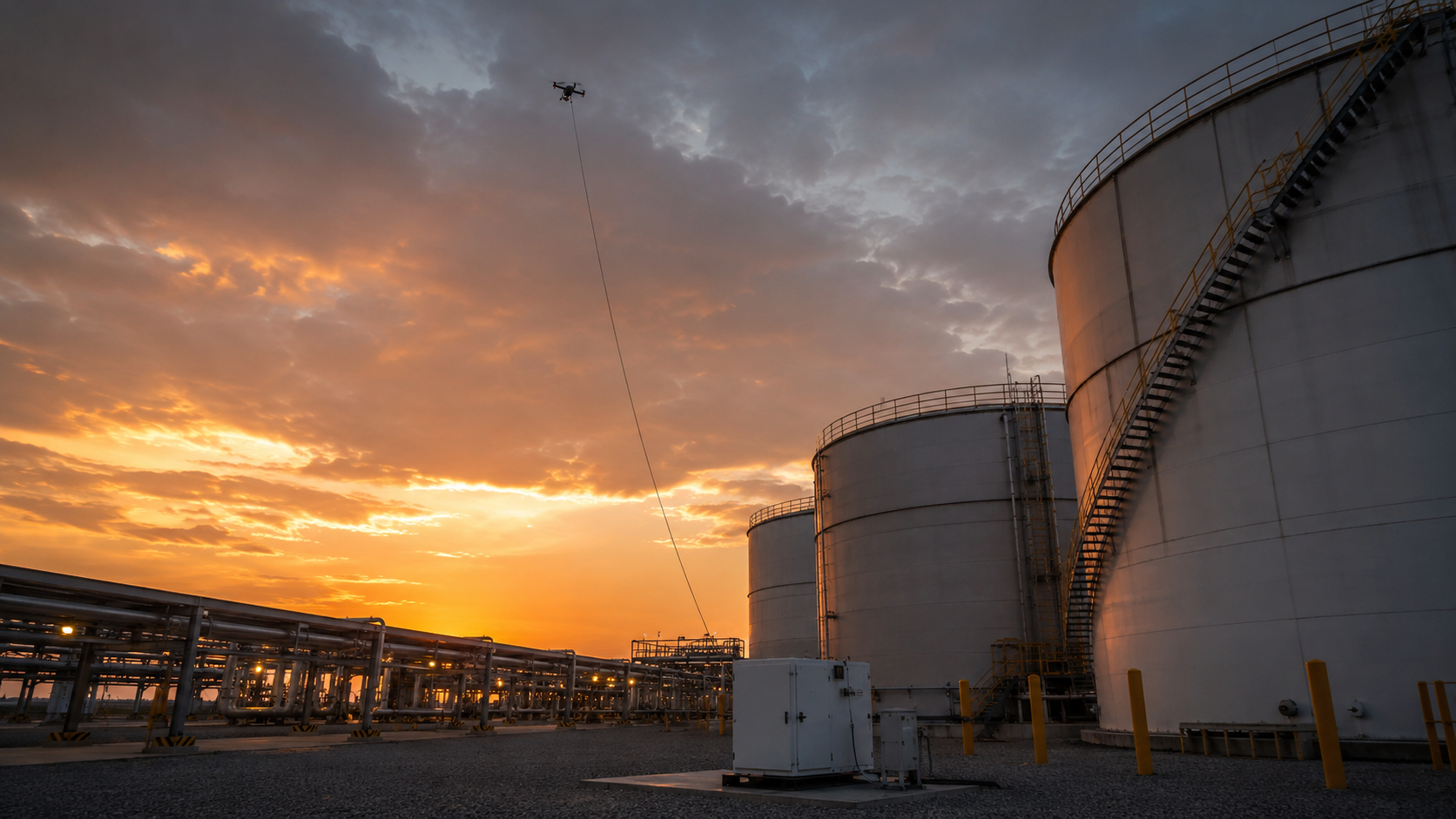
    Tethered drones occupy an unusual position between fixed surveillance towers and free-flying unmanned aircraft. Connected to the ground by a cable that can provide power and communications, a tethered drone can remain airborne for extended periods while carrying cameras, thermal sensors, communications equipment or other payloads.

    For industrial security, the main advantage is persistent elevated observation. A drone positioned tens of meters above a refinery, port, mine, pipeline construction zone or temporary event can see over fences, buildings and terrain that would block ground cameras. Because power is supplied from the ground, endurance can be measured in hours or days rather than the battery life of a conventional drone.

    The tether can also provide a secure high-bandwidth data path, reducing dependence on wireless links. This is useful where video quality, cyber security or RF congestion is a concern.

    Tethered systems still have operational limits. Wind, lightning, aviation restrictions, tether management and safe operating areas must be considered. They are not suitable everywhere, and the aircraft remains a visible physical asset that requires maintenance and procedures.

    Their strongest use case is usually temporary or semi-permanent overwatch: construction projects, incident response, large industrial shutdowns, border posts, temporary perimeter expansion or remote facilities where installing a tower would take longer.

    Tethered drones should be integrated with the wider security system rather than treated as standalone cameras in the sky. Video can feed the VMS, analytics can monitor defined zones and command-center operators can correlate aerial views with ground sensors.

    As industrial sites seek flexible surveillance coverage, tethered drones provide a middle ground between permanent infrastructure and mobile airborne patrol.

  • Acoustic Drone Detection: Where It Works and Where It Fails

    Acoustic Drone Detection: Where It Works and Where It Fails

    Acoustic drone detection uses microphones or microphone arrays to listen for characteristic sound signatures produced by propellers and electric motors. Unlike radar or active radio systems, acoustic sensors are passive. They do not transmit energy and can sometimes detect drones that are flying autonomously without an obvious RF control link.

    The technology is attractive because it can be compact, relatively easy to deploy and useful as a supplementary sensor. Algorithms compare incoming audio with trained signature libraries and may estimate direction of arrival when multiple microphones are used together.

    Its main limitation is range. Sound attenuates quickly, especially in wind, rain or complex terrain. Urban areas, highways, factories, airports and ports generate substantial background noise that can mask drone signatures or create false detections. The same drone may also sound different depending on payload, propeller type, speed and distance.

    Acoustic detection therefore works best in quieter environments or as part of a multi-sensor architecture. A radar track can be strengthened by an acoustic confirmation, while an acoustic cue can direct a camera toward a suspected target. It is generally less suitable as the sole primary detector for large critical sites.

    System evaluation should focus on measured performance in the actual environment rather than laboratory range claims. Buyers should test wind conditions, machinery noise, vehicle traffic and different drone types. They should also examine how the acoustic layer integrates with radar, RF and video systems.

    Acoustic sensing has a legitimate role in drone awareness, but its strength comes from complementing other technologies. Used correctly, it adds another independent source of evidence; used alone, it can be vulnerable to environmental conditions that are difficult to control.

  • Critical Infrastructure Airspace Monitoring

    Critical Infrastructure Airspace Monitoring

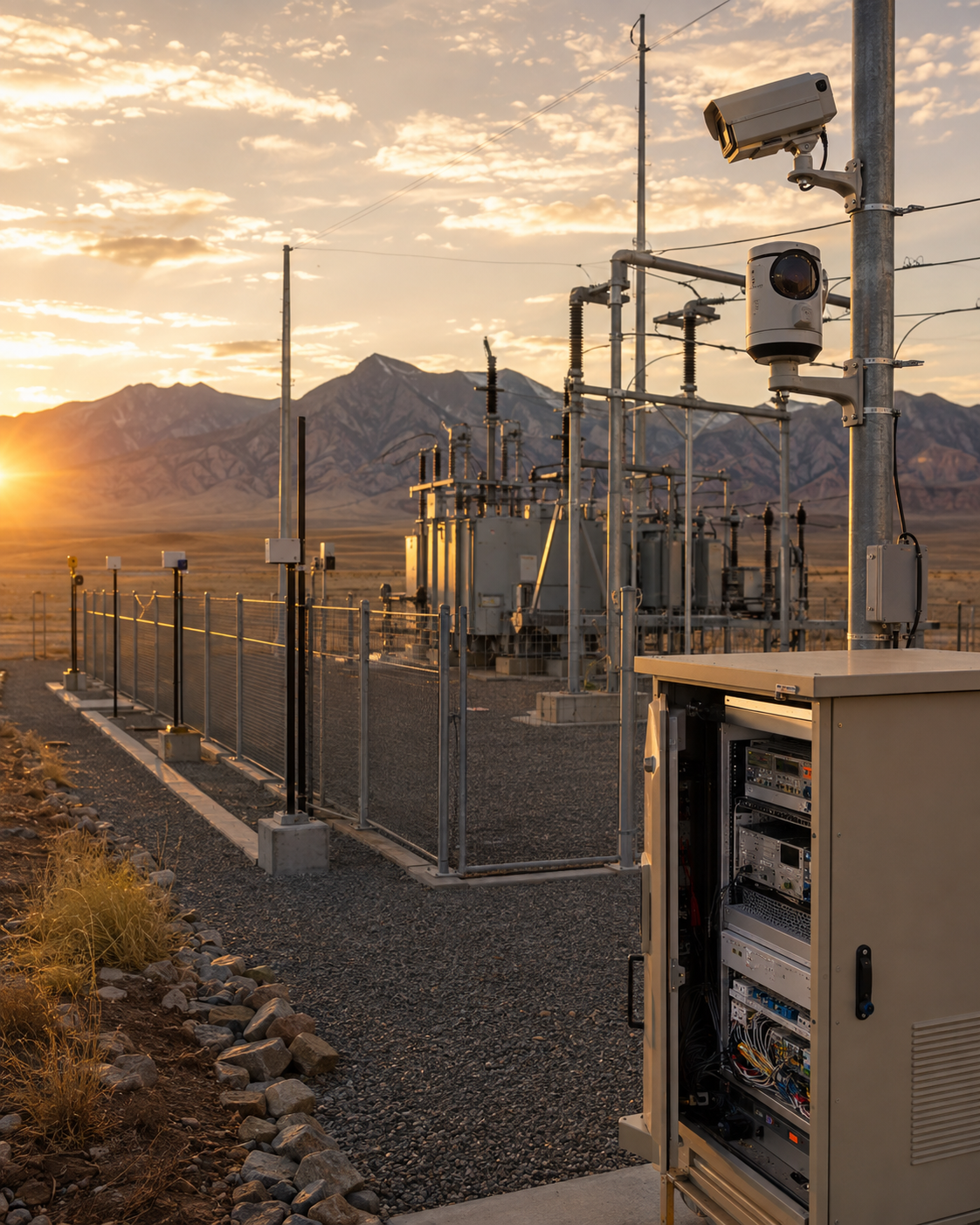
    Critical infrastructure security traditionally focused on fences, gates, cameras and ground-based intrusion detection. Drones have added a new dimension: the low-altitude airspace above a facility can now be used for observation, inspection, accidental overflight or unauthorized activity. Power plants, refineries, substations, ports, data centers and water facilities increasingly treat airspace awareness as part of physical security.

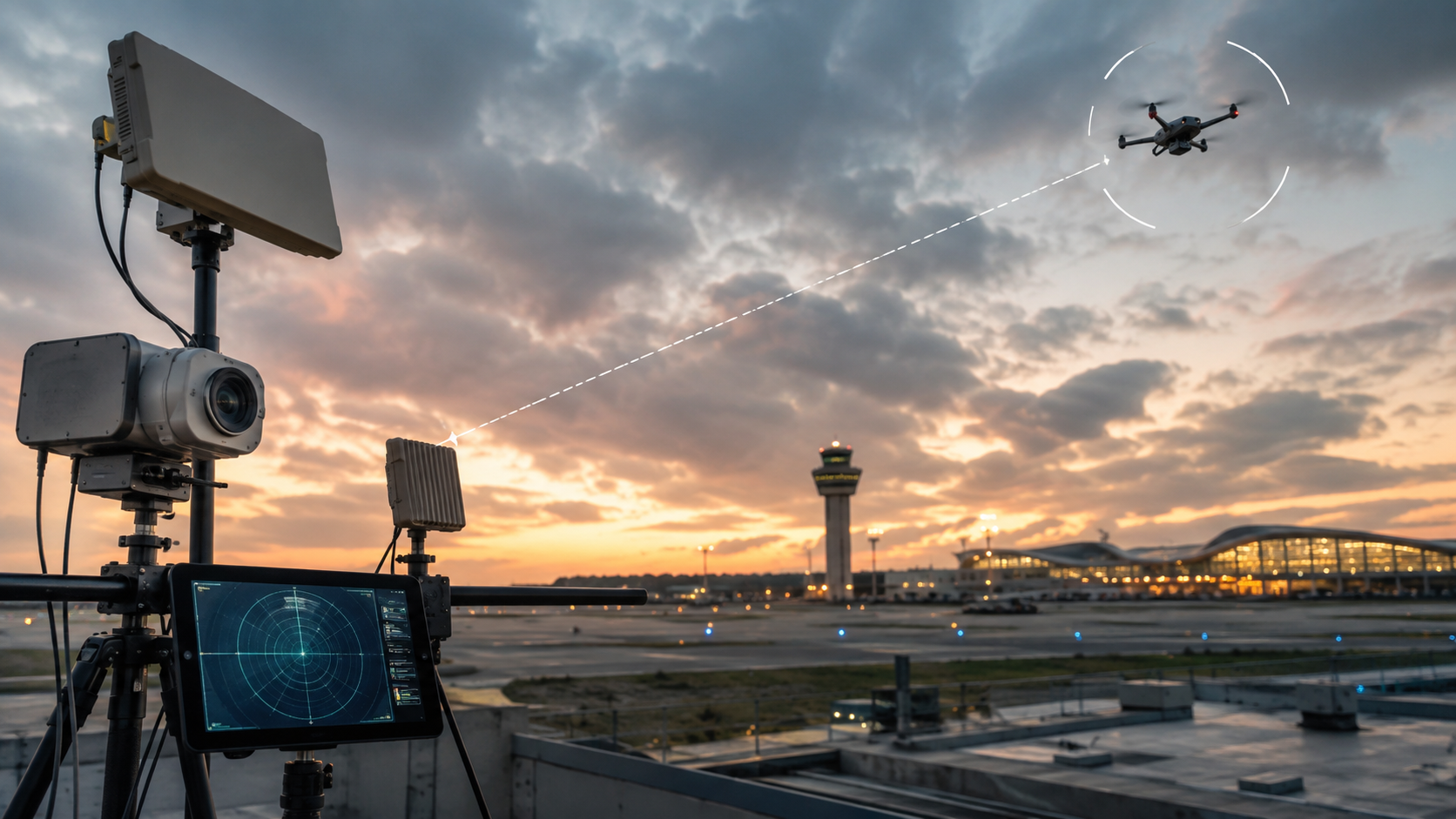
    A typical architecture combines radar, RF sensing, optical or thermal cameras and a command platform. Radar supplies range, direction and track history. RF monitoring can provide protocol-level clues when a drone is actively communicating. Cameras verify the target and create evidence. Sensor fusion then combines these data points into a single operational track.

    Risk is highly site-specific. A drone above a large solar farm presents a different concern from one approaching a high-voltage substation, LNG terminal or nuclear facility. Security teams should therefore define protected zones, alert thresholds and escalation rules around critical assets rather than using one uniform alarm policy.

    Integration with existing systems is essential. When an airspace event is detected, nearby perimeter cameras can be cued automatically, incident-management software can create a case and operators can correlate the drone’s route with ground activity. This is especially valuable when the airspace event is part of a broader security incident.

    Environmental design is also important. Industrial facilities contain steel structures, pipes, cranes, electromagnetic noise and moving machinery. These conditions affect radar, RF and camera performance. Site surveys and real-world testing should therefore be part of procurement.

    The most useful outcome is not a separate drone console, but a unified picture that shows what is happening on the ground and in the air. As critical infrastructure becomes more instrumented, low-altitude airspace monitoring is likely to become another standard layer of integrated physical security.

  • Airport Drone Detection Systems

    Airport Drone Detection Systems

    Airports face one of the most demanding drone-detection environments. A small unmanned aircraft can create operational disruption around runways, approach paths and terminal areas even when there is no malicious intent. The challenge is not simply to detect an object in the sky, but to determine whether it represents a credible risk quickly enough for airport operators to act.

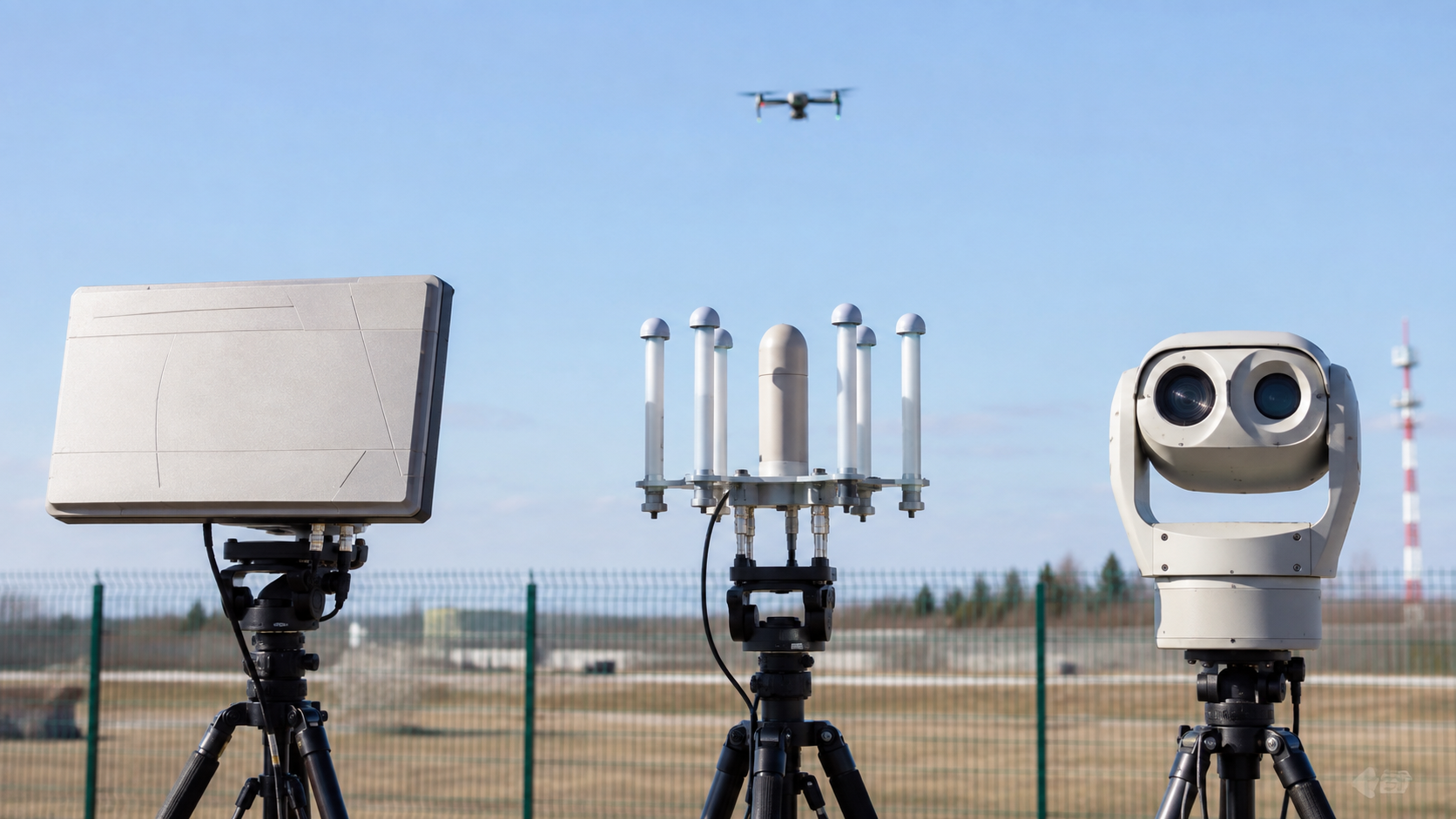
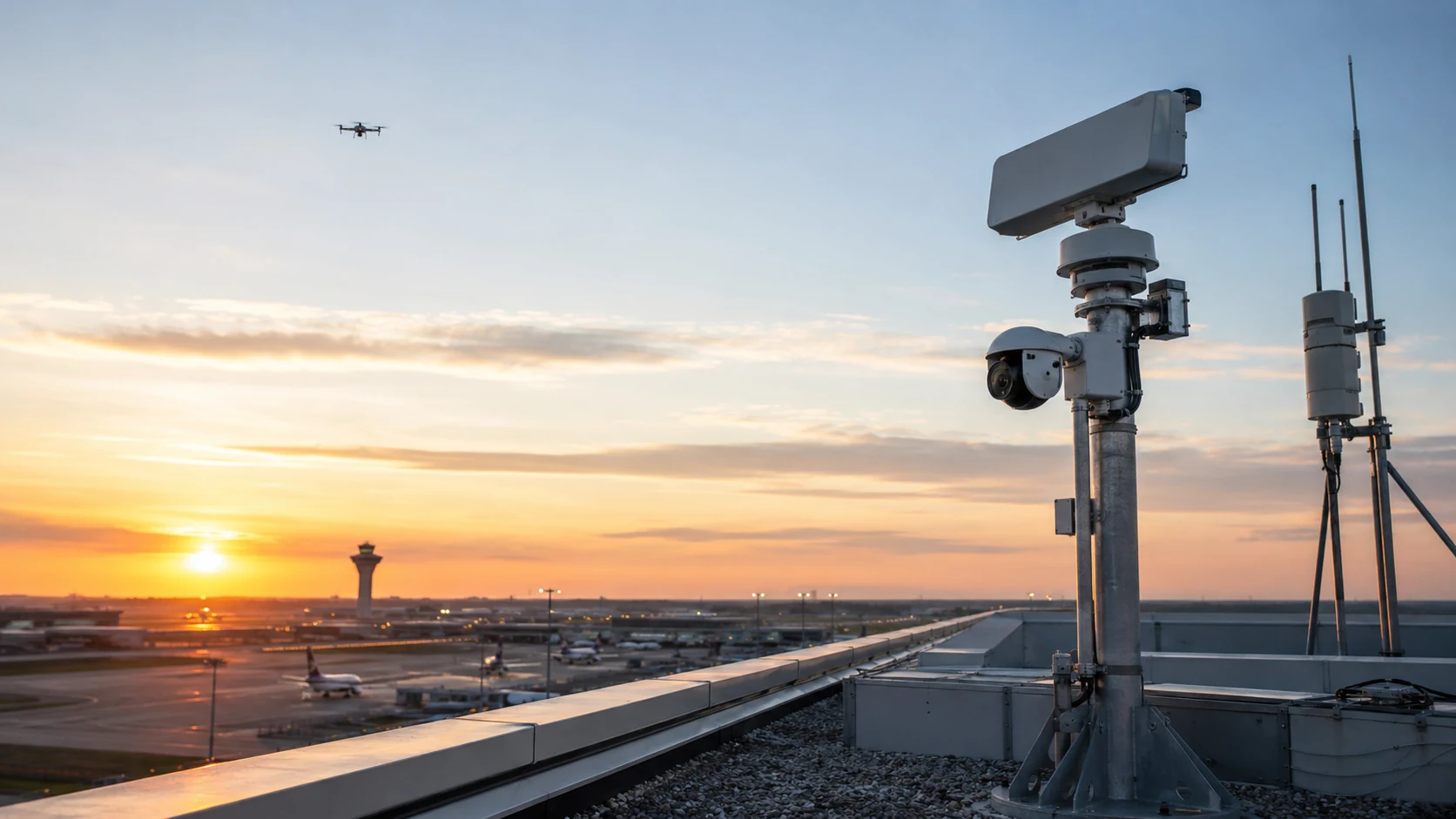
    Modern airport systems normally combine short- and medium-range radar, radio-frequency monitoring, electro-optical cameras and thermal imaging. Radar provides persistent coverage and track information. RF sensors can identify known command links or protocols. Cameras then provide visual confirmation and evidence. Because airports already contain extensive radar, radio and navigation infrastructure, careful frequency planning and site engineering are essential.

    Coverage design matters as much as sensor selection. A system should consider runway approaches, terminal airspace, parking aprons, perimeter zones and nearby public areas. Terrain, hangars, control towers and other structures can create blind spots. Multiple sensors positioned around the airport are often required to achieve useful low-altitude coverage.

    False alarms are another major concern. Birds, ground vehicles, construction equipment and conventional aircraft can all produce confusing signatures. Good systems use track behavior, micro-Doppler analysis and sensor fusion to improve classification. The objective is not to eliminate every false positive, but to reduce them to a level at which operators continue to trust the system.

    Drone detection must also integrate with airport operations. A verified track may need to be shared with the airport operations center, air traffic stakeholders, police or other authorized responders. Automated camera cueing and geofenced alert zones can help prioritize drones that are moving toward a runway or other sensitive area.

    Detection should be separated from mitigation. Active countermeasures may be restricted by aviation and communications law, and authority varies by country. For many airports, the most important capabilities are early detection, reliable tracking, evidence preservation and a clear operational response plan.

    The best airport drone-detection architecture is therefore layered, site-specific and tightly integrated with existing safety and security procedures. The goal is not simply to see drones. It is to create a dependable low-altitude airspace picture that supports fast, proportionate decisions.

  • Counter-UAS Detection: How Layered Airspace Awareness Works

    Counter-UAS Detection: How Layered Airspace Awareness Works

    Counter-UAS programs begin with awareness. Before any organization can respond to an unauthorized drone, it must first detect, classify and track the object with enough confidence to support a decision. That is why modern counter-UAS architecture is increasingly built around layered sensing rather than a single device.

    The Detection Layer

    The first layer is discovery. Security radar is frequently used because it can search a wide area continuously and provide position, speed and trajectory. RF sensors can add information about command links or known drone protocols. Acoustic arrays may contribute in short-range environments, while optical and thermal cameras provide visual confirmation.

    Each sensor has weaknesses. Radar can struggle with clutter and small non-drone objects. RF sensors may miss autonomous aircraft. Cameras need line of sight. Acoustic performance changes with wind and background noise. Layering reduces dependence on any one technology.

    Classification and Correlation

    Raw detections are not the same as actionable intelligence. A command platform must correlate data from different sensors and decide whether several observations represent the same target. Modern systems increasingly use machine learning, micro-Doppler analysis and track behavior to distinguish drones from birds, vehicles and other objects.

    The most useful output for an operator is not five separate alarms. It is one track with confidence, location, direction, speed and supporting evidence.

    Visual Verification

    After a radar or RF system detects a target, a pan-tilt camera can be automatically cued toward the coordinates. Daylight or thermal imagery can then help an operator understand what is in the air and whether the object is approaching a protected zone.

    This sensor-to-camera handoff is one of the most important features of an integrated counter-UAS system because it turns machine detection into human-verifiable situational awareness.

    Protected Zones and Rules

    Effective systems use geofenced zones instead of treating every drone equally. A drone several kilometers away may be informational. The same drone entering a runway approach, prison boundary or power-plant exclusion zone may trigger a higher-priority workflow.

    Rules can consider altitude, direction, speed, dwell time and proximity to sensitive assets. This allows operators to focus on behavior rather than simply counting airborne objects.

    Integration with Security Operations

    Counter-UAS should not exist as a separate island. Events can be integrated with VMS, access control, incident management, maps and command-center software. A drone approaching a substation, for example, can automatically bring nearby cameras onto screen and create an incident record.

    This unified workflow is particularly important at airports, critical infrastructure, ports, correctional facilities and large campuses where operators already manage many security systems.

    Detection Is Not Mitigation

    It is important to separate detection from active mitigation. Technologies that interfere with, take control of or physically defeat a drone are subject to significant legal and regulatory restrictions in many jurisdictions. A commercial security organization may be allowed to detect and document activity without being legally authorized to disrupt the aircraft.

    For that reason, system design should start with legal authority, response procedures and evidence requirements, not only hardware specifications.

    The Future of Airspace Awareness

    Counter-UAS detection is evolving into low-altitude airspace intelligence. Sensor fusion, edge AI, improved radar classification and automatic camera cueing are reducing false alarms and improving operator confidence. As drones become more autonomous, systems will increasingly need to detect physical behavior even when no conventional RF link is present.

    The strongest counter-UAS architecture therefore follows a layered principle: discover with multiple sensors, correlate the evidence, verify visually, prioritize by risk and integrate the result into the wider security operation.

  • Drone Detection Technologies: Radar, RF, Optical & Acoustic Explained

    Drone Detection Technologies: Radar, RF, Optical & Acoustic Explained

    Small unmanned aircraft have changed the way organizations think about perimeter security. A fence can define a property boundary, but it does not protect the airspace above it. Airports, power plants, ports, data centers, prisons, logistics hubs and other sensitive sites increasingly need systems that can discover, classify and track low-flying drones before an operator can make a decision.

    There is no single universal drone detector. Modern counter-UAS awareness systems normally combine several sensing methods because each technology sees a different part of the problem.

    Radar

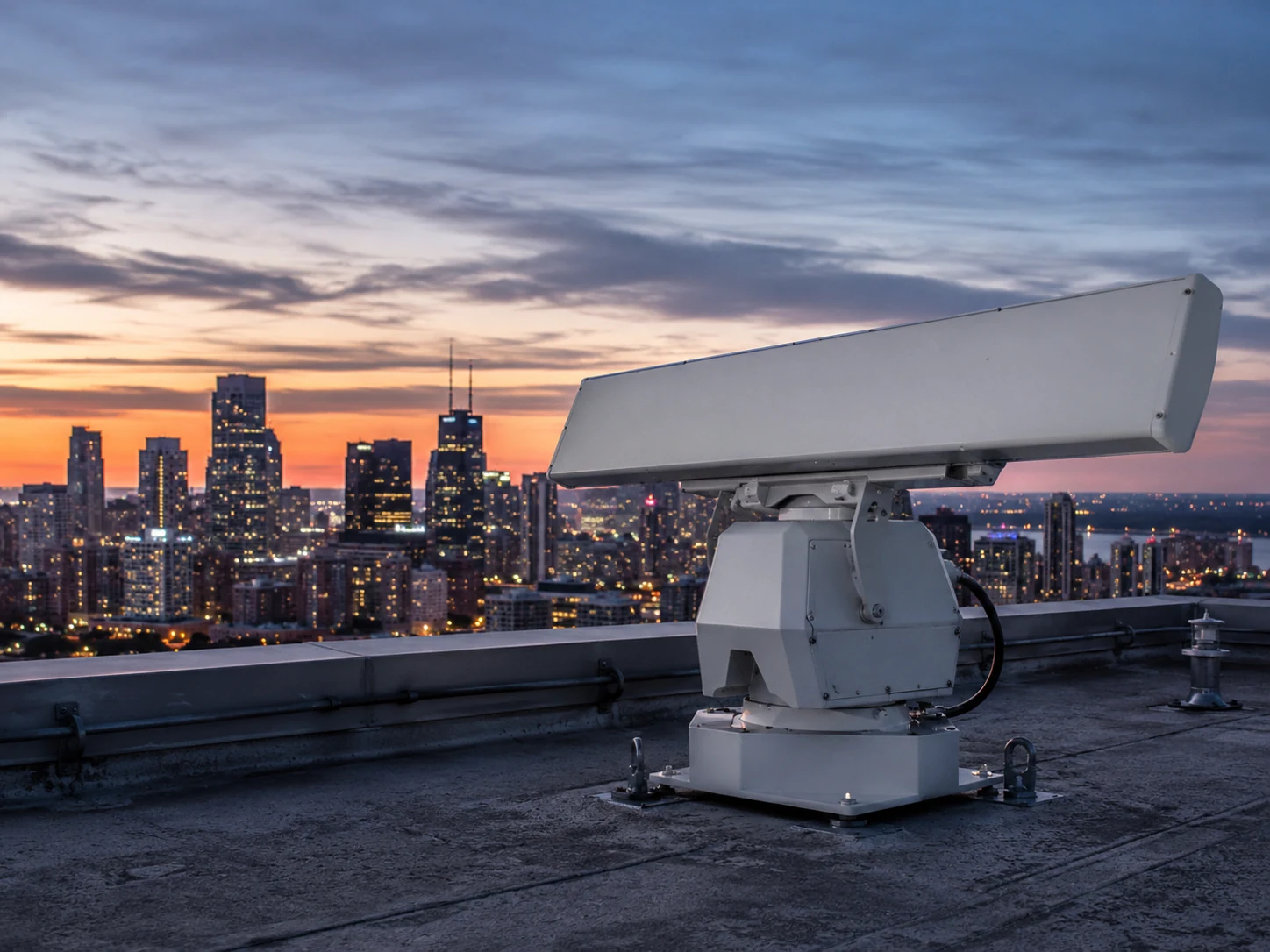
    Radar is one of the most important tools for persistent airspace surveillance. It transmits radio energy and analyzes reflections from objects in the monitored area. Security radars designed for small targets can detect and track drones at distances where conventional cameras may not yet provide useful imagery.

    Radar works day and night and does not depend on visible light. It can also provide range, direction, speed and track history. Its weakness is classification. Birds, clutter and moving machinery can create difficult signatures, so modern systems use micro-Doppler processing and machine-learning models to improve discrimination.

    RF Detection

    Radio-frequency detection looks for communication signals between a drone and its controller or for telemetry emitted by the aircraft. When a known protocol is detected, an RF system may identify the drone family, approximate its direction and sometimes locate both aircraft and controller.

    RF sensing can be highly effective because it may recognize a drone before the aircraft enters visual range. However, autonomous drones, unusual frequencies, encrypted links or pre-programmed flights may reduce detection opportunities. RF monitoring is therefore strongest when used as one layer rather than the only sensor.

    Optical and Thermal Cameras

    Visible-light and thermal cameras provide something radar and RF sensors cannot: visual confirmation. A tracking camera can automatically point toward a radar or RF cue and give the operator an image of the object.

    Day cameras can provide detailed evidence in good conditions. Thermal cameras remain useful at night and in many low-contrast situations because they detect heat rather than reflected visible light. Long-range optical systems often use motorized pan-tilt units and high-magnification lenses to maintain the target after detection.

    Their limitations are familiar: fog, heavy rain, obstacles, glare and extreme distance can reduce usable detail. A camera is usually most effective after another sensor has already told it where to look.

    Acoustic Detection

    Acoustic arrays listen for characteristic propeller and motor signatures. They are passive and do not emit radio energy, which can be useful in sensitive environments. Acoustic sensors can also help detect drones that do not transmit recognizable RF signals.

    The challenge is environmental noise. Wind, vehicles, machinery, aircraft and urban activity can mask or imitate signatures. Detection range is generally shorter than radar, so acoustic sensing is usually a supplementary layer.

    Why Sensor Fusion Matters

    The strongest architecture combines these technologies. Radar may discover an unknown target. RF analytics may identify the protocol. A camera may provide visual verification. Acoustic sensing may add confidence when the RF link is absent. The command platform then correlates the tracks into one operational picture.

    This approach reduces false alarms because the system is not asking a single sensor to make every decision. It also improves resilience: if one technology performs poorly because of weather, terrain or interference, another layer may still provide useful information.

    What Buyers Should Evaluate

    Detection range alone should never determine a procurement decision. Organizations should examine minimum target size, altitude coverage, update rate, clutter performance, false-alarm behavior, weather tolerance, cyber security, integration with VMS and command platforms, data retention, operator workload and legal constraints.

    The site survey is equally important. A sensor that performs well on a flat test field may behave differently beside buildings, cranes, hills, transmission lines or heavy RF activity.

    The Direction of the Market

    Drone detection is moving from isolated specialty equipment toward integrated airspace-awareness platforms. AI classification, edge processing, automated sensor cueing and unified command software are making it possible to treat the low-altitude air domain as another layer of physical security.

    For most critical sites, the practical lesson is simple: reliable drone awareness comes from layered sensing, not from a single detector. Radar, RF, optical, thermal and acoustic technologies are most powerful when they complement one another and present operators with one clear, verified track.

  • Fiber Optic Perimeter Detection vs Traditional Fence Sensors

    Fiber Optic Perimeter Detection vs Traditional Fence Sensors

    Fiber-optic sensing is increasingly used to protect long fences, pipelines, borders and critical infrastructure. Traditional fence sensors remain effective in many environments, but fiber introduces a different architecture: the sensing cable itself becomes part of the detection system.

    Traditional fence sensors

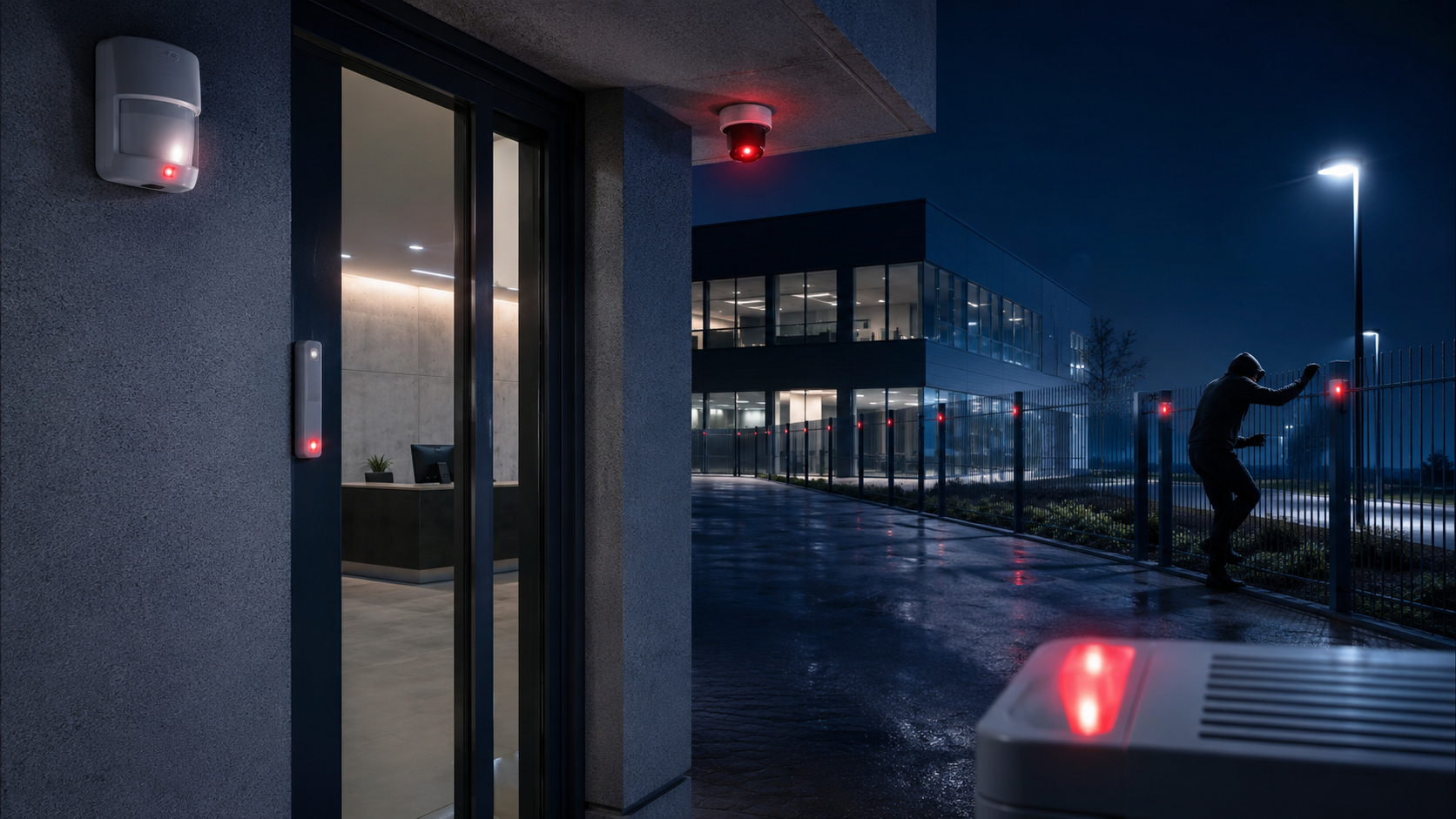
    Conventional systems may use accelerometers, vibration detectors, microphonic cable or point sensors mounted at intervals. They can identify climbing, cutting and strong mechanical disturbance. Their strengths include mature technology, straightforward zoning and relatively simple maintenance on short or medium perimeters.

    Fiber-optic detection

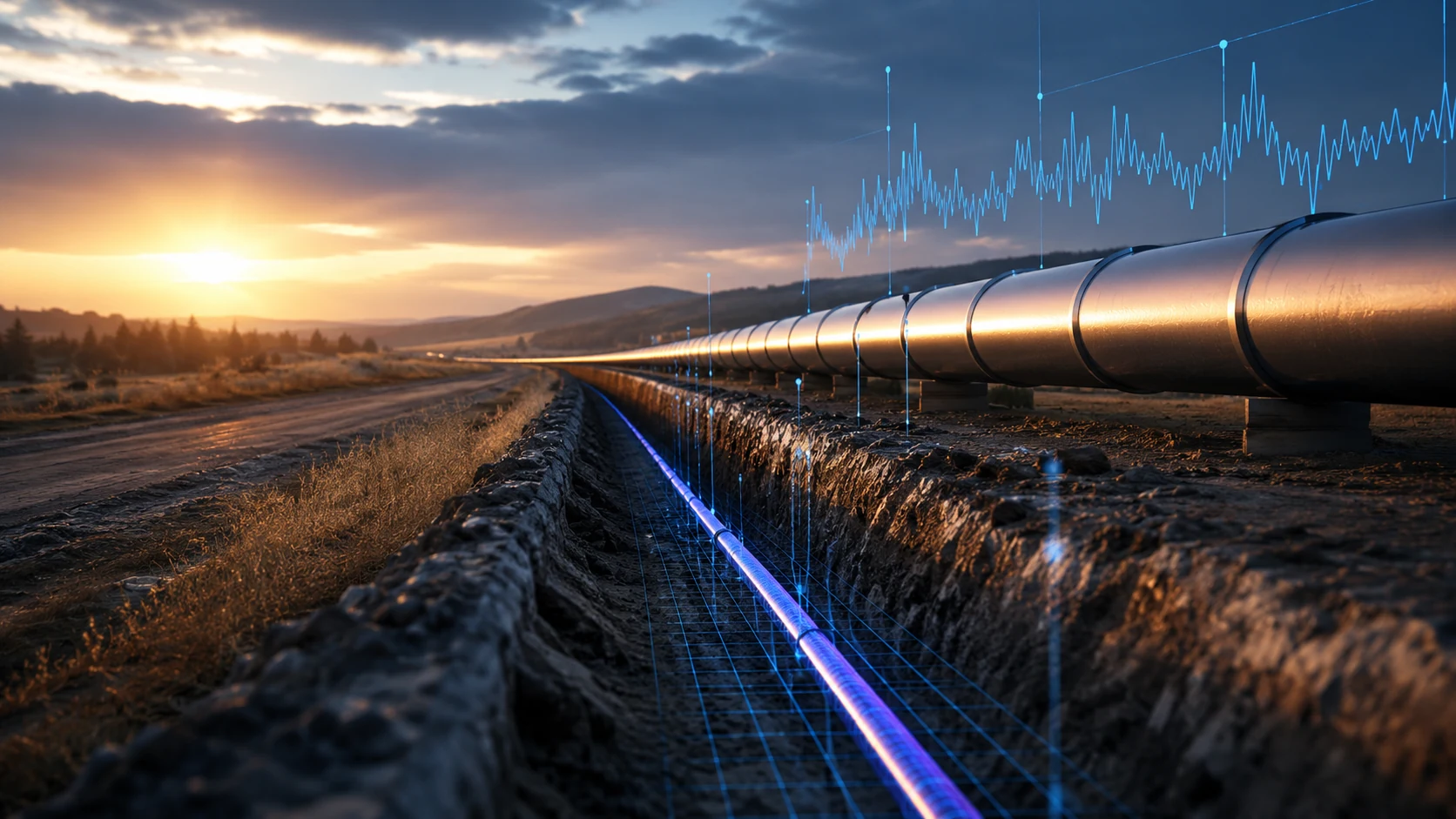
    Fiber systems monitor changes in light traveling through an optical cable. Depending on the design, the system may use discrete zones or distributed sensing that analyzes activity continuously along many kilometers of fiber. The field cable is passive, which means powered electronics can remain in protected equipment locations.

    Advantages of fiber

    Fiber is immune to electromagnetic interference, does not conduct electricity and can cover long distances. Distributed sensing can provide detailed location information and, with suitable signal processing, classify patterns associated with climbing, cutting, digging, footsteps or vehicle activity.

    Where traditional sensors still make sense

    For a small compound with a few hundred meters of good-quality fence, a conventional sensor system may be simpler and more economical. Existing infrastructure, technician familiarity and integration requirements can make traditional systems the practical choice.

    Where fiber becomes attractive

    Large industrial sites, solar farms, railways, pipelines, borders, airports and remote critical infrastructure benefit from long sensing distance and reduced field electronics. Fiber can also support architectures in which one cable protects multiple zones or extends beyond the physical fence.

    False alarms and classification

    Neither technology is automatically immune to nuisance alarms. Wind, vegetation, loose fence material and maintenance activity can affect any vibration-based system. Fiber platforms increasingly use advanced signal processing and machine learning to distinguish event patterns, but commissioning and site-specific tuning remain essential.

    Lifecycle considerations

    Designers should compare not only equipment price but also power distribution, communications, spare parts, repair procedures, expansion capability and maintenance over the life of the system. A higher initial cost may be justified when a technology reduces remote electronics or simplifies very long-distance coverage.

    Conclusion

    Fiber-optic perimeter detection is not universally better than traditional fence sensing, but it changes the economics and capabilities of large perimeters. Conventional sensors remain strong for many compact sites; fiber becomes especially compelling when distance, electromagnetic immunity, passive field infrastructure and precise event localization are priorities.

  • AI-Based Perimeter Analytics: How to Reduce False Alarms

    AI-Based Perimeter Analytics: How to Reduce False Alarms

    Perimeter systems are often judged by detection range, but alarm quality is just as important. A sensor that detects everything can overwhelm operators with animals, vegetation, weather effects and routine activity. AI-based analytics are increasingly used to separate relevant events from background noise.

    Why false alarms happen

    Outdoor environments change constantly. Shadows move, rain crosses the scene, trees sway, insects pass near cameras and wildlife enters protected zones. Traditional motion detection can interpret many of these changes as security events.

    Object classification

    Modern analytics can distinguish people, vehicles and other object classes. Instead of alarming whenever pixels change, the system can apply rules only when a relevant object enters a defined zone, crosses a virtual line or remains in an area for a specified time.

    Context matters

    Classification alone is not enough. A person walking on a public path may be normal while the same person inside a restricted substation is significant. Good perimeter analytics combine object type with location, direction, speed, dwell time and schedule.

    Sensor fusion

    AI becomes more useful when it receives data from several sensors. Radar may establish that a target is moving toward the perimeter, a thermal camera may detect a warm object and video analytics may classify it as a person. Combining these signals can increase confidence and reduce single-sensor nuisance alarms.

    Training and tuning

    Analytics should be commissioned for the actual site. Camera angle, target size, vegetation, weather and seasonal changes affect performance. Thresholds that work during installation may need refinement after weeks of real operation.

    Human verification remains important

    AI should prioritize and enrich alarms rather than automatically treating every classification as fact. Operators need access to live and recorded video, sensor history and clear alarm context.

    Conclusion

    The goal of AI perimeter analytics is not to eliminate every false alarm. It is to improve the signal-to-noise ratio so that operators can focus on events that deserve attention. Strong results come from good sensor placement, site-specific tuning, multiple sources of evidence and disciplined alarm workflows.

  • Radar and Thermal Camera Integration for Perimeter Security

    Radar and Thermal Camera Integration for Perimeter Security

    Radar and thermal cameras are complementary technologies. Radar is strong at detecting and tracking movement over large areas, while thermal cameras provide visual confirmation in darkness and difficult lighting. When integrated correctly, the combination can reduce blind spots and help operators understand alarms faster.

    What radar contributes

    Security radar measures the position and movement of targets. Unlike a visible-light camera, it does not depend on scene illumination and can continue tracking in darkness, glare or low-contrast conditions. A radar can also monitor a wide area and maintain multiple tracks at the same time.

    What thermal imaging contributes

    Thermal cameras detect differences in emitted heat. They can reveal people and vehicles at night and often provide better target contrast than visible cameras in low-light scenes. Thermal imagery also gives the operator a visual object to assess, which radar alone cannot provide.

    Automatic camera cueing

    One of the most valuable integrations is automatic PTZ cueing. When radar detects a moving target, the system calculates its coordinates and points a thermal or dual-sensor camera toward it. This can reduce the time an operator spends searching manually.

    Classification and analytics

    Radar may classify a track based on movement characteristics, while video analytics can add visual classification. Combining these sources increases confidence. A system might require agreement between radar movement and camera classification before escalating an alarm.

    Site-design challenges

    Radar requires a clear understanding of terrain, buildings, vegetation and reflective structures. Thermal cameras need appropriate lens selection and mounting height. Poor calibration between the radar coordinate system and camera field of view can undermine the entire integration.

    Where the combination works well

    Airports, power plants, ports, data centers, borders, solar farms, substations and large industrial sites can benefit from radar-thermal integration, particularly where long-range nighttime detection is important.

    Conclusion

    Radar provides wide-area awareness and precise tracking; thermal imaging provides visual confirmation. Together they create a stronger perimeter layer than either technology can usually deliver alone, especially when the system is calibrated, integrated with analytics and connected to a clear operator workflow.

  • Fence-Mounted vs Buried Perimeter Sensors: Which Is Better?

    Fence-Mounted vs Buried Perimeter Sensors: Which Is Better?

    Fence-mounted and buried sensors solve the same basic problem in different ways: detecting unauthorized movement before a person reaches a protected asset. The right choice depends on site geometry, terrain, aesthetics, maintenance and the type of intrusion that must be detected.

    Fence-mounted sensors

    Fence systems detect vibration, movement or strain caused by climbing, cutting or lifting. Technologies include accelerometers, microphonic cable and fiber-optic sensing. They can provide precise zone information along long boundaries and are relatively easy to inspect because the detection medium follows the visible fence line.

    Their performance, however, is closely tied to fence condition. Loose mesh, vegetation, wind-driven objects or poorly tensioned panels can create nuisance alarms. Good mechanical installation and site-specific tuning are essential.

    Buried sensors

    Buried systems create an invisible detection zone using seismic, pressure, electromagnetic or other sensing methods. They are useful around executive facilities, heritage sites, landscaped areas or locations where a visible sensor system would be undesirable.

    Because the sensing medium is underground, soil type, moisture, drainage, frost, nearby roads and heavy machinery can influence performance. Installation can also be more disruptive, and later maintenance may require excavation.

    Detection behavior

    Fence sensors are naturally associated with a physical barrier and are well suited to detecting climbing or cutting. Buried sensors may detect a person before they reach the fence, providing earlier warning. On the other hand, they can be more sensitive to environmental vibration or non-threatening movement depending on the technology.

    Lifecycle cost

    The cheapest installation is not always the lowest-cost system over ten years. Fence repairs, vegetation management, battery replacement, excavation and calibration should all be considered in lifecycle planning.

    When to combine them

    High-security sites sometimes use buried sensors outside the fence for early detection and fence-mounted sensors as a second layer. Cameras, radar or thermal imaging can then verify the alarm.

    Conclusion

    Fence-mounted sensors are often simpler where a strong fence already exists. Buried sensors are valuable when covert or pre-fence detection is required. The decision should be based on the physical site and operating environment rather than on technology preference alone.