Author: Osiris

  • Passwordless Physical Access: Wallet Credentials and Digital Identity

    Passwordless Physical Access: Wallet Credentials and Digital Identity

    What passwordless means

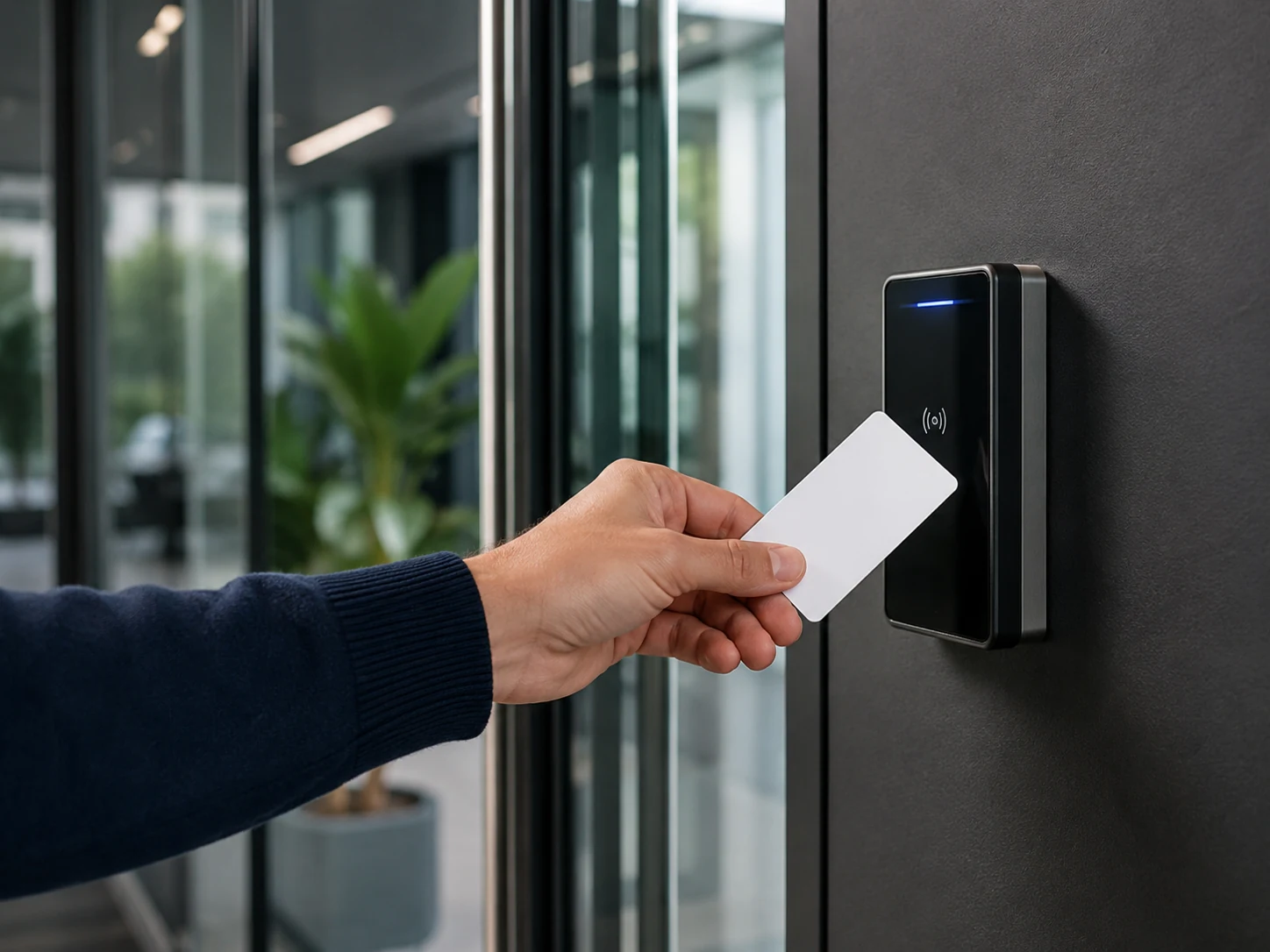
    Users prove identity without entering a reusable secret. A device-bound credential protected by secure hardware and local authentication can provide stronger assurance than a badge alone.

    Wallet credentials

    Digital wallets support remote provisioning and central revocation tied to HR or identity lifecycle systems.

    Identity convergence

    A shared authoritative identity can govern application sign-in and physical entry, reducing duplicate records and improving auditability.

    Security and resilience

    Phone possession can be combined with biometric verification, while fallback processes remain necessary for dead batteries, lost devices and visitors.

    Conclusion

    Passwordless physical access is part of a broader shift toward unified cyber-physical identity governance.

  • Biometric Access Control: Fingerprint, Face, Iris and Palm

    Biometric Access Control: Fingerprint, Face, Iris and Palm

    Fingerprint

    Fingerprint readers are mature and compact, but dirty, wet or damaged fingers and hygiene concerns can affect performance and acceptance.

    Face recognition

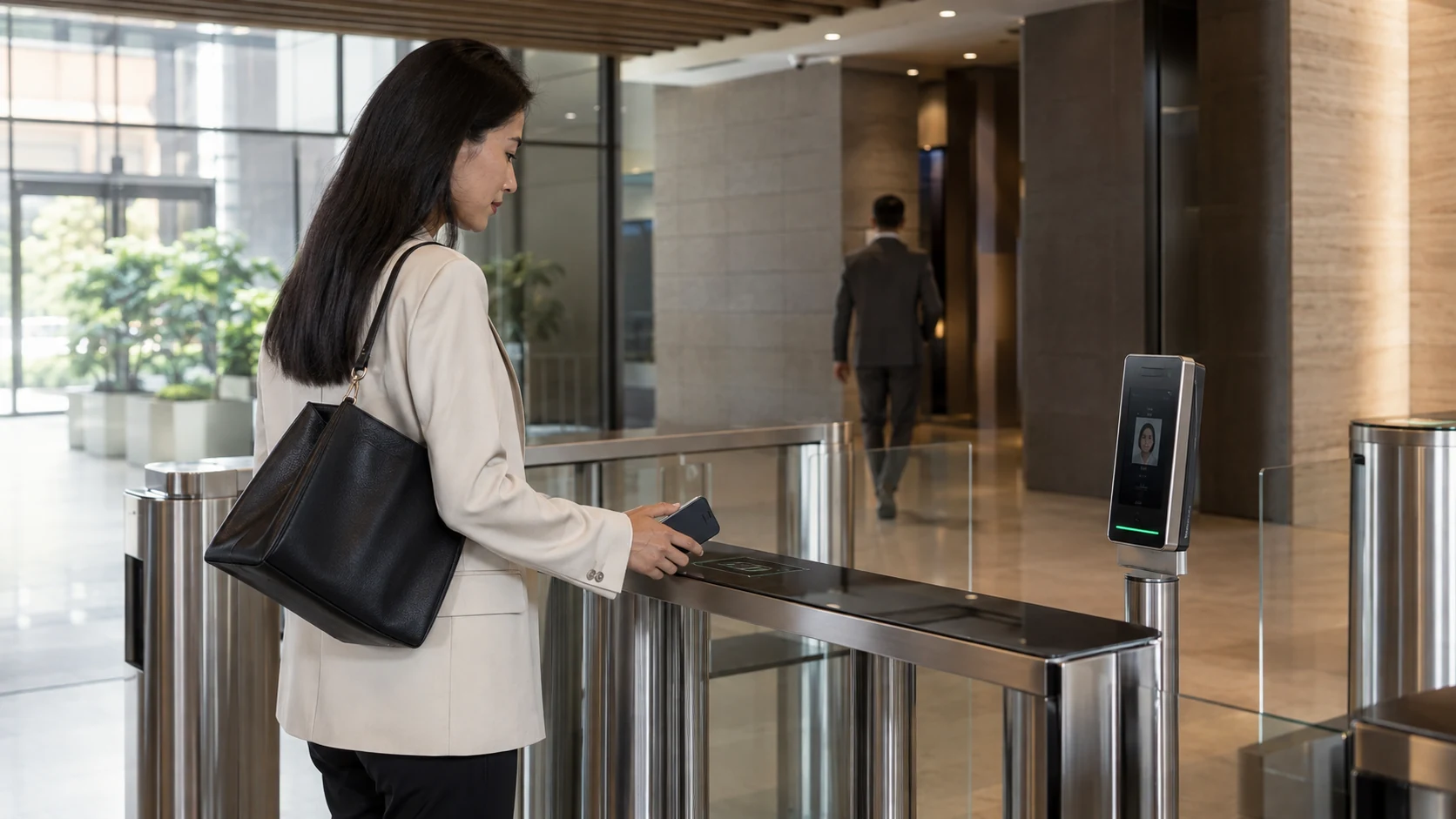
    Contactless facial authentication can be fast, but depends on camera position, lighting, image quality and presentation-attack defenses.

    Iris recognition

    Iris patterns can support high-assurance matching, while specialized hardware and user positioning may increase complexity and cost.

    Palm and palm-vein systems

    Palm systems may use surface geometry or subsurface vein patterns. Contactless options can balance strong authentication with high-throughput operation.

    Use more than one factor

    Combining a biometric with a secure card or mobile credential reduces reliance on a single modality and provides a recovery path when authentication fails.

    Privacy and governance

    Biometric templates require encryption, retention limits, access controls, a lawful processing basis and reliable deletion procedures. Unlike a password, a biometric characteristic cannot simply be replaced.

    Conclusion

    There is no universally best modality. Selection should reflect risk, environment, throughput, privacy obligations and user experience.

  • Mobile Credentials: Smartphones as Security Badges

    Mobile Credentials: Smartphones as Security Badges

    Why adoption is growing

    Digital credentials can be issued remotely, updated without replacing a card and revoked quickly. This is valuable for distributed workforces, temporary personnel and multi-site organizations.

    Security advantages

    Credentials may be protected by device hardware and combined with biometric unlock, PIN protection or mobile-device management, adding controls unavailable to passive cards.

    User experience

    Performance depends on reader placement, phone models, battery state and whether NFC, Bluetooth Low Energy or wallet technology is used. Representative testing is essential.

    Operational considerations

    Organizations need processes for lost phones, replacement devices, offboarding and visitors. Mobile credentials can coexist with cards during a phased transition.

    Privacy and ownership

    Bring-your-own-device deployments need clear boundaries and data minimization so physical access does not become unnecessary tracking.

    Conclusion

    The value of mobile access extends beyond convenience to lifecycle management, flexible identity integration and stronger authentication choices.

  • IP-Based Access Control: Architecture and Advantages

    IP-Based Access Control: Architecture and Advantages

    How the architecture works

    Credential readers, controllers, locks and request-to-exit devices connect with management software through standard networks. Controllers should retain local permissions and decision-making when connectivity is interrupted.

    Why organizations choose IP

    IP architectures can simplify multi-site administration, health monitoring, firmware management and integration. Existing structured cabling may reduce installation complexity in suitable buildings.

    Cybersecurity responsibilities

    Controllers require encrypted communication, unique credentials, secure firmware, segmentation and controlled administrative access. A physically protected but poorly configured device can still create cyber risk.

    PoE and edge intelligence

    Power over Ethernet can deliver power and data over one cable. Edge-capable controllers can preserve permissions and event logs locally to support continuity during network outages.

    Where it fits

    Campuses, data centers, logistics sites and distributed enterprises often benefit, especially when IT and security teams already manage converged infrastructure.

    Conclusion

    IP access control changes deployment and governance, not just connectivity. Sound network design can make physical access more scalable, observable and interoperable.

  • OSDP vs Wiegand: Why the Security Industry Is Moving to OSDP

    OSDP vs Wiegand: Why the Security Industry Is Moving to OSDP

    Why Wiegand is under pressure

    Wiegand became common because it is simple, but it typically provides one-way credential transmission, no native encryption and limited visibility into reader health.

    What OSDP changes

    The Open Supervised Device Protocol supports bidirectional communication, device supervision, remote configuration and Secure Channel encryption between compatible readers and controllers.

    Operational advantages

    Controllers can monitor reader status and manage indicators, displays and configuration. These capabilities can reduce maintenance effort across campuses and large estates.

    Migration considerations

    A migration does not always require full replacement. Many modern readers and controllers support both interfaces, allowing phased upgrades after wiring, compatibility and Secure Channel support are verified.

    Conclusion

    Wiegand remains widespread, but OSDP offers a stronger and more manageable foundation for new access-control projects.

  • Is Traditional Access Control Becoming Obsolete?

    Is Traditional Access Control Becoming Obsolete?

    Why the old model is under pressure

    Legacy systems built around isolated doors, trusted networks and proprietary controllers are increasingly difficult to integrate with identity platforms, mobile credentials and modern cybersecurity controls. The shift is from door-centric security to policies that consider identity, role, device and context.

    Mobile credentials and digital identity

    NFC, Bluetooth Low Energy and wallet credentials can reduce physical card issuance and simplify remote provisioning and revocation. Device authentication can add protection beyond a passive badge.

    OSDP and secure reader communication

    Secure bidirectional reader protocols such as OSDP add encryption, supervision and remote configuration. New projects should treat secure reader-to-controller communication as a baseline requirement.

    Cloud, hybrid and integration

    Cloud management can simplify multi-site administration while resilient controllers continue making local decisions during outages. Access systems increasingly connect with video, visitor management, HR and security operations workflows.

    A practical modernization path

    Organizations should inventory readers, controllers, credentials, software and network dependencies, then address unsupported software, insecure communications and shared credentials before cosmetic upgrades.

    Conclusion

    Traditional access control is not obsolete, but isolated and weakly protected assumptions are. Gradual modernization can improve security and usability without replacing every door at once.

  • Digital Twins for Physical Security Operations

    Digital Twins for Physical Security Operations

    Digital twins are increasingly being used to create a live virtual representation of buildings, campuses and critical infrastructure. In physical security, the value of a digital twin is not the 3D model itself. It is the ability to connect that model to real devices, alarms, identities and operational data.

    How the Technology Works

    A security digital twin can display cameras, doors, intrusion zones, fire devices, intercoms, sensors and critical assets in their actual spatial context. When an alarm occurs, the operator sees where it is happening and what systems are nearby instead of interpreting a device name from a list.

    The concept becomes more powerful when live data is added. Door status, camera health, occupancy, environmental conditions and maintenance state can all be visualized on the same model. This turns a static design file into an operational interface.

    Operational Considerations

    Incident response is an obvious use case. A perimeter alarm can highlight the affected zone, show the nearest cameras, display access routes and identify nearby personnel. During an evacuation, the model can combine fire information, occupancy data and route status to support command decisions.

    Digital twins can also help before an incident. Security planners can simulate camera coverage, evaluate blind spots, review guard routes and test the effect of new barriers or access points. The model becomes a shared environment for design, operations and training.

    Integration is the difficult part. Buildings often contain systems from many vendors using different protocols and naming conventions. A digital twin is only as useful as the data connected to it. Device identifiers, floor plans and asset records must be maintained as the facility changes.

    Deployment and Risk

    Performance and cybersecurity must also be considered. A detailed 3D environment can require significant computing resources, and connections to operational systems create a sensitive integration layer. Access to the twin should be role-based and audited.

    For large infrastructure, geographic information systems and digital twins are beginning to overlap. A single operational model may include buildings, perimeter sensors, pipelines, fiber sensing, rail corridors and remote substations.

    Conclusion

    Digital twins will not replace VMS, access control or command-and-control software. They are more likely to become a spatial interface above those systems. When designed well, they reduce cognitive load by showing operators not just what alarmed, but where it is, what surrounds it and what actions are available.


  • Video Surveillance Storage: How Much Storage Do You Really Need?

    Video Surveillance Storage: How Much Storage Do You Really Need?

    Storage is one of the largest cost components in a video surveillance system, yet it is often estimated with oversimplified assumptions. Real requirements depend on bitrate, frame rate, resolution, compression, scene complexity, recording mode, redundancy and retention policy.

    How the Technology Works

    The basic calculation is straightforward. A camera producing an average bitrate of 4 megabits per second generates roughly 43 gigabytes per day before overhead. Multiply that by the number of cameras and retention days, and storage grows quickly.

    Average bitrate is more useful than resolution alone. A 4K camera does not always use four times the storage of a lower-resolution camera because modern codecs, frame rate and scene activity have major effects. A quiet corridor may compress extremely well, while a tree-filled outdoor scene with rain and movement can require much more bandwidth.

    Operational Considerations

    Variable bitrate is common because it allocates more data to complex scenes and less to static ones. This improves efficiency but makes capacity planning dependent on realistic average and peak values. Integrators should use field measurements where possible rather than rely only on nominal manufacturer figures.

    Recording policy can reduce storage dramatically. Continuous recording is appropriate for many critical environments, but some cameras may use motion-based or event-based recording. Pre-event and post-event buffers preserve context while avoiding continuous high-bitrate storage in low-risk areas.

    Retention should be driven by operational need and regulation. Keeping every camera for 90 days because storage is available may be unnecessary. Different camera groups can have different retention periods. Critical entrances may need longer retention than low-risk internal spaces.

    Deployment and Risk

    Redundancy also consumes capacity. RAID, replication, failover recording and backup must be included in the design. Usable storage is always lower than raw disk capacity.

    Cloud storage introduces additional variables such as upload bandwidth, egress charges and subscription tiers. Hybrid systems may keep recent high-resolution video locally and archive selected evidence to the cloud.

    A good storage design includes a safety margin and monitoring. Actual bitrate should be reviewed after commissioning, and capacity alerts should warn administrators before retention drops below policy.

    Conclusion

    The objective is not to buy the largest array possible. It is to create a documented storage model that matches camera behavior, evidence requirements and resilience goals. Accurate calculation can save substantial cost while ensuring that critical video is available when an investigation begins.

  • Cloud VMS vs On-Premise VMS

    Cloud VMS vs On-Premise VMS

    Video management systems are increasingly available as cloud services, traditional on-premise platforms or hybrid combinations. The correct choice depends on scale, connectivity, cybersecurity policy, retention requirements and how much operational control the organization wants to keep locally.

    How the Technology Works

    An on-premise VMS places recording servers, databases and management software inside the organization’s infrastructure. This provides direct control over storage and network architecture. It can be attractive for high-bandwidth sites, long retention periods and facilities with strict data-residency requirements.

    Cloud VMS shifts more of the management layer to hosted infrastructure. Cameras may connect directly to the service or through local gateways. Software updates, remote access and multi-site administration are usually simpler because the platform is operated as a service.

    Operational Considerations

    Bandwidth is a key design issue. Sending full-resolution continuous video to the cloud can be expensive or impractical at large sites. Many cloud architectures therefore record locally and upload events, lower-resolution streams or selected footage. This hybrid model reduces WAN dependence while preserving centralized management.

    Cloud services can offer rapid deployment and predictable subscription costs, but recurring fees should be compared with the lifecycle cost of local servers, storage, operating systems, maintenance and upgrades. The cheapest model depends on camera count, bitrate and retention.

    Cybersecurity responsibility changes rather than disappears. A reputable cloud provider can operate strong infrastructure and patch services quickly, but the customer remains responsible for device credentials, user permissions, network configuration and governance. On-premise systems provide control but also place more maintenance responsibility on internal teams.

    Deployment and Risk

    Resilience should be designed explicitly. What happens if the internet connection fails? Can cameras continue recording? Can local operators still view critical video? A cloud-first system should define offline behavior before it is deployed in a critical environment.

    Hybrid VMS is becoming a common enterprise strategy. Local storage provides continuity and bandwidth efficiency, while cloud services provide centralized health monitoring, remote access, analytics and fleet management.

    Conclusion

    There is no universal winner. Single-site critical facilities may favor local control. Distributed organizations may benefit greatly from cloud management. The best architecture is based on operational requirements and risk, not on a blanket preference for either cloud or on-premise technology.

  • Multispectral Cameras for Security Applications

    Multispectral Cameras for Security Applications

    Visible-light cameras are excellent when there is enough illumination and contrast, but security environments are rarely ideal. Multispectral systems combine information from different parts of the electromagnetic spectrum to improve detection, classification and situational awareness.

    How the Technology Works

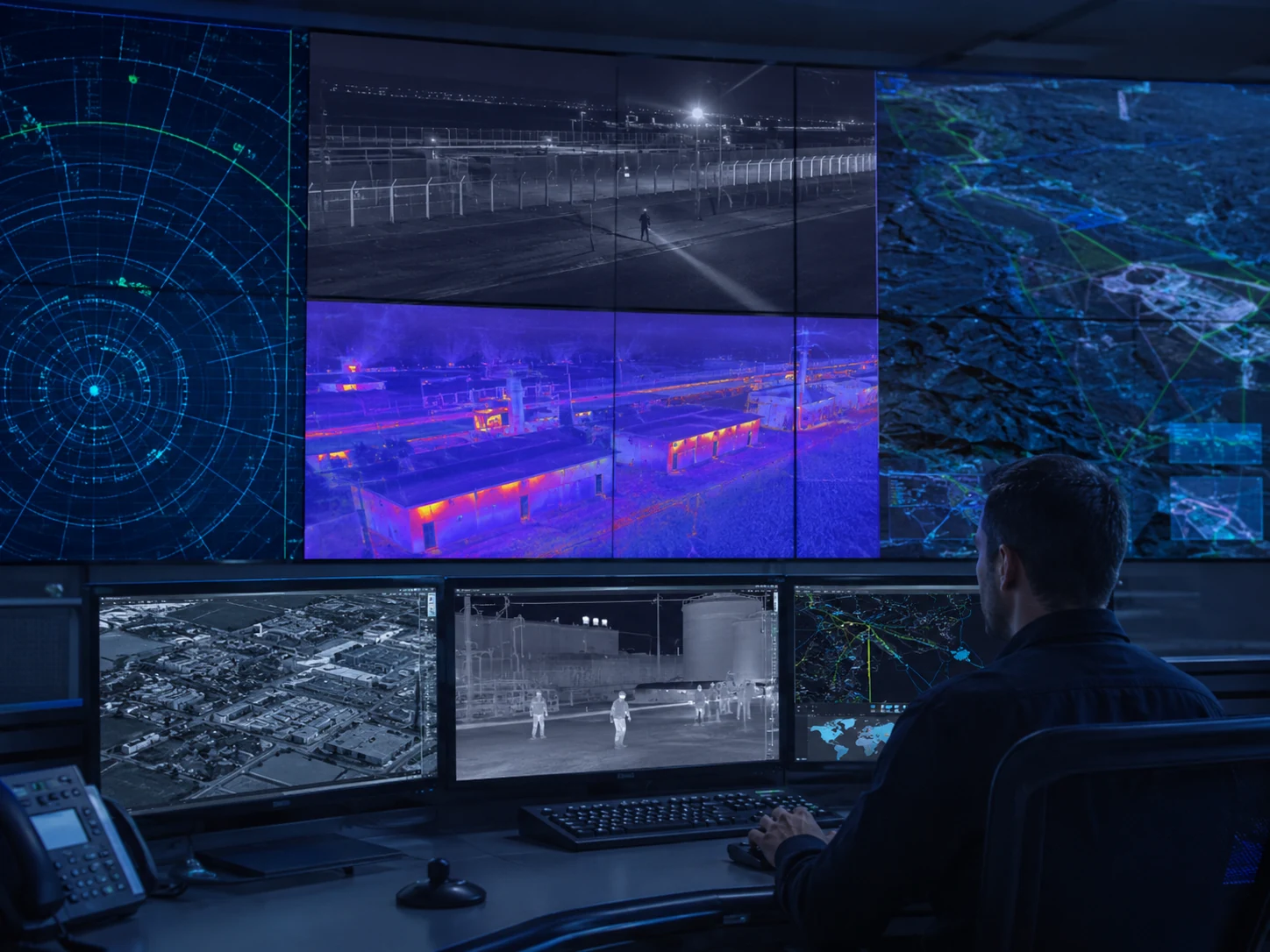
    The most common security combination is visible and thermal imaging. A visible sensor provides detail, color and identification information, while a thermal sensor detects heat differences that remain useful in darkness and many low-contrast conditions. When the two views are calibrated, operators can switch between them or display fused imagery.

    Near-infrared imaging is another tool. Many conventional surveillance cameras already use near-IR sensitivity for night mode. More specialized systems may combine visible, near-IR and short-wave infrared to reveal materials or conditions that are difficult to distinguish with ordinary color video.

    Operational Considerations

    Thermal imaging is particularly valuable for perimeter security because it does not depend on reflected visible light. A person can often be detected against a background at night without floodlights. Thermal cameras can also support temperature-based monitoring in industrial environments when radiometric measurement is available.

    No spectrum is perfect. Thermal cameras can lose contrast when the target and background reach similar temperatures. Heavy rain, certain atmospheric conditions and glass can affect performance. Visible cameras can provide details that thermal sensors cannot, such as clothing color or readable signage.

    Sensor fusion addresses these weaknesses. Radar can provide range and speed, thermal can provide robust detection, and visible video can provide verification. Multispectral cameras fit naturally into this layered architecture.

    Deployment and Risk

    Optics and alignment are important. Different wavelengths require different lens materials and focus characteristics. A dual-sensor device must be designed so that both views correspond accurately enough for operators and analytics.

    Multispectral systems are increasingly relevant in airports, energy facilities, borders, ports, data centers, industrial plants and remote infrastructure. They are especially useful where lighting cannot be guaranteed or where detection must continue through day-night transitions.

    Conclusion

    The right question is not whether multispectral is “better” than visible imaging. It is whether the additional spectrum solves a specific weakness in the target environment. When it does, multispectral sensing can dramatically improve resilience and reduce dependence on perfect lighting.