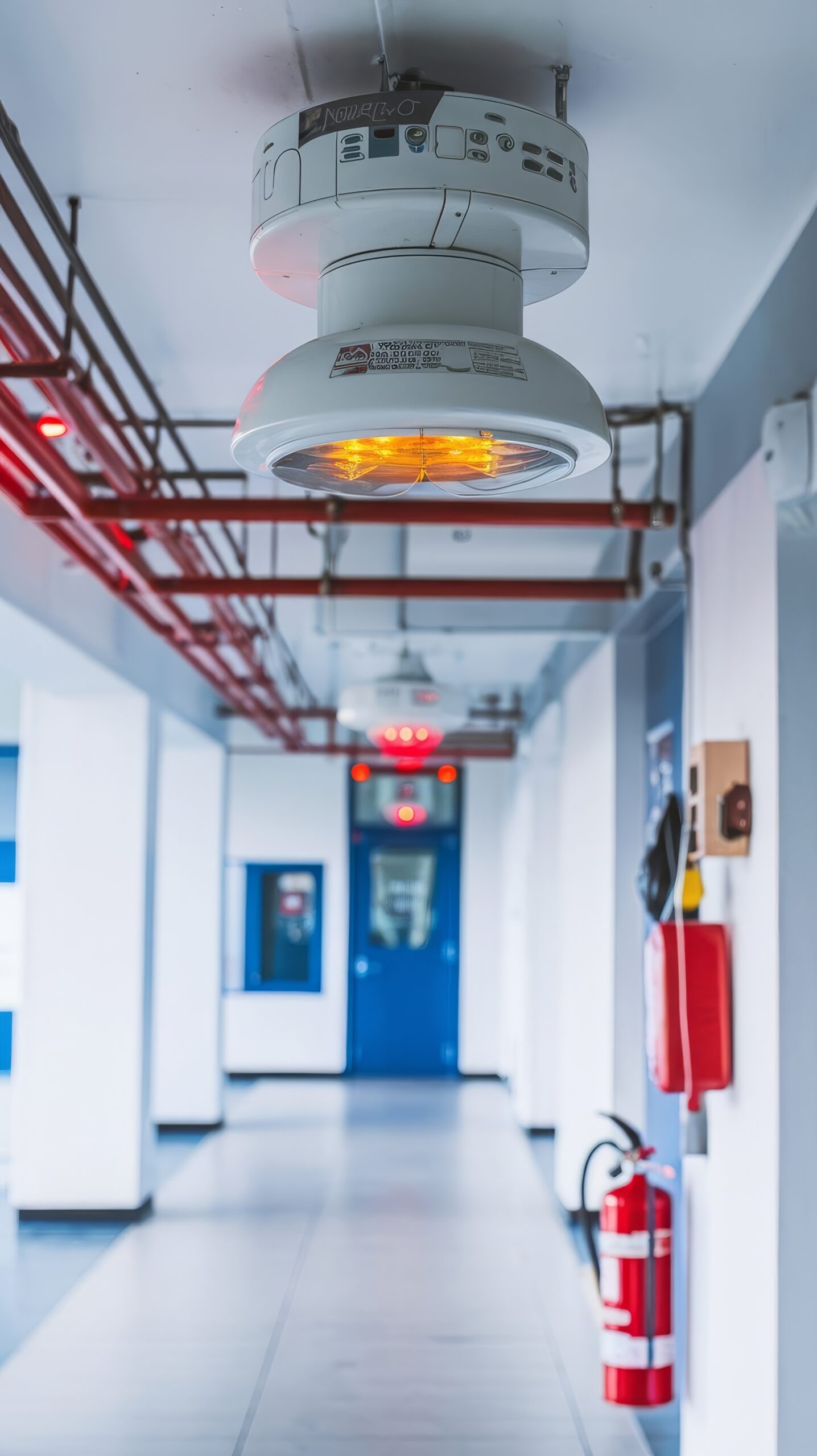
A smoke detector can remain connected and report normal communications while its sensing chamber becomes contaminated or its response drifts. Maintenance must therefore look beyond panel connectivity. Sensitivity testing, device diagnostics and environmental history provide evidence that a detector remains within its approved operating range.
Understand what the system reports
Addressable detectors may provide a sensitivity value, contamination level or maintenance alert. The meaning of those values is manufacturer-specific and must be interpreted with the approved documentation. A percentage or bar graph should not be converted into a pass decision without knowing the reference range and compensation method.
Some devices automatically compensate for gradual contamination. Compensation can preserve performance for a period, but it is not unlimited and should not be treated as a substitute for cleaning or replacement. Record when the device approaches a maintenance threshold and whether the panel reports that state to operators.
Test within an approved maintenance program
Use methods permitted by the applicable code, authority and manufacturer. Functional aerosol testing confirms that smoke can enter the chamber and generate an alarm, while sensitivity testing evaluates the response threshold. Those are related but different questions, so one result should not be used to claim that both were tested.
Coordinate impairment controls before testing. Notify monitoring parties, protect occupants and restore all disabled outputs after the work. The record should identify the detector, location, method, result, tester, equipment and any corrective action.
Investigate the environmental cause
Repeated contamination may indicate dust, construction activity, steam, aerosols, insects or unsuitable air movement. Cleaning the detector without addressing the environment can produce a cycle of nuisance alarms and early failure. Compare maintenance history across nearby devices to identify a local pattern.
Confirm that detector type and placement remain suitable after room-use changes. A space converted into a workshop, kitchen or high-airflow area may need a design review rather than repeated adjustment. Settings should not be widened simply to silence alarms unless the change is engineered, approved and documented.
Use trends to plan replacement
Track devices that repeatedly approach contamination limits, fail sensitivity checks or require frequent cleaning. Trending supports risk-based replacement and helps identify batches exposed to similar conditions. It also distinguishes a single defective device from a broader environmental or design problem.
Close maintenance by verifying normal panel state, remote annunciation, monitoring communication and updated records. Smoke-detector assurance supports the wider Fire & Safety program by proving that connected devices remain capable of performing their detection function, not merely responding on the network.
Maintenance analytics should support, not replace, required inspection and testing. Assign responsibility for reviewing contamination trends and overdue work orders, and ensure technicians can trace every device result to its physical location. Any detector removed for service should remain controlled so that an untested device is not returned to the wrong address.