Category: Fire & Safety

  • Smoke Detector Sensitivity Testing and Contamination Maintenance

    Smoke Detector Sensitivity Testing and Contamination Maintenance

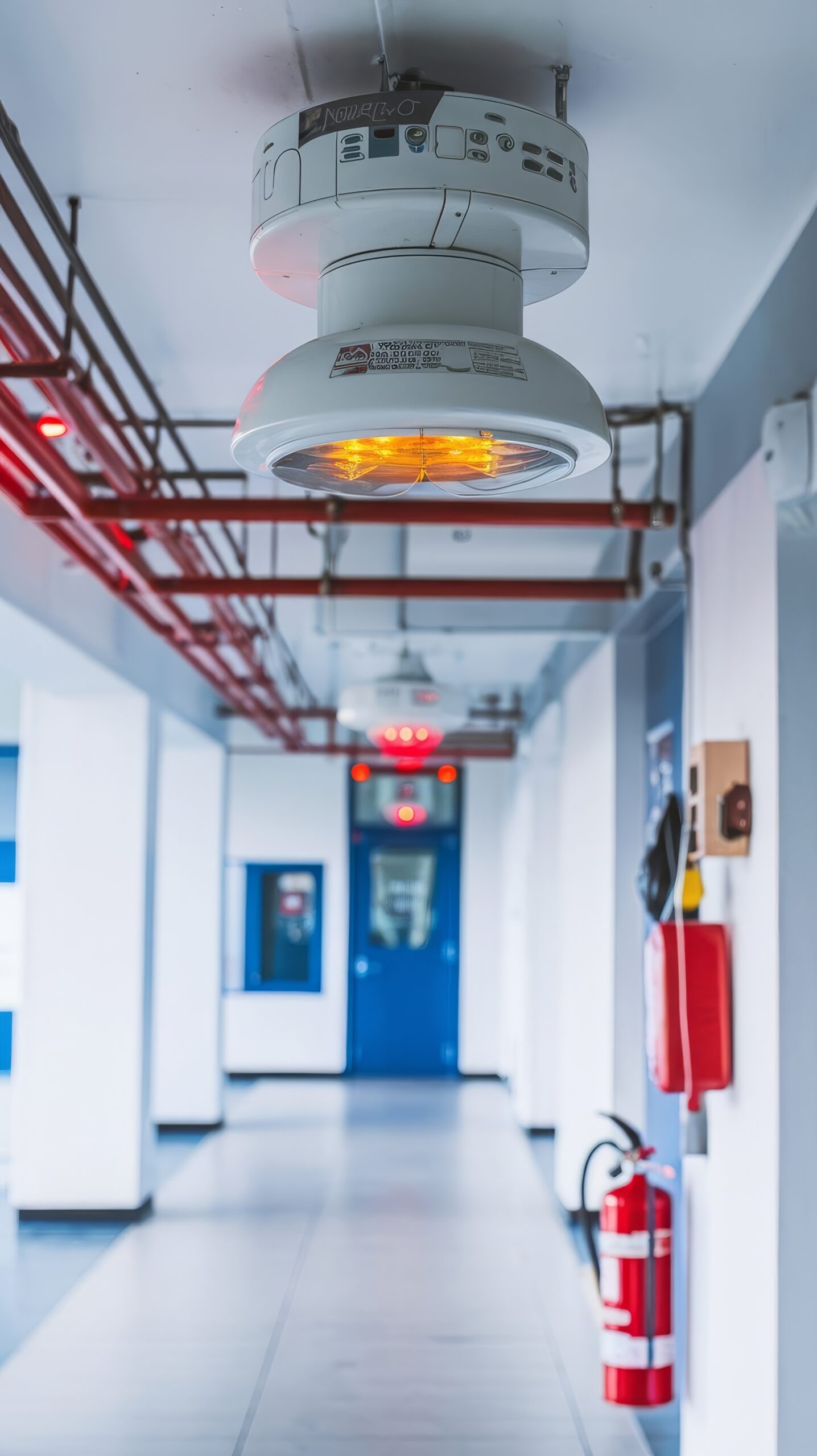
    A smoke detector can remain connected and report normal communications while its sensing chamber becomes contaminated or its response drifts. Maintenance must therefore look beyond panel connectivity. Sensitivity testing, device diagnostics and environmental history provide evidence that a detector remains within its approved operating range.

    Understand what the system reports

    Addressable detectors may provide a sensitivity value, contamination level or maintenance alert. The meaning of those values is manufacturer-specific and must be interpreted with the approved documentation. A percentage or bar graph should not be converted into a pass decision without knowing the reference range and compensation method.

    Some devices automatically compensate for gradual contamination. Compensation can preserve performance for a period, but it is not unlimited and should not be treated as a substitute for cleaning or replacement. Record when the device approaches a maintenance threshold and whether the panel reports that state to operators.

    Test within an approved maintenance program

    Use methods permitted by the applicable code, authority and manufacturer. Functional aerosol testing confirms that smoke can enter the chamber and generate an alarm, while sensitivity testing evaluates the response threshold. Those are related but different questions, so one result should not be used to claim that both were tested.

    Coordinate impairment controls before testing. Notify monitoring parties, protect occupants and restore all disabled outputs after the work. The record should identify the detector, location, method, result, tester, equipment and any corrective action.

    Investigate the environmental cause

    Repeated contamination may indicate dust, construction activity, steam, aerosols, insects or unsuitable air movement. Cleaning the detector without addressing the environment can produce a cycle of nuisance alarms and early failure. Compare maintenance history across nearby devices to identify a local pattern.

    Confirm that detector type and placement remain suitable after room-use changes. A space converted into a workshop, kitchen or high-airflow area may need a design review rather than repeated adjustment. Settings should not be widened simply to silence alarms unless the change is engineered, approved and documented.

    Use trends to plan replacement

    Track devices that repeatedly approach contamination limits, fail sensitivity checks or require frequent cleaning. Trending supports risk-based replacement and helps identify batches exposed to similar conditions. It also distinguishes a single defective device from a broader environmental or design problem.

    Close maintenance by verifying normal panel state, remote annunciation, monitoring communication and updated records. Smoke-detector assurance supports the wider Fire & Safety program by proving that connected devices remain capable of performing their detection function, not merely responding on the network.

    Maintenance analytics should support, not replace, required inspection and testing. Assign responsibility for reviewing contamination trends and overdue work orders, and ensure technicians can trace every device result to its physical location. Any detector removed for service should remain controlled so that an untested device is not returned to the wrong address.
    Reference sources

  • Fire Alarm Loop Fault Isolation and Network Survivability

    Fire Alarm Loop Fault Isolation and Network Survivability

    A fire alarm system may appear normal at the control unit while a single cable fault threatens a large part of the detection or notification path. Loop isolators, redundant communications and supervised circuits are intended to limit that impact, but their value depends on design, placement and testing. Acceptance should prove what remains operational after realistic faults.

    Map the intended fault boundaries

    Start with drawings that show signaling-line circuits, notification circuits, isolators, network nodes, power supplies and interfaces. Identify which devices are expected to remain available after an open circuit, short circuit or node loss. The drawing should match the installed field route, not only the tender design.

    Fault isolation is affected by physical topology. Devices on both sides of an isolator may not fail in the way an operator expects if the cable route, address sequence or return path changed during construction. Record fire compartments, risers and critical functions so the test can assess consequence as well as device count.

    Test faults under controlled conditions

    Introduce approved test faults one at a time using a documented method that protects people and equipment. Confirm the control unit identifies the correct circuit or segment, annunciators receive the condition and unaffected devices continue to operate. Measure how long isolation and restoration take and whether repeated faults produce additional loss.

    An open circuit, short circuit and network communication failure can have different effects. Test representative locations, including boundaries near isolators and remote power supplies. Where a fault could disable a safety function, coordinate compensating measures and restore the system immediately after the evidence is collected.

    Verify interfaces and degraded operation

    Fire alarm systems often control doors, smoke control, elevators, suppression interfaces and monitoring connections. A field loop may retain detectors while losing an interface module that supports another life-safety action. The acceptance matrix should therefore verify required cause-and-effect behavior in the degraded state.

    Confirm that off-site monitoring receives fault and restoration events with correct timestamps. Networked panels should maintain required indications when a peer node or communications link is unavailable. Cybersecurity controls must not block supervised traffic, while maintenance access should remain authenticated and logged.

    Preserve evidence for maintenance

    Close the test with updated drawings, device lists, software versions, fault results and unresolved limitations. Operators need plain-language information about which area is affected by a reported fault and what temporary action is required. A generic trouble message without location or consequence is difficult to manage safely.

    Repeat selected tests after rewiring, expansion, firmware changes or unexplained communication faults. Fire network survivability supports the wider Fire & Safety program by making single-fault behavior visible before an emergency exposes it.

    Coordinate testing with the authority having jurisdiction and the site’s impairment procedure where required. Notify affected occupants and monitoring parties before the exercise, then confirm that normal supervision has been fully restored.

    Reference sources

  • UL FSRI Updates Evidence-Based Structural Firefighting Course

    UL FSRI Updates Evidence-Based Structural Firefighting Course

    UL’s Fire Safety Research Institute has updated its Evidence-Based Structural Firefighting course to connect current fire-dynamics research with operational decision-making. The free online course was updated on September 22 and is designed for both firefighters and personnel responsible for training, policy and procedural consistency.

    New search-and-rescue and hazard content

    FSRI says the revision adds lessons built around 12 tactical considerations from its search-and-rescue research. It also expands guidance on coordinating search, rescue, suppression and ventilation before, during and after fire control. Additional material addresses implementation of NFPA 1700 guidance and emerging hazards including photovoltaic systems and battery fires.

    The course page lists 151 minutes of instruction covering fire science, construction, heat transfer and personal protective equipment, suppression, ventilation, search and rescue, and implementation. It includes a final assessment and certificate of completion. The program is educational guidance rather than a universal incident playbook; departments still need to adapt tactics to staffing, construction, water supply, local procedures and incident conditions.

    From research to operating guidance

    The practical challenge is translating fire research into repeatable training and standard operating guidance without treating one tactic as appropriate for every structure. FSRI’s accompanying fireground playbook is intended to help departments organize evidence-based considerations for their own operations. SectechMedia follows related developments in its Fire & Safety channel.

    Sources

  • Unauthorized Drones Interrupt Aerial Firefighting at California’s Timber Fire

    Unauthorized Drones Interrupt Aerial Firefighting at California’s Timber Fire

    Unauthorized drones have disrupted aerial firefighting around California’s Timber Fire, forcing pilots to suspend or redirect operations while unidentified aircraft were inside restricted airspace. The incident was highlighted in September 22 coverage after local authorities had issued temporary flight restrictions for the Timber and Plaskett fires in Monterey County.

    Why a small drone can halt an air operation

    Firefighting aircraft often work at low altitude, in smoke and close to terrain. A drone that is difficult to see can create a collision hazard for helicopters and fixed-wing tankers, so incident commanders may ground aircraft even when no impact has occurred. The result can remove reconnaissance, water-drop and retardant-drop capacity during a fast-changing emergency.

    Temporary flight restrictions are therefore an operational safety control, not merely an administrative boundary. Public messaging, geofencing information, remote identification and rapid reporting can help reduce accidental incursions, while counter-UAS decisions still have to comply with aviation and communications law.

    Security and resilience lesson

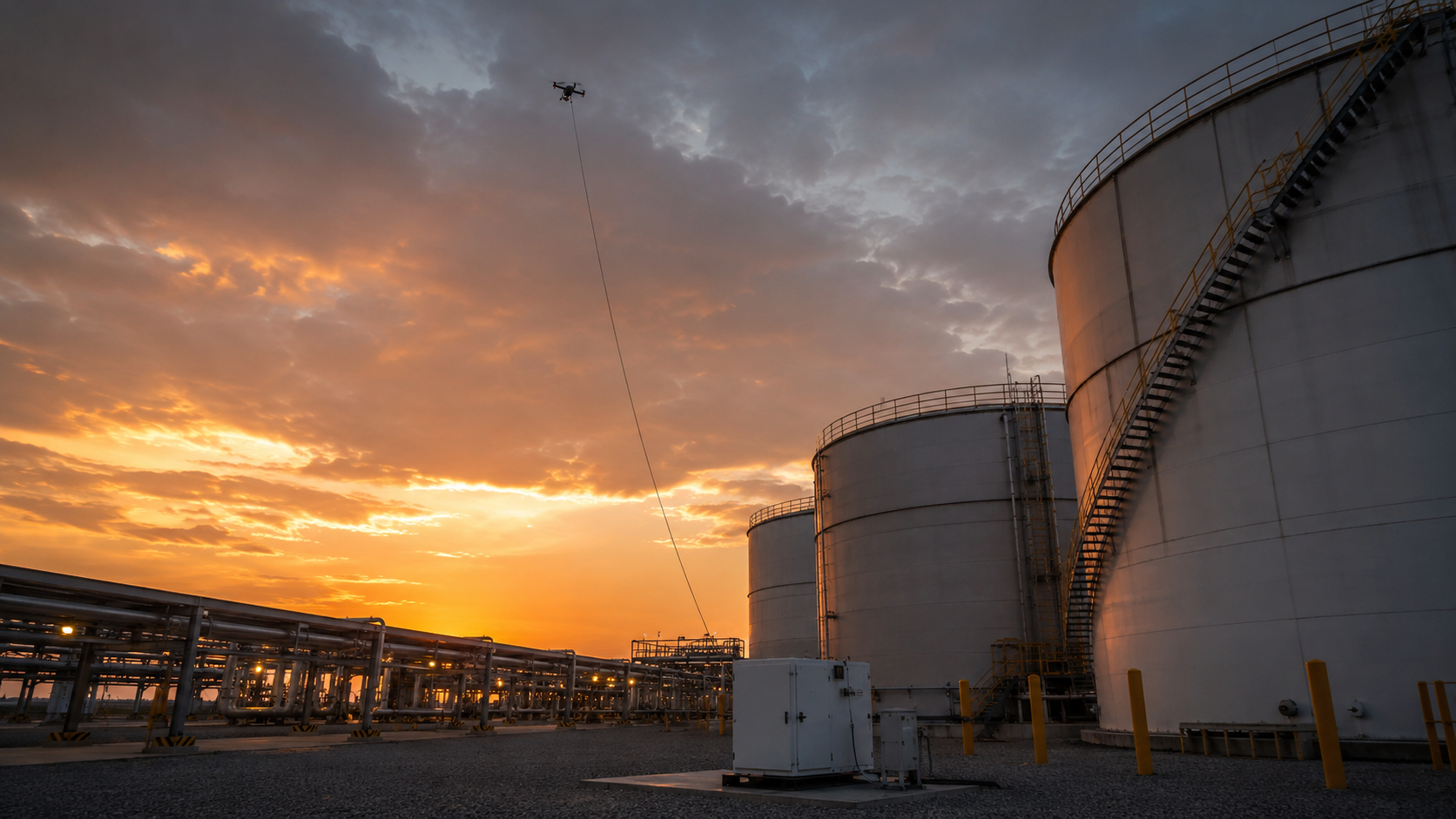
    The Timber Fire disruption illustrates the link between counter-UAS and airspace security and emergency-response continuity. Agencies need clear detection, identification and escalation procedures so that drone reports can be assessed quickly without creating additional risk to responders or the public.

    Sources

  • Fire Alarm Cause-and-Effect Matrix Testing Explained

    Fire Alarm Cause-and-Effect Matrix Testing Explained

    A fire alarm cause-and-effect matrix defines what the building should do when a specific input or combination of inputs occurs. A smoke detector may initiate evacuation signals, release doors, recall elevators, stop air-handling equipment and notify a monitoring center. Testing the detector alone does not prove that this sequence works.

    What the matrix should contain

    The matrix normally lists initiating events on one axis and required outputs on the other. Inputs may include automatic detectors, manual call points, sprinkler flow, supervisory signals and faults. Outputs can include notification zones, smoke-control commands, fire-door release, elevator interfaces, suppression release logic and messages to external monitoring.

    The document must reflect the approved fire strategy and applicable code requirements. It should identify delays, coincidence logic, dependencies and exceptions. Generic text such as “all systems operate” is not testable. Each expected action needs an observable result and a responsible discipline.

    Prepare an integrated test

    Before testing, confirm that the matrix version matches the installed programming and current building layout. Coordinate fire alarm, mechanical, elevator, door, suppression and monitoring contractors. Notify occupants and authorities as required, establish impairment controls and prevent an unintended emergency response.

    Tests should be planned so that inputs and outputs are observed at their real interfaces. A software indication at the fire panel is not proof that a damper moved or a door released. Where testing a physical action is unsafe or impractical, the alternative method and limitation should be documented.

    Test sequences, failures and recovery

    Verify single inputs, combined inputs and reset behavior. Confirm that priorities are correct when fire and security commands conflict. Door access control, for example, must not prevent the required life-safety release. Check how the system behaves during communication loss, disabled points and power transfer.

    Recovery matters as much as activation. After reset, equipment should return to the intended state without leaving doors, fans or interfaces in an unsafe condition. Operators need a clear indication when a field device requires manual restoration.

    Include negative tests where they can be performed safely. A supervisory input should not start an evacuation sequence unless the approved design calls for it, and an isolated output should generate a visible impairment rather than failing silently.

    Evidence and change control

    Record the test input, expected output, observed result, time, witness and defect. Screenshots can support the record but should not replace signed field observations. Defects must be corrected and the affected sequence retested; broad statements that a problem was “resolved” are insufficient.

    Any later change to fire logic, access control, elevators or smoke control should trigger matrix review. This discipline connects fire detection and automatic protection with the systems it commands. A tested matrix provides evidence that the building responds as a coordinated life-safety system rather than a collection of individually functional components.

    Reference sources

  • Streamlight Launches Hazard-Rated Side-Mounted Firefighter Helmet Light

    Streamlight Launches Hazard-Rated Side-Mounted Firefighter Helmet Light

    Streamlight has introduced the SL-SideSaddle HAZ-LO, a side-mounted helmet light aimed at firefighting and rescue work in locations where equipment may need a hazardous-location rating. International Fire and Safety Journal reported the launch on 21 September.

    Helmet-mounted lighting as safety equipment

    A helmet light keeps both hands available and can illuminate the direction in which the wearer is looking. Side mounting is intended to reduce interference with other helmet components, but fit must be assessed with the complete ensemble, including face protection, communications equipment and breathing apparatus. A light that catches on equipment or changes helmet balance can create a new problem.

    Hazardous-location suitability should be confirmed against the exact certification and operating environment rather than inferred from the product name. Users also need to follow battery, charging and inspection instructions. Damage to seals or housings can invalidate assumptions made at procurement.

    Deployment considerations

    Fire services should test beam pattern, controls and glove usability under realistic visibility conditions. Equipment checks should be incorporated into routine readiness procedures, including battery state and secure attachment. The product sits within a broader emergency and life-safety system in which personal lighting supports, but does not replace, team communications and scene illumination.

    Sources

  • SU Group Holdings to Acquire Hong Kong Safety Firm KM Safety Solution

    SU Group Holdings to Acquire Hong Kong Safety Firm KM Safety Solution

    SU Group Holdings Limited, a Nasdaq-listed integrated security services provider offering security engineering, guarding, screening and vocational training services in Hong Kong, agreed to acquire 100% of KM Safety Solution Company Limited for HK$5,616,000 (approximately US$721,000) in cash at completion. The deal is contingent on satisfactory due diligence and required approvals by October 31, 2026.

    KM Safety Solution provides safety consultancy services and holds a 24-month distribution agreement, started in July 2026, for intelligent emergency-lighting control products in Hong Kong. SU Group said the acquisition is intended to “expand SU Group’s technology-enabled safety and security offerings,” with management saying KM’s operations and distribution rights complement SU Group’s existing security-engineering capabilities and support more integrated customer solutions.

    Why it matters

    The deal is a small one in dollar terms, but it reflects a broader pattern among regional security-services firms of adding adjacent life-safety product lines — like emergency lighting — to existing guarding and engineering businesses rather than staying narrowly focused on a single service category.

    Sources

  • Pavion Expands Midwest Reach With Acquisition of Indiana-Based Communication Company

    Pavion Expands Midwest Reach With Acquisition of Indiana-Based Communication Company

    Pavion, a systems integrator specializing in fire, life safety, security and critical communications, has acquired Communication Company, a South Bend, Indiana-based technology solutions provider that has served the region for roughly five decades, the company announced.

    Regional Relationships and Healthcare Expertise

    Founded in 1976, Communication Company brings established local customer relationships, technical expertise and service capabilities to Pavion’s broader portfolio, which spans fire and life safety, security, critical communications, audiovisual and integrated technology solutions. Pavion said the deal also strengthens its healthcare capabilities, since Communication Company has experience supporting hospitals and healthcare systems, complementing Pavion’s existing work in nurse call, real-time location systems and life-safety technology for the sector.

    Part of a Broader Growth Strategy

    “Communication Company has built an impressive legacy by earning the trust of its customers through exceptional service, technical expertise and strong local responsiveness,” said Joe Oliveri, chief executive officer of Pavion, adding that the acquisition expands the combined company’s ability to help organizations across the Midwest “connect and protect their people, property and assets.” The Chantilly, Virginia-based company, backed by private equity firm Wind Point Partners since 2020, has built its growth strategy around acquiring regional integrators with strong customer relationships and local market leadership, continuing a multi-year acquisition run across the fire, life-safety and security integration sector.

  • RapidFire Safety & Security Acquires Black Fire & Security Services in West Texas Expansion

    RapidFire Safety & Security Acquires Black Fire & Security Services in West Texas Expansion

    RapidFire Safety & Security has acquired Black Fire & Security Services, an El Paso, Texas-based provider of fire protection, electronic security and life-safety solutions, expanding the St. Louis-based platform’s footprint into West Texas, according to Security Info Watch.

    What the Deal Adds

    Black Fire & Security Services brings a broad service portfolio to the combined company, including fire alarm systems, video surveillance, access control and monitoring services, alongside fire extinguisher inspection and kitchen exhaust hood cleaning — specialized service lines that expand RapidFire’s capabilities beyond its existing fire, life-safety and security offerings. The acquisition is RapidFire’s latest in a series of Texas-focused deals as the company builds out a multi-regional presence across the Southwest and Midwest United States.

    Part of a Broader Consolidation Trend

    RapidFire, backed by Concentric Equity Partners, has pursued a “buy, build, grow” strategy since its founding in 2022, acquiring a string of regional fire, security and life-safety integrators to build a larger multi-state platform. The company’s prior Texas acquisitions include Texas Star Fire Systems, Progressive Protection Security Systems and ACT Low Voltage, reflecting a broader wave of private-equity-backed consolidation reshaping the fragmented fire and security integration market, where family-owned regional providers are increasingly being folded into larger platforms that can offer national account support alongside local service relationships.

    Terms of the transaction were not disclosed. Black Fire & Security Services’ existing customers and technicians are expected to remain in place to support continuity of service as the integration proceeds.