Category: Industrial Safety & Monitoring

  • Tethered Drones for Industrial Site Monitoring

    Tethered Drones for Industrial Site Monitoring

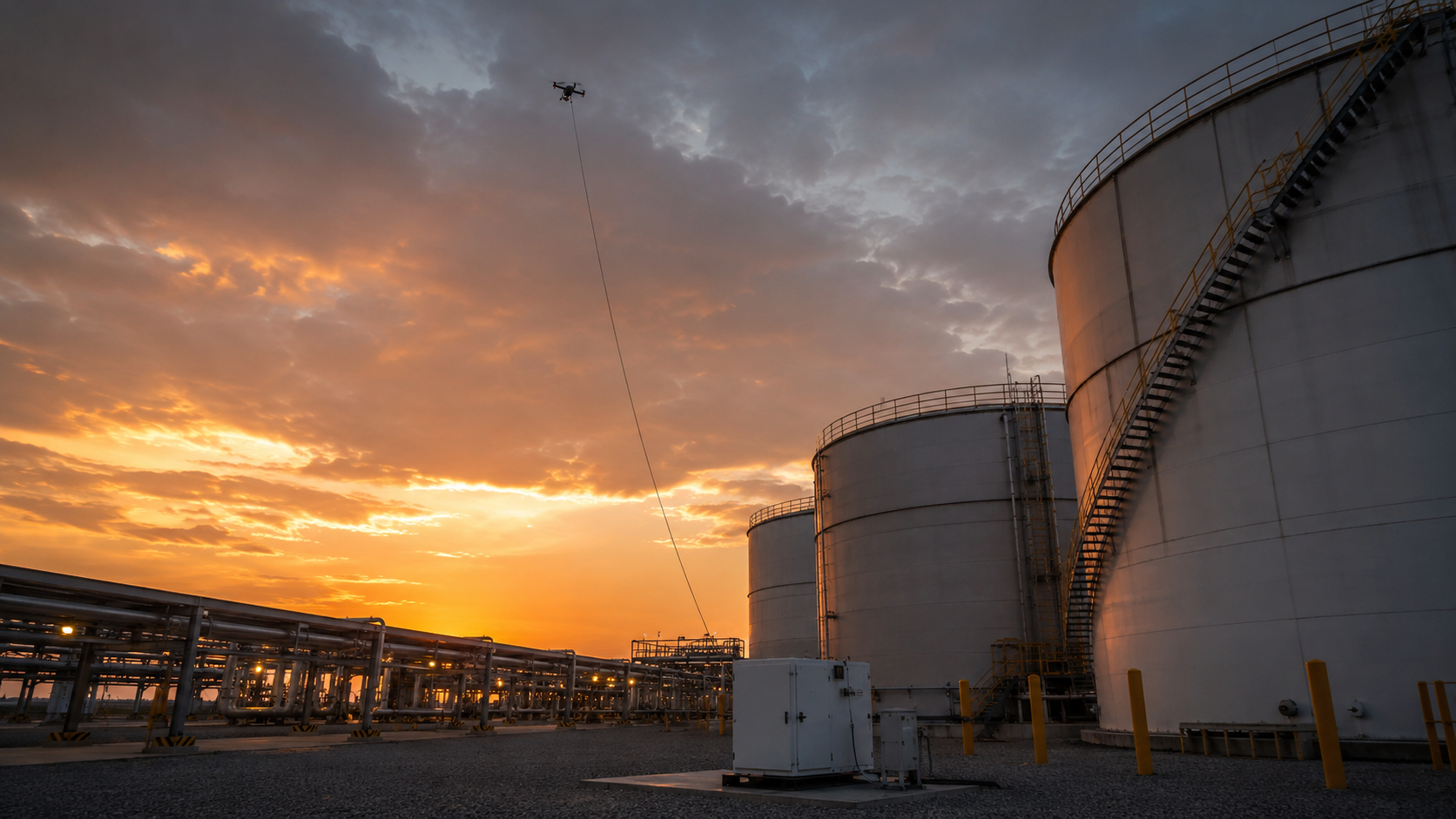
    Tethered drones occupy an unusual position between fixed surveillance towers and free-flying unmanned aircraft. Connected to the ground by a cable that can provide power and communications, a tethered drone can remain airborne for extended periods while carrying cameras, thermal sensors, communications equipment or other payloads.

    For industrial security, the main advantage is persistent elevated observation. A drone positioned tens of meters above a refinery, port, mine, pipeline construction zone or temporary event can see over fences, buildings and terrain that would block ground cameras. Because power is supplied from the ground, endurance can be measured in hours or days rather than the battery life of a conventional drone.

    The tether can also provide a secure high-bandwidth data path, reducing dependence on wireless links. This is useful where video quality, cyber security or RF congestion is a concern.

    Tethered systems still have operational limits. Wind, lightning, aviation restrictions, tether management and safe operating areas must be considered. They are not suitable everywhere, and the aircraft remains a visible physical asset that requires maintenance and procedures.

    Their strongest use case is usually temporary or semi-permanent overwatch: construction projects, incident response, large industrial shutdowns, border posts, temporary perimeter expansion or remote facilities where installing a tower would take longer.

    Tethered drones should be integrated with the wider security system rather than treated as standalone cameras in the sky. Video can feed the VMS, analytics can monitor defined zones and command-center operators can correlate aerial views with ground sensors.

    As industrial sites seek flexible surveillance coverage, tethered drones provide a middle ground between permanent infrastructure and mobile airborne patrol.
  • AI Data Center Growth Expands Power, Safety and Security Risk Planning

    AI Data Center Growth Expands Power, Safety and Security Risk Planning

    2025–2026 — Rapid AI data-center construction is forcing operators to treat power availability, fire safety, physical protection and cyber resilience as one connected risk program.

    What happened

    AI workloads are accelerating demand for high-density computing facilities and the energy systems that support them. The International Energy Agency’s Energy and AI work describes the growing relationship between data centers and electricity systems, while large infrastructure announcements show that the buildout is already moving into physical delivery.

    Why it matters

    The risk is not simply higher electricity consumption. Dense compute changes cooling, backup power, battery, fire-detection and business-continuity requirements. New sites also add construction-stage access, supplier and commissioning risks before normal operations begin.

    Security and infrastructure impact

    A defensible design connects cyber and physical controls: segmented building and OT networks, managed contractor identities, layered perimeter detection, validated fire scenarios and a command process that can correlate facility, security and IT alarms.

    Sources

    ← Back to Technology News

  • Siemens Showcases ASD+ Aspirating Smoke Detection at NFPA Conference & Expo 2026

    Siemens Showcases ASD+ Aspirating Smoke Detection at NFPA Conference & Expo 2026

    June 22, 2026 — Siemens presented its ASD+ aspirating smoke detection system, alongside its Acend Intelligent, Fire Install Suite and Fire Digital Twin offerings, at the NFPA Conference & Expo 2026 in Las Vegas.

    What happened

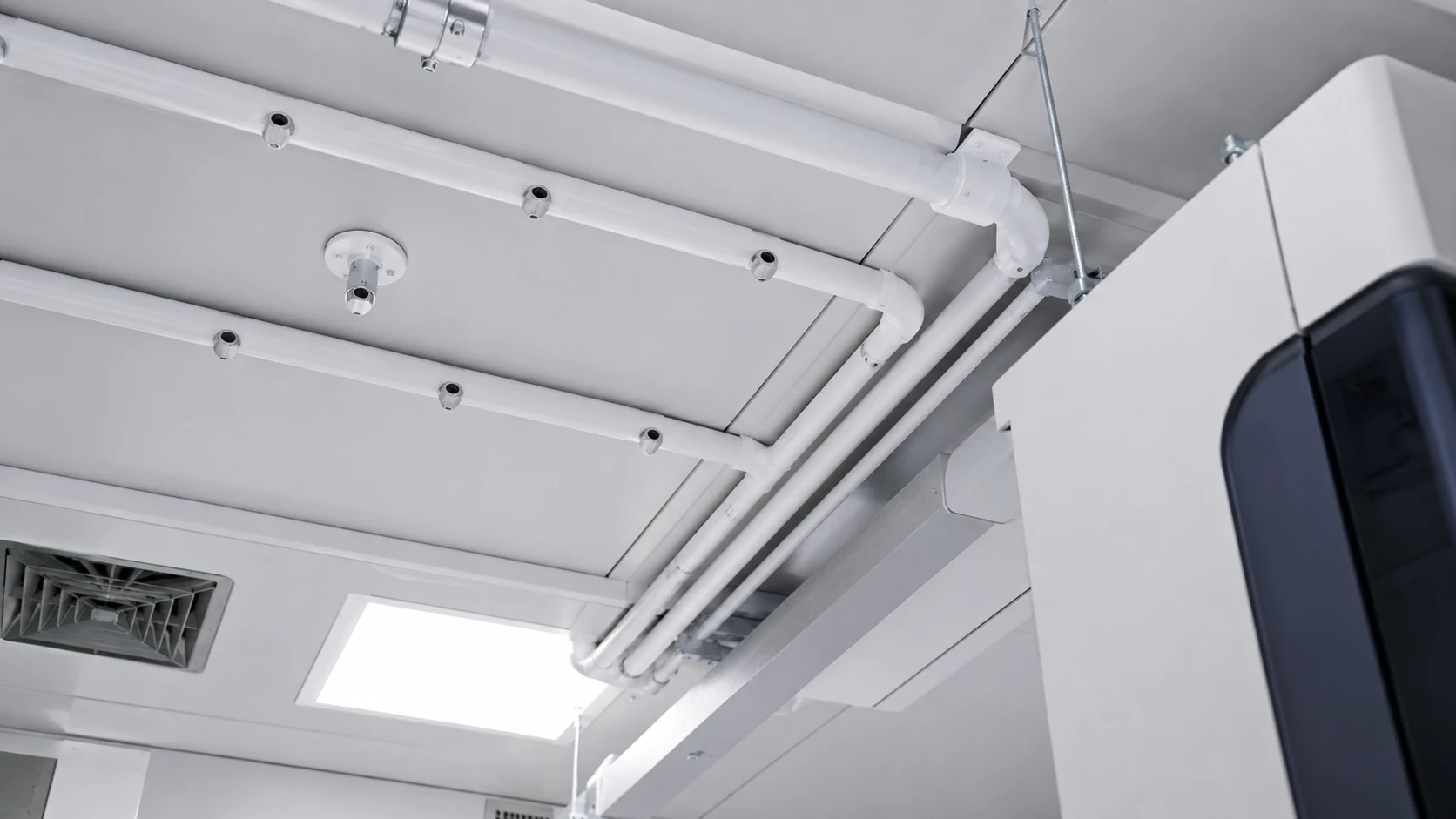
    Aspirating smoke detection actively draws air samples to a detector rather than waiting for smoke to reach a ceiling-mounted sensor, a very-early-warning approach recognized in NFPA 72 for environments with airflow challenges. Siemens positioned ASD+ alongside its broader fire-safety software suite at the industry’s largest annual fire-protection conference.

    Why it matters

    Very-early-warning detection technologies are gaining renewed attention as data centers, industrial facilities and other airflow-challenged environments seek faster fire detection than conventional ceiling-mounted smoke alarms can provide, directly relevant to the fire-safety demands of the current AI data-center construction boom.

    Security and infrastructure impact

    Facility designers specifying fire-detection systems for high-value or airflow-complex environments — including data centers — increasingly need to evaluate aspirating and video-based detection alongside traditional point detectors rather than defaulting to legacy designs.

    Sources

    ← Back to Technology News

  • NVIDIA Expands AI-Powered Cybersecurity Partnerships for OT and ICS

    NVIDIA Expands AI-Powered Cybersecurity Partnerships for OT and ICS

    February 23, 2026 — NVIDIA detailed integrations with Akamai, Forescout, Palo Alto Networks, Siemens and Xage Security for operational technology and industrial control security.

    What happened

    NVIDIA announced that several security and industrial vendors were integrating its accelerated computing, AI and BlueField technology into OT and ICS security offerings. The company described architectures for visibility, policy enforcement and threat response at the infrastructure edge. Capabilities will vary by partner product and deployment, so the announcement should not be read as a single universally available solution.

    Why it matters

    OT environments often combine long-lived equipment, availability constraints and limited maintenance windows. Moving selected security functions closer to industrial workloads may improve visibility and response, but it also adds components that must be engineered and governed correctly.

    Security and infrastructure impact

    Operators should validate passive discovery, segmentation, fail-safe behavior, update procedures and the effect of automated containment on production. AI-generated detections must feed accountable incident workflows rather than making uncontrolled process decisions.

    Sources

    ← Back to Technology News