
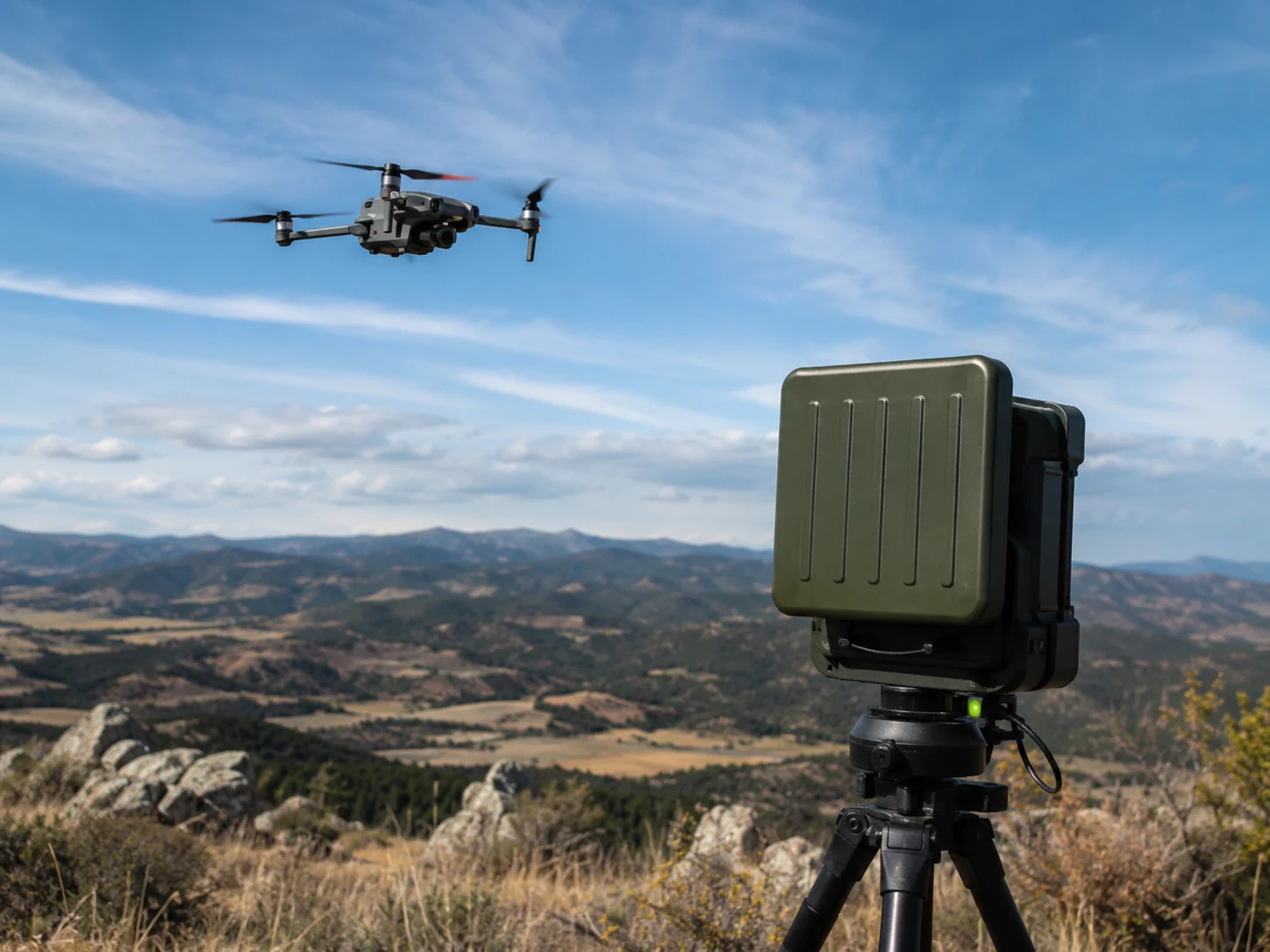
A counter-UAS system may detect a target with one sensor but lose it before another sensor or operator receives usable context. Coverage testing should measure the complete chain from first detection through classification, tracking, alerting and authorized response.
Build a three-dimensional coverage model
Map terrain, buildings, vegetation, reflective surfaces and restricted test areas. Coverage should be described by altitude, range and direction rather than a flat radius. Radar shadowing, RF interference and camera line-of-sight limits rarely share the same geometry.
Record each sensor’s intended role. Radar may provide initial detection, RF equipment may identify a control link, and cameras may support visual classification. The test should not assume that every technology will observe every target.
Measure handover between sensors
Use authorized test flights or approved simulation tools to cross sector and sensor boundaries. Record the time of first detection, track creation, correlation, camera cue, operator presentation and classification. Verify that identifiers remain associated with the same target during handover.
Test crossing targets and multiple simultaneous tracks. A system may perform well with one cooperative aircraft but merge, swap or drop tracks when trajectories intersect.
Expose practical coverage gaps
Vary altitude, speed, direction and approach path within legal and safety constraints. Include routes near rooftops, utility structures and site edges. Repeat tests under different weather and lighting conditions where optical or acoustic sensors contribute.
Document whether a gap is caused by geometry, detection threshold, network delay, time synchronization or operator workflow. The corrective action may be a sensor move, configuration change or revised response procedure rather than an additional sensor.
Validate decision and evidence workflows
Confirm that alerts show location uncertainty, sensor confidence and supporting evidence. Operators should distinguish detection from identification and should understand the legal limits on mitigation. Record acknowledgements, escalation and event export so exercises can be reviewed.
Counter-UAS testing must follow aviation, spectrum and public-safety rules. It belongs within a controlled Counter-UAS & Airspace Security assurance program, with retesting after sensor relocation, software updates, construction or major changes to the surrounding radio environment.
Maintain a repeatable test library
Store approved routes, simulated targets, sensor settings and expected event sequences. Repeat a core subset after software, map, network or camera changes. This makes regression visible and prevents each acceptance test from becoming an unrelated demonstration.
Review missed and delayed detections with engineering and operations teams. Record the cause, operational consequence and corrective action. Where live flights are not permitted, use vendor-supported injection or replay tools while clearly distinguishing simulated evidence from field performance.
Measure operator workload during dense scenarios and confirm that priority rules remain understandable. Archive track data, screen recordings and timing logs under controlled access. A final report should distinguish detection coverage, classification confidence and legally authorized response capability.
Leave a Reply