Category: Articles & Analysis

Long-form guides, explainers, comparisons, analysis and sector assessments.

  • K9 Detection Teams vs. Technology: Explosives and Narcotics Screening Compared

    K9 Detection Teams vs. Technology: Explosives and Narcotics Screening Compared

    Despite decades of advances in trace-detection and chemical-sensing technology, trained detection dogs remain a benchmark that many automated screening systems are still measured against, particularly for explosives and narcotics detection in environments where speed and mobility matter as much as raw sensitivity.

    What Detection Dogs Do Well

    A trained detection dog can screen a moving crowd, a parked vehicle, or a large open area far faster than most stationary technology, since the dog and handler simply walk through the space rather than requiring each person or item to pass through a fixed checkpoint. Dogs are also highly mobile and adaptable, able to work in outdoor environments, uneven terrain, and situations where setting up fixed equipment isn’t practical, and their sensitivity to airborne trace odors in real-world, unpredictable environments has proven difficult for technology to fully replicate.

    What Technology Does Well

    Trace-detection technology, which analyzes a physical swab or air sample for chemical signatures of explosives or narcotics, produces a documented, repeatable result that does not depend on a living animal’s health, mood or fatigue on a given day. Technology-based screening can also run continuously without rest breaks, doesn’t require years of specialized training and ongoing recertification the way a working dog and handler team does, and produces a data trail that can be logged and audited, which matters in regulated environments like aviation security.

    Cost, Availability and Deployment Speed

    Training a detection dog and handler team is a significant, multi-year investment, and the supply of qualified teams is limited relative to demand, particularly for high-profile events or emergency deployments where trained teams may need to travel from elsewhere. Fixed technology installations require significant upfront capital and site preparation but, once deployed, scale more predictably: a facility can install additional trace-detection lanes far more easily than it can recruit and train additional canine teams on short notice.

    Most Security Programs Use Both

    Rather than treating dogs and technology as competing options, most serious security programs deploy them as complementary layers: technology handles high-volume, repeatable screening at fixed checkpoints, while detection dogs provide rapid, mobile screening for large crowds, vehicles, and situations technology cannot easily reach, such as searching a stadium concourse before an event or sweeping a vehicle in a parking structure. Security planners generally select the mix based on the specific threat environment, available budget, and how quickly a space needs to be screened.

    FAQ

    Are detection dogs more accurate than technology? Both approaches have strengths and limitations; dogs excel at real-world, mobile screening of large or irregular spaces, while technology offers documented, repeatable results better suited to fixed, high-volume checkpoints. Neither is universally more accurate across all scenarios.

    How long does it take to train a detection dog? Training a working detection dog and handler team typically takes many months to over a year, followed by ongoing recertification and continued training throughout the dog’s working life.

    Can technology fully replace detection dogs? Not currently for most large-scale or mobile screening scenarios; most security programs use technology and detection dogs as complementary layers rather than substitutes for one another.
  • Security Lighting and CPTED: How Illumination Deters Crime

    Security Lighting and CPTED: How Illumination Deters Crime

    Lighting is one of the oldest security measures in existence, and it remains one of the most cost-effective: well-designed illumination increases the chance that a person committing a crime will be seen, which is often enough to discourage the attempt in the first place. Crime Prevention Through Environmental Design (CPTED), a framework used by security planners and architects, treats lighting as a deliberate design decision rather than simply a matter of installing as many fixtures as budget allows.

    Uniformity Matters More Than Brightness Alone

    A common misconception in security lighting is that brighter is always better, but security professionals generally focus on uniformity, the consistency of light levels across a space, rather than peak brightness at any single point. A parking lot with a few extremely bright fixtures and large dark gaps between them can actually be more dangerous than one with moderate, evenly distributed light, because the dark gaps create pockets where an offender can wait unseen, and the contrast between bright and dark areas can make it harder for the human eye and for cameras to adjust.

    CPTED’s Core Lighting Principles

    CPTED lighting guidance generally emphasizes illuminating pathways, entrances and natural surveillance zones, areas where legitimate users of a space would naturally look or pass through, rather than simply lighting every square foot of a property equally. It also stresses eliminating shadows and blind spots created by landscaping, structures or the fixtures themselves, since overgrown vegetation or poorly placed light poles can inadvertently create the dark pockets that undermine a lighting plan’s purpose. Motion-activated lighting is often used strategically in lower-traffic areas, both to draw attention to unexpected activity and to reduce energy costs compared with continuous full illumination.

    Lighting as a Camera Enabler, Not Just a Deterrent

    As video surveillance has become central to physical security, lighting design increasingly has to account for camera performance alongside human visibility, since even a high-quality camera struggles to produce a usable image in inconsistent or insufficient light. Security planners increasingly coordinate lighting layout with camera placement early in a project, rather than treating lighting and video as separate systems designed independently, since a camera aimed at a poorly lit area may capture footage too dark or too high-contrast to be useful after an incident.

    FAQ

    What does CPTED stand for? Crime Prevention Through Environmental Design, a framework that uses the physical design of a space, including lighting, landscaping and sightlines, to reduce opportunities for crime.

    Is more lighting always better for security? No. Security professionals generally prioritize uniform, well-distributed lighting over maximum brightness, since uneven lighting with dark gaps can create hiding spots and glare that undermine both human visibility and camera performance.

    Does security lighting help camera footage quality? Yes, consistent, adequate lighting is important for producing usable video footage, and lighting layout is increasingly planned alongside camera placement rather than as a separate consideration.

  • Under-Vehicle Surveillance Systems: How UVSS Technology Works

    Under-Vehicle Surveillance Systems: How UVSS Technology Works

    The underside of a vehicle is one of the few spaces that conventional security cameras, guards and X-ray baggage scanners simply cannot see, which is why under-vehicle surveillance systems (UVSS) have become a standard checkpoint technology at facilities where vehicle-borne threats are a serious concern, including government buildings, ports, prisons, data centers, and major event venues.

    How a UVSS Scan Actually Works

    A typical UVSS installation embeds a line-scan camera, or an array of cameras, in a low-profile housing set into or on top of the road surface at a checkpoint. As a vehicle drives over the unit at low speed, the camera captures a continuous image strip of the undercarriage, which imaging software then stitches together into a single flattened, readable image of the entire underside, similar in concept to how a flatbed scanner builds an image line by line. The resulting image lets an operator, or increasingly an automated analytics system, inspect the chassis, fuel tank, wheel wells and other undercarriage components for anything that looks out of place.

    Fixed, Portable and Drive-Through Configurations

    Fixed UVSS units are permanently installed at a checkpoint lane and offer the most consistent image quality, since the scanning geometry and lighting are controlled and calibrated for that specific location. Portable UVSS units, often mounted on a wheeled pallet or ramp, trade some image consistency for the ability to be moved between checkpoints or deployed temporarily for a specific event. Both configurations are generally designed for vehicles to drive over slowly rather than stop, keeping traffic moving through a checkpoint rather than creating a bottleneck.

    From Manual Review to Automated Threat Detection

    Early UVSS deployments relied entirely on a human operator visually reviewing each scanned image for anomalies, a process that works but depends heavily on operator attention and experience. Newer systems increasingly pair the scan with automated image analysis that compares the captured undercarriage against a reference image of the same vehicle model, or flags common anomaly patterns, to help operators catch changes they might otherwise miss during a high-volume shift, while still leaving the final determination to a trained person.

    FAQ

    Do vehicles need to stop for a UVSS scan? No, most systems are designed to scan a vehicle driving over the unit at low speed, though some very high-resolution or high-security deployments may require a brief stop or reduced speed for optimal image quality.

    Can UVSS detect explosives directly? UVSS provides a visual image of the undercarriage for anomaly detection; it does not chemically detect explosives the way a trace-detection or canine screening does, which is why it is often paired with other screening methods at the highest-security checkpoints.

    Where are under-vehicle surveillance systems most commonly deployed? Government and military facility entrances, ports and border crossings, prisons and correctional facilities, data centers, and major stadium or event venues are among the most common deployment locations.

  • Anti-Tailgating and Mantrap Systems: Stopping Piggybacking at Secure Entrances

    Anti-Tailgating and Mantrap Systems: Stopping Piggybacking at Secure Entrances

    Tailgating, sometimes called piggybacking, happens when an unauthorized person follows an authorized person through a secured door before it closes and locks, quietly defeating an access control system without ever presenting a credential. It remains one of the most common real-world ways access control gets bypassed, largely because it exploits ordinary politeness rather than a technical flaw.

    Detection Versus Prevention

    Anti-tailgating technology falls into two broad categories: detection systems that sense a violation and alert security staff after the fact, and prevention systems that physically stop the second person from entering at all. Detection approaches include infrared or thermal sensors mounted above a doorway that count how many people pass through per credential swipe, and video analytics that visually track individuals entering a controlled space. These systems are lower cost and easier to retrofit into existing doorways, but they rely on a human response to an alarm rather than stopping the intrusion outright.

    How Mantraps Physically Prevent Piggybacking

    A mantrap, also called an interlocking vestibule, is a small enclosed space with two doors that are never both unlocked at the same time: a person must pass through the first door, have it lock behind them, and only then can the second door open, typically after a sensor confirms only one person is present in the vestibule. This makes it physically impossible for a second, uncredentialed person to slip through alongside an authorized individual, which is why mantraps are standard in the highest-security environments, including data centers, pharmaceutical facilities, and secure government spaces.

    Sensor Technology Inside the Vestibule

    Modern mantraps typically use overhead infrared beams, weight-sensing floor plates, or 3D depth sensors to verify occupancy before releasing the second door, since simple beam sensors alone can sometimes be fooled by unusual body positions or objects carried through the space. Some higher-security installations also require a second credential check or biometric verification at the interior door, adding an additional layer beyond simple occupancy counting.

    FAQ

    What is the difference between a mantrap and an airlock-style vestibule? The terms are often used interchangeably in security contexts; both describe a two-door interlocking space where only one door can be open or unlocked at a time.

    Can mantraps handle wheelchairs or large deliveries? Many facilities install a separate, staff-monitored accessible or delivery entrance alongside a mantrap, since the enclosed vestibule space can be too small for wheelchairs, carts or bulky equipment.

    Are camera-based tailgating detection systems as effective as mantraps? Detection-based systems are useful for lower-risk areas and can flag violations for review, but they do not physically prevent an intrusion the way a mantrap does, which is why the highest-security spaces typically use mantraps rather than detection alone.

  • Turnstiles and Pedestrian Access Barriers: Types and How to Choose

    Turnstiles and Pedestrian Access Barriers: Types and How to Choose

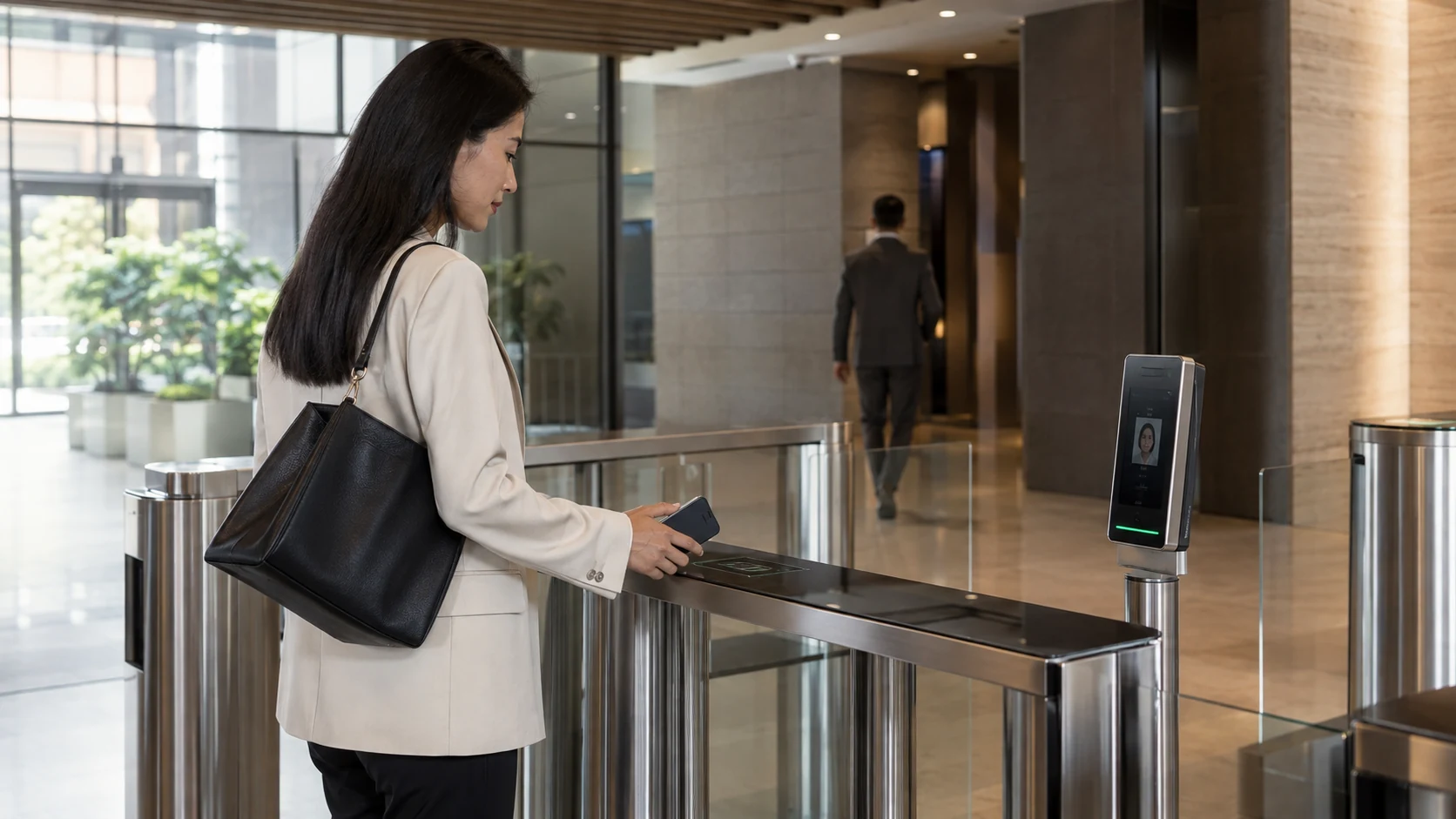
    Turnstiles are one of the oldest access control technologies still in widespread use, and for good reason: paired with a card reader or biometric scanner, a turnstile physically enforces that only one person passes per valid credential, something a door alone cannot guarantee. Choosing the right type is a balance between throughput, security level and how a site wants to present itself to visitors.

    Waist-Height Turnstiles for High Throughput

    Waist-height turnstiles, the tripod or drop-arm style common in stadiums, transit stations and office lobbies, prioritize speed, letting large numbers of people pass quickly while still enforcing single-person entry per credential. Their tradeoff is security level: a determined person can climb or vault over a waist-height barrier, which is why they are typically paired with a security guard or camera coverage rather than deployed as a standalone security measure in high-risk environments.

    Full-Height Turnstiles for Higher Security

    Full-height turnstiles, which resemble a rotating cage extending from floor to ceiling, physically prevent climbing over or crawling under, making them the standard choice for unstaffed perimeter entrances at data centers, utilities and other facilities where an unauthorized entry cannot rely on a guard noticing in time. The tradeoff is throughput and cost: full-height units process people more slowly and take up significantly more space and budget than waist-height alternatives.

    Optical and Sensor-Based Lanes

    A newer category, optical turnstiles or speed lanes, uses infrared sensors rather than physical arms to detect unauthorized passage, sounding an alarm or triggering a barrier only when someone attempts to pass without a valid credential or follows too closely behind an authorized person. These systems offer a more open, modern appearance favored in corporate lobbies, but they generally rely on integration with video analytics or a staffed reception desk to respond to detected violations rather than physically stopping them outright.

    Matching the Barrier to the Risk

    Security consultants typically select turnstile type based on the consequence of an unauthorized entry, the expected volume of legitimate traffic, and whether the location has staff present to respond to an alarm. A single site often uses different turnstile types at different entrances, for example optical lanes at a staffed main lobby and full-height turnstiles at an unstaffed rear or loading-area entrance.

    FAQ

    Can turnstiles alone stop tailgating? Waist-height and optical turnstiles reduce tailgating but do not fully prevent a determined person from following closely behind an authorized individual; full-height turnstiles and mantrap-style systems provide stronger physical prevention.

    Are full-height turnstiles required for data centers? Not universally required by code, but they are a common industry best practice for unstaffed high-security entrances where climbing over a barrier must be physically prevented rather than just detected.

    Do optical turnstiles work with mobile credentials? Yes, most modern optical turnstile systems integrate with the same card, mobile or biometric credential readers used elsewhere in a facility’s access control system.

  • Fire Suppression Systems Explained: Wet, Dry, Clean Agent and Water Mist

    Fire Suppression Systems Explained: Wet, Dry, Clean Agent and Water Mist

    Fire suppression systems put out or contain a fire automatically, and the right choice depends heavily on what a space is protecting, since water, chemical and gas-based suppression methods each bring different trade-offs for occupant safety, equipment damage and environmental impact.

    Wet and Dry Pipe Sprinkler Systems

    Wet pipe sprinkler systems, the most common type in commercial and residential buildings, keep water constantly present in the piping so it discharges immediately when a sprinkler head activates from heat. Dry pipe systems instead hold the piping full of pressurized air, releasing water only after a valve opens, which makes them suitable for unheated spaces such as parking structures or freezer warehouses where standing water in pipes would freeze, at the cost of a short delay between activation and water reaching the fire compared with a wet system.

    Clean Agent Systems for Sensitive Equipment

    Data centers, server rooms, museums, archives and other spaces containing valuable or sensitive electronic equipment often use clean agent suppression instead of water, since gaseous agents extinguish a fire without leaving residue or causing water damage to equipment. These systems typically work by displacing oxygen below the level needed to sustain combustion or by chemically interrupting the fire’s combustion reaction, and they are designed to be used in occupied spaces at concentrations considered safe for brief human exposure, though occupants are still expected to evacuate immediately upon activation.

    Water Mist as a Middle Ground

    Water mist systems use much finer water droplets than conventional sprinklers, discharged at higher pressure, which absorb heat more efficiently and displace oxygen locally around the fire while using a fraction of the water volume of a traditional sprinkler system. This makes water mist attractive in spaces where minimizing water damage matters but a fully gaseous clean agent system is not practical or affordable, such as certain industrial machinery enclosures, heritage buildings, or marine engine rooms.

    Matching the System to the Risk

    Fire protection engineers select a suppression approach based on the specific fuel and hazard present, the value and sensitivity of what is being protected, whether the space is normally occupied, and applicable code requirements, rather than defaulting to a single technology across every building type. A single facility often uses several suppression technologies in different areas, pairing conventional sprinklers in general office space with clean agent protection in an adjoining server room, for example.

    FAQ

    Why don’t all buildings use clean agent suppression instead of water sprinklers? Clean agent systems are considerably more expensive to install and maintain than sprinklers and are typically reserved for spaces with high-value or sensitive equipment where water damage would be especially costly.

    Is water mist as effective as traditional sprinklers? Water mist can be highly effective for the specific hazards and enclosure types it is designed and tested for, but it is not a universal substitute for conventional sprinklers across all occupancy types and fire hazards.

    Are dry pipe systems slower to respond than wet pipe systems? Yes, dry pipe systems have an inherent delay because air must be released from the piping before water arrives, which is why they are used primarily where freezing risk rules out a wet pipe system rather than as a general-purpose choice.

  • Fire Alarm Control Panels Explained: Addressable vs. Conventional Systems

    Fire Alarm Control Panels Explained: Addressable vs. Conventional Systems

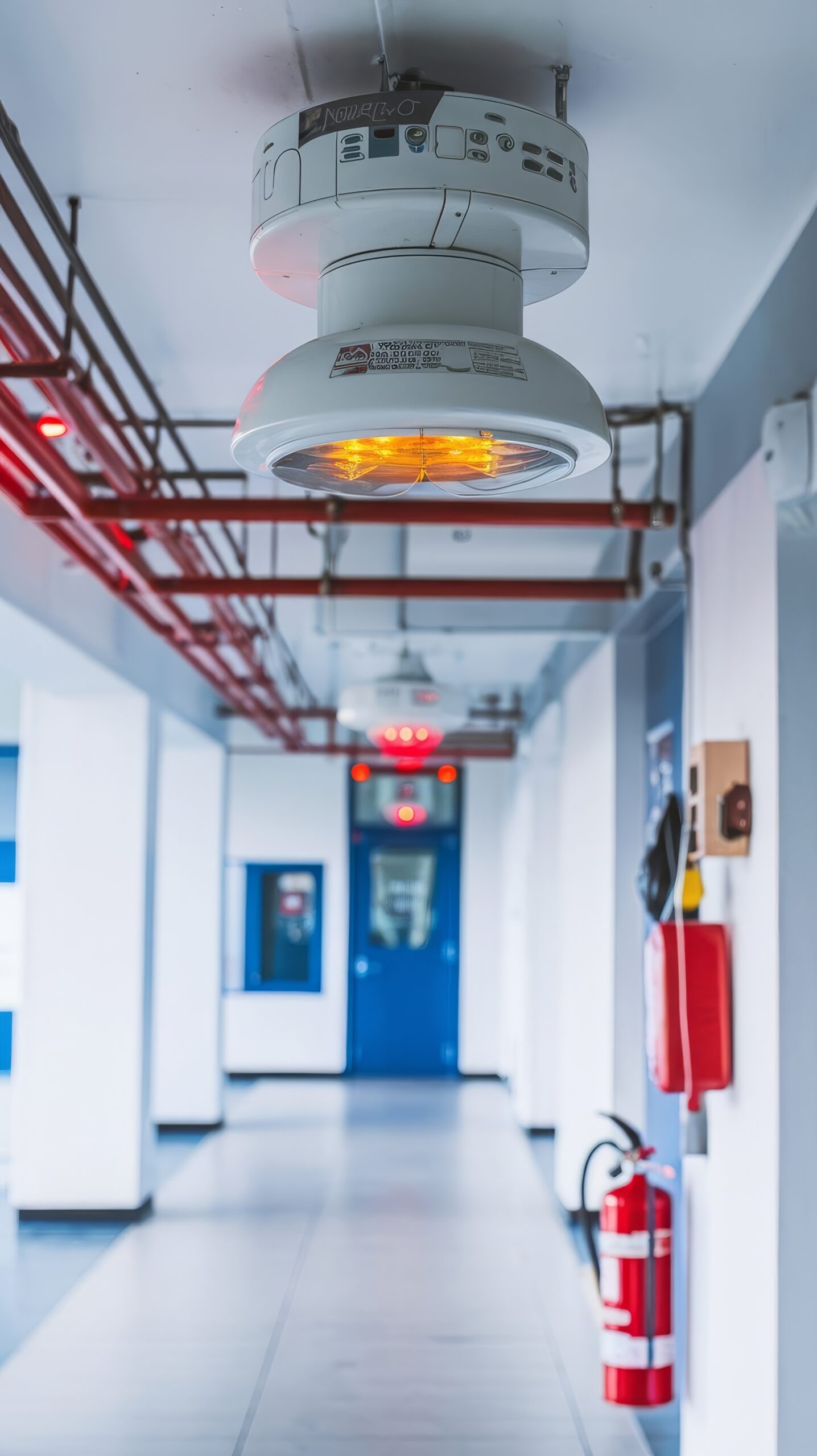
    The fire alarm control panel is the brain of a building’s fire detection system, and the choice between an addressable and a conventional design affects everything from how precisely a fire can be located to how much wiring an installation requires and how the system can be diagnosed and expanded later.

    Conventional Panels: Zones, Not Individual Devices

    Conventional fire alarm panels wire groups of detectors and pull stations together into zones, with each zone reporting back to the panel as a single circuit. When an alarm triggers, the panel can tell responders which zone is affected, such as a wing or floor of a building, but not which specific detector within that zone activated, meaning staff still have to physically search the zone to find the fire’s exact location. Conventional systems remain common in smaller buildings where the cost of extensive zoning is unnecessary and the building is simple enough to search quickly.

    Addressable Panels: Every Device Has an Identity

    Addressable panels assign a unique digital address to every individual detector, pull station and other device on the system, so the panel’s display can report the precise device that activated rather than just a general zone. This precision becomes increasingly valuable as buildings grow larger or more complex, since it can mean the difference between directing responders to a specific room versus an entire floor. Addressable systems also typically support continuous device-level diagnostics, such as detecting a dirty or failing smoke detector before it causes a false alarm or fails to detect a real fire, and they generally require less wiring than an equivalently sized conventional system because devices can share a single looped circuit rather than needing separate zone wiring.

    Choosing Between Them

    The decision generally comes down to building size, complexity and growth plans: conventional panels remain a cost-effective choice for small, simple buildings, while addressable panels are standard in larger commercial buildings, campuses, hospitals and any facility where precise fire location and easy future expansion justify the higher upfront cost of addressable devices and panel hardware. Many jurisdictions and insurance requirements effectively push larger or higher-occupancy buildings toward addressable systems even where a conventional system would technically satisfy basic code minimums.

    FAQ

    Can a conventional system be upgraded to addressable? Generally not by simply swapping the panel; addressable systems typically require compatible addressable devices and different wiring topology, so upgrading usually means a substantial retrofit rather than a simple panel replacement.

    Are addressable panels always required by code? Not universally. Requirements vary by jurisdiction, occupancy type and building size, though many codes and insurance standards effectively favor addressable systems in larger or higher-occupancy buildings.

    Do addressable systems reduce false alarms? They can help, since device-level diagnostics let facility staff identify and service a specific failing or contaminated detector before it causes a false alarm, something a conventional zone-based system cannot pinpoint as precisely.

  • Access Control Cybersecurity: Hardening Controllers, Readers and Credentials

    Access Control Cybersecurity: Hardening Controllers, Readers and Credentials

    Access control systems were once treated as purely physical hardware: a card reader, a controller board and a locked door. Today most systems run over IP networks, store credential databases, and expose management interfaces, which means they carry the same categories of cybersecurity risk as any other networked infrastructure, alongside the physical risk of an unlocked door.

    Controllers Are Endpoints, Not Just Hardware

    Access control panels and controllers are, functionally, small networked computers, and vulnerabilities in their firmware or management interfaces can let an attacker unlock doors, disable alarms, or extract stored credential data without ever touching the building. Recently disclosed flaws in access control and device management platforms have shown that missing authentication or hard-coded credentials in these systems can hand an attacker root-level control, underscoring why manufacturers and integrators treat firmware update discipline and network segmentation as security-critical rather than optional maintenance.

    Weak Credential Technology Is Still Common

    Despite years of known weaknesses, many sites still rely on older low-frequency proximity cards and legacy Wiegand wiring between readers and controllers, both of which can be cloned or intercepted with inexpensive, widely available equipment. Modern smart cards and mobile credentials using encrypted protocols close much of this gap, but only if a site has actually migrated its readers, controllers and credentials together; a modern reader paired with an unencrypted legacy card format, or vice versa, can leave the original vulnerability largely intact.

    Network Segmentation and Monitoring

    Best practice increasingly places access control controllers on a segmented network separate from general office IT traffic, limiting what an attacker who compromises one system can reach from the other. Pairing that segmentation with logging and monitoring of controller and management-software activity helps detect unusual behavior, such as after-hours credential changes or unexpected firmware update attempts, before it results in an unauthorized physical entry.

    FAQ

    Can a cyberattack on access control lead to a physical break-in? Yes. If an attacker gains control of an access control system’s management interface, they may be able to unlock doors, add unauthorized credentials, or disable alarms, translating a network compromise directly into physical access.

    Are older proximity cards insecure? Many legacy low-frequency proximity card formats can be cloned with low-cost, readily available equipment, which is why organizations are increasingly migrating to encrypted smart card or mobile credential technology.

    Should access control systems be on the same network as office computers? Security best practice generally recommends network segmentation, keeping access control controllers and servers on a separate network segment from general office IT traffic to limit the blast radius of a compromise on either side.

  • Airport Security Technology: Layered Perimeter, Screening and Access Control

    Airport Security Technology: Layered Perimeter, Screening and Access Control

    Airports operate one of the most complex physical security environments of any facility type, combining a large outdoor perimeter, high-throughput passenger screening, tightly restricted airside access, and constant coordination with law enforcement and aviation authorities, all while keeping flights moving on schedule.

    Protecting the Airfield Perimeter

    The airfield perimeter, often several miles of fence line separating public areas from runways, taxiways and aircraft, is typically monitored with a combination of fencing, ground radar, thermal cameras and buried or fence-mounted intrusion sensors, since a single unauthorized incursion onto an active runway can halt operations across the entire airport. Larger airports increasingly integrate airfield perimeter sensors with counter-drone detection systems, addressing the growing risk that unauthorized drone activity near runways poses to aircraft during takeoff and landing.

    Passenger and Baggage Screening

    Checkpoint screening combines walk-through metal detectors or millimeter-wave body scanners for passengers with X-ray and, increasingly, computed tomography (CT) scanning for carry-on baggage, giving screeners a rotatable 3D image rather than the flat 2D image older X-ray systems produce. Checked baggage passes through separate, higher-throughput explosive detection systems behind the scenes, and biometric identity verification, typically facial recognition matched against a passport or boarding pass, is increasingly used to speed passengers through checkpoints and boarding gates without manual document checks at every step.

    Controlling Access to Restricted Airside Areas

    Access to the airfield, ramp areas and other restricted zones is controlled through badge-based access control systems layered with biometric verification, since a badge alone does not confirm that the person carrying it is its rightful holder. Airports also enforce strict escorting and challenge procedures for anyone in a restricted area without airport-issued credentials, backed by video surveillance covering gates, ramps and cargo areas to create an audit trail of who accessed which zone and when.

    FAQ

    Why do airports need counter-drone systems? Unauthorized drones near runways and approach paths pose a collision risk to aircraft during takeoff and landing, which has led many larger airports to add drone detection alongside their existing airfield perimeter sensors.

    What is the difference between X-ray and CT baggage screening? Traditional X-ray produces a flat 2D image of a bag’s contents, while CT scanning produces a rotatable 3D image, giving screeners a clearer view of items that might otherwise be obscured or ambiguous in a 2D scan.

    How is facial recognition used at airports? Facial recognition is typically used to match a live photo of a passenger against their passport or boarding pass photo at checkpoints or boarding gates, allowing faster verification than a manual document check.

  • Vehicle Barriers and Bollards: How Anti-Ram Perimeter Protection Actually Works

    Vehicle Barriers and Bollards: How Anti-Ram Perimeter Protection Actually Works

    Bollards and vehicle barriers have become a standard part of perimeter protection at government buildings, stadiums, transit hubs and commercial plazas, driven by a mix of vehicle-ramming attacks and simple traffic accidents. What looks like a decorative post or a low steel arm is, in most professional installations, a rated device engineered and tested to stop a specific vehicle at a specific speed.

    Fixed, Removable and Automatic Bollards

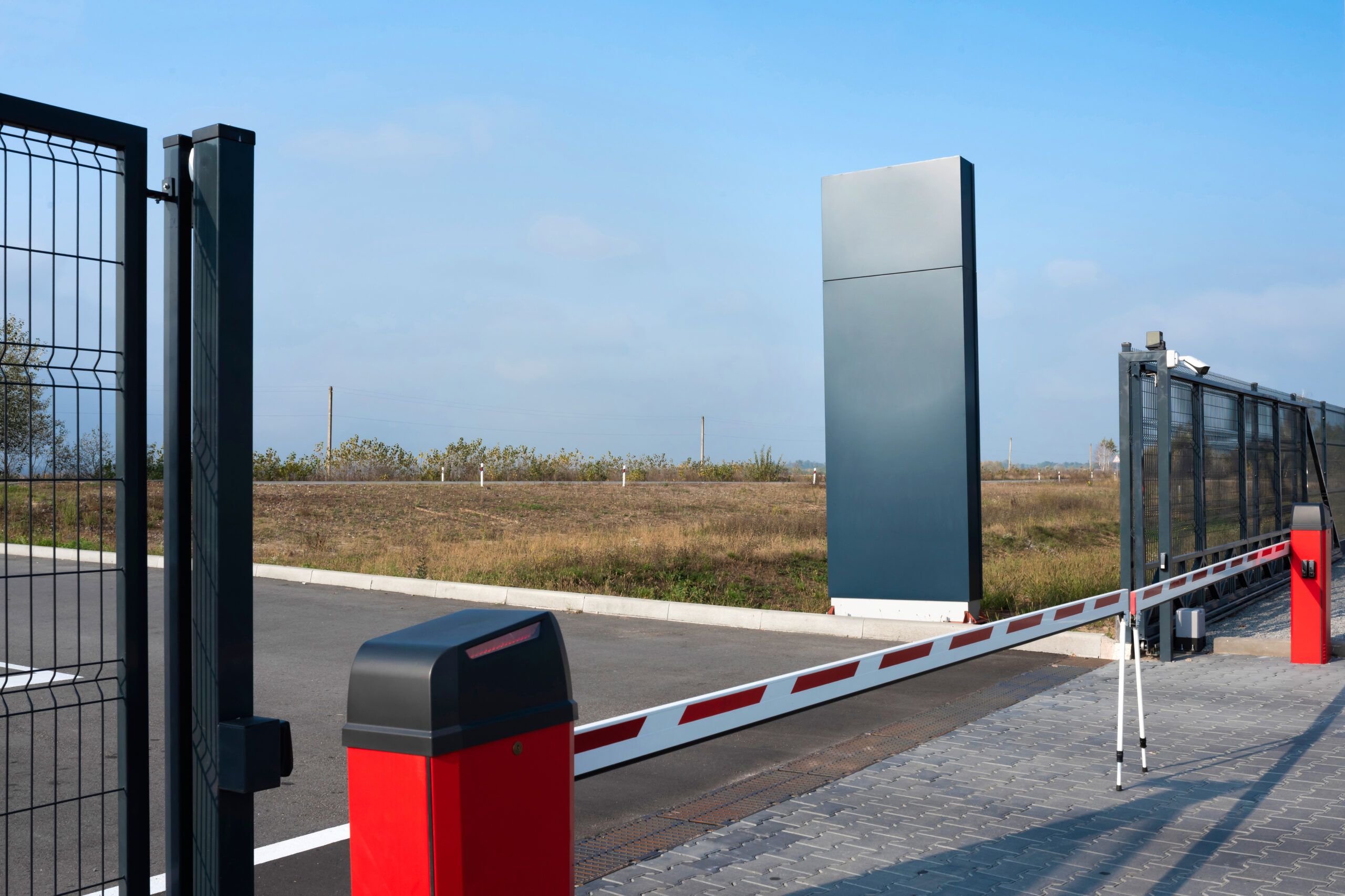
    Fixed bollards are permanently anchored and offer the highest reliability since there is no mechanism to fail, but they permanently block the space they occupy. Removable or retractable bollards can be taken out of the ground or lowered to allow authorized vehicle access, trading some convenience for a manual or semi-manual operating step. Automatic bollards rise and lower on command from an access control system, gate operator or guard station, letting a single lane serve both pedestrians and authorized vehicles without a fixed barrier permanently occupying the space, at the cost of added mechanical and power complexity that must be maintained.

    Crash Ratings Are Not Marketing Claims

    Serious perimeter security specifications reference independent crash-rating standards, most commonly the US State Department’s K-rating system and ASTM F2656, which test a barrier against a vehicle of a defined weight striking it at a defined speed and measure how far the vehicle penetrates past the barrier line after impact. A barrier rated to stop a 15,000-pound vehicle at 40 miles per hour behaves very differently in a real event than an unrated decorative post that merely looks similar, which is why security consultants specify barriers by their tested rating rather than their appearance.

    Barriers as Part of a Layered Approach

    Bollards and barriers are typically combined with standoff distance, planters, retaining walls, sloped grading and other landscape features that a site’s architects can use to keep vehicles away from a building without visually presenting as a fortress. Security planners generally treat the vehicle barrier line as the outermost layer of a broader protection plan that also includes access control, video surveillance and, at higher-risk sites, manned checkpoints, rather than as a standalone solution to vehicle-borne threats.

    FAQ

    What is a K-rating? K-ratings are a US State Department classification system that rates a barrier’s ability to stop a vehicle of a specified weight traveling at a specified speed, based on independent crash testing.

    Can automatic bollards fail open or closed during a power outage? Behavior varies by product and installation; many automatic bollards are specified to fail in a particular position (safe, secure, or last-known-state) depending on site requirements, which is a key design decision during installation.

    Do decorative bollards provide real vehicle protection? Only if they carry an independent crash rating for the intended threat vehicle and speed. Purely decorative posts without a tested rating should not be relied on to stop a vehicle.