Category: Articles & Analysis

Long-form guides, explainers, comparisons, analysis and sector assessments.

  • Biometric Access Control Compared: Fingerprint, Iris, Face and Vein Recognition

    Biometric Access Control Compared: Fingerprint, Iris, Face and Vein Recognition

    Biometric access control has moved from a specialist technology into a mainstream option for offices, data centers, airports and critical infrastructure sites. But “biometrics” is not one technology — fingerprint, iris, facial and vein-pattern recognition each rely on different physical traits, different sensors and different deployment trade-offs. Choosing the right modality, or combination of modalities, depends heavily on the environment, the threat model and how the system will be used day to day.

    Fingerprint Recognition

    Fingerprint readers remain the most widely deployed biometric modality because the sensors are inexpensive, compact and familiar to users from consumer smartphones. Most systems capture a digital image of the fingerprint ridge pattern and extract minutiae points — the specific locations where ridges end or split — to build a template for matching, rather than storing the raw image. Fingerprint readers perform well in controlled indoor environments but can struggle with dirty, wet, gloved or worn fingertips, which is a common consideration for industrial and outdoor sites.

    Iris Recognition

    Iris recognition captures the intricate pattern in the colored ring around the pupil using a near-infrared camera, converting the pattern into a mathematical template. Because the iris pattern is highly detailed and stable over a person’s lifetime, iris systems are often used where very high assurance is required, such as border control, data centers and other high-security facilities. Iris cameras typically require the user to look toward the sensor within a defined distance, which makes enrollment and enforcement more deliberate than a simple badge tap.

    Facial Recognition

    Facial recognition systems map geometric features of the face, or increasingly use deep-learning models to generate a numerical embedding of the face, and compare that embedding against enrolled templates. The major advantage of facial recognition for access control is speed and convenience: many systems can identify an authorized person without requiring them to touch a sensor or stop moving, which supports high-traffic entrances and touchless access goals. Accuracy can be affected by lighting conditions, camera angle, face coverings and image quality, and the technology has also drawn regulatory and public scrutiny over data protection and consent, which organizations need to factor into deployment plans.

    Vein Pattern Recognition

    Vein recognition, most commonly implemented as finger-vein or palm-vein scanning, uses near-infrared light to image the pattern of veins beneath the skin’s surface, since deoxygenated blood in veins absorbs infrared light differently than surrounding tissue. Because the vein pattern sits inside the body rather than on an exposed surface, it is difficult to capture or replicate without the cooperation of a live subject, which makes vein recognition attractive for high-security financial and data center environments concerned about spoofing. The trade-off is that vein scanners are typically more expensive than fingerprint or facial recognition hardware and are less commonly integrated into general-purpose access control platforms.

    Choosing the Right Modality

    In practice, the choice between modalities usually comes down to a handful of operational questions: How much throughput does the entrance need to support? Will users wear gloves, masks or personal protective equipment on site? Is the environment indoors and climate-controlled, or exposed to dirt, moisture and temperature swings? And what level of assurance does the asset being protected actually require? Many organizations end up deploying more than one modality across a site — for example, facial recognition for high-traffic general entrances and iris or vein recognition for a smaller number of high-security zones such as server rooms or vaults.

    Privacy and Data Protection Considerations

    Because biometric data is permanently tied to an individual and cannot be reset the way a password or badge can, organizations deploying any of these modalities need a clear policy for how templates are stored, encrypted, and eventually deleted, along with a legal basis for collecting biometric data that satisfies applicable regional privacy laws. Storing a mathematical template rather than a raw image, and keeping that template on a secure local device rather than in a shared cloud database, are common practices for reducing the impact of a potential breach.


  • Nuclear Power Plant Security Technology

    Nuclear Power Plant Security Technology

    Nuclear power plants operate under the strictest physical and cyber-physical security requirements of any commercial facility class, governed by dedicated regulatory frameworks that treat security as inseparable from safety. The technology stack protecting a nuclear generating station reflects that reality: multiple redundant, independently monitored layers designed so that no single failure, whether mechanical, electronic or human, can compromise the protection of reactor systems, spent fuel and special nuclear material.

    Layered Physical Protection

    Nuclear facilities are typically organized around concentric security zones, moving from an owner-controlled area through a protected area to vital areas immediately surrounding reactor and safety systems. Each boundary is reinforced with hardened barriers, vehicle arrest systems capable of stopping a loaded truck, and intrusion detection that combines microwave, infrared and fiber-optic perimeter sensors to minimize single-technology blind spots. Armed, highly trained security officers supplement these systems, with response times and staffing levels dictated by regulatory design-basis threat requirements rather than site-specific risk tolerance alone.

    Access Control and Insider Threat Programs

    Access to vital areas requires multi-factor identity verification, typically combining biometric authentication with credentialed access control and continuous personnel reliability screening. Because insider access represents one of the most difficult threat vectors to detect through perimeter security alone, nuclear operators maintain dedicated insider threat programs that monitor behavioral indicators, enforce two-person rules for access to the most sensitive areas, and require ongoing psychological and background reassessment of cleared personnel.

    Video Surveillance and Command Integration

    Video surveillance at nuclear sites integrates with access control, intrusion detection and radiological monitoring within a unified command-and-control platform, giving security operations centers a consolidated operational picture rather than a collection of disconnected feeds. Redundant power supplies and hardened communications ensure that surveillance and detection systems remain operational even during grid disturbances or attempted sabotage of supporting infrastructure.

    Cyber-Physical Convergence

    Modern nuclear security programs increasingly treat cybersecurity as inseparable from physical protection, given that digital instrumentation and control systems now govern safety-critical functions once managed by purely analog equipment. Regulatory frameworks require nuclear operators to secure both operational technology networks and the physical pathways — cabling, network closets, remote terminals — through which those systems could be accessed, reflecting the recognition that a determined adversary may target the weaker of the two domains rather than confronting the stronger one directly.

    Counter-Drone and Airspace Monitoring

    Growing concern over small unmanned aircraft has pushed nuclear operators to add counter-UAS detection layers, combining radar, radio-frequency and electro-optical sensors to identify and track drones approaching restricted airspace above and around generating stations, an area where regulatory guidance continues to evolve as the underlying technology matures.

  • Public Transit and Bus Depot Security Technology

    Public Transit and Bus Depot Security Technology

    Public transit systems present a distinct security challenge: they must remain open, accessible and fast-moving for millions of daily riders while simultaneously protecting vehicles, depots, stations and passengers from crime, vandalism and, in rarer cases, deliberate attack. Unlike a controlled-access facility, a transit network is deliberately porous by design, which shapes the technology choices operators make.

    Onboard and Station Video Surveillance

    Modern transit fleets deploy multi-camera systems on every vehicle, covering the driver compartment, passenger cabin, doors and exterior approach zones, with footage typically recorded locally and synchronized to a central video management system whenever the vehicle returns to a depot or passes through a wireless upload zone. Stations and platforms are covered by fixed and pan-tilt-zoom cameras integrated with the same VMS, allowing operators to follow an incident across a rider’s entire journey rather than reviewing disconnected clips from separate systems.

    Depot and Yard Perimeter Protection

    Bus and rail depots concentrate high-value rolling stock, fuel or charging infrastructure, and maintenance facilities in a single location, making perimeter security a priority distinct from the open transit network itself. Depots typically combine fenced perimeters, access-controlled gates, license plate recognition for fleet and visitor vehicles, and video analytics tuned to detect loitering or unauthorized entry after operating hours, when yards are otherwise unattended.

    Real-Time Operator Communication and Panic Alerts

    Driver safety technology has become a growing focus as assaults on transit operators have drawn regulatory and labor attention. Systems now commonly include silent panic buttons that alert dispatch and trigger live video and audio streaming from the vehicle, GPS-based location tracking integrated with computer-aided dispatch, and in some deployments, driver-facing barriers combined with intercom systems that let control center staff communicate directly with passengers without requiring the driver to intervene.

    Access Control for Employee and Maintenance Areas

    Depots and control centers restrict access to maintenance bays, parts storage and operations rooms using badge-based or biometric access control, often layered with visitor management systems for contractors and vendors who require temporary, auditable access to secure areas.

    Integration With City-Wide Public Safety Systems

    Because transit incidents frequently require a coordinated response involving both transit security and municipal police, many agencies now integrate their video and alert systems with city-wide public-safety platforms, allowing real-time video sharing and location data to reach first responders faster than a traditional phone-based incident report would allow.

  • Agriculture and Food Processing Facility Security Technology

    Agriculture and Food Processing Facility Security Technology

    Agricultural and food processing facilities occupy a growing place within critical infrastructure protection frameworks, reflecting the recognition that disruption to food production, processing or distribution can cascade into public health and supply-chain consequences far beyond a single site. Security technology for this sector must account for expansive rural footprints, biosecurity requirements and food-safety regulation alongside conventional theft and sabotage concerns.

    Perimeter Security Across Large, Remote Footprints

    Farms, feedlots and processing complexes often span hundreds or thousands of acres, making traditional fenced-perimeter models impractical for the outer boundary. Operators increasingly rely on a combination of strategically placed fencing around high-value structures — processing plants, chemical storage, equipment yards — supplemented by long-range video analytics, thermal cameras and, on the largest sites, radar systems capable of detecting vehicle or personnel intrusion across open land where fixed cameras alone cannot provide continuous coverage.

    Biosecurity-Driven Access Control

    Livestock and processing facilities implement access control designed as much to prevent disease introduction as to prevent theft or sabotage. Controlled entry points, vehicle wash stations, and credentialed access for employees and visitors work alongside traceability systems that log who entered which zone and when, supporting both security investigations and biosecurity incident response if a disease outbreak requires rapid contact tracing.

    Video Surveillance for Food Safety and Loss Prevention

    Processing plants deploy video surveillance across production lines, loading docks and cold storage areas, serving a dual purpose: deterring and investigating theft or tampering, and providing a documented record that supports food-safety compliance and audit requirements under regulations that increasingly expect traceable oversight of handling and processing conditions.

    Supply Chain and Cold Chain Monitoring

    Security technology extends into the cold chain itself, with sensor-based monitoring of temperature, humidity and door-open events on refrigerated storage and transport, integrated with alerting systems that flag deviations before spoiled product reaches distribution. GPS tracking on transport vehicles adds a security layer against cargo theft, a persistent risk for high-value agricultural shipments moving through less-monitored rural transit corridors.

    Cyber-Physical Risk in Modern Agricultural Operations

    As precision agriculture equipment, automated processing lines and remote monitoring systems proliferate, agricultural operators face a growing cyber-physical risk profile similar to other industrial sectors, with internet-connected control systems for irrigation, feed distribution and processing equipment representing a potential attack surface that security planning increasingly has to account for alongside traditional physical threats.

  • Telecommunications Infrastructure Security Technology

    Telecommunications Infrastructure Security Technology

    Telecommunications infrastructure — cell towers, central offices, data exchange facilities and the fiber networks connecting them — forms a foundational layer of critical infrastructure that other sectors depend on for their own operations, from emergency services dispatch to financial transactions to the remote monitoring systems used across utilities and industrial facilities. Securing this infrastructure combines dispersed-site physical protection with facility-level access control and a growing emphasis on supply-chain and hardware integrity.

    Securing Widely Distributed, Often Unmanned Sites

    Cell towers and remote equipment shelters are typically unmanned and geographically dispersed, making them attractive targets for copper and equipment theft as well as vandalism. Operators increasingly deploy solar-powered remote monitoring systems combining motion-activated cameras, door and cabinet intrusion sensors, and cellular or satellite backhaul for alerting, since many tower sites lack reliable wired connectivity of their own for security reporting.

    Central Office and Data Exchange Access Control

    Central offices and carrier-neutral data exchange facilities, where multiple network operators interconnect, apply layered access control similar to data center security: biometric or multi-factor authentication at building and cage-level entry points, mantrap vestibules to prevent tailgating, and comprehensive video surveillance covering both public and restricted areas. Because these facilities often host equipment belonging to multiple competing carriers within the same building, access segmentation between tenant spaces is a particular design priority.

    Fiber Route and Cable Landing Protection

    Long-haul fiber routes and cable landing stations, where undersea cables come ashore, represent concentrated points of failure for national and international connectivity. Security for these assets combines physical protection of landing station buildings with monitoring of the buried or undersea cable routes themselves, an area where distributed acoustic sensing technology has found growing application for detecting unauthorized digging, dragging anchors or other activity near cable paths before physical damage occurs.

    Network Operations Center Security

    Network operations centers, which provide real-time monitoring and control over telecommunications infrastructure, require the same access control and video surveillance rigor as other critical control-room environments, given that a compromise of NOC systems could allow an attacker to disrupt network operations directly rather than through physical damage to remote infrastructure.

    Supply Chain and Equipment Integrity

    Telecommunications security increasingly extends into supply-chain risk management, with regulatory scrutiny in multiple countries focused on the origin and integrity of network equipment given concerns that compromised hardware or firmware could introduce backdoors into national communications infrastructure, adding a procurement and vendor-vetting dimension to what has traditionally been a purely physical and operational security discipline.

  • Parking Facility and Garage Security Technology

    Parking Facility and Garage Security Technology

    Parking facilities present a security profile shaped by the tension between convenience and control: operators need to move large volumes of vehicles in and out efficiently while protecting parked vehicles, deterring crime in low-visibility areas, and managing liability in spaces that are frequently unstaffed for long stretches of the day.

    Automated Access Control and License Plate Recognition

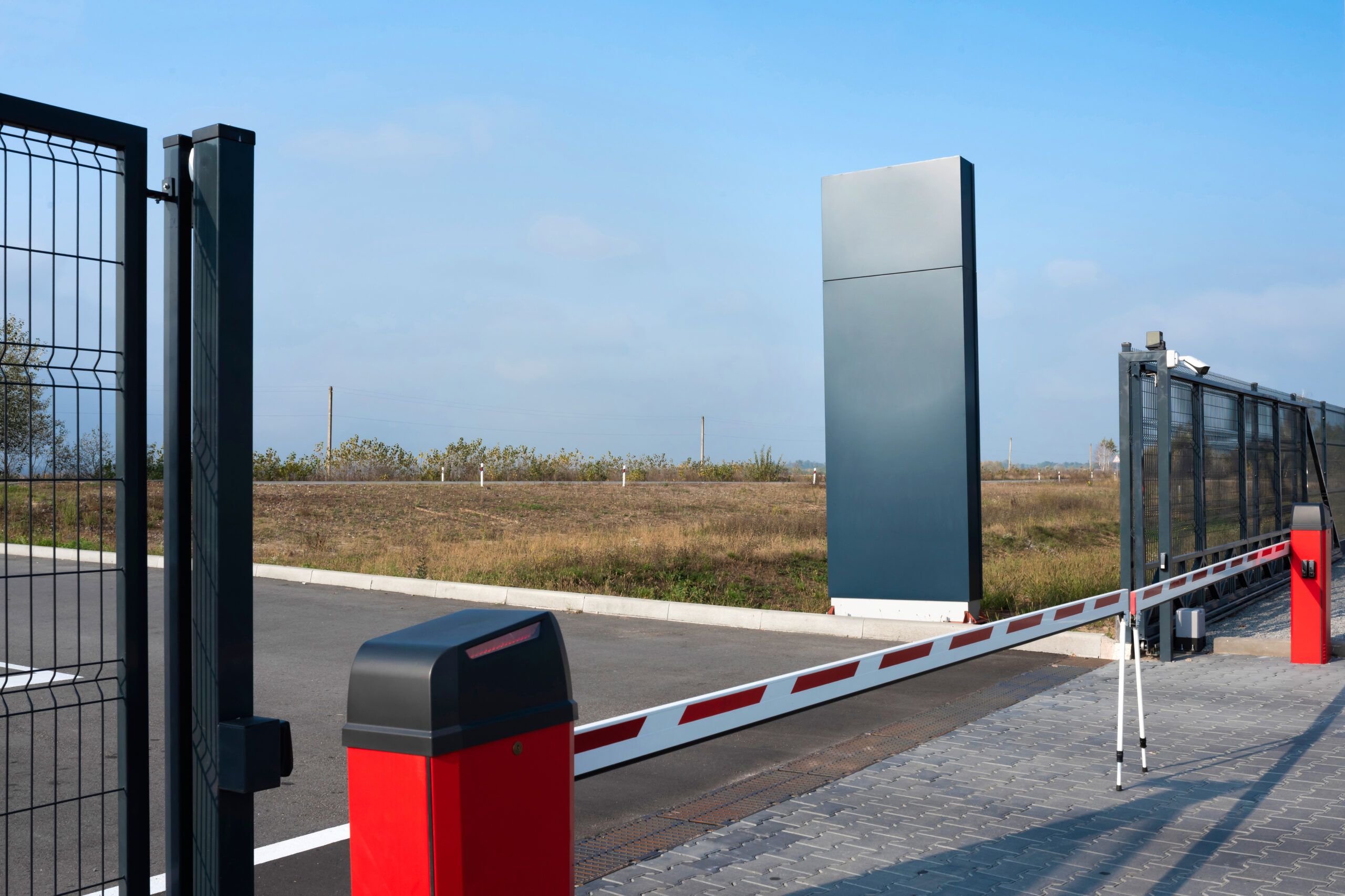
    Modern parking access control has largely moved away from ticket-based entry toward license plate recognition systems that identify vehicles automatically at entry and exit, matching them against reservations, permits or payment records without requiring drivers to stop and interact with a gate or attendant. Automatic barrier gates paired with vehicle detection loops and LPR cameras allow facilities to enforce access restrictions and capacity limits with minimal staffing, while maintaining an auditable record of every vehicle movement through the facility.

    Video Surveillance in Low-Visibility Environments

    Parking structures present persistent lighting and sightline challenges, particularly in multi-level garages with support columns, stairwells and dimly lit corners that create natural blind spots. Camera placement strategy in garages typically prioritizes chokepoints — entry and exit lanes, elevator lobbies, stairwell doors and pedestrian walkways — supplemented by wide-area coverage of parking bays, with increasing use of AI-based analytics to detect loitering, unusual dwell time near parked vehicles, or people entering restricted areas after hours.

    Emergency Communication and Panic Infrastructure

    Because parking facilities are frequently used at hours when few other people are present, blue-light emergency phone towers and intercom call points remain a standard feature in many garages, giving pedestrians a direct, monitored line to security or law enforcement without needing a mobile device. Newer deployments increasingly pair these fixed call points with mobile safety apps that let users share their location and request an escort or check-in while walking to their vehicle.

    Vehicle and Asset Theft Prevention

    Beyond general surveillance, parking security technology addresses vehicle-specific theft risks, including catalytic converter theft and break-ins, through a combination of visible camera coverage, motion-activated lighting, and in some deployments, license-plate-linked alerting that flags when a vehicle associated with a prior incident re-enters the facility.

    Integration With Broader Building Security

    In commercial and residential developments, parking facility access control is frequently integrated with the building’s broader access control and video management systems, allowing a single credential to grant access to both the garage and the building above it, and giving security operations a unified view of a person’s movement from vehicle to building entry rather than treating the parking facility as a separate, disconnected system.

  • Office and Commercial Real Estate Security Technology

    Office and Commercial Real Estate Security Technology

    Office and commercial real estate security has changed shape alongside how buildings are actually used: hybrid work patterns mean occupancy is less predictable than it once was, multi-tenant buildings must balance individual tenant security needs against shared building infrastructure, and property owners increasingly treat security technology as a leasing amenity rather than a cost center.

    Layered Access From Street to Suite

    Modern commercial buildings typically implement access control in tiers: perimeter and lobby access managed by building ownership, elevator or floor-level access restricted to authorized tenants, and suite-level access managed independently by each tenant organization. Mobile credentials and turnstile integration allow this tiered model to function without requiring visitors or employees to carry multiple physical badges for different access levels within the same building.

    Visitor Management at Scale

    Multi-tenant buildings receive a high volume of visitors intended for different companies on different floors, making visitor management more complex than in a single-occupant facility. Building-wide visitor-management systems that let individual tenants pre-register guests, while giving the building’s front desk a single interface to verify and direct all visitors, have become standard in class-A office properties.

    Video Surveillance and Common-Area Monitoring

    Camera coverage in commercial real estate typically concentrates on common areas — lobbies, parking structures, loading docks, and elevator banks — that fall under building ownership’s responsibility, while tenant suites are covered separately at each tenant’s discretion. Parking structures, in particular, receive disproportionate security attention given their historical association with opportunistic crime and their role as a building’s most exposed access point.

    Reduced Occupancy and Hybrid-Work Security Implications

    Lower and less predictable daily occupancy, driven by hybrid work schedules, has pushed some buildings toward occupancy-aware security postures — adjusting patrol schedules, lighting, and monitoring intensity based on real-time occupancy data rather than fixed daytime and after-hours modes. This same occupancy data increasingly feeds into building operations more broadly, informing HVAC and space-utilization decisions alongside security posture.

    Security as a Leasing Consideration

    Property owners increasingly market building security technology — touchless access, integrated visitor management, and modern camera systems — directly to prospective tenants as a differentiator, reflecting a shift where security infrastructure is evaluated by tenants during lease negotiations rather than treated purely as building-management overhead.

  • LNG Facility Security Technology

    LNG Facility Security Technology

    LNG facilities — liquefaction plants, import and export terminals, and storage sites — occupy a distinct category in critical-infrastructure security because a successful attack or serious accident carries both catastrophic safety consequences and significant economic and energy-supply impact, placing these sites under some of the most stringent security regulatory regimes in the industrial sector.

    Regulatory Framework and Layered Design

    In the United States, LNG facilities fall under Coast Guard and Federal Energy Regulatory Commission security requirements that mandate layered protection: perimeter security, access control, surveillance, and threat detection are treated as regulatory obligations rather than optional risk-management choices. This regulatory backbone shapes security architecture more directly at LNG sites than at most other industrial facility types.

    Perimeter and Waterside Security

    Because many LNG terminals are sited on waterways to accommodate tanker traffic, security architecture must cover both landside perimeter protection — fencing, intrusion detection, access control — and waterside security, including vessel-tracking integration, waterside barriers, and coordination with port-security and Coast Guard monitoring systems for approaching vessels.

    Hazard Detection Integrated With Security Systems

    LNG-specific hazard detection, including gas detection, cryogenic leak sensors, and flame detection tuned for low-temperature hydrocarbon fires, is typically integrated into the same monitoring and control infrastructure as conventional security systems, since a security breach and a process safety event can present overlapping signatures and both require immediate, coordinated response.

    Access Control for High-Consequence Areas

    Facilities apply tiered access control, with the most stringent credentialing and monitoring reserved for process areas, storage tanks, and loading arms, while lower-risk administrative areas use standard commercial access control. Contractor and vendor access — common at LNG sites due to specialized maintenance needs — is managed through time-limited credentials and escort requirements for unescorted access to restricted process zones.

    Command and Control Integration

    Given the scale of consequence if a security or safety event escalates, LNG facilities typically operate a unified control room where security monitoring, process control, and emergency response coordination share situational awareness, allowing a single operational picture to inform both a security response and a safety shutdown decision when the two are connected.

  • Mining Site Security Technology

    Mining Site Security Technology

    Mining sites present a security profile shaped by geography as much as by threat: operations are frequently remote, span enormous physical areas that make conventional perimeter fencing impractical everywhere, and combine heavy mobile equipment, explosives storage, and valuable extracted material within a single operating environment.

    Perimeter Coverage Over Large, Irregular Terrain

    Because a mine’s operational footprint can span thousands of acres of uneven terrain, fixed fencing alone rarely provides full coverage. Sites increasingly layer long-range thermal cameras, radar, and, where terrain allows, fiber optic perimeter sensing along critical boundary segments, reserving dense sensor coverage for access roads, processing facilities, and explosives magazines rather than attempting to instrument an entire property line.

    Explosives and Hazardous Materials Storage

    Explosives magazines used in blasting operations are typically the highest-priority asset on a mining site from a regulatory and security standpoint, subject to dedicated access control, inventory tracking, and often video verification independent of the site’s general security systems. Chain-of-custody tracking for explosives, from delivery through use, is both a safety and a security requirement in most jurisdictions.

    Vehicle and Heavy-Equipment Tracking

    Large mining vehicles represent significant capital investment and, in the case of fuel and equipment theft, an ongoing loss-prevention concern. GPS and telematics tracking integrated with access control allows sites to monitor equipment location and usage patterns, flagging vehicles operating outside scheduled hours or authorized zones.

    Workforce Access and Remote-Site Challenges

    Mining workforces often include a mix of permanent staff, contractors, and rotating shift crews at remote sites where connectivity can be limited, complicating cloud-dependent access-control and video systems. Facilities in this position increasingly deploy edge-capable systems that can operate and store data locally during connectivity gaps, syncing to central management platforms when links are restored.

    Environmental and Site-Monitoring Integration

    Beyond conventional security, many mining operations integrate slope-stability monitoring, tailings-dam sensors, and environmental compliance systems into the same operations center used for security monitoring, reflecting the reality that safety, environmental, and security risks at a mine site are often interconnected and benefit from a unified operational view.

  • Warehouse and Logistics Facility Security Technology

    Warehouse and Logistics Facility Security Technology

    Warehouses and distribution centers combine several security challenges that rarely coexist at the same scale elsewhere: large open floor plans with limited natural sightlines, constant inbound and outbound vehicle traffic, high-value inventory concentrated in dense storage, and a workforce that includes a significant share of temporary or third-party personnel.

    Perimeter and Yard Management

    Facility perimeters typically combine fencing, gate-access control, and license-plate recognition at vehicle entry points to track which trucks and personal vehicles are on site and when. Yard-management systems increasingly integrate with access control so that a scheduled delivery’s arrival automatically opens an assigned gate or dock door, reducing the number of manual security interactions at high-traffic entry points.

    Interior Coverage and Inventory Protection

    Because warehouse interiors are large, open, and often dimly lit in aisle areas, camera placement strategy differs from office or retail environments — wide-angle and PTZ cameras cover main aisles and dock areas, while analytics tuned for this environment focus on loitering near high-value storage zones, unauthorized access to restricted areas, and dock-door activity outside scheduled shipping windows. Loss-prevention teams also increasingly rely on inventory-discrepancy analytics that correlate access logs and camera footage with warehouse-management-system records to flag shrinkage patterns.

    Dock Door and Loading Area Security

    Loading docks are a facility’s highest-traffic and highest-risk access points, where legitimate deliveries, damaged-goods returns, and unauthorized access attempts can look superficially similar on camera. Dock-specific access control, seal-verification procedures for trailer doors, and analytics that flag doors left open outside active loading windows are standard countermeasures.

    Fire Detection in High-Storage Environments

    Dense, high-rack storage complicates fire detection: smoke can take longer to reach ceiling-mounted detectors in tall racking, and combustible inventory can accelerate a fire before conventional smoke detection triggers. Facilities handling flammable or high-value goods increasingly deploy aspirating smoke detection or video-based fire detection alongside conventional sprinkler and suppression systems to shorten response time.

    Integrating Physical Security With Operations

    The most effective warehouse security programs treat access control, video, and yard management as an extension of logistics operations rather than a separate function — tying security events to shipment schedules and inventory systems so that anomalies are flagged in the context of what should be happening at a given dock door or storage zone at a given time.